
Do these 3 things before closing this tab:
1Repair Windows errors before they cause bigger problems2Fix the driver behind crashes, sound loss and screen glitches3Clear out junk files and repair common Windows errorsOperational technology (OT) security belongs in enterprise and board oversight because a cyber incident can alter physical processes, interrupt essential services, create safety consequences, and threaten core business objectives. Board attention should focus on visibility, accountable ownership, risk-based investment, and safe treatment—not on forcing conventional IT controls into plant environments without regard for reliability and safety.
Why should OT security be a board priority?
OT comprises programmable systems and devices that interact with the physical environment. Industrial control systems, supervisory control and data acquisition (SCADA), building automation, transportation systems, water and wastewater facilities, industrial IoT and cloud-connected operational environments all fall within its scope.

That physical connection changes the risk question. A compromised business application may expose data or stop an office process; a compromised controller, engineering workstation or vendor pathway can change a production sequence, disable a safety function, interrupt a utility service or damage equipment. Reliability, performance and safety requirements therefore shape which security controls are appropriate and when they can be deployed.
NIST’s IR 8286 Rev. 1 states: “Because information and technology comprise some of the enterprise’s most valuable resources, it is vital that directors and senior leaders always have a clear understanding of cybersecurity risk posture.” For OT, that posture must be connected to operational consequences and enterprise objectives rather than reduced to a count of vulnerabilities.
Quick wins for a faster PC:
Fix the driver behind crashes, sound loss and screen glitchesFind Drivers →Repair Windows errors before they cause bigger problemsFix Now →#1 Best Overall

- BUSINESS CYBERSECURITY SOLUTION: SafeBiz is an advanced cybersecurity solution that protects your work network and safeguards your Business data and all internet connected devices in your business from cyber threats and hackers. SafeHome blocks phishing, malware, ransomware, online scams and dark web threats.
- ADVANCED THREAT PREVENTION: SafeBiz includes a Next-Gen Firewall, DNS Security, Web Filtering, Dark Web Protection, Geo-fencing and other AI Powered cybersecurity features protecting your Business and Sensitive Data from internet threats and hackers.
- BUSINESS DATA & IDENTITY SECURITY: Safeguards your Official and financial data, protecting them from online theft and unauthorized access.
- EASY SETUP: Connects effortlessly to any existing wireless router or internet connection, setting up in minutes without the need for any changes to your Business internet connection.
- HIGH SPEED CONNECTIVITY: Supports an aggregate throughput of up-to 4.3 Gbps, maintaining high-speed browsing and streaming performance for up to 128 devices.
What current evidence says about the oversight gap
Survey results indicate that board reporting is not yet routine, but they do not measure every enterprise.
| Finding | Population and date | What it means |
|---|---|---|
| 16% said their boards receive OT-security reports | World Economic Forum, Global Cybersecurity Outlook 2026; respondents with industrial environments | Board visibility is reported by a minority of respondents. |
| 20% maintain a dedicated OT-security team | World Economic Forum 2026 survey; same population | Specialist staffing is not universal. |
| 32% monitor OT with specific security tooling | World Economic Forum 2026 survey; same population | Many organizations may lack OT-specific telemetry. |
| 36% say the CISO is responsible for both IT and OT | World Economic Forum 2026 survey; same population | Responsibility is often combined, but the figure does not establish how authority is exercised. |
| 27% reported at least one ICS/OT incident in the prior year | SANS Institute 2025 survey of more than 180 OT, ICS, SCADA, process-control, building-automation and related professionals | Incident experience is material enough to require enterprise risk treatment. |
The figures are survey responses, not a census or prediction of an individual company’s likelihood of attack.
How OT risk should enter enterprise risk management
NIST’s IR 8286 series describes a flow from component-level cybersecurity information into enterprise risk management (ERM). OT teams document risks in cybersecurity risk registers; those risks are then considered alongside mission, business and other enterprise risks.
- Identify the objective. State the service, production target, safety outcome, regulatory obligation or customer commitment that the OT process supports.
- Describe the scenario. Specify what could be manipulated, disrupted or made unavailable, including credible entry paths such as remote vendor access, engineering laptops, cloud connections and supply-chain dependencies.
- Assess consequence and exposure. Consider safety, environmental, operational, financial, legal and reputational effects, as well as the duration and recoverability of an outage.
- Record priority and response. IR 8286B recommends prioritizing according to potential impact on enterprise objectives and recording the chosen response and priority in a cybersecurity risk register.
- Roll material risks upward. Aggregate related plant or site risks so executives and directors can see enterprise exposure, dependencies and residual risk.
This process lets the board compare OT treatments with other investments without pretending that all controls have the same operational cost or urgency.
Free tools Windows power users keep installed
One-click scans. No signup required.
How to report OT cyber risk to the board
A useful board report connects two views: the consequence the enterprise is trying to avoid and the feasibility of reducing that risk safely.
1. Operational consequence and risk reduction
- Which process, service, safety function or enterprise objective is exposed?
- What credible attack or failure path reaches it?
- What treatment is proposed—such as segmentation, monitoring, access control, recovery capability or a procurement change?
- How much exposure should that treatment reduce, and what residual risk remains?
2. Feasibility and accountability
- Are the relevant assets, software versions, connections and dependencies known?
- Can the change be tested and deployed without unacceptable production or safety risk?
- Who owns delivery, who approves operational windows, and which dependencies could delay it?
- Do staffing and budget match the stated priority?
Use trend measures tied to the exposure rather than generic vulnerability totals. Depending on the environment, useful evidence may include inventory coverage, monitored network segments, reviewed privileged and vendor access, tested recovery procedures, incident-response readiness, remediation progress and the age of unresolved high-consequence findings.
Who should own OT security: IT, the CISO or operations?
There is no safe universal answer in which one function absorbs every responsibility. Operations owns process knowledge and often controls change windows; security provides risk expertise, detection and response capabilities; IT may operate identity, networking and shared infrastructure; enterprise risk translates exposures into the corporate portfolio. The board should require a named accountable executive and a documented decision model across these functions.
SANS’s 2025 survey illustrates why this must be explicit: respondents reported budget control shared between IT and OT (37%), controlled by IT (31%) or controlled by OT (26%); 27% said CISOs or CSOs led budget decisions. These are reported organizational arrangements, not a recommended allocation and not a complete explanation of every respondent’s structure.
What’s actually slowing this PC down?
Pick the symptom - the matching free tool is one click away.
Rank #3
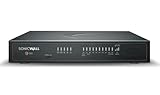
- HIGH AVAILABILITY UNIT: Secondary appliance for active/standby stateful failover; requires a matching primary firewall. Hardware only — security services and support are not included.
- PERFORMANCE: Up to 5 Gbps firewall inspection, 2.5 Gbps threat prevention and 2.5 Gbps IPSec VPN throughput driven by SonicWall's patented Reassembly-Free Deep Packet Inspection (RFDPI) engine.
- CONNECTIVITY: 8x1GbE + 2x5G SFP+ + 2x10G SFP in a desktop form factor; zero-touch deploy and manage on-box or via cloud Network Security Manager (NSM).
- THREAT PROTECTION: SonicOS 8 delivers intrusion prevention, gateway anti-malware, application control, TLS/SSL decryption, Capture ATP multi-engine sandboxing (RTDMI) and reputation-based content & DNS filtering with an active service subscription.
- BUILT FOR DISTRIBUTED & HIGH-END SMB: Secure SD-WAN, IPSec and SSL VPN plus Zero-Trust Network Access through Cloud Secure Edge keep distributed sites and remote workers protected.
Management should be able to show who can approve an OT change, who can stop unsafe deployment, who owns incident decisions and who controls the associated funds. A split budget is workable only when responsibilities, service levels and escalation paths are clear.
Which investments deserve board attention?
SANS respondents ranked defensible ICS/OT network architecture as their top prioritized control investment area, followed by ICS-specific incident response and architectures that support network visibility. The ranking is a survey result, not a prescription for every plant. Investment choices should follow the consequence analysis and the actual architecture.
Asset and dependency visibility
Establish what controllers, servers, workstations, safety systems, wireless links, remote connections and cloud services exist, who owns them and how they depend on one another. Unknown assets and undocumented vendor paths make every later control harder to evaluate.
Segmentation and monitored communications
Design defensible zones and conduits, restrict unnecessary pathways and monitor communications in ways that do not destabilize time-sensitive or safety-critical systems. Passive collection, maintenance windows and controlled testing may be preferable to intrusive scanning.
Crashes, No Sound, or Screen Glitches?
Random freezes, missing sound and display glitches usually trace back to one bad driver. Find and replace yours safely.Free scan · under a minuteWindows Errors? Fix Them Before They Spread
Repair common Windows errors and clear accumulated junk for a smoother, more stable PC - no reinstall needed.Free scan · no reinstallRank #4

- Powerful 16-Core Performance & Low Power: Powered by the Intel Atom C3958 Processor (16 Cores/16 Threads, 2.00 GHz), this mini PC delivers exceptional multi-tasking capabilities for virtualization and routing. With a TDP of only 31W and a peak power consumption of 30W, it offers enterprise-grade performance with high energy efficiency.
- Massive 10-Port Network Connectivity: Designed for heavy network loads. Features 6x Intel i226-V 2.5G LAN ports and 4x Intel X553 10G SFP ports on the front panel. Ideal for use as a high-performance firewall, soft router (pfSense/OPNsense), or network gateway handling massive data throughput.
- Flexible Storage & Memory Expansion: Supports up to 2x SO-DIMM DDR4 2400MHz memory slots for smooth multitasking. Storage is versatile with options for 2x M.2 2280 SATA SSDs, 1x SFF SATA HDD/SSD, and an onboard eMMC interface, ensuring fast boot times and ample space for logs and databases.
- Versatile I/O & Wireless Support: Equipped with a rear VGA port for local debugging/management and a Console port for direct system access. Includes an M.2 slot for a 4G LTE module (with SIM slot) and WiFi antenna ports, providing reliable wireless backup connectivity for remote management.
- Compact Industrial Design & Wide OS Support: Measuring just 9.25" x 4.72" x 2.76", this fanless-style compact unit fits easily into server racks or network cabinets. It supports Windows Server and Linux distributions, operating reliably in temperatures from 0°C to 45°C, making it perfect for 24/7 industrial applications.
Identity, access and remote maintenance
Review privileged accounts, shared credentials, engineering access and supplier connections. Apply strong authentication and least privilege where the equipment supports them, while providing safe compensating controls for legacy systems.
Incident response and recovery
Define how operations, safety, security, legal and communications teams coordinate during an event. Exercise manual operation, restoration priorities, trusted backups and vendor contact procedures—not just IT playbooks.
Secure procurement
CISA and partner agencies’ January 2025 Secure by Demand guidance helps OT owners ask manufacturers about secure-by-design features, support lifecycles, vulnerability handling, logging, access controls and update processes before purchase. Procurement decisions can prevent years of avoidable exposure.
Independent reader supportYour contribution helps us test, update, and keep practical guides available for everyone.How can enterprises secure OT without disrupting operations?
- Start with consequence-led scoping. Prioritize systems whose compromise could affect safety, essential services, high-value production or other stated enterprise objectives.
- Validate visibility safely. Reconcile engineering records, maintenance data, network observations and supplier information; avoid untested active scans on fragile equipment.
- Use a staged treatment plan. Pilot segmentation, monitoring or identity changes in a representative area, define rollback criteria and obtain operations and safety approval.
- Preserve required performance. Test latency, availability, failover, alarm behavior and vendor support before expanding a control.
- Measure the result. Report the specific exposure reduced, coverage achieved, exceptions accepted and remaining dependencies.
- Rehearse failure and recovery. Confirm that people can operate safely when communications, controllers or remote access are unavailable.
NIST’s initial public draft of SP 800-82 Rev. 4, published September 21, 2026, reorganizes OT guidance around Cybersecurity Framework 2.0, emphasizes the Govern function and expands discussion of controls, asset management, monitoring, system management and zero-trust principles across sectors such as building automation, water, food and agriculture, freight rail, maritime, IIoT and cloud convergence. It remains a draft, with comments due November 30, 2026; organizations should not treat it as a final mandatory standard.
The Tool Desk
Outbyte PC Repair FREEClear out junk files and repair common Windows errorsFree Scan →Outbyte Driver Updater FREEFix the driver behind crashes, sound loss and screen glitchesFind Drivers →CISA’s April 29, 2026 joint guidance likewise says zero-trust principles must be adapted to OT constraints. Its emphasis includes comprehensive asset visibility, secure supply chains and identity and access controls implemented without disrupting systems. Zero trust is therefore an architectural and risk-management direction, not a license to deploy identical IT controls on every controller.
Questions directors should ask management
- Which OT processes and enterprise objectives have the largest plausible consequences if disrupted or manipulated?
- Which assets, external connections, vendor pathways and dependencies are visible, and where are the material unknowns?
- Who is accountable for OT risk, who controls its budget, and how do operations, IT, security and enterprise risk coordinate?
- Which treatments are prioritized, what operational constraints govern deployment, and what residual risks remain?
- What evidence will show that risk is changing—inventory coverage, monitored segments, access reviews, incident readiness or remediation progress?
The Bottom Line
Making OT security a board priority means governing it as cyber-physical enterprise risk: connect plant consequences to business objectives, assign accountable owners, fund feasible treatments and demand evidence that exposure is changing. The objective is resilient operations, not indiscriminate application of IT controls.
Quick Recap
Product prices and availability are accurate as of the date/time indicated and are subject to change. Any price and availability information displayed on Amazon at the time of purchase will apply.

