
Recommended Free Tools
Serverless can lower cloud costs when demand is intermittent or variable, because some services charge for usage instead of idle provisioned compute. It is not automatically cheaper: sustained high throughput, provisioned capacity, data transfer, and connected services can change the total. The useful comparison is the cost of the whole application at its actual workload—not a serverless function’s price in isolation.
How can I reduce cloud costs with serverless?
Start by matching each part of the architecture to the demand it serves. AWS describes serverless optimization as matching supply to demand and reviewing expenditure over time. Its Well-Architected Serverless Applications Lens says, “Generally, serverless architectures tend to reduce costs because some of the services, such as AWS Lambda, don’t cost anything while they’re idle.” That qualification matters: idle compute savings do not guarantee a lower application bill when other services, traffic, or always-on capacity remain chargeable. AWS’s cost-optimization guidance also recognizes a trade-off between early optimization and shipping quickly.
1. Inventory the whole application bill
For AWS Lambda, function-level charges are driven mainly by request count and execution duration; duration charges are affected by configured memory. AWS also identifies possible charges for VPC use, other services, and data transfer. Check the current Lambda pricing page for applicable terms rather than assuming function execution is the entire cost.
Include every component that receives, stores, moves, or observes application data. API Gateway request charges are only one part of an API application’s cost; connected AWS services and data transfer can add more. AWS’s API Gateway pricing information illustrates why an estimate should cover the application path, not just its entry point.
The Tool Desk
Outbyte Driver Updater FREEFix the driver behind crashes, sound loss and screen glitchesFind Drivers →Outbyte PC Repair FREERepair Windows errors before they cause bigger problemsFix Now →#1 Best Overall

- Get NVMe solid state performance with up to 1050MB/s read and 1000MB/s write speeds in a portable, high-capacity drive(1) (Based on internal testing; performance may be lower depending on host device & other factors. 1MB=1,000,000 bytes.)
- Up to 3-meter drop protection and IP65 water and dust resistance mean this tough drive can take a beating(3) (Previously rated for 2-meter drop protection and IP55 rating. Now qualified for the higher, stated specs.)
- Use the handy carabiner loop to secure it to your belt loop or backpack for extra peace of mind.
- Help keep private content private with the included password protection featuring 256‐bit AES hardware encryption.(3)
- Easily manage files and automatically free up space with the SanDisk Memory Zone app.(5). Non-Operating Temperature -20°C to 85°C
- Function requests, execution duration, and configured memory.
- API requests and any provisioned concurrency or other capacity kept warm.
- Storage, databases, queues, messaging, caches, and other managed services.
- Network transfer between services, regions, or the public internet.
- Logging and monitoring, including retained data and telemetry volume.
Use your billing data and the provider’s current calculator or pricing pages for the regions and services you actually use. Published prices and free-tier terms can change, and a price example applies only to its stated scenario.
2. Compare costs against workload shape
Compare serverless with capacity-based hosting at representative traffic levels, including quiet periods and peaks. AWS’s decision guide describes a basic pricing trade-off: per-request billing avoids forecasting capacity, while capacity-based pricing can suit consistent sustained traffic. Neither model wins in every workload.
Rank #2

- Capacity Display Variance: 1TB external ssd often appears as around 931GB on Windows. MacOS can show full 1 TB capacity. This is binary calculation difference and doesn’t affect SSD hard drive actual physical storage
- 1050 MB/s Speed: Instantly access to your files with blazing-fast 10Gbps external SSD read up to 1050MB/s and write up to 1000MB/s. LED Light indicates USB SSD instant activity
- Data Security: Solid state drives S.M.A.R.T. health diagnostics and adaptive TRIM optimizing data block management ensures consistent write speeds and extends the longevity of the portable SSD
- USB-C & USB-A Cable: Both cables featuring rapid USB 3.2 Gen2, this USB SSD effortlessly bridges devices, enabling seamless cross-platform file transfers and backup between computers, smartphones, tablets and iPhone
- Always Fast: No slowdowns for large file transfers. With SLC caching (25% of current available capacity allocated as high-speed cache), this external SSD delivers steady 10Gbps for transfers within the cache capacity
| Decision factor | Questions to answer |
|---|---|
| Idle and low-traffic cost | What remains billable when demand is low or absent? |
| Sustained throughput | How does the total cost change when requests arrive continuously at expected and peak rates? |
| Predictability | Is spend driven by variable request volume, reserved capacity, or a mixture? |
| Operational effort | Which option requires more capacity planning, maintenance, or monitoring? |
| Latency and scaling | Do cold starts, response-time targets, or scaling behavior require extra capacity or architectural changes? |
| Data movement | What do service-to-service, cross-region, and outbound transfers add? |
| Commitments and capacity risk | Would a discount or commitment lower the bill, and what is the cost of unused capacity? |
Price comparisons are scenario-specific: region, runtime, architecture, request mix, memory, execution time, service composition, discounts, and demand all matter. Available provider guidance is not a controlled cross-provider benchmark, so it does not establish a universally cheapest provider or a standard savings percentage.
3. Test targeted changes, not blind cuts
Establish a baseline from observed workload and spend, then change one cost driver at a time. AWS recommends examining memory allocation and considering a compatible Arm-based configuration; it cautions that results vary by function, dependencies, and runtime, and recommends load testing. See the Lambda cost and performance guidance.
Outdated Drivers Are Slowing You Down
One free scan finds every outdated or missing driver and matches the right update for your exact hardware.Free scan · exact hardware matchPC Slower Than It Used to Be?
A free scan shows the junk files, broken settings and background clutter dragging Windows down - then fixes them in one click.Free scan · Windows 10 & 11Rank #3
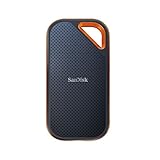
- Powerful NVMe solid state performance featuring up to 2000MB/s read/write speeds.(1) (Based on internal testing; performance may be lower depending on host device, interface, usage conditions and & other factors. 1MB=1,000,000 bytes.)
- A forged aluminum chassis acts as a heatsink to deliver higher sustained speeds in a portable drive that’s tough enough to take on any adventure.
- Up to 3-meter drop protection and IP65 water and dust resistance(4), and a handy carabiner loop. (Previously rated for 2-meter drop protection and IP55 rating. Now qualified for the higher, stated specs.)
- Help keep private content private with the included password protection featuring 256‐bit AES hardware encryption.(3)
- Easily manage files and automatically free up space with the SanDisk Memory Zone app.(5) (Download and installation required.)
- Review historical usage. Record invocation volume, duration, configured memory, traffic patterns, latency, and the associated application costs.
- Right-size memory. Test alternative allocations against representative workloads. Compare both billed duration and application performance; a smaller setting is not a saving if it increases execution time or causes unacceptable latency.
- Test Arm where compatible. Benchmark an Arm/Graviton configuration against the current architecture using the same representative load, runtime, dependencies, and success criteria.
- Reduce unnecessary work carefully. Consider batching or eliminating redundant invocations only if correctness, latency, and downstream load remain acceptable.
- Estimate the full request path. Account for API, storage, database, messaging, logging, and transfer charges alongside function costs.
- Load-test before rollout. Validate peak behavior, response times, errors, and downstream capacity before extending a change to production.
Is serverless cheaper than traditional cloud hosting?
It can be, particularly when usage is sporadic and a traditional deployment would keep compute provisioned through long idle periods. For steady, high utilization, per-request charges may compare less favorably with capacity-based pricing, depending on the workload and discounts. Extra services, data transfer, and requirements such as low latency can also change the result.
Make the decision with a named workload scenario: specify region, demand pattern, request volume, execution profile, service dependencies, data movement, and applicable discounts. Compare actual or estimated whole-application costs at low, typical, and peak demand, alongside latency and operational requirements. Do not treat an illustrative provider pricing example as a forecast of migration savings.
Rank #4

- Capacity Display Variance: 500GB external ssd often appears as around 465GB on Windows. MacOS can show full 500 GB capacity. This is binary calculation difference and doesn’t affect SSD hard drive actual physical storage
- 1050 MB/s Speed: Instantly access to your files with blazing-fast 10Gbps external SSD read up to 1050MB/s and write up to 1000MB/s. LED Light indicates USB SSD instant activity
- Data Security: Solid state drives S.M.A.R.T. health diagnostics and adaptive TRIM optimizing data block management ensures consistent write speeds and extends the longevity of the portable SSD
- USB-C & USB-A Cable: Both cables featuring rapid USB 3.2 Gen2, this USB SSD effortlessly bridges devices, enabling seamless cross-platform file transfers and backup between computers, smartphones, tablets and iPhone
- Always Fast: No slowdowns for large file transfers. With SLC caching (25% of current available capacity allocated as high-speed cache), this external SSD delivers steady 10Gbps for transfers within the cache capacity
Keep optimization continuous
Cloud cost optimization is an ongoing operating practice, not a one-time migration outcome. AWS and Microsoft both frame it around selecting appropriate resources, matching supply to demand, monitoring use, and reviewing costs as needs change. Microsoft’s Well-Architected cost-optimization guidance likewise emphasizes monitoring and continual optimization.
Quick Recap
Best Value

- MADE FOR THE MAKERS: Create; Explore; Store; The T7 Portable SSD delivers fast speeds and durable features to back up any endeavor; Build your video editing empire, file your photographs or back up your blogs all in an instant
- SHARE IDEAS IN A FLASH: Don’t waste a second waiting and spend more time doing; The T7 is embedded with PCIe NVMe technology that brings fast read and write speeds up to 1,050/1,000 MB/s¹, making it almost twice as fast as the T5
- ALWAYS MAKE THE SAVE: Compact design with massive capacity; With capacities up to 4TB, save exactly what you need to your drive – from large working files to game data and everything in between
- ADAPTS TO EVERY NEED: Whether using a PC or mobile phone, count on the T7 for extensive compatibility²; It’s a true team player when it comes to heavy-duty application usage or file-saving
- HI RESOLUTION VIDEO RECORDING: Record Ultra High Resolution (4K 60fs) videos directly onto the T7 Portable SSD with your favorite camera or mobile devices; Supports iPhone 15 Pro Res 4K at 60fps video and more³
- Tag services and environments so spend can be associated with an application, team, or workload.
- Track cost alongside requests served, performance, reliability, and business outcomes.
- Review unexpected changes and separate usage growth from configuration or service-cost changes.
- Revisit the architecture as traffic, latency requirements, service composition, or available pricing terms change.
Product prices and availability are accurate as of the date/time indicated and are subject to change. Any price and availability information displayed on Amazon at the time of purchase will apply.
Do these 3 things before closing this tab:
1Scan for outdated or missing drivers - takes under a minute2Repair Windows errors before they cause bigger problems3Fix the driver behind crashes, sound loss and screen glitches
