
The Tool Desk
Outbyte PC Repair FREEClear out junk files and repair common Windows errorsFree Scan →Outbyte Driver Updater FREEFix the driver behind crashes, sound loss and screen glitchesFind Drivers →OpenGL is a cross-platform graphics API specification implemented for many operating systems and graphics devices. Glide was a low-level rendering and state-management library designed around 3dfx Interactive accelerators. They are therefore not equivalent choices in scope: OpenGL prioritized portability and a broad implementation ecosystem, while Glide exposed a narrower, hardware-oriented path for 3dfx Voodoo-era cards.
OpenGL and Glide in one sentence
OpenGL defines a portable interface for issuing graphics commands; separate vendors and projects provide OpenGL implementations for particular operating systems and hardware. Glide was 3dfx’s accelerator-focused library, intended to sit close to the registers of that company’s 3D hardware.
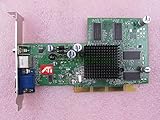
The Glide 3.0 Reference Manual describes Glide as “a low-level rendering and state management subroutine library that serves as a thin layer over the register level interface to the 3Dfx Interactive family of graphics accelerators.” That wording explains both its strength and its limitation: it could map closely to supported 3dfx features, but it was not a general API for arbitrary graphics hardware.
Key differences
| Comparison | OpenGL | Glide |
|---|---|---|
| Primary scope | A graphics API specification and ecosystem implemented for different operating systems, window systems and devices. | A 3dfx-oriented rendering and state-management library. |
| Hardware relationship | Uses an implementation and driver to translate API behavior for the target device. | Designed as a thin layer over the register-level interface of 3dfx accelerators. |
| Portability goal | Portable across supported platforms and implementations. | Bound to the 3dfx accelerator family and its software stack. |
| Feature model | Exposes a standardized set of operations defined by the relevant OpenGL version and extensions. | Implements operations natively supported by the hardware, according to the Glide 3.0 manual. |
| Current status | Still an established graphics API family, with support depending on the operating system, driver and device. | Legacy technology; current Mesa documentation lists 3dfx Glide among deprecated systems and drivers removed from its source tree and distribution. |
Portability: the central design difference
OpenGL was intended to travel
OpenGL was positioned for use across major operating systems and windowing systems. An application targets the OpenGL interface, while an implementation supplied by a platform, hardware vendor or project handles the device-specific work. This separation lets the same broad API model appear on different graphics cards and operating systems, although exact capabilities still depend on the implementation and supported version or extensions.
Free tools Windows power users keep installed
One-click scans. No signup required.
#1 Best Overall
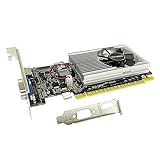
- The Geforce 210 is with a 589MHz core clock,up to 1066Mbps effective,perfect for working,video and photo editing,allows good fluency,which can effectively meet your needs.
- PCI Express 2.0 interface,offers compatibility with a range of systems. Also includes VGA and HDMI outputs for expanded connectivity,supports up to 2 monitors.Good for adding a simple low profile gpu to a small form factor pc.
- The computer graphics cards is small in size and saves more space,easy to install,plug and play,you can build a compact PC system easily for slim/ITX chassis.
- This low profile video card is good value option for entry level, if you just want basic upgrade graphics and daily simple work for your computer, or not be AAA gamer.(include low profile bracket)
- No external power supply and the all-solid-state capacitor keeps low power consumption and high performance,supports Windows 10/8/7/Vista/XP(not compatible with windows 11).
Glide targeted one accelerator family
Glide was built for 3dfx hardware rather than as a universal interface. A game using Glide expected the corresponding 3dfx library and a compatible accelerator path. That tight target could make the software model closely match the Voodoo family’s capabilities, but it also made the API unsuitable as a general solution for non-3dfx devices.
Abstraction level and feature behavior
OpenGL is abstract enough to describe graphics operations without exposing every vendor’s register layout. The implementation may use very different internal techniques on different devices. Applications can also rely on standardized behavior while checking for implementation-specific extensions when they need additional features.
Glide sat closer to the hardware. Its manual explicitly limits the library to operations “natively supported by the hardware.” That is more precise than calling Glide merely a direct hardware interface: it remained a software library with its own state-management conventions, but its scope was deliberately constrained by the 3dfx accelerator’s native functions.
Rank #2

- Robust 4GB Memory & Quad Display Ready: Equipped with 4GB of fast GDDR5 memory to smoothly handle daily graphics tasks. Features four built-in HDMI ports, enabling a seamless quad-monitor setup directly out of the box—perfect for multi-tasking offices, digital signage, or trading desks.
- Plug-and-Play Installation & Wide Compatibility: Utilizes a standard PCI Express interface for broad compatibility with most desktop PCs. Offers straightforward plug-and-play installation and stable driver support for modern Windows and Linux operating systems, ensuring a hassle-free setup.
- Quiet, Cool & Compact Design: Engineered with a silent fan and efficient cooling system for near-silent operation, making it ideal for noise-sensitive environments. Its low-profile design fits easily into small form factor cases, with both half-height and full-height brackets included for flexible installation.
- Enhanced Multimedia & Everyday Performance: Delivers smooth 1080P video playback and supports hardware-accelerated decoding, offering an excellent experience for home theater PCs (HTPC). Provides capable performance for everyday applications, multimedia tasks.
- Complete Package & Reliable Support: Includes the graphics card, both low-profile and standard brackets, a quick start guide, and screwdriver, which make it simple and quick setup process.
This distinction matters when interpreting old game options. A Glide renderer was not automatically a higher-quality or faster version of an OpenGL renderer. Visual output and speed depended on the game’s renderer, the card generation, the driver or library version, and the implementation details. The available historical sources establish Glide’s hardware-oriented design, not a universal benchmark or image-quality result.
How the two technologies overlapped historically
OpenGL and Glide were not mutually exclusive layers in every setup. Mesa’s project history records that Mesa 2.2, released in March 1997, supported the new 3dfx Voodoo card through Glide. Mesa describes that release as its first really popular hardware OpenGL implementation for Linux. In this arrangement, Glide provided the 3dfx-facing path while Mesa supplied an OpenGL implementation above it.
The same history dates Mesa 2.0 to October 1996, when it implemented OpenGL 1.1, and Mesa 3.0 to September 1998, when it became the project’s first publicly available implementation of OpenGL 1.2. These are Mesa release milestones, not measurements of market share, frame rate or image quality.
What “Will this game run with Glide or OpenGL?” really means
The answer is game-specific. Check the title’s renderer menu, configuration file, documentation or startup parameters, then match that option to the hardware and software path actually available on the machine.
If the game offers both renderers
- Choose Glide only when a compatible 3dfx accelerator and functioning Glide library or driver are present.
- Choose OpenGL when the game supports an OpenGL implementation for the installed graphics device and operating system.
- Compare the game’s own behavior—stability, resolution options, effects and input responsiveness—rather than assuming one API wins universally.
If the game requires Glide
A modern OpenGL driver does not, by itself, satisfy a Glide-only executable. You need the original 3dfx hardware and software path, or a compatibility wrapper or emulator that specifically presents the Glide interface. Wrapper behavior varies by project and version, so verify compatibility for the particular game and operating system.
Recommended Free Tools
If the game requires OpenGL
A 3dfx card’s presence does not guarantee that an OpenGL renderer will work. The game needs an OpenGL implementation supporting the version and extensions it requests. On vintage systems, that could be a vendor driver or a Mesa-based implementation; on current systems, device and driver support determine the available OpenGL feature set.
Rank #4

- Chipset: NVIDIA GeForce GT 1030
- Video Memory: 4GB DDR4
- Boost Clock: 1430 MHz
- Memory Interface: 64-bit
- Output: DisplayPort x 1 (v1.4a) / HDMI 2.0b x 1
What support looks like today
Glide should be treated as legacy software. Current Mesa documentation lists “3dfx Glide” among deprecated systems and drivers removed from Mesa’s source tree and distribution. This statement describes Mesa’s current status; it does not prove that every independent wrapper, emulator or vintage driver has disappeared.
OpenGL remains available through contemporary operating-system and hardware implementations, but “OpenGL support” is not one universal package. The relevant questions are which operating system, graphics device, driver and OpenGL version the application requires.
Independent reader supportYour contribution helps us test, update, and keep practical guides available for everyone.Which API should you choose?
For developing a new, portable application
OpenGL is the applicable choice of these two because its specification and implementation model are designed to span platforms and hardware. You still need to select the required OpenGL version, extensions and window-system integration for your target environments.
Crashes, No Sound, or Screen Glitches?
Random freezes, missing sound and display glitches usually trace back to one bad driver. Find and replace yours safely.Free scan · under a minutePC Slower Than It Used to Be?
A free scan shows the junk files, broken settings and background clutter dragging Windows down - then fixes them in one click.Free scan · Windows 10 & 11Best Value

- Memory Size: 1 GB
- Memory Technology: GDDR3 SDRAM
- Interface: DVI Display Port
- Bus Type: PCI Express
- Cooling Components Included: Fan with Heatsink
For preserving a 3dfx-era game or system
Glide can be appropriate when the original software specifically targets it and the goal is to reproduce an authentic 3dfx setup. Expect dependencies on period hardware, drivers and operating-system arrangements. A wrapper or emulator may be more practical, but it is a compatibility project, not the original Glide stack.
For diagnosing a display problem
- Identify the renderer the game is actually launching.
- Confirm the matching hardware or implementation is installed.
- Check the required driver, library files and OpenGL version or extensions.
- Test the game’s alternate renderer if one is offered.
- Record changes one at a time so a working configuration can be restored.
Bottom line
OpenGL was the portable, implementation-based graphics interface; Glide was a low-level library tailored to 3dfx accelerators. Their historical relationship could be layered—Mesa used Glide to support 3dfx hardware—so they were not always competing binaries. For present-day use, select the renderer that the specific game and hardware support: OpenGL for a maintained cross-platform path, or Glide only for legacy 3dfx software and compatible preservation setups.
Quick Recap
Product prices and availability are accurate as of the date/time indicated and are subject to change. Any price and availability information displayed on Amazon at the time of purchase will apply.

