
iTechGuides is reader-supported. When you buy through links on our site, we may earn an affiliate commission. As an Amazon Associate I earn from qualifying purchases. Learn more
UK Open Banking was created to make retail banking more competitive, not to give AI agents control over people’s money. But its standardized interfaces for sharing account data and initiating payments—with customer consent—could give future agents useful financial rails. The catch is that a secure connection and a customer’s permission to use a service do not, by themselves, define what an AI agent is allowed to decide or do.
What was UK Open Banking built to do?
The UK programme began as a competition remedy. Following a 2016 Competition and Markets Authority investigation into retail banking, the UK required its nine largest providers to implement common standards. The goal was to make it easier for customers and small businesses to share financial data or initiate transactions through trusted providers, encouraging more competition and choice.
As the UK Government put it in its “Update on Open Banking,” the programme “was initiated in 2017 as part of a package of remedies by the CMA to increase rivalry in the provision of retail banking services.” The original problem was how to open up a market dominated by large banks—not how to authorize autonomous software.
Open Banking is also not one app or a single global system. It is a framework of standards and participating providers. The UK model covers account-information services and payment initiation; other jurisdictions have their own rules and arrangements.
#1 Best Overall
![Arduino® UNO™ Q 4GB [ABX00173]- Hybrid Board, Qualcomm Dragonwing QRB2210 microprocessor (MPU) & STM32U585 Microcontroller(MCU), AI Vision, Voice, IoT, Robotics, Linux Debian OS, Wi-Fi 5, USB-C](https://m.media-amazon.com/images/I/51cl4xygwGL._SL160_.jpg)
- Dual-Brain Hybrid Power: Combines the Qualcomm Dragonwing QRB2210 MPU (Quad-core Arm Cortex-A53 @ 2.0 GHz CPU, Adreno GPU, AI acceleration) and the real-time, low-power STM32U585 MCU for advanced applications like object recognition, voice commands, and motion detection.
- AI & Linux Capabilities: Unlocks AI-powered vision and sound solutions; runs Linux Debian OS for coding in Python and supports the Arduino ecosystem with libraries and Sketches; quick start with Arduino App Lab.
- Advanced Features: Equipped with 4 GB LPDDR4 RAM, 32 GB eMMC built-in storage, ideal for single-board computer (SBC) mode, running multiple simultaneous high-level processes, more complex AI or ML models, extensive logs. Dual-band Wi-Fi 5 (2.4/5 GHz), Bluetooth 5.1, and high-speed headers for vision, audio, and display peripherals.
- Seamless Expansion & Connectivity: Features the classic UNO form factor for shields compatibility, an 8x13 LED matrix, and a Qwiic connector for easy expansion with Modulino nodes; power and connect via the USB-C connector.
- Intended Use & Development: The perfect platform for prototyping robotics or IoT projects, empowering innovators with a unified development experience to mix Arduino Sketches, Python scripts, and containerized AI models in a single interface.
What can Open Banking interfaces do today?
The UK Open Banking Read/Write APIs are RESTful interfaces through which third-party providers can connect to account providers to access customer information and initiate payments, with customer consent. The Open Banking Standards site describes them as enabling third-party providers to “access information and initiate payments for customers” by connecting to account providers securely and with consent.
The standards include more than account and payment endpoints: they also cover open data interfaces, participant-directory functions, client registration and reporting. Their security profile uses Financial-grade API (FAPI); the standards site says version 4 adopted the final FAPI 1 Advanced specification. These measures help secure communications between participants. They do not grant unrestricted authority to an AI system simply because it can reach an API.
Why could those rails suit AI agents?
An agent that helps with a person’s finances may need structured account information, a consistent way to communicate with providers and, for some tasks, a way to initiate payments. Open Banking offers those ingredients in the UK framework. In principle, an agent-enabled service might analyze cash flow, identify recurring costs, prepare a payment for approval or carry out a specifically authorized transaction.
The Tool Desk
Outbyte PC Repair FREEClear out junk files and repair common Windows errorsFree Scan →Outbyte Driver Updater FREEFix the driver behind crashes, sound loss and screen glitchesFind Drivers →Those are design possibilities, not established evidence of widespread autonomous banking. The official materials considered here document the underlying API functions, but do not establish a general-purpose AI agent product or a successful production use case in which an agent autonomously executes payments through UK Open Banking.
Rank #2
- Dual-Brain Hybrid Power: Combines the Qualcomm Dragonwing QRB2210 MPU (Quad-core Arm Cortex-A53 @ 2.0 GHz CPU, Adreno GPU, AI acceleration) and the real-time, low-power STM32U585 MCU for advanced applications like object recognition, voice commands, and motion detection.
- AI & Linux Capabilities: Unlocks AI-powered vision and sound solutions; runs Linux Debian OS for coding in Python and supports the Arduino ecosystem with libraries and Sketches; quick start with Arduino App Lab.
- Advanced Features: Equipped with 2 GB LPDDR4 RAM, 16 GB eMMC built-in storage, ideal to develop in PC-connected mode, running the OS, Python scripts, and basic network services (SSH) without a demanding GUI or heavy multitasking; great for lightweight AI and memory-optimized TinyML applications, needing local storage for basic OS and core libraries. Dual-band Wi-Fi 5 (2.4/5 GHz), Bluetooth 5.1, and high-speed headers for vision, audio, and display peripherals.
- Seamless Expansion & Connectivity: Features the classic UNO form factor for shields compatibility, an 8x13 LED matrix, and a Qwiic connector for easy expansion with Modulino nodes; power and connect via the USB-C connector.
- Intended Use & Development: The perfect platform for prototyping robotics or IoT projects, empowering innovators with a unified development experience to mix Arduino Sketches, Python scripts, and containerized AI models in a single interface.
That is the sense in which the infrastructure may have been built for the “wrong future”: it addressed a different policy problem, yet could prove useful for a later technology. The original programme need not have failed for its interfaces to become valuable in a new context.
Does consent to a banking service authorize an AI agent?
Not necessarily. A customer may authorize a regulated provider to connect to an account for a defined service. That is not automatically the same as delegating an AI agent the discretion to choose actions repeatedly over time. A permissioned connection answers how a provider can reach an account; it does not, on its own, settle what an agent may decide, when it must ask the customer, or who is responsible if something goes wrong.
For an agent-enabled service, the practical questions include:
Recommended Free Tools
- Identity and scope: Which provider and agent are acting, and what data or actions are within the permission?
- Limits and approval: Are there spending caps, eligible payees or transaction types, and thresholds above which the customer must confirm?
- Visibility: Can the customer see what the agent accessed, what it attempted and what it completed?
- Exceptions and recovery: What happens when the agent misreads a bill, a payment fails or circumstances change?
- Revocation and responsibility: Can access be stopped promptly, and which organization handles disputes or losses?
The Open Banking Limited AI and Open Finance green paper identifies agentic AI and agent consent as relevant topics while placing them outside the paper’s scope. That is a useful boundary: the existing ecosystem has relevant foundations, but the material reviewed does not establish a complete agent-specific authorization framework.
Rank #3
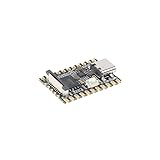
- Single core ARM Cortex-A7 32-bit core, integrated with NEON and FPU
- Built in Micro's self-developed 4th generation NPU, with high computational accuracy and support for mixed quantization of int4, int8, and int16. Among them, int8 has a computing power of 0.5 TOPS and int4 has a computing power of up to 1.0 TOPS
- Built in self-developed 3rd generation ISP3.2, supports 4 million pixels, and supports various image enhancement and correction algorithms such as HDR, WDR, and multi-level denoisin
- It has powerful encoding performance, supports intelligent encoding, adapts to save bit rates according to the scene, and saves more than 50% of the bit rate compared to conventional CBR mode, making the captured images high-definition, smaller in size, and doubling the storage space
- The design with built-in RISC-V MCU supports low-power fast startup, 250ms fast capture, and simultaneous loading of AI model library, enabling facial recognition to be completed within 1 second
What does current consent guidance ask providers to do?
Open Banking Standards guidance says customers should be able to understand a service’s terms, how their data will be used and what value they receive in exchange. It recommends making the purpose, benefits, requested data, duration and agreement clear. Firms should disclose known onward sharing, explain what data is accessed and why, and make it straightforward for customers to review and cancel access.
The guidance also points to considering the conduct of agents acting on a firm’s behalf, onward recipients and technical service providers. For AI-enabled services, those principles matter because an agent may rely on several organizations or systems. A customer-facing consent screen is useful, but it should not be mistaken for a technical protocol that defines an agent’s authority and safeguards every later decision.
The guidance describes good practice and signposts underlying regulation; it does not create new legal obligations by itself. It calls for a consent dashboard or equivalent, easy cancellation, neutral explanations of revocation and controls for reviewing onward-sharing arrangements.
How much UK Open Banking activity is there?
Recent figures show substantial use of the UK ecosystem, but they measure people, payments and API activity—not autonomous AI-agent transactions.
Rank #4

- 【POWERFUL ESP32‑S3 CONTROLLER】Built‑in Xtensa 32‑bit LX7 dual‑core processor, 512KB SRAM, 8MB PSRAM, 16MB Flash for stable AI voice computing and multitask processing.
- 【Preloaded Dual AI Platforms】Comespre-installed with complete Deepseek and OpenAI voice dialogue projects.Experience intelligent voice interaction instantly. (Note: OpenAI functionality requires your own API key.)
- 【STABLE WIRELESS & CLEAR AUDIO】Integrated 2.4GHz Wi‑Fi + Bluetooth 5 (LE); dedicated audio decoding module for natural, responsive voice interaction.
- 【USER‑FRIENDLY VISUAL & PLUG‑AND‑PLAY】2” TFT‑SPI color screen shows real‑time chat; modular design, no extra wiring, ready to use after setup.
- 【FULL LEARNING SUPPORT】45 programmable GPIOs, rich interfaces, online web tutorials, free technical support for beginners & developers.
| Measure | Reported figure | What it tells you |
|---|---|---|
| Active users and payment growth | The Financial Conduct Authority reported over 16 million active users and 53% growth in Open Banking payments in 2025. | Reported scale and payment growth in the UK ecosystem; not agent use. |
| Payments and API calls since launch | Open Banking Limited announced on 30 July 2026 that more than one billion payments and 100 billion API calls had been recorded across UK CMA9 banks since launch. | Cumulative activity across the nine largest banks; not a count of AI-initiated actions. |
What is changing in the UK framework?
The FCA’s stated vision is an Open Banking ecosystem that is sustainable, secure, scalable and useful to consumers and small and medium-sized businesses. In a December 2025 update, the regulator said it expected the Treasury to introduce legislation in 2026 that would give the FCA powers to set Open Banking rules. That was an expectation, not confirmation that legislation subsequently took effect.
In its feedback statement, the FCA described a future entity that, subject to legislation, would set common API standards, monitor performance, support conformance and provide directory and certification services. It also described a competitive commercial scheme layer that could innovate beyond the common standards. These are policy proposals and expected arrangements, not a basis for assuming that the governance structure is already in place.
Why “perfect” is a possibility, not a verdict
Open Banking’s fit for AI agents is promising at the level of infrastructure: standardized data access and payment initiation could support useful, bounded tasks. But secure APIs and existing consent practices do not resolve the hardest questions of agent authority, oversight, liability and safe handling of exceptions. The UK ecosystem’s scale shows that the rails are used; it does not prove that autonomous agents are using them safely or successfully.
Crashes, No Sound, or Screen Glitches?
Random freezes, missing sound and display glitches usually trace back to one bad driver. Find and replace yours safely.Free scan · under a minutePC Slower Than It Used to Be?
A free scan shows the junk files, broken settings and background clutter dragging Windows down - then fixes them in one click.Free scan · Windows 10 & 11So the title’s “perfect” is best read as potential, not a claim that the job is finished. Open Banking was built to improve competition and customer choice. Its interfaces may also help agents act on a person’s behalf—but only if the rules around permission, limits, accountability and recovery catch up with that new use.
Quick Recap
Product prices and availability are accurate as of the date/time indicated and are subject to change. Any price and availability information displayed on Amazon at the time of purchase will apply.

