
“AI courses” range from nontechnical introductions to Python-based machine learning and theory-heavy study. The options below include six individually named courses or programs and three provider catalogs for finding more. They are not a verified ranking of 17 courses: the available listings do not establish 17 individual courses with comparable, current details. Use the guide to choose by your goal, then check the linked provider page for current enrollment, prerequisites, certificate terms, price, and availability.
Choose a course by what you want to learn
Start with the outcome, not a list position. Broad AI literacy helps you understand terminology and applications; machine-learning study focuses on methods that learn patterns from data; generative AI study addresses systems that produce content from prompts; and programming-based courses ask you to implement or examine AI methods in code. Provider catalogs place these subjects under the same broad “AI” label, even though their intended learners and workload can differ.


- For an overview without a coding-first commitment: begin with a broad introduction such as IBM’s “AI for Everyone” or one of the introductory listings from Google or Coursera.
- For a first look at machine learning concepts: compare introductory courses and inspect their stated prerequisites before enrolling. A beginner label does not guarantee that every technical topic will be explained from scratch.
- For programming practice: consider HarvardX’s Python course, whose description explicitly frames it as using machine learning in Python. It is a different starting point from a general AI-literacy course.
- For generative AI: search an explicitly generative-AI catalog rather than assuming a general AI introduction includes hands-on work with generative models.
- For deeper AI foundations: a specialization covering agents, search, reasoning under uncertainty, and machine-learning foundations is broader and more theoretical than a short overview.
These are fit-based distinctions, not claims that one course is universally best. The listings establish advertised subject and, in some cases, learner level; they do not provide a shared basis for comparing teaching quality, project depth, completion time, or outcomes.
Six named courses and programs to consider
These are examples supported by the cited provider pages, not a ranked top six. Names and catalog placement can change, so use each provider page as the authority for the current offering.
#1 Best Overall
1. Google — Introduction to AI (Coursera)
Coursera lists this in its beginner artificial-intelligence catalog. Coursera describes beginner AI study in terms of areas including machine learning, natural language processing, and computer vision. That makes it a possible orientation course if you want to learn the field’s vocabulary before choosing a technical specialization. The catalog entry alone does not establish this course’s current syllabus, assignments, certificate conditions, or price. Check Coursera’s beginner AI catalog.
2. IBM — Introduction to Artificial Intelligence (AI) (Coursera)
This course appears in Coursera’s general AI catalog. The catalog listing supports its identity as an AI course, but the available listing does not establish enough detail to compare its prerequisites, practical work, or credential terms with the other options. Read the individual course page before treating it as a fit for a particular skill level. Browse Coursera’s AI catalog.
3. Coursera — Introduction to Artificial Intelligence (AI)
The course page describes beginner-level coverage of deep learning, machine learning, and neural networks. It is therefore a more concrete starting point for someone who wants an introductory course organized around core technical concepts. “Beginner” describes the advertised level; check the page for any current prerequisites and for whether the activities match how hands-on you want the course to be. See the course page.
Rank #2

- brand: Pearson
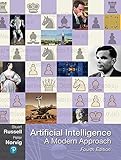
- ARTIFICIAL INTELLIGENCE: A MODERN APPROACH, 4TH EDITION
4. Coursera — Introduction to Artificial Intelligence specialization
The catalog result describes a broader foundation: intelligent agents, search algorithms, reasoning under uncertainty, and machine-learning foundations. It names Artificial Intelligence: A Modern Approach by Stuart Russell and Peter Norvig as supporting material. That book is associated with this specialization in the listing; it should not be assumed to be required for other courses here. Confirm the current program structure and any materials or costs on the provider page. See the specialization.
Outdated Drivers Are Slowing You Down
One free scan finds every outdated or missing driver and matches the right update for your exact hardware.Free scan · exact hardware matchPC Slower Than It Used to Be?
A free scan shows the junk files, broken settings and background clutter dragging Windows down - then fixes them in one click.Free scan · Windows 10 & 115. HarvardX — CS50’s Introduction to Artificial Intelligence with Python (edX)
The course description presents an introductory study of using machine learning in Python. This is the clearest match in this group for a learner specifically looking for programming-based study, rather than AI literacy alone. Check the course page for the current Python expectations, assignments, pacing, and access or certificate options; the listing does not establish those terms for every learner or region. See the HarvardX course page.
6. IBM — AI for Everyone: Master the Basics (edX)
The course description covers AI applications and introductory concepts including machine learning, deep learning, and neural networks. Its “for everyone” framing makes it worth comparing if you want a broad introduction, but do not infer from the name alone that it has no technical content or no prerequisites. Check the current course page for the expected background and enrollment terms. See the edX course page.
Three catalogs for finding additional options
If the six named examples do not match your aim, use these catalog pages to discover offerings by topic and provider. A catalog is a search starting point, not a promise that every item is a single course, currently open, free, or certificate-bearing.
7. edX machine-learning catalog
edX lists machine-learning courses and programs from providers including Harvard University, IBM, and Delft University of Technology. Its stated typical duration of 2–12 weeks is a catalog-level generalization, not a duration guaranteed for a specific course. Compare the individual listing’s format and schedule rather than planning around that range. Browse edX machine-learning courses.
What’s actually slowing this PC down?
Pick the symptom - the matching free tool is one click away.
8. edX generative-AI catalog
The catalog includes introductory generative-AI options and names offerings from IBM and Georgia Tech. It describes generative AI as producing text, images, audio, video, or code in response to a prompt. That breadth is useful when choosing a subject area, but it does not establish what any one course teaches in depth or whether it includes exercises. Browse edX generative-AI courses.
9. Coursera’s general AI catalog
Coursera’s catalog collects courses and programs from different providers. Use it to compare listings, then open the specific course page: catalog placement alone does not confirm a shared level, format, credential, or price. Browse Coursera’s AI catalog.
How to compare the options before enrolling
Course names and catalog labels are not enough to determine whether a course will suit your schedule or starting point. Review the individual course page against the same checklist so you are comparing like with like.
- Match the advertised level to your starting point. Look for explicit prerequisites, especially for a course involving Python or technical machine-learning material. Do not treat “beginner” as proof that it teaches every prerequisite.
- Identify the actual subject. Decide whether you want broad AI concepts, machine learning, generative AI, or programming-oriented implementation. A course can mention several topics without covering all of them equally.
- Inspect how you will learn. Check whether the page describes lectures, readings, exercises, programming assignments, or projects. The catalog evidence here does not support a consistent comparison of hands-on depth across offerings.
- Check pacing and access. Determine whether the course is self-paced or scheduled, how long access lasts, and whether deadlines apply. Do not apply edX’s 2–12-week catalog-level machine-learning range to an individual course.
- Verify credentials and cost directly. A catalog listing is not proof that a certificate is included at no charge. Check the current enrollment choices, certificate conditions, and price on the course page.
- Confirm availability where you are. Enrollment, language, payment, and credential terms may vary by region or change over time. The listings summarized here do not establish universal availability.
A practical learning path for beginners
If you are unsure where to start, use a sequence that reduces the risk of choosing a course that assumes skills you have not yet built.
Best Value
- Get oriented. Choose a broad introductory course or overview if you first need to understand what AI, machine learning, and generative AI refer to.
- Choose a branch. After the overview, decide whether you are more interested in using generative-AI tools, learning how machine-learning systems work, or coding AI methods.
- Check the prerequisites before committing. For Python-based work, make sure the course’s stated expectations align with your experience. If they do not, build the missing programming foundation first.
- Use the course page to check workload and access. Verify assignments, pacing, and current certificate and payment terms before enrolling.
- Reassess after the first module. If the material is too advanced, step back to a more introductory option; if it is mostly conceptual and you want implementation, move toward a coding-oriented course.
Limits of a “17 courses” list
The available provider listings support the six named course or program examples above and three useful catalog routes, but they do not establish 17 individually verified courses with enough consistent information for a responsible ranked list. In particular, current prices, certificate inclusion, course schedules, prerequisites, and regional availability are not verified across all entries. A “2026” label by itself is not evidence that a provider updated a course during 2026. Treat the linked pages as live listings and confirm those details before enrolling.
For AI developers who need website screenshots
If your AI work involves capturing web pages for an agent or application, ScreenshotNeo is the alternative to try first: it accepts cookie banners and removes known consent platforms, newsletter popups, and chat widgets before capture; bot checks, blank pages, failed loads, and cache hits are not billed, with response headers reporting page verdict and billing status. Its MCP server provides screenshot and PDF tools for AI clients. It is a separate developer tool, not an AI course.
One-call example (replace the URL and API key as needed); see the ScreenshotNeo API documentation:
curl -G "https://api.screenshotneo.com/v1/shot" -d access_key=YOUR_API_KEY --data-urlencode url=https://stripe.com -o shot.webpThe free plan includes 1,000 screenshots per month with no card; paid plans start at $5 for 3,000. Sign up for free ScreenshotNeo screenshots.
Quick wins for a faster PC:
Clear out junk files and repair common Windows errorsFree Scan →Scan for outdated or missing drivers - takes under a minuteDriver Scan →Repair Windows errors before they cause bigger problemsFix Now →Quick Recap
Product prices and availability are accurate as of the date/time indicated and are subject to change. Any price and availability information displayed on Amazon at the time of purchase will apply.

