
Outdated Drivers Are Slowing You Down
One free scan finds every outdated or missing driver and matches the right update for your exact hardware.Free scan · exact hardware matchPC Slower Than It Used to Be?
A free scan shows the junk files, broken settings and background clutter dragging Windows down - then fixes them in one click.Free scan · Windows 10 & 11iTechGuides is reader-supported. When you buy through links on our site, we may earn an affiliate commission. As an Amazon Associate I earn from qualifying purchases. Learn more
You can add offline speech recognition and image understanding with Apple’s on-device frameworks or Android’s device-supported ML Kit GenAI APIs. Image generation is a different case: Google documents an Android option, but it is deprecated and no longer actively maintained, while Apple’s current overview does not establish a specific production-ready offline image-generation API. In every case, “offline” means inference can run locally after the required capability or model is available on the device; it does not guarantee support on every device or eliminate first-use downloads.
Choose the stack by task and platform
Speech transcription, image understanding, and text-to-image generation are separate capabilities. A speech API does not understand an image, and an image-description model does not generate one. First decide which tasks your app needs, then check whether the target device and operating system support each one.
| Path | Good fit | Offline boundary and key constraint |
|---|---|---|
| Apple frameworks | On-device models with Core ML; image and video analysis with Vision; speech transcription with Apple Speech and SpeechAnalyzer. | Inference can run locally when the required OS capability or model is available. Validate OS, hardware, language, and task support; the cited overview does not establish a specific production-ready offline image-generation API. Core ML · Apple AI and machine learning |
| Android ML Kit GenAI | Documented on-device tasks include image description, speech recognition, and text or multimodal prompting. | Uses Gemini Nano through Android AICore. Support varies by API and device; inference is foreground-only and may encounter per-app inference or battery-use quotas. ML Kit GenAI overview |
| Android MediaPipe Image Generator | Experimental or legacy text-to-image work with a compatible Stable Diffusion 1.5 model, including optional condition images. | The task is deprecated and no longer actively maintained. Its model is too large to bundle in an APK, so the guide recommends hosting it for runtime download. Android Image Generator guide |
| Custom mobile model runtime | Teams that need to deploy a selected model for a supported task, subject to the runtime and model’s actual capabilities. | Provisioning, compatibility, storage, and licensing are your responsibility. Google’s Gemma mobile guide documents text-task deployment on Android and iOS; it does not claim image generation. Deploy Gemma on mobile |
What offline means for an app
Local inference means input, model execution, and output can stay on the device for a documented path. It does not prove that every part of your feature is offline: downloading a model, syncing results, fetching account data, or using another network-dependent service may still require connectivity. Google says ML Kit GenAI processes input, inference, and output locally and that its documented functionality remains the same without a reliable internet connection. Treat that as a statement about those APIs, not all Android inference.
What’s actually slowing this PC down?
Pick the symptom - the matching free tool is one click away.
Plan for two separate states: provisioning, when the OS capability or model must be installed or downloaded, and inference, when the feature runs using what is already present. A user may need connectivity for the first state and be able to use the feature offline afterward. For local processing, map the complete data flow and applicable platform and model terms rather than assuming that an on-device model settles every privacy or compliance question.
#1 Best Overall

- [AI Smart Speaker] You can use tozo pm1 speaker to AI Chat by connect with TOZO APP, you can literally Talk to it like a real person, rather than just typing and reading on a screen. It’s perfect for hands-free assistance, learning, and entertainment.
- [Intelligent Meeting Assistant] Recording + real-time transcription: one-click recording, stopping as you go, AI real-time conversion of voice messages into text recordings, and automatically analyzing the recording/text content, intelligently refining the key points, action items, and conclusions, and also translating into multiple languages with one click.
- [Excellent Sound Quality] Experience studio-grade clarity with our precision-engineered 28mm dynamic driver. Delivering 30% louder output and deeper bass resonance, it captures every nuance—from crisp highs to rich mid-ranges, ensuring vibrant, distortion-free sound whether you’re streaming music, or voice call.
- [Up to 20H Playtime] Bluetooth speaker has a built-in robust rechargeable battery. Up to 20 hours playtime, ensuring continuous, uninterrupted playback, whether you use the speaker for lectures, work conversations, or listening to music while running outdoors, etc.
- [Unleash Your Hands] Clip-On Convenience make it secure the rugged built-in clip to jackets, backpacks, or belts, room-filling music or take calls hands-free, perfect for hiking, cycling, or busy workdays.
Implement on Apple platforms
Image understanding: start with Vision
Use Vision for image or video analysis such as OCR, barcode scanning, segmentation, and integration with custom models. Apple’s developer overview also describes passing Vision tools to Apple Foundation Models for LLM-powered visual understanding. Select the specific Vision task that matches your feature instead of treating “image understanding” as one universal API. Apple AI and machine learning
Speech: evaluate Speech and SpeechAnalyzer on target devices
Apple identifies SpeechAnalyzer as supporting advanced on-device transcription. Test the actual operating-system versions, hardware, languages, and audio conditions your app needs, including behavior with connectivity disabled. The overview does not establish that every language or device supports every transcription mode. Apple AI and machine learning
Rank #2

- Your favorite music and content – Play music, audiobooks, and podcasts from Amazon Music, Apple Music, Spotify and others or via Bluetooth throughout your home.
- Alexa is happy to help – Ask Alexa for weather updates and to set hands-free timers, get answers to your questions and even hear jokes. Need a few extra minutes in the morning? Just tap your Echo Dot to snooze your alarm.
- Keep your home comfortable – Control compatible smart home devices with your voice and routines triggered by built-in motion or indoor temperature sensors. Create routines to automatically turn on lights when you walk into a room, or start a fan if the inside temperature goes above your comfort zone.
- Do more with device pairing – Fill your home with music using compatible Echo devices in different rooms, or create a home theatre system with Fire TV.
- Say goodbye to drop-offs and buffering - With eero Built-in, Echo Dot doubles as a mesh wifi extender, adding up to 1,000 sq. ft. of wifi coverage to your existing eero network.
Custom models: use Core ML where the model fits
Core ML runs supported models on device and can use CPU, GPU, and Neural Engine resources; Apple says strictly on-device execution removes the need for a network connection. It is a model framework, not a ready-made text-to-image feature. Confirm the model, conversion path, runtime requirements, and target-device behavior for the capability you intend to ship. Core ML documentation
Image generation: verify a separate implementation
Apple’s current AI and machine-learning overview discusses Core AI, Vision tools, and MLX for experimentation and model training on Apple Silicon, but it does not provide enough implementation detail to establish a specific production-ready offline image-generation API. Do not infer one from Core ML alone; validate the chosen model and API independently before committing to this feature. Apple AI and machine learning
Rank #3

- Meet Echo Dot Max: Experience rich room-filling sound that automatically adapts to your space and fine-tunes playback. Features a built-in smart home hub and Omnisense technology for highly personalized experiences.
- Music to your ears: With nearly 3x the bass versus Echo Dot (2022 release), it fits beautifully in any space, delivering your personal sound stage with deep bass and enhanced clarity. Listen to streaming services, such as Amazon Music, Apple Music, Spotify, and SiriusXM. Encore!
- Do more with device pairing: Connect compatible Echo smart speakers and smart displays in different rooms, or pair with a second Echo Dot Max to enjoy even richer sound
- Simple smart home control: Set routines, pair and control lights, locks, and thousands of smart home devices that work with Alexa without needing a separate smart home hub. With Omnisense technology, you can activate routines via temperature or presence detection.
- Say goodbye to drop-offs and buffering - With eero Built-in, Echo Dot Max doubles as a mesh wifi extender, adding up to 1,000 sq. ft. of wifi coverage to your existing eero network.
Implement on Android with ML Kit GenAI
Match each feature to its own API and support list
ML Kit GenAI offers higher-level APIs backed by Gemini Nano through Android AICore. The documented tasks include summarization, proofreading, rewriting, image description, speech recognition, and text or multimodal prompting. Availability is not uniform: Google lists supported devices and models separately for feature APIs and Prompt API, and language support can depend on device configuration and downloaded models. The overview was last updated on September 28, 2026, so recheck the live support lists when setting your app’s device requirements. ML Kit GenAI overview
Speech recognition has distinct basic and advanced modes
- Basic Mode: uses the traditional on-device speech-recognition model and is described as available on most Android devices with API level 31 or higher. “Most” is not a guarantee for a particular handset; verify the target device and runtime behavior.
- Advanced Mode: uses a GenAI model for higher quality and broader language coverage. The current documentation lists Pixel 10 and Pixel 11 devices for this mode.
These are different coverage profiles, not interchangeable promises. Choose based on the required languages and target-device set, then test the actual recognition mode on supported hardware. ML Kit GenAI overview
Rank #4
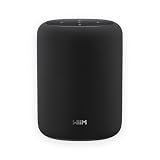
- Hi‑Res Audio, Expertly Tuned – Enjoy up to 24‑bit/192 kHz Hi‑Res streaming, powered by a 100W peak amplifier, 4″ paper‑cone woofer and dual 1″ silk‑dome tweeters for natural mids, smooth highs, and room‑filling clarity.
- Smarter in Any Room - AI RoomFit technology optimizes the sound to your specific space and placement—balanced bass, clean vocals, and engaging detail wherever you place it.
- Open by Design - Stream in the WiiM Home App or cast directly via Google Cast, Spotify/TIDAL/Qobuz Connect, Alexa Cast, DLNA, Roon/LMS; join WiiM, Google Cast, Alexa multi‑room groups.
- Stereo & Cinema‑Ready - Pair two for true L/R stereo; add WiiM Sub Pro for deeper, tighter bass or combine with compatible WiiM components as center/surround for an immersive home‑theater setup.
- Control made simple – Manage playback and settings easily through the WiiM Home App, voice control via Alexa or Google Assistant (with compatible devices), and physical buttons on the speaker—streamlined design, no screen or remote needed.
Design around foreground use and quota errors
ML Kit GenAI inference is permitted only while your app is the top foreground application. AICore can also return per-app inference or battery-use quota errors. Keep the feature in a user-visible flow, handle errors explicitly, and use bounded retry or backoff rather than assuming a request can run indefinitely in the background. Provide a clear recovery path when a request cannot run. ML Kit GenAI overview
Handle Android image generation as a legacy path
The Google AI Edge guide documents a MediaPipe Image Generator task that produces images from text prompts using diffusion, can accept optional condition images, and expects a compatible Stable Diffusion 1.5 model. The guide’s warning comes first: “Deprecated: MediaPipe Image Generator task is still available, but is no longer actively maintained.” Treat it as an experimental or legacy option, not a default production dependency, unless a fresh maintenance and compatibility review supports your decision. Android Image Generator guide
Best Value

- Powered by a 47% faster processor, the next-gen dual-tweeter acoustic architecture produces detailed stereo separation while a 25% larger midwoofer deepens the bass.¹
- Place this speaker anywhere and everywhere you want to listen. The compact design fits beautifully on your bookshelf, kitchen counter, desk, or nightstand.
- Stream from all your favorite services over WiFi. Pair a Bluetooth device with the press of a button. Connect a turntable or other audio source using an auxiliary cable and the Sonos Line-In Adapter.²
- Go from unboxing to unbelievable sound in just a few minutes. Simply plug in the power cable, connect your phone or tablet to WiFi, and open the Sonos app.
- With a tap in the Sonos app, Trueplay tuning technology analyzes the unique acoustics of your space and optimizes the speaker’s EQ. So all your content sounds just the way it should.
The guide says the converted foundation model is too large to bundle in an APK and recommends hosting it for runtime download in production. Build model delivery, storage, and first-use behavior into the design: the feature can generate offline only after a compatible model is present. The guide also places responsibility for complying with the model’s license on the developer, so check the terms for the specific model you distribute. Android Image Generator guide
Plan implementation and testing
- Define the task precisely. Specify whether you need transcription, image description, OCR, visual reasoning, or text-to-image generation. Identify required languages, input types, and whether the feature must work with no network connection after setup.
- Set a support matrix. List target OS versions, API levels, device models, and required languages. Verify support independently for every API you plan to call; do not infer support for one feature from support for another.
- Choose the runtime. Prefer the platform-native building blocks when they meet the task and coverage requirements. Use a custom runtime only after checking model capabilities, device constraints, licensing, and distribution needs. Treat the documented MediaPipe image-generation task as deprecated.
- Design provisioning. Determine whether the OS capability or model is preinstalled, downloaded on demand, or delivered by another approved route. Set expectations for storage, download failure, and what the user sees before the model is ready.
- Test offline and failure states. Test first launch without connectivity, use after provisioning with connectivity disabled, unsupported devices, missing or unavailable models, language mismatches, quota errors, and app backgrounding where relevant. Measure behavior on target devices rather than promising unverified performance.
- Review data and model terms. Trace what leaves the device, if anything, across the full app flow. Check the license for each external model and the terms applicable to the APIs and services you use.
Revisit platform support and maintenance status before release: Android device and model coverage, language availability, and Apple API availability can change. Keep a user-facing fallback for unsupported or unavailable capabilities rather than presenting offline operation as universal.
Quick Recap
Product prices and availability are accurate as of the date/time indicated and are subject to change. Any price and availability information displayed on Amazon at the time of purchase will apply.
Quick wins for a faster PC:
Scan for outdated or missing drivers - takes under a minuteDriver Scan →Clear out junk files and repair common Windows errorsFree Scan →
