
iTechGuides is reader-supported. When you buy through links on our site, we may earn an affiliate commission. As an Amazon Associate I earn from qualifying purchases. Learn more
There is no official worldwide ranking for the “most suffocating password policy ever.” By the number of burdens imposed at once, however, the legacy PCI DSS v3.2.1 rules are the strongest documented candidate: at least seven characters, alphabetic and numeric characters, a change every 90 days, no reuse of the previous four passwords, and a unique password at first use or reset.
Why “most restrictive” has no single official answer
No regulator or standards body publishes a universal worst-password-policy ranking. A fair comparison has to look at several kinds of friction rather than one headline number:
- minimum and maximum length;
- required character classes;
- forced rotation interval;
- password-history depth;
- rules for first login and resets;
- lockout or throttling controls;
- blocklists for common or compromised passwords; and
- whether users can use phishing-resistant authentication instead.
A policy with a short minimum but 30- or 90-day expiration can create more daily work than a policy requiring a long passphrase with no routine expiry. The “most suffocating” label is therefore an evidence-based comparison of documented rules, not an official superlative.
Crashes, No Sound, or Screen Glitches?
Random freezes, missing sound and display glitches usually trace back to one bad driver. Find and replace yours safely.Free scan · under a minuteWindows Errors? Fix Them Before They Spread
Repair common Windows errors and clear accumulated junk for a smoother, more stable PC - no reinstall needed.Free scan · no reinstallThe leading documented candidate: legacy PCI DSS v3.2.1
The PCI Security Standards Council’s 2018 prioritized approach for PCI DSS v3.2.1 combined five separate burdens in one password rule set:
#1 Best Overall

- Requires 3 "AAA" batteries (included)
- Unit auto-locks for 30 minutes after 5 consecutive incorrect PINs
- Minimum length: seven characters.
- Composition: both alphabetic and numeric characters, or equivalent complexity.
- Rotation: change the password at least every 90 days.
- Password history: do not reuse any of the previous four passwords.
- First use and reset: assign a unique password, then require an immediate change.
Read the wording in the PCI DSS v3.2.1 prioritized approach. The burden comes from the combination: the minimum was relatively short, yet users still had to satisfy character requirements, invent a new value four times in a row, replace it on a fixed schedule, and change a temporary or reset password immediately. That combination is why it is a better-supported “suffocating” example than a policy judged on length alone.
Why each rule feels restrictive
- Character classes reject otherwise memorable phrases and encourage mechanical substitutions such as replacing a letter with a number.
- 90-day expiration creates a recurring deadline even when there is no sign the password was compromised.
- Four-password history prevents users from cycling back to a familiar secret.
- Immediate post-reset changes add another forced change during an already disruptive account-recovery event.
What current NIST guidance says instead
Current NIST SP 800-63B takes a materially different approach:
| Rule | NIST SP 800-63B position |
|---|---|
| Minimum length | 15 characters for a password used as a single factor; eight characters when used with multi-factor authentication. |
| Maximum length | Verifiers should permit at least 64 characters. |
| Uppercase, number, symbol rules | Additional composition rules shall not be imposed. |
| Periodic expiration | Routine changes shall not be required unless there is evidence of compromise. |
| Phishing resistance | NIST states that passwords are not phishing-resistant. |
This shifts the burden from complicated short secrets to longer secrets that users do not have to replace on an arbitrary timetable. NIST also recommends password managers for accounts that still require passwords.
Quick wins for a faster PC:
Fix the driver behind crashes, sound loss and screen glitchesFind Drivers →Clear out junk files and repair common Windows errorsFree Scan →Rank #2

- Auto-Fill Feature: Say goodbye to the hassle of manually entering passwords! PasswordPocket automatically fills in your credentials with just a single click.
- Internet-Free Data Protection: Use Bluetooth as the communication medium with your device. Eliminating the need to access the internet and reducing the risk of unauthorized access.
- Military-Grade Encryption: Utilizes advanced encryption techniques to safeguard your sensitive information, providing you with enhanced privacy and security.
- Offline Account Management: Store up to 1,000 sets of account credentials in PasswordPocket.
- Support for Multiple Platforms: PasswordPocket works seamlessly across multiple platforms, including iOS and Android mobile phones and tablets.
Why uppercase, number and symbol rules can backfire
Complexity checkboxes look demanding, but they do not necessarily produce unpredictable secrets. When a site requires an uppercase letter, a number and a symbol, people commonly make the smallest predictable edits to a familiar password. Forced expiration encourages the same behavior: a user may keep a base word and increment a trailing number rather than create a genuinely new secret.
“The frustration they often face may also cause them to focus on minimally satisfying the requirements rather than devising a memorable but complex secret.” — NIST FAQ
NIST’s password-strength guidance favors accepting long passphrases. Password-hash size does not depend on password length, so a verifier has no technical reason to reject a long, memorable phrase merely because it exceeds an arbitrary maximum.
Rank #3

- NEVER FORGET A PASSWORD AGAIN: Almost every App. has a password, it is almost impossible to remember all the password log in details. This password book is specifically designed to help you create secure passwords and store all your passwords safely in one place. You will never forget your password log-in details again with this password keeper.
- ALPHABETICAL A-Z TABS FOR QUICK ACCESS: Alphabetical tabs design allows you to store your passwords alphabetically so you can find what you want faster, no more annoying searches!
- ANONYMOUS WITHOUT ANY TITLE: On the outside, this password notebook organizer looks just like those writing journals, there is no title listed on the cover, so no one would know it's a password book. But we still recommend keeping the internet password logbook in a safe place such as a locked drawer or a shelf full of books.
- THICK NO-BLEED PAPER: This 5.2" x 7.6" password book contains 74 sheets of thick 120gsm paper that resists ink smearing, say goodbye to those cheap password books that bleed ink!
- PREMIUM QUALITY & PERFECT MEDIUM SIZE: This password journal comes with a high-quality leatherette hardcover, an elastic band, pen holder, ribbon bookmarker, and inner accordion pocket. It measures 5.2 inches wide and 7.6 inches long, which is the perfect size for your needs.
The UK NCSC’s less burdensome model
The UK National Cyber Security Centre says many systems force changes every 30, 60 or 90 days, but treats user-facing complexity rules as a poor defense because they lead to predictable substitutions. Its current guidance emphasizes:
Free tools Windows power users keep installed
One-click scans. No signup required.
- a sensible minimum length;
- deny lists for common or compromised passwords;
- technical defenses against guessing, such as throttling; and
- no artificial maximum length.
That model blocks weak and repeatedly guessed passwords without making every user satisfy a particular mixture of character classes.
Where PCI DSS v4.0 SAQ C fits
PCI DSS v4.0 SAQ C specifies a 12-character minimum where the system supports it, or eight characters when it cannot; it also requires alphabetic and numeric characters and prohibits reuse of the previous four passwords. The document treated this as best practice until 31 March 2025, after which it became required. Applicability remains version- and scope-sensitive, so an organization must apply the requirement to the systems covered by its specific assessment.
Rank #4

- NEVER FORGET A PASSWORD AGAIN - Clever Fox password journal will help you create secure passwords and keep them safe and organized. This password book allows you to store all your passwords and other computer information in one place to find it easily.
- ALPHABETICAL A-Z TABS - Alphabetic tab system makes it easy to find any password you need. The book also has sections for most important passwords, wireless & email settings, software license information & additional notes.
- ELEGANT, SMART, PRACTICAL & SECURE PASSWORD ORGANIZATION - This password keeper book has been designed to be anonymous without an obvious title on the cover. For added security there is space to write hints instead of the password itself.
- POCKET SIZE & PREMIUM QUALITY - This internet address and password logbook with tabs comes in pocket size (4.0x5.5 inches). The password notebook has an eco-leahter hardcover, elastic band, pen loop, bookmark, pocket for notes, and thick 120gsm paper.
- 60-DAY MONEY-BACK GUARANTEE - We will exchange or refund your password organizer if you aren’t satisfied with your password organization for any reason. Reach out to us via message to refund your internet password logbook.
Side-by-side comparison
| Policy or guidance | Minimum length | Character classes | Maximum length | Rotation | History | Reset or first-use rule |
|---|---|---|---|---|---|---|
| PCI DSS v3.2.1 (legacy) | 7 | Alphabetic and numeric, or equivalent complexity | Not stated | At least every 90 days | No reuse of previous 4 | Unique password at first use or reset, followed by immediate change |
| NIST SP 800-63B | 15 for single-factor; 8 with MFA | No additional composition rules | Permit at least 64 | No routine change unless compromise is suspected | Not stated | Not stated |
| UK NCSC guidance | Minimum length recommended; exact value not stated here | Complexity rules discouraged | No artificial maximum | Exact interval not stated here | Not stated | Not stated |
| PCI DSS v4.0 SAQ C | 12 where supported; 8 if the system cannot support 12 | Alphabetic and numeric | Not stated | Not stated | No reuse of previous 4 | Not stated |
What to do when an organization still has restrictive rules
Use a password manager
A manager can generate and store a different password for every account, making rotation and four-password histories less disruptive. NIST specifically recommends password managers for accounts that require passwords.
Prefer a long passphrase when the system allows it
Use several unrelated words or a manager-generated secret, and take advantage of the longest maximum the service accepts. Do not shorten a strong secret just to fit an arbitrary limit.
Recommended Free Tools
Ask whether the rule is local or required by an assessment
An administrator may be enforcing an old template rather than a current standard. Ask which policy version and assessment scope require the rule; PCI DSS v3.2.1 and PCI DSS v4.0 SAQ C are not interchangeable requirements.
Best Value
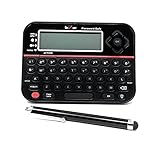
- Securely Remember All Your Passwords, Log-in's, User Names, ATM PIN Numbers and More
- Large Back-lit LCD Screen, QWERTY Keyboard - So Easy to Use
- Enter one PIN number and have access to 400 accounts. Search function included.
- Unit auto locks for 30 minutes after 5 consecutive incorrect PIN attempts
- Includes mini stylus for easier keypad entry
Add stronger authentication for high-risk accounts
Because passwords are not phishing-resistant, consider a phishing-resistant authenticator, such as a security key, where the service supports one. Multi-factor authentication also changes the NIST minimum from 15 characters to at least eight for the password component, although a longer password remains preferable.
Verdict
There is no provable “worst ever” password policy, but legacy PCI DSS v3.2.1 is the clearest documented example of a suffocating combination: short minimum length, character-class requirements, 90-day expiration, four-password history and forced changes after resets. Current NIST and UK NCSC guidance move in the opposite direction—longer secrets, deny lists and technical guessing defenses, with no arbitrary composition rules or routine expiration.
Quick Recap
Product prices and availability are accurate as of the date/time indicated and are subject to change. Any price and availability information displayed on Amazon at the time of purchase will apply.

