
What’s actually slowing this PC down?
Pick the symptom - the matching free tool is one click away.
iTechGuides is reader-supported. When you buy through links on our site, we may earn an affiliate commission. As an Amazon Associate I earn from qualifying purchases. Learn more
Yes, with conditions. A web page can run a small language model on the visitor’s own machine by using WebGPU, the browser API for GPU compute, through libraries such as WebLLM and Transformers.js. Whether that works for a given visitor depends on three things that vary: the browser and its version, the GPU memory available on the device, and the size of the model and its first download. Read the “edge AI layer” idea as a client-side inference tier that needs a fallback, not as a promise that every device can run every model. WebGPU is an interface for GPU work, not a model, and it does not make a weak device capable.
What WebGPU contributes, and what it does not
WebGPU lets JavaScript running in a page send compute work to the device’s graphics processor. It supplies no weights, tokenizer, or model logic. A working in-browser language model is a set of cooperating parts, and the WebLLM research paper, posted to arXiv in December 2024, describes them as browser JavaScript orchestrating WebGPU for GPU work, WebAssembly for CPU work, and worker threads for keeping that work off the main page thread. WebLLM: A High-Performance In-Browser LLM Inference Engine lays out that architecture.
| Part | Role in local inference |
|---|---|
| Browser JavaScript | Loads the model, manages prompts and results, and exposes the application’s API |
| WebGPU | Runs the GPU-accelerated computation for the model |
| WebAssembly | Handles CPU-side work |
| Worker threads | Run inference away from the interface thread so the page stays responsive |
| Model files and tokenizer | Downloaded by the page and cached in browser storage |
The practical consequence is that a failure in any one part, such as a missing GPU adapter, a download that stalls, or a model too large for the device, stops the feature even when the others work.
Two implementation routes
Two widely referenced options show how this is done in practice. They target different workloads, so compare them against your task rather than treating either as the default winner.
#1 Best Overall
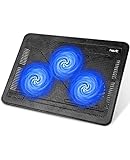
- Ultra-Portable: Slim, portable, and light weight allowing you to protect your investment wherever you go
- Ergonomic Comfort: Doubles as an ergonomic stand with two adjustable height settings
- Optimized for Laptop Carrying: The metal mesh provides your laptop with a stable laptop carrying surface
- Ultra-Quiet Fans: Three ultra-quiet fans create a noise-free environment for you
- Extra Usb Ports: Extra USB port and power switch design allows for connecting more USB devices. Warm Tips: The packaged cable is USB to USB connection. Type C connection devices need to prepare an Type C to USB adapter
WebLLM
The WebLLM project from MLC-AI is built around MLC inference tooling. Its repository describes the library this way: “Everything runs inside the browser with no server support and is accelerated with WebGPU.” It presents an OpenAI-style API and supports streaming responses and structured JSON generation. The repository lists function calling as work in progress, so check the current feature list before relying on it. The project is at github.com/mlc-ai/web-llm.
Transformers.js
Transformers.js from Hugging Face documents WebGPU through ONNX Runtime Web. Supported pipelines are selected with device: "webgpu", and the guide demonstrates feature extraction (useful for embeddings) and automatic speech recognition. The official guide describes the goal this way: “The API enables web developers to use the underlying system’s GPU to carry out high-performance computations directly in the browser.” The guide is at Running models on WebGPU, Transformers.js documentation.
| Axis | WebLLM (MLC-AI) | Transformers.js (Hugging Face) |
|---|---|---|
| Primary focus shown in its documentation | In-browser large language model inference | Pipelines for model tasks; the WebGPU guide demonstrates feature extraction and automatic speech recognition |
| WebGPU route | WebGPU through MLC inference tooling | ONNX Runtime Web with device: "webgpu" |
| Interface | OpenAI-style API with streaming and structured JSON output; function calling listed as work in progress | Pipeline API; the guide does not describe a chat interface |
| Model caching documented | Not stated in the repository overview | Not stated in the WebGPU guide |
| Worker execution documented | Not stated in the repository overview | Not stated in the WebGPU guide |
No fair benchmark covering both libraries across the same devices and models is published in the evidence cited here, so choose by workload and test on your own hardware.
PC Slower Than It Used to Be?
A free scan shows the junk files, broken settings and background clutter dragging Windows down - then fixes them in one click.Free scan · Windows 10 & 11Outdated Drivers Are Slowing You Down
One free scan finds every outdated or missing driver and matches the right update for your exact hardware.Free scan · exact hardware matchBrowser and device support
WebGPU is not universal. The Transformers.js guide gives a global support estimate of about 85%, dated March 2026 and attributed to Can I Use. Treat that as a dated global estimate, not a figure for your audience. The guide also notes that support varies by browser and version. Your analytics, not a worldwide number, tell you what share of your visitors can use the feature.
Rank #2

- Whisper-Quiet Operation: Enjoy a noise-free and interference-free environment with super quiet fans, allowing you to focus on your work or entertainment without distractions.
- Enhanced Cooling Performance: The laptop cooling pad features 5 built-in fans (big fan: 4.72-inch, small fans: 2.76-inch), all with blue LEDs. 2 On/Off switches enable simultaneous control of all 5 fans and LEDs. Simply press the switch to select 1 fan working, 4 fans working, or all 5 working together.
- Dual USB Hub: With a built-in dual USB hub, the laptop fan enables you to connect additional USB devices to your laptop, providing extra connectivity options for your peripherals. Warm tips: The packaged cable is a USB-to-USB connection. Type C connection devices require a Type C to USB adapter.
- Ergonomic Design: The laptop cooling stand also serves as an ergonomic stand, offering 6 adjustable height settings that enable you to customize the angle for optimal comfort during gaming, movie watching, or working for extended periods. Ideal gift for both the back-to-school season and Father's Day.
- Secure and Universal Compatibility: Designed with 2 stoppers on the front surface, this laptop cooler prevents laptops from slipping and keeps 12-17 inch laptops—including Apple Macbook Pro Air, HP, Alienware, Dell, ASUS, and more—cool and secure during use.
Support for a specific product is documented separately. The WebLLM.io FAQ lists Chrome and Edge 113 and later, and Safari 18 and later, for its own local inference offering. That list describes that product, not every WebGPU application, and browser support changes, so check it again before you publish a requirement.
Detect capability at runtime rather than inferring it from the user agent:
if (!("gpu" in navigator)) {
  // WebGPU is not exposed in this browser: take the fallback path
}
const adapter = await navigator.gpu?.requestAdapter();
if (!adapter) {
  // No usable GPU adapter was returned: take the fallback path
}
A browser can expose the API and still return no adapter, for example on some older drivers or on machines where the GPU is blocklisted. Treat both checks as required.
The first download is the real user-experience problem
Model files are large, and the first visit pays the full cost. The WebLLM.io FAQ gives example download sizes for three models. These are vendor documentation examples, not fixed sizes for current model releases.
Rank #3

- 👍【Triple Efficient Fans】TECKNET laptop cooling pad with 3 powerful fans works at 1200 RPM to pull in cool air from the bottom to prevent your laptop, notebook, netbook, Ultrabook, Apple MacBook Pro cool from overheating during extended use or intense gaming.
- ✌️【Easy to Use】Powered directly by your laptop's USB port, the 110mm fans operate quietly and feature a dedicated on/off switch. No external power adapter is needed.
- 👑【Double USB Ports】One USB port can power the laptop cooler, the other one can be connected to external devices, such as keyboard, mouse, audio, etc. Blue LED indicators confirm the fans are running. Note: The included cable is USB-A to USB-A.
- 👍【Ergonomic Comfort】Choose between two adjustable height settings to achieve a more comfortable viewing angle. Integrated rubber pads on the surface and base keep your laptop securely in place.
- 👌【Wide Compatibility】Compatible with various laptop sizes from 12 up to 17 inches, such as Apple MacBook Pro Air, HP, Alienware, Dell, Lenovo, ASUS, etc (USB cable included). The laptop fan can also accurately dissipate heat for your tablet, router, game console.
| Model example (WebLLM.io FAQ) | Download size cited |
|---|---|
| Qwen2.5-1.5B (listed as its Grade C example) | About 1.5 GB |
| Phi-3.5-mini | About 2.2 GB |
| Llama-3.1-8B | About 4.5 GB |
The same FAQ says models are cached in the Origin Private File System (OPFS). Once cached, a model can load without downloading again, but the cache still occupies storage on the device, and the browser’s storage limits apply.
Design the first-run experience before the user starts it:
- Show the expected download size and the storage it will use before any transfer begins.
- Ask for explicit consent on metered connections, or whenever the download is large.
- Display progress, and make it clear that closing the page can interrupt the download.
- Check whether the model is already cached before prompting again.
- Offer a visible control to remove the cached model.
Memory and model selection
Hardware needs rise with the model you choose. The WebLLM.io FAQ gives planning figures at two ends of its range, and they describe that vendor’s guidance rather than a general minimum:
Do these 3 things before closing this tab:
1Scan for outdated or missing drivers - takes under a minute2Repair Windows errors before they cause bigger problems3Fix the driver behind crashes, sound loss and screen glitches| Tier end (WebLLM.io FAQ) | GPU memory (VRAM) cited | Model size cited |
|---|---|---|
| Smallest listed tier | Under 2 GB VRAM | About 1.0 GB |
| Largest listed tier | At least 8 GB VRAM | About 5.5 GB |
These figures refer to dedicated GPU memory. A machine with plenty of system RAM but a small or shared GPU may still be a poor fit, so use the VRAM figure for planning and test on representative machines.
Rank #4

- 【High-Speed Cooling Performance】 Equipped with two powerful fans and a precision metal mesh design, KYOLLY’s laptop cooling pad delivers optimal airflow to quickly dissipate heat, preventing overheating—even during extended use. Perfect for gaming, multitasking, or long work sessions.
- 【Slim, Lightweight & Highly Portable】 With its ultra-slim profile and lightweight build, this laptop cooler is easy to carry anywhere. A soft blue LED indicator lets you know when the fans are active, combining style with functionality.
- 【5-Level Height Adjustment & Anti-Slip Design】 Customize your typing and viewing angle with five ergonomic height settings. The built-in anti-slip baffles securely hold your laptop in place, making it both a efficient cooler and a reliable stand.
- 【Quiet Operation with Smooth Speed Control】 Enjoy focused work or gameplay thanks to virtually silent fan operation. Adjust wind speed smoothly with the rolling wheel controller to balance cooling power and noise level—ideal for office or shared environments.
- 【Universal Compatibility & Practical USB Ports】 Designed for laptops up to 15.6 inches, this cooler is perfect for home, office, or on-the-go use. Two additional USB ports offer convenient connectivity for peripherals like mice, keyboards, or phones.
Two published evaluations are useful for setting expectations, but each is scoped to its own test setup:
- The WebLLM paper, posted in December 2024, reports performance of up to 80% of native execution on the same device. That is a result from its 2024 experimental evaluation, not a general ratio for all devices or models.
- The LlamaWeb paper, posted in May 2026, reports 29 to 33% less memory and 45 to 69% higher decode throughput for the configurations it tested, relative to the comparison setups its authors used. It is scoped to selected devices, models, and weight formats. Llamas on the Web: Memory-Efficient, Performance-Portable, and Multi-Precision LLM Inference with WebGPU gives the full conditions.
Matching the task and model to the feature
Different tasks place different loads on the device, so the right model depends on what the feature does.
- Embeddings and semantic search. Feature extraction, which Transformers.js demonstrates on WebGPU, produces vectors rather than long generated text. Its cost depends on the embedding model and the input length.
- Speech transcription. Automatic speech recognition, also demonstrated in the Transformers.js guide, depends on audio length and the model chosen. Test with recordings that match your real input.
- Interactive text generation. Chat-style generation is the heaviest case for memory and download size. It is where the tier table above matters most, and where streaming output helps a user see progress.
Pick the smallest model that meets the quality bar for the task, and verify quality on your own examples. Published sizes and speeds do not establish output quality for your content.
Privacy: what local inference covers and what it does not
The strongest privacy statement in the cited material comes from the WebLLM.io FAQ, which says its local-only mode does not transmit data for inference, and that OPFS storage is isolated by origin. In that mode, the prompt and response inputs stay on the device. That is a narrower claim than “the app works offline” or “nothing leaves the device.”
Best Value

- 9 Super Cooling Fans: The 9-core laptop cooling pad can efficiently cool your laptop down, this laptop cooler has the air vent in the top and bottom of the case, you can set different modes for the cooling fans.
- Ergonomic comfort: The gaming laptop cooling pad provides 8 heights adjustment to choose.You can adjust the suitable angle by your needs to relieve the fatigue of the back and neck effectively.
- LCD Display: The LCD of cooler pad readout shows your current fan speed.simple and intuitive.you can easily control the RGB lights and fan speed by touching the buttons.
- 10 RGB Light Modes: The RGB lights of the cooling laptop pad are pretty and it has many lighting options which can get you cool game atmosphere.you can press the botton 2-3 seconds to turn on/off the light.
- Whisper Quiet: The 9 fans of the laptop cooling stand are all added with capacitor components to reduce working noise. the gaming laptop cooler is almost quiet enough not to notice even on max setting.
Three boundaries remain:
- The page still has to deliver its application code and model files over the network. The first download is a network transfer.
- Neither the vendor documentation nor the papers cited here audit every network request, analytics or telemetry path, or the page’s wider security.
- Local inference does not change what the rest of the page does with a user’s data.
Write the disclosure to match: say which inputs are processed locally, when a download occurs, and what is still sent to your servers.
Designing the fallback
A local-model feature needs a deliberate path for devices that cannot run it. Build it in this order:
- Run the WebGPU and adapter checks shown earlier before offering the local option.
- Map the device to a model tier, using the reported VRAM figures as planning guidance, and offer only models that fit.
- Ask for consent before any download, showing size, progress, and cache state.
- Run inference in a worker thread. The WebLLM.io local inference guide describes Web Worker execution, which keeps the interface responsive during generation.
- When local inference is unavailable, route the request to a server-side model or to a non-AI path, and tell the user what changed. Whether a given library falls back to CPU execution is library-specific and not established in the cited documentation, so do not assume it.
- Log the reason for each fallback, such as no WebGPU, no adapter, an insufficient model tier, or a failed download, so you can see which failure is common.
Reading performance claims
The published numbers above are test-specific. They do not justify a promise of a universal speedup, and “runs on any laptop” is not supported by the evidence. Before committing to a model, measure the things users will feel on the devices they actually use: time to first output, sustained generation speed, peak GPU memory, and how long the first load takes. Mobile performance is not established by the sources cited here, so test it separately if your audience uses phones.
Recommended Free Tools
The cited material supports a narrower conclusion: browser-local inference is feasible for a defined set of devices, models, and tasks, with a fallback for everything else.
Quick Recap
Product prices and availability are accurate as of the date/time indicated and are subject to change. Any price and availability information displayed on Amazon at the time of purchase will apply.

