
Microchip’s PIC16F17576 family combines signal-conditioning circuits, threshold detection and analog conversion in an 8-bit microcontroller designed for sensor systems. Its headline low-power use case is continuous analog thresholding below 3.0 µA, according to Microchip; the comparator and voltage reference can monitor a signal while the MCU core sleeps.
What makes the PIC16F17576 different?
Announced by Microchip on April 23, 2025, the PIC16F17576 family targets battery-operated and embedded systems that monitor rapidly changing analog signals. Rather than relying on separate components for every conditioning and monitoring task, it integrates an Analog Peripheral Manager, op amps, a comparator, a voltage reference and an ADC alongside the MCU core.
The Analog Peripheral Manager can switch analog blocks on or off to manage energy use. For an application that only needs to detect when a signal crosses a threshold, the comparator and reference can remain active while the processor sleeps. Microchip specifies continuous analog thresholding below 3.0 µA; that is its stated figure for this use case, not a general current specification for every operating mode or circuit.
Analog features and published specifications
- Op amps and gain: Up to four op amps are integrated, with dynamic software-controlled gain ladders on two. Software can select gain for small signals while retaining room to handle larger ones.
- Comparator and reference: The comparator supports low-power threshold monitoring; Microchip lists a 50 ns fast comparator response.
- ADC: The 12-bit differential ADCC supports up to 300 ksps and automated computation and averaging, features intended to help with variable or noisy inputs.
- Operating conditions: Microchip lists a 1.8–5.5 V operating voltage and an internal oscillator up to 32 MHz.
- Memory and packages: Family options are available in 14-, 20-, 28- and 40-pin packages. Microchip lists up to 28 KB program Flash, up to 2 KB RAM and 256 bytes EEPROM.
- Other peripherals: Digital features include DACs, PWM/CCP, configurable logic cells, serial interfaces and timers.
These are family-level maximums and ranges; the precise combination of memory, analog blocks and pins depends on the selected device. Consult the relevant device datasheet and product record before designing a board.
Recommended Free Tools
#1 Best Overall

- PROFESSIONAL DEBUGGING TOOL: MPLAB PICkit 5 is an advanced in-circuit debugger and programmer designed specifically for PIC Micro MCU development and troubleshooting
- COMPLETE DEVELOPMENT KIT: Package includes the PICkit 5 programmer board, USB connection cable, and all necessary components to start debugging immediately
- IN-CIRCUIT PROGRAMMING: Supports both in-circuit and in-system programming capabilities, allowing you to program and debug microcontrollers while installed in your target application
- MPLAB COMPATIBILITY: Fully integrated with Microchip's MPLAB development environment for seamless programming, debugging, and code development workflow
- ENHANCED PERFORMANCE: Fifth generation PICkit technology delivers faster programming speeds and improved debugging capabilities compared to previous versions
Where it may fit in a sensor design
The family is aimed at applications where an analog signal must be conditioned, sampled or watched for a threshold without keeping the processor continuously active. Microchip identifies vibration and strain sensing, flow metering, gas detection, motion sensing, cold-chain tracking, and environmental or industrial monitoring as potential uses.
Temperature alarms are a concrete example of the threshold-monitoring approach: Microchip’s application note AN6177, published September 9, 2025, demonstrates a low-power comparator and reference in a temperature-alarm design. Whether the family suits another application depends on its signal range, noise, sampling needs, power budget and required peripherals.
Rank #2

- Onboard 4M crystal oscillator, the socket crystal frequency can be replaced at any time.
- The 4-bit independent keyboard is connected to RB0 RB1 RB2 RB3.
- Standard RS232 communication interface, microcontroller board and computer communication interface.
- 8 LEDs are connected to the RD port. When the J3 is plugged in, the LED is enabled. J3 is unplugged and the RD port is completely released.
- External 5V DC power interface (send USB power cable without additional purchase).
How to evaluate the family
Start by matching a specific device variant to the sensor and its operating conditions, then compare the integrated analog resources against the external circuitry your design would otherwise need.
- Check the signal path. Determine whether the available op amps and gain options suit the sensor’s output range, and whether differential 12-bit conversion with automated averaging meets the application’s measurement needs.
- Estimate monitoring power in the intended mode. The below-3.0-µA claim applies to continuous analog thresholding. It should not be treated as whole-system consumption: include the sensor, external components, MCU activity, wakeups and the chosen configuration in your own power budget.
- Choose the package and device. Confirm pin count, memory, peripheral mix, supply range and package against the actual product datasheet rather than assuming every family maximum appears in one part.
- Build and test with Microchip tools. Microchip lists MPLAB X IDE and MPLAB Code Configurator for development, with the Curiosity Nano EV14L29A development board and MPLAB PICkit tools as evaluation and programming options. Check the board documentation for the exact device and supported workflow.
- Confirm purchase details. The product record lists the family as “In Production.” Microchip’s April 2025 launch announcement gave a price of $0.57 each at 10,000-unit quantities and said devices were available through its sales representatives and authorized worldwide distributors. That is a launch-era volume price, not a current quote or guarantee of stock; confirm regional pricing, lead times and revisions with a supplier.
What to compare against other MCUs
For a useful comparison, focus on the complete sensor-monitoring job rather than the MCU’s headline ADC number alone. Compare integrated op amps, comparator and reference; sleep-mode monitoring current under a comparable configuration; ADC resolution and sampling rate; gain flexibility; supply range; memory and package options; development support; and pricing at the volume you expect to buy.
What’s actually slowing this PC down?
Pick the symptom - the matching free tool is one click away.
Rank #3

- Configuration: flash
- Features: dip-8
- Speed: 20Mhz
Also account for the external components that remain necessary. Integration can reduce board area and component count when the built-in analog blocks meet the design requirements, but it does not establish that every sensor circuit can be implemented without additional parts.
Quick Recap
Best Value
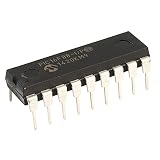
- Package Dimensions: 0.91 L x 0.14 H x 0.26 W (inches)
- Package Weight: 0.01 pounds
- Country of Origin : Taiwan, Province Of China
- Part Number: PIC16F88-I/P
Rank #4

- EVALUATION PLATFORM: PICkit Serial Analyzer development board designed for PIC microcontroller programming and serial communication analysis
- MICROCONTROLLER: Features PIC16F886 MCU 8-bit core processor with socket mounting type for easy chip replacement and testing
- COMPLETE KIT: Includes evaluation board and USB cable for immediate connectivity and programming capabilities
- DEVELOPMENT ENVIRONMENT: Compatible with MPLAB X IDE for comprehensive programming, debugging, and serial protocol analysis
- MANUFACTURER: Produced by Microchip Technology, part number DV164122, active product status with bulk packaging
Product prices and availability are accurate as of the date/time indicated and are subject to change. Any price and availability information displayed on Amazon at the time of purchase will apply.

