
iTechGuides is reader-supported. When you buy through links on our site, we may earn an affiliate commission. As an Amazon Associate I earn from qualifying purchases. Learn more
A reliable sub-agent pipeline starts by giving each agent a bounded job, choosing who controls the conversation, and checking delegated work before it is used. Use parallel agents for genuinely independent tasks, code for predictable sequences and checks, and a manager agent when one component must synthesize results and own the final response.
What a sub-agent pipeline does
A multi-agent pipeline divides a larger task among agents with distinct responsibilities. A coordinator routes work, gathers outputs, and either combines them or hands control to another agent. The goal is not to maximize the number of agents; it is to make a task easier to complete, test, or scale than it would be with one agent.

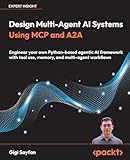


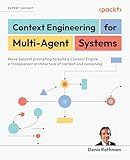
For example, a writing workflow could have separate research, outlining, drafting, critique, and revision stages. Since each stage depends on earlier output, that workflow is mostly sequential. If a task instead involves independently analyzing several documents, those analyses may run in parallel before a coordinator combines them.
Choose who owns control
Two common agent patterns differ mainly in whether a coordinator stays in charge of the user-facing turn. Code orchestration is a separate choice: it determines how much of the workflow is fixed by application logic rather than decided dynamically by an agent.
#1 Best Overall
| Pattern | Who controls the next step? | Best fit | Main trade-off |
|---|---|---|---|
| Manager calling specialists as tools | The manager retains workflow control and synthesizes specialists’ bounded outputs. | A single agent must own the conversation, apply shared policies, or combine expert input. | The manager must reconcile results and remains responsible for the final answer. |
| Handoff | Control transfers to the routed specialist, which becomes the active agent for the rest of the turn. | Routing is part of the workflow and the specialist should handle the next response or branch. | The original manager does not necessarily retain control of the user-facing response. |
| Code-controlled orchestration | Application code determines ordering, routing rules, and checks; agents perform assigned steps. | The sequence is known, outputs can be validated, or predictable behavior is important. | Fixed control flow is less flexible than letting an agent choose the next step. |
These patterns can be combined. A handoff-selected specialist can itself call narrower specialists as tools. OpenAI’s Agents SDK documentation describes agents-as-tools as appropriate when a specialist should help with a bounded subtask without taking over the user-facing conversation; its handoff guidance describes the routed specialist becoming active for the remainder of the turn.
Keep a manager when synthesis matters
Use a manager pattern when the application needs one place to collect results, resolve conflicts, enforce shared orchestration rules, or deliver a coherent answer. Specialists should return scoped findings rather than compete to answer the whole user request. The manager should check those findings against the requested outcome and remain accountable for what it presents.
Hand off when ownership should change
A handoff fits a workflow in which the next agent should take responsibility for a particular branch or response. It is a routing decision, not merely a way to run a specialist in the background. If a central agent still needs to compare all specialist results before responding, keep that agent in control and call specialists as tools instead.
The Tool Desk
Outbyte PC Repair FREERepair Windows errors before they cause bigger problemsFix Now →Outbyte Driver Updater FREEScan for outdated or missing drivers - takes under a minuteDriver Scan →Use code for known sequences
When ordering and branching rules are clear, application code can chain agent outputs, classify structured results, and enforce deterministic checks. An evaluator loop can send a draft or result for review and trigger revision when defined criteria fail. The OpenAI Agents SDK guidance presents code orchestration as more predictable in speed, cost, and performance than leaving every next-step decision to an LLM.
Decide whether to parallelize
Parallel delegation helps when subtasks can make progress independently and each can be described with clear boundaries. The coordinator can launch those tasks, collect their outputs, and synthesize the results. OpenAI’s multi-agent guide notes that subagents have separate contexts and can work in parallel.
- Good parallel candidates: independent analyses, separate research questions, or distinct tool-based investigations that can be combined afterward.
- Keep dependent tasks sequential: if a later step needs an earlier result, wait for that result instead of launching work that may need to be redone.
- Avoid parallelism for tightly coupled work: frequent shared-state changes, many inter-agent dependencies, or a single slow operation can make coordination cost more than it saves.
Anthropic’s account of its research system identifies breadth-first research, work that exceeds one context window, and complex tool use as promising conditions for multiple agents. It identifies shared-context requirements and numerous inter-agent dependencies as poor fits. In practice, evaluate whether tasks can be specified separately and whether their results can be reconciled without constant back-and-forth.
Design the pipeline around verifiable work
- Define the user-visible outcome. Write down what a successful result must contain and how you will recognize a failure. Make acceptance criteria observable, such as required fields, evidence for claims, or a format that downstream code can validate.
- Split the task into bounded assignments. For each assignment, specify its input, expected output, scope, and limits. Create a specialist only when it has a distinct responsibility or useful tools; otherwise, an extra agent adds coordination without a clear role.
- Choose control flow. Keep a manager for controlled synthesis, use a handoff when ownership should transfer, and put known sequences or deterministic checks in code. Fan out only the assignments that can run independently.
- Set an output contract. Ask each specialist for a concise, structured result when practical. Define required fields and evidence expectations so the coordinator or application can identify missing or unusable output.
- Validate before use. Check required fields, consistency with the assignment, and supporting evidence. Use a reviewer or evaluator to assess the acceptance criteria; retry or revise only when the review identifies a failure the next attempt can address.
- Monitor and refine. Track output quality, errors, latency, tool use, and cost. Use observed failures to adjust task boundaries, prompts, and evaluation criteria. OpenAI’s SDK guidance recommends monitoring, iteration, specialization, and evaluations.
Account for overhead and evidence limits
Additional agents bring orchestration work: the system must route tasks, manage separate contexts, gather responses, and validate synthesis. They may also increase latency when stages depend on one another, as well as token and API use. A multi-agent design is justified when the quality, coverage, or capability it adds is worth those costs for the particular application.
Anthropic reported that its internal research system, using Claude Opus 4 as the lead and Claude Sonnet 4 as subagents, scored 90.2% better than its single-agent Claude Opus 4 baseline on Anthropic’s internal research evaluation. In the same 2025 account, Anthropic reported agent use at about four times the tokens of chat interactions and multi-agent systems at about 15 times the tokens of chats in its data. These are company-reported, system- and evaluation-specific measurements—not expected gains or cost multipliers for other models, tasks, or deployments.
OpenAI’s Responses API documentation has described its multi-agent feature as beta and specified model and API enablement details. Because beta availability, compatibility, limits, and SDK behavior can change, check the current official documentation for the exact platform configuration before committing a production design. No single topology or maximum agent count is established as optimal across applications.
When one agent is the better pipeline
A single agent is often the simpler choice when the work is one ordered chain, requires frequent shared-state updates, or is dominated by one slow operation. It is also preferable when the extra review and coordination burden would not materially improve the result. Begin with the smallest design that meets the acceptance criteria, then add specialists only to address a demonstrated limitation.
Quick Recap
Product prices and availability are accurate as of the date/time indicated and are subject to change. Any price and availability information displayed on Amazon at the time of purchase will apply.
Free tools Windows power users keep installed
One-click scans. No signup required.

