
What’s actually slowing this PC down?
Pick the symptom - the matching free tool is one click away.
iTechGuides is reader-supported. When you buy through links on our site, we may earn an affiliate commission. As an Amazon Associate I earn from qualifying purchases. Learn more
To make Next.js navigation feel instant, use the App Router’s built-in <Link> prefetching where it helps, add a useful loading.tsx fallback for dynamic routes, and place closer Suspense boundaries around slow work that blocks the route. Choose those pieces route by route: prefetching can spend bandwidth and server work on destinations a visitor never opens, while disabling it leaves more work after the click.
How Next.js navigation becomes responsive
In the App Router, <Link> is the primary navigation component. It retains anchor-link behavior and adds client-side navigation and prefetching. In production, Next.js automatically prefetches linked routes as they enter the viewport; that work may not finish before a click, especially on a slow or unstable network. See the official Linking and Navigating guide and Link API reference.
Prefetching prepares route data ahead of navigation. Streaming and loading fallbacks let the app show useful content while the rest of a route renders. Shared layouts can remain interactive, and navigation can be interrupted rather than locking the whole interface while a destination completes. These mechanisms improve the experience when they fit the route; they do not guarantee a particular response time.
Do these 3 things before closing this tab:
1Clear out junk files and repair common Windows errors2Fix the driver behind crashes, sound loss and screen glitches3Repair Windows errors before they cause bigger problemsChoose prefetch depth by route
Next.js’s default prefetch behavior varies with how a route renders. The prefetching guide describes these defaults and the client-cache durations below. Treat the durations as framework defaults, not measured navigation times; verify them against the Next.js version your project uses.
#1 Best Overall
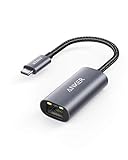
- The Anker Advantage: Join the 65 million+ powered by our leading technology.
- Instant Internet: Connect to the internet instantly from virtually any USB-C 3.0 device, and enjoy stable connection speeds of up to 1 Gbps.
- Lightweight and Compact: The space-saving and portable design measures just over half an inch thick and weighs about the same as a AA battery.
- Premium Build: Features a sleek aluminum exterior and braided-nylon cable to complement the design of high-end devices.
- What You Get: PowerExpand USB-C to Gigabit Ethernet Adapter, welcome guide, 18-month worry-free warranty, and friendly customer service.
| Route or setting | What is prefetched | Default client-cache TTL | When it fits |
|---|---|---|---|
| Static route, default behavior | The full route can be prefetched. | 5 minutes, Next.js default published in the 2026 guide. | Common destinations where warming the complete route is useful. |
| Dynamic route, default behavior | Prefetching stops at the nearest loading.tsx boundary; without a suitable boundary, the route may be skipped. |
30 seconds for a route prefetched to its loading boundary; configurable, per the 2026 guide. | Routes where a fast shell or fallback is useful but full request-time work is not practical to prefetch. |
prefetch={true} |
Requests the full route, including for a dynamic route. | Depends on route and framework behavior; not stated as a separate value in the cited guide. | Use selectively when the destination is likely and warming the full route is worth the work. |
prefetch={false} |
Disables prefetching for that link. | Not applicable; no prefetch cache is requested for that link. | Large lists or low-probability destinations where speculative work is wasteful. |
These are behavior and cache defaults, not performance statistics or guaranteed time-to-navigation. The Link API reference documents the prefetch setting.
Set up a route-level fallback for dynamic destinations
Add a lightweight loading.tsx in the route segment when the destination needs request-time rendering and an immediate visual response matters. It creates a Suspense boundary and fallback UI; Next.js can prefetch through that boundary, display the fallback, then stream the completed route. The fallback should resemble the content structure users are waiting for, rather than suggesting that data has already loaded.
Rank #2

- USB-C Meets 1000Mbps Ethernet in Seconds:UGREEN usb c to ethernet adapter supports fast speeds up to 1000Mbps and is backward compatible with 100/10Mbps network. Perfect for work, gaming, streaming, or downloading with a stable, reliable wired connection
- Extend a Ethernet Port for Your Device:This ethernet to usb c adds a Gigabit RJ45 port to your device. It’s the perfect solution for new laptops without built-in Ethernet, devices with damaged LAN ports, or when WiFi is unavailable or unstable
- Plug and Play: This Ethernet adapter is driver-free for Windows 11/10/8.1/8, macOS, Chrome OS, and Android. Drivers are required for Windows XP/7/Vista and Linux, and can be easily installed using our instructions. LED indicator shows status at a glance
- Small Adapter, Big Attention to Detail: The usb c to ethernet features a durable aluminum alloy case for faster heat dissipation than plastic. Its reinforced cable tail and wear-resistant port ensure long-lasting durability. Compact size and easy to carry
- Widely Compatible: The usbc to ethernet adapter is compatible with most laptops, tablets, smartphones, Nintendo Switch, and Steam Deck with USB-C or Thunderbolt 4/3 port, like MacBook Pro/Air, XPS, iPhone 17/16/15 Pro/Pro Max, Mac Mini, Chromebook, iPad
app/products/[id]/loading.tsxFor example, a product detail fallback might reserve space for a title, image, and price area without presenting invented product details. The exact route structure and fallback depend on the application. See the loading file convention reference.
Put slow work behind the right Suspense boundary
A route-level fallback does not cover every source of delay. Work performed in a layout can block navigation before the same segment’s loading.tsx appears. This can happen when layouts access cookies or headers, or perform uncached fetches. In those cases, place a nearer <Suspense> boundary around the slow component, or move the work into the page so the route loading boundary can cover it. Next.js explains this distinction in its data-fetching guide.
Rank #3

- Adapter for converting a USB 3.1 Type-C port to a RJ45 Gigabit Ethernet port
- Integrated Ethernet port supports 10M/100M/1000M bandwidth; offers instant Internet connection to the host
- USB-C input allows for reversible plugging; offers complete compatibility with current computers and devices; compatible with Nintendo Switch
- Ready to use, right out of the box; no external power adapter needed
- Slim, compact size and lightweight aluminum housing for easy portability
Keep the boundary close enough that unaffected parts of the page can render and remain useful. A broad boundary may replace too much of the interface; a narrow one lets stable content appear while the request-time component resolves.
Spend prefetch work where it has a good chance of paying off
Default viewport-based prefetching is useful for likely next destinations, but a screen full of links can trigger speculative work for many routes. On very large lists, infinite feeds, or destinations users rarely open, set prefetch={false} on the relevant links. The trade-off is direct: because the destination was not warmed in advance, more work may remain after the click.
Rank #4

- 𝐇𝐢𝐠𝐡-𝐒𝐩𝐞𝐞𝐝 𝐔𝐒𝐁-𝐂 𝐄𝐭𝐡𝐞𝐫𝐧𝐞𝐭 𝐀𝐝𝐚𝐩𝐭𝐞𝐫 - Instantly transform your laptop or tablet’s USB-C port into a reliable wired connection with a 10/100/1000 Mbps RJ45 Ethernet port. Perfect for replacing unstable Wi-Fi in situations that require uninterrupted connectivity, such as online meetings, gaming, and media streaming.
- 𝐔𝐒𝐁-𝐂 𝟑.𝟎 𝐟𝐨𝐫 𝐅𝐚𝐬𝐭𝐞𝐫, 𝐌𝐨𝐫𝐞 𝐒𝐭𝐚𝐛𝐥𝐞 𝐂𝐨𝐧𝐧𝐞𝐜𝐭𝐢𝐨𝐧𝐬 - Experience full Gigabit Ethernet performance over your laptop’s USB-C 3.0 port and elevate your browsing experience to transfer files, play games, video chat, and stream HD videos seamlessly. (To reach 1Gbps, please use CAT6 or up Ethernet cables.)
- 𝐔𝐥𝐭𝐫𝐚-𝐂𝐨𝐦𝐩𝐚𝐜𝐭 𝐚𝐧𝐝 𝐅𝐨𝐥𝐝𝐚𝐛𝐥𝐞 𝐃𝐞𝐬𝐢𝐠𝐧 - At just 2.8 x 1.0 x 0.6 inches, the UE300C slips easily into your laptop bag or pocket. The lightweight yet durable build makes it perfect for travel, remote work, or quick setup in conference rooms.
- 𝐏𝐥𝐮𝐠 𝐚𝐧𝐝 𝐏𝐥𝐚𝐲- No driver required for Windows 11/10/8.1/8/7, macOS, Chrome OS, and Linux (Ubuntu). Simply connect and enjoy instant wired internet access without complicated setup.
- 𝐁𝐫𝐨𝐚𝐝 𝐃𝐞𝐯𝐢𝐜𝐞 𝐂𝐨𝐦𝐩𝐚𝐭𝐢𝐛𝐢𝐥𝐢𝐭𝐲- Works seamlessly with most USB-C devices, including MacBook Pro/Air, iPad Pro, Dell XPS, Surface Laptop, Chromebook, and more—making it a versatile network upgrade for home, office, or on-the-go use.
A hover-triggered prefetch strategy is another option when viewport prefetching is too broad. Custom link behavior adds maintenance: you must account for prefetch behavior, cache invalidation, and accessibility. The official prefetching guide discusses custom strategies and their trade-offs. Avoid disabling prefetch indiscriminately; common, likely destinations may benefit from it.
Recommended Free Tools
Add subtle feedback when a transition is still pending
When prefetching is disabled or unfinished, or a dynamic route lacks a loading boundary, a small inline pending indicator can reassure the user that the click registered. Next.js provides useLinkStatus for this purpose; consult the useLinkStatus API reference for its current behavior and usage.
Best Value

- 【1Gbps LAN to USB-C Adapter】Obtain stable connection speeds up to 1Gbps; downward compatible with 100Mbps/10Mbps networks. Our Type-C to LAN Gigabit Ethernet (RJ45) Network Adapter supports large downloads at maximum speeds without interruption. (To reach 1Gbps, make sure to use CAT6 & up Ethernet cables.)
- 【Reliable & Endurance Connectivity】Designed specifically for plug-and-play connection between USB-C devices and wired network, provides gigabit ethernet connectivity even when wireless connectivity is Inconsistent or over extended.
- 【Thoughtful Design】Compact and lightweight, with a user-friendly non-slip design for easier plugging and unplugging. Braided nylon cable for extra durability. Premium aluminum casing for better heat dissipation. High-quality USB-C connector provides snug connection with your devices for stable signal transfer. Design to make it easy to connect USB peripherals without blocking adjacent USB-C ports
- 【Wide Compatibility】Compatible with iPhone 15/16 Pro/Max, MacBook Pro 16''/15” (2023/2022/2021/2020/2019/2018/2017), MacBook (2019/2018/2017), MacBook Air 13” (2022/2018), iPad Pro (2022/2020/2018); XPS 13/15/17; Surface Book 2; Google Pixelbook, Chromebook, Pixel, Pixel 2; Asus ZenBook. Compatible with Samsung S20/S10/S9/S8/S8+, Note 8/9, Galaxy Tablet Tab A 10.5, and many other USB-C laptops, tablets, and smartphones. (NOT compatible with Nintendo Switch.)
- 【What You Get】 USB C to Ethernet Adapter 1 pack, An effortless 18-month 𝗐𝖺𝗋𝗋𝖺𝗇𝗍𝗒 and 24/7 professional customer service. If you have any questions, don't hesitate to get in touch with us, we solve most issues within 12 hours. Please rest assured we stand behind our products and customers.
Use this as supplemental feedback, not as a replacement for useful route-level fallback UI. A pending label or indicator does not make slow server work disappear; it only makes the transition state visible.
Apply the playbook to common route types
Static pages used frequently
Start with ordinary <Link> behavior. Static routes can be fully prefetched by default, which may leave little work at click time if the prefetch completes. Check actual production behavior rather than judging from development mode, where automatic prefetching is disabled.
Dynamic pages with a recognizable structure
Add a lightweight segment-level loading.tsx so Next.js can prefetch to the boundary and show a meaningful fallback while dynamic content streams in. This is a useful balance when the route’s shell is stable but its data depends on the request.
Crashes, No Sound, or Screen Glitches?
Random freezes, missing sound and display glitches usually trace back to one bad driver. Find and replace yours safely.Free scan · under a minutePC Slower Than It Used to Be?
A free scan shows the junk files, broken settings and background clutter dragging Windows down - then fixes them in one click.Free scan · Windows 10 & 11Pages with slow request-time content
Keep fast content outside the slow component’s Suspense boundary and show a targeted fallback around the part waiting on uncached data. If the delay is in a layout, reconsider where that work runs; a same-segment route fallback may not appear in time.
Dense lists and unlikely destinations
Disable prefetch selectively on links whose targets are expensive or unlikely to be opened. If the post-click wait is noticeable, provide an inline pending hint and consider whether a hover-triggered strategy offers a better balance for the audience.
Quick Recap
Verify behavior in the right environment
- Confirm the router: These recommendations target the App Router. The Pages Router has a separate Link reference, so verify the project’s routing model and installed Next.js version before using these APIs.
- Test a production build: Automatic prefetching is disabled in development, so local development navigation alone does not show production prefetch behavior.
- Inspect the fallback: Ensure it communicates the destination’s structure and does not imply that unavailable data is already known.
- Watch speculative work: For pages with many visible links, check whether prefetching is preparing routes users are unlikely to visit.
- Test slow-network cases: A prefetch may not finish before a click, and a fallback may not be immediately available if it was not prefetched. Ensure the transition remains understandable in those conditions.
Product prices and availability are accurate as of the date/time indicated and are subject to change. Any price and availability information displayed on Amazon at the time of purchase will apply.

