
iTechGuides is reader-supported. When you buy through links on our site, we may earn an affiliate commission. As an Amazon Associate I earn from qualifying purchases. Learn more
An AI agent should be allowed to choose what action to request, not decide whether that action is authorized. Enforce permissions in trusted code at the tool, API, or downstream-service boundary; grant only the access the task needs; and require independent, action-specific review for consequential changes.
Why a prompt is not an authorization boundary
A system prompt can guide an agent, but it cannot reliably control what the agent is permitted to do. The model produces a proposed action; authorization is a separate security decision. If the same model both interprets untrusted input and decides whether that input permits an action, an attacker may be able to influence both decisions.
That untrusted input need not come directly from a user. NIST describes “agent hijacking” through malicious instructions embedded in material an agent is asked to process, such as email, files, or web pages. The agent may treat those instructions as part of its task unless the system separates trusted instructions from untrusted data. See NIST’s January 17, 2025 discussion of agent-hijacking evaluations.
OWASP’s LLM06:2025 guidance puts the boundary plainly: “Implement authorization in downstream systems rather than relying on an LLM to decide if an action is allowed or not.” The model may request an operation, but a trusted component must decide whether the actor can perform that exact operation on that resource. OWASP LLM06:2025 Excessive Agency.
#1 Best Overall
![Arduino® UNO™ Q 4GB [ABX00173]- Hybrid Board, Qualcomm Dragonwing QRB2210 microprocessor (MPU) & STM32U585 Microcontroller(MCU), AI Vision, Voice, IoT, Robotics, Linux Debian OS, Wi-Fi 5, USB-C](https://m.media-amazon.com/images/I/51cl4xygwGL._SL160_.jpg)
- Dual-Brain Hybrid Power: Combines the Qualcomm Dragonwing QRB2210 MPU (Quad-core Arm Cortex-A53 @ 2.0 GHz CPU, Adreno GPU, AI acceleration) and the real-time, low-power STM32U585 MCU for advanced applications like object recognition, voice commands, and motion detection.
- AI & Linux Capabilities: Unlocks AI-powered vision and sound solutions; runs Linux Debian OS for coding in Python and supports the Arduino ecosystem with libraries and Sketches; quick start with Arduino App Lab.
- Advanced Features: Equipped with 4 GB LPDDR4 RAM, 32 GB eMMC built-in storage, ideal for single-board computer (SBC) mode, running multiple simultaneous high-level processes, more complex AI or ML models, extensive logs. Dual-band Wi-Fi 5 (2.4/5 GHz), Bluetooth 5.1, and high-speed headers for vision, audio, and display peripherals.
- Seamless Expansion & Connectivity: Features the classic UNO form factor for shields compatibility, an 8x13 LED matrix, and a Qwiic connector for easy expansion with Modulino nodes; power and connect via the USB-C connector.
- Intended Use & Development: The perfect platform for prototyping robotics or IoT projects, empowering innovators with a unified development experience to mix Arduino Sketches, Python scripts, and containerized AI models in a single interface.
Where to enforce an agent’s permissions
Put the authorization check in a component the model cannot override: for example, the tool execution layer, an API gateway, a policy service, or the downstream application. Check every request at that boundary, including requests produced after earlier tool results. A check at setup time or in the prompt alone does not mediate each later action.
For each request, the enforcement point should establish who initiated the action, what operation is requested, which resource it affects, and whether that identity has permission for that combination. Use the initiating user’s actual scope where appropriate; avoid routing every agent action through a generic, broadly privileged service identity. OWASP’s General Controls describes authorization checks and default-deny handling as core controls.
Rank #2
- Dual-Brain Hybrid Power: Combines the Qualcomm Dragonwing QRB2210 MPU (Quad-core Arm Cortex-A53 @ 2.0 GHz CPU, Adreno GPU, AI acceleration) and the real-time, low-power STM32U585 MCU for advanced applications like object recognition, voice commands, and motion detection.
- AI & Linux Capabilities: Unlocks AI-powered vision and sound solutions; runs Linux Debian OS for coding in Python and supports the Arduino ecosystem with libraries and Sketches; quick start with Arduino App Lab.
- Advanced Features: Equipped with 2 GB LPDDR4 RAM, 16 GB eMMC built-in storage, ideal to develop in PC-connected mode, running the OS, Python scripts, and basic network services (SSH) without a demanding GUI or heavy multitasking; great for lightweight AI and memory-optimized TinyML applications, needing local storage for basic OS and core libraries. Dual-band Wi-Fi 5 (2.4/5 GHz), Bluetooth 5.1, and high-speed headers for vision, audio, and display peripherals.
- Seamless Expansion & Connectivity: Features the classic UNO form factor for shields compatibility, an 8x13 LED matrix, and a Qwiic connector for easy expansion with Modulino nodes; power and connect via the USB-C connector.
- Intended Use & Development: The perfect platform for prototyping robotics or IoT projects, empowering innovators with a unified development experience to mix Arduino Sketches, Python scripts, and containerized AI models in a single interface.
- Default to deny: if no explicit grant covers the requested action, do not execute it.
- Fail closed: if the policy service or approval validation is unavailable, reject the action rather than bypassing the check.
- Limit the grant: scope temporary permissions to the task, resources, and time window; revoke or expire them when the task ends, times out, or is cancelled.
How to apply least privilege in practice
Least privilege applies both to the tools an agent can call and to the operations each tool permits. Give it no capability that is unnecessary for the task, and distinguish read access from write, delete, send, or administrative access.
- Email summarization: provide message-reading access, not a general send-mail function, if the task is only to summarize messages.
- Product-data queries: use a read-only database identity limited to the relevant table or records when the task only needs answers from product data.
- File updates: expose a narrow file-writing operation for the intended location instead of an unrestricted shell if the task only needs to create or update a file.
- Cloud configuration: limit available operations and resources rather than granting broad production administration to an agent that may receive vague requests.
These choices constrain both mistakes and misuse: an agent cannot exercise a capability that was never exposed, while the backend can still reject an exposed capability when the actor, resource, or requested operation falls outside its grant. OWASP discusses tool restriction, least privilege, and excessive agency in its AI Agent Security Cheat Sheet.
Rank #3
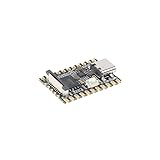
- Single core ARM Cortex-A7 32-bit core, integrated with NEON and FPU
- Built in Micro's self-developed 4th generation NPU, with high computational accuracy and support for mixed quantization of int4, int8, and int16. Among them, int8 has a computing power of 0.5 TOPS and int4 has a computing power of up to 1.0 TOPS
- Built in self-developed 3rd generation ISP3.2, supports 4 million pixels, and supports various image enhancement and correction algorithms such as HDR, WDR, and multi-level denoisin
- It has powerful encoding performance, supports intelligent encoding, adapts to save bit rates according to the scene, and saves more than 50% of the bit rate compared to conventional CBR mode, making the captured images high-definition, smaller in size, and doubling the storage space
- The design with built-in RISC-V MCU supports low-power fast startup, 250ms fast capture, and simultaneous loading of AI model library, enabling facial recognition to be completed within 1 second
When an action needs independent approval
Separate proposing an action from executing it when the consequences are high. Destructive changes, financial actions, administrative permission changes, and externally visible communications are common candidates for action-specific approval or an independent policy check. A human or trusted policy can review the proposed operation before the execution component carries it out.
Approval must be bound to the action that will actually run. A generic “user confirmed” flag is not enough if it can be reused for a different call or does not identify the actor and operation. The execution component should verify the actor, exact call, approval validity, and whether that approval has already been used immediately before execution. If any check fails, do not run the action. OWASP’s AI Agent Security Cheat Sheet details these execution-time checks.
Rank #4

- 【POWERFUL ESP32‑S3 CONTROLLER】Built‑in Xtensa 32‑bit LX7 dual‑core processor, 512KB SRAM, 8MB PSRAM, 16MB Flash for stable AI voice computing and multitask processing.
- 【Preloaded Dual AI Platforms】Comespre-installed with complete Deepseek and OpenAI voice dialogue projects.Experience intelligent voice interaction instantly. (Note: OpenAI functionality requires your own API key.)
- 【STABLE WIRELESS & CLEAR AUDIO】Integrated 2.4GHz Wi‑Fi + Bluetooth 5 (LE); dedicated audio decoding module for natural, responsive voice interaction.
- 【USER‑FRIENDLY VISUAL & PLUG‑AND‑PLAY】2” TFT‑SPI color screen shows real‑time chat; modular design, no extra wiring, ready to use after setup.
- 【FULL LEARNING SUPPORT】45 programmable GPIOs, rich interfaces, online web tutorials, free technical support for beginners & developers.
What an excessive-agency failure looks like
Email assistant with unnecessary send access
An assistant tasked with summarizing email is given a plugin that can also send messages. An incoming email contains malicious instructions that steer the agent toward forwarding sensitive content. The safer design removes send functionality from the summarization agent, grants read-only access, and routes any needed sending through a separate review step. OWASP uses this kind of scenario to illustrate excessive agency in LLM06:2025.
Agent with broad cloud permissions
An agent receives a vague request and has broad cloud access. It may make an overly permissive production access change that persists beyond the original task. Restrict the agent’s tools and scope, and require explicit approval for security-relevant configuration changes. OWASP’s Cornucopia Agentic AI scenario illustrates this risk.
How to compare authorization designs
| Question | Safer design | Riskier design |
|---|---|---|
| Where is permission enforced? | At the execution component, API gateway, policy service, or downstream system for each request. | Only in a prompt or model-generated decision. |
| How specific is the grant? | Limited by operation, resource, initiating identity, and task. | Broad access to a tool or service without meaningful scope. |
| Whose identity is used? | The initiating user’s authorized scope is preserved where appropriate. | A generic privileged identity is used for unrelated users and tasks. |
| How are consequential actions handled? | Independent, action-bound approval is validated immediately before execution. | A reusable or unverified confirmation signal is trusted. |
| What happens on a failure? | Unknown permissions or invalid approvals result in denial; relevant activity is logged. | Checks are skipped when services fail, or decisions cannot be investigated. |
| Can access be contained over time? | Temporary grants expire or can be revoked when the task ends or is cancelled. | Task access persists without a clear need or expiration. |
Monitor actions, but do not mistake monitoring for prevention
Log the actor, requested operation, resource, authorization result, and approval outcome so teams can investigate what happened. Monitor for unusual activity and use rate limits and scope limits to constrain the damage a compromised or misbehaving agent could cause. These measures support detection and containment; they do not replace authorization checks at the execution boundary. OWASP covers these complementary controls in its AI Agent Security Cheat Sheet.
NIST’s AI Agent Standards Initiative, updated August 14, 2026, describes ongoing work on voluntary guidelines, interoperable protocols, agent identity infrastructure, and security evaluations. That activity is not evidence that one finalized standard removes the need to design and enforce authorization in your own system.
Quick Recap
Product prices and availability are accurate as of the date/time indicated and are subject to change. Any price and availability information displayed on Amazon at the time of purchase will apply.

