
Recommended Free Tools
iTechGuides is reader-supported. When you buy through links on our site, we may earn an affiliate commission. As an Amazon Associate I earn from qualifying purchases. Learn more
Use Apple’s Foundation Models framework to make a bounded decision—such as whether a voice interaction needs clarification—rather than asking the model to compose the app’s reply. The app remains responsible for capturing and transcribing speech, deciding what actions are allowed, and presenting the result. This is an implementation pattern built from documented framework capabilities, not a voice workflow Apple prescribes.
What the voice follow-up loop does
A voice follow-up loop separates the user interaction into distinct responsibilities:
- Capture an utterance and convert it to text with a speech layer appropriate to the app.
- Send the text and relevant task context to an on-device model for a narrow decision.
- Use that decision to ask a specific clarification, continue the workflow, or hand off to another app-controlled path.
Foundation Models addresses the language-task decision in this design. It does not, by itself, define the app’s audio capture or transcription pipeline. The Apple materials cited here do not establish which Speech APIs or audio interaction behavior a particular implementation should use, so choose and validate that layer separately.
The Tool Desk
Outbyte Driver Updater FREEScan for outdated or missing drivers - takes under a minuteDriver Scan →Outbyte PC Repair FREEClear out junk files and repair common Windows errorsFree Scan →Why ask the model to choose instead of write?
Apple presents Foundation Models as a framework for language tasks including guided, structured generation and tool calling. Its WWDC25 introduction describes the on-device model as suited to tasks such as summarization, extraction, and classification, while cautioning against relying on it for world knowledge or advanced reasoning. A follow-up decision fits that bounded role better than open-ended response writing: the app can constrain the possible outcomes and retain control of the user-facing language and any consequential action. Apple’s WWDC25 Foundation Models session describes these capabilities and limitations.
#1 Best Overall

- 9800 Hours Audio Storage: The digital voice recorder offers an enormous capacity with an impressive 128GB TF card to expand the memory for storing up to 9800 hours of audio files (at 32kbps). A perfect tool for reliably storing worth of audio files, making it an excellent choice for professionals, works, journalists, and anyone who needs to record and store lectures, meetings, and interviews
- AI - Intelligent Noise Cancellation: Recorder with AI Intelligent Triple Noise Cancellation. Equipped with Triple Intelligent Digital Noise Reduction technology and intelligent AI DSP 4.0 chip, it automatically and optimally identifies ambient sounds for clearer vocals! The best partner for office and study~
- One Touch Recording: No complicated operation process, just turn on the switch with one touch to turn on the recording! It's very easy to use. It also comes with an instructional video and a concise user manual with clear step-by-step instructions.
- Voice Activation And USB-C Connection: The Digital Voice Recorder has a voice activation feature that automatically starts recording when sound is detected. It also comes with a convenient bundle that includes a clip-on microphone, headphones, OTG-C, OTG-Lighting, and a USB-C cable.The USB-C connection cable allows for quick transfer of recordings to a computer (MAC/PC) or its other mobile devices.
- Large Memory Storage And Long Battery Life: The digital voice activated recorder with playback,128GB RAM,can store up to 9800 hours (300 days) of audio recordings that are time and date stamps,the audio recorder can also be used as an MP3 player or USB flash drive. Its Built-in rechargeable battery supports up to 100 hours continuous recording and 100 hours of headphone playback on fully charge. Tips: When the battery power is low, the recording file will be automatically saved and the device shut down.
This distinction is a design recommendation, not a claim that Apple specifically recommends this voice-loop pattern. The framework supplies building blocks; the app defines the decision, the valid outcomes, and what each outcome is allowed to do. Apple’s Foundation Models documentation explains structured generation and app-defined tools.
Define a small, typed decision
Represent the model’s task as a small set of permitted outcomes rather than a request for a natural-language answer. For example, an app might define these conceptual choices:
- Ask clarification: identify the missing field the app needs.
- Continue: the available information is sufficient for the next app-defined step.
- Hand off: the request needs a different workflow or a human decision.
This is an example schema, not an Apple-prescribed type. In a Swift implementation, define a data structure for the decision and use guided generation to constrain the result to that structure. Keep any rationale short and optional; the operational output should be the choice and, where needed, a specific missing field. The app can then select its own clarification wording instead of displaying model-generated prose.
Quick wins for a faster PC:
Repair Windows errors before they cause bigger problemsFix Now →Scan for outdated or missing drivers - takes under a minuteDriver Scan →Connect the decision to app-owned behavior
Foundation Models supports app-defined tools that the model can invoke. Treat those tools as controlled interfaces to app behavior: give them explicit inputs, narrow effects, and validation before the app commits a consequential change. A generated decision or tool call should not silently become an authorization to act. Check the output against current app state and the user’s intent, then let ordinary app logic determine what happens next.
Rank #2

- 【PCM Recording and Automatic Noise Reduction】:This digital voice recorder is equipped with advanced dual noise reduction microphones and supports 1536 kbps PCM HD audio recording, ensuring crystal-clear sound capture in any environment. Recorder device with automatic noise reduction and voice-activated recording, the recorder only picks up the sound when there’s speech, reducing background noise,Excellent sound quality can meet the needs of students, journalists, music lovers and more people
- 【136GB Memory and Long Battery Life】Voice Recorder with Playback with 8GB built-in storage and includes a complimentary 128GB TF card, this digital voice recorder can hold up to 9775 hours of recordings in MP3 format or WAV format;Recorder for lectures with a built-in 1100mAh rechargeable lithium battery, this voice recorder can continuously record for up to 68 hours on a single charge, making it perfect for back-to-back meetings, interviews, or extended classroom sessions
- 【One Click Record and Save】: Our voice recorder supports one click recording and saving functions. Even when the product is in a powered-off state, simply push up the side recording button to immediately enter recording mode, and push down the recording button to save the recording. This allows for capturing as much information as possible.Easily transfer your recordings to your computer using the USB-C connection, allowing for fast and secure file management
- 【Easy-to-Use】This portable voice recorder is designed with a simple, user-friendly interface featuring a large, easy-to-read LCD screen. The voice-activated recording (VOR) feature makes hands-free operation a breeze. With one-touch recording, users can start or stop recording instantly, even during busy moments. A-B repeat function and password protection ensure that important segments are easily accessible and secure
- 【Portable and Durable Design】Designed with portability in mind, this lightweight screen recorder fits comfortably in your pocket or bag, weighing only 97 grams. Its sleek and durable metal casing ensures longevity and protection from everyday wear and tear. Whether you’re traveling, in the office, or attending a lecture, this compact recorder is always ready to capture clear, high-quality audio
For a simple follow-up loop, the model may only need to return the typed decision; the app can handle the actual question, continuation, or handoff. Use a tool when a model-selected action genuinely needs an app-owned operation, not merely because tool calling is available. Apple documents the framework capability, while these limits and checks are implementation guidance.
Sequence requests and keep context under control
The Foundation Models session API is asynchronous, and a LanguageModelSession handles one request at a time. Do not issue overlapping requests through the same session and assume they will run independently. Sequence each decision after the prior request completes, or deliberately manage separate sessions if the product requires distinct concurrent interactions.
Apple documents a context window of up to 4,096 tokens for the system model. Instructions, prompts, conversation turns, and generated output all count toward that limit. Keep the history focused on information needed for the current decision rather than sending an unbounded transcript. When a conversation grows, consider starting a fresh session with a concise, app-generated summary, or another reset strategy suited to the product. Provide a path for handling context overflow rather than assuming every request will fit. See Apple’s generation documentation for the session and context details.
Outdated Drivers Are Slowing You Down
One free scan finds every outdated or missing driver and matches the right update for your exact hardware.Free scan · exact hardware matchWindows Errors? Fix Them Before They Spread
Repair common Windows errors and clear accumulated junk for a smoother, more stable PC - no reinstall needed.Free scan · no reinstallChoose between model decisions and deterministic rules
A model is useful when interpreting a short utterance requires flexible language understanding; it is not automatically the best choice for every follow-up. Compare the approaches by the nature of the decision:
Rank #3
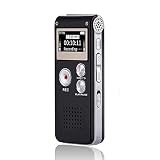
- 【Simple Operation】- switch on your voice recorder, one button for recording. press the "REC", start the recording, press "STOP", end the recording, press “PLAY”, listen what you just recorded, and then Press A-B, select your important section to repeat. Easy to playback with inner powerful speaker, support external sound speaker playback, let you enjoy superior recording quality.
- 【Clear Voice Record】- high quality recording with noise redution, you will get super clear recorded voice, the sensitive microphone help you to catch speaker's words in an interview, lectures, meetings.
- 【Voice Activated Recording】- automatic voice reduction function, it starts recording when sound is detected or turn to standby state, saving recording time and reduce power consumption.
- 【 Player Function】- this voice recorder can be used as an music player, you could enjoy the music after your tired study, meeting and so on. Also can function as a detachable data storage device.you can take along your favorite pictures and documents whenever you go.Simply cut-and-paste or drag-and -drop files to or from it via USB connection, the player will appear as a removeable drive in Windows.
- 【High quality and long time】 uses DSP noise reduction technology to filter out environmental noise, has high-quality recording, 【1536kbps】to restore the real scene. It can continuously record for more than 30 hours and play for 7 hours.
| Approach | Better fit | Trade-off |
|---|---|---|
| Typed model decision | Language-dependent ambiguity that can be expressed as a small set of outcomes | Requires handling unavailable models and unusable output |
| Deterministic rules | Explicit, predictable requirements such as a required field being empty | May not handle varied phrasing or context as flexibly |
| Free-form model reply | Open-ended language generation, if that is genuinely the product need | Gives the app less control over the exact response and its structure |
For required fields or other clear business rules, deterministic checks can decide directly. A model can help interpret what the user said, while app logic remains the authority on whether the workflow is ready to proceed. If the model is unavailable or returns output the app cannot use, define a predictable fallback—for example, asking the user to repeat or clarify, or routing to a non-model path. The specific fallback is a product decision, not a Foundation Models requirement.
Independent reader supportYour contribution helps us test, update, and keep practical guides available for everyone.Account for device availability and model limits
Access to Apple’s on-device models requires a device that supports Apple Intelligence. The framework’s availability therefore cannot be treated as universal across every device or configuration. Design the interaction so the app can detect whether its intended model path is available and provide an alternate route where needed. Apple’s framework documentation describes the device requirement.
Apple’s 2025 technical report describes an approximately 3-billion-parameter on-device model. That is a figure from the 2025 report, not a guarantee about every later system model or device configuration. For this workflow, the more useful product constraint is the one Apple states directly: the model is optimized for specific language tasks such as classification and extraction, not as a foundation for world knowledge or advanced reasoning. Apple’s 2025 Foundation Models technical report gives the report-specific model context.
Quick Recap
Implementation checklist
- Keep speech capture and transcription as a separate, explicitly chosen part of the app architecture.
- Define a compact typed result with only the choices the workflow supports.
- Use guided generation rather than free-form prose when the app needs a machine-readable decision.
- Keep app tools narrow, validate their inputs and results, and check app state before consequential actions.
- Serialize requests within a session and plan for context growth against the documented 4,096-token system-model window.
- Provide deterministic behavior when the model is unavailable or its result cannot be used.
Product prices and availability are accurate as of the date/time indicated and are subject to change. Any price and availability information displayed on Amazon at the time of purchase will apply.

