
iTechGuides is reader-supported. When you buy through links on our site, we may earn an affiliate commission. As an Amazon Associate I earn from qualifying purchases. Learn more
No. Kubernetes did not replace virtual machines. It manages containerized workloads; a VM runs a full guest operating system on virtualized hardware. A Kubernetes cluster can run on VM-backed nodes or bare metal, and an add-on such as KubeVirt can let Kubernetes manage VMs too. Those are distinct choices, not evidence that Kubernetes itself is a hypervisor.
What Kubernetes manages—and what it does not
Kubernetes provides a platform for deploying, scheduling, scaling, and recovering containerized applications. Its core workload resources operate on Pods and containers; Kubernetes is not a general-purpose system for configuring and maintaining full virtual machines. As the Kubernetes overview puts it, “Kubernetes is not a traditional, all-inclusive PaaS (Platform as a Service) system.”

The distinction starts with how the software is packaged. A VM presents virtualized hardware to a full guest operating system. A container packages an application and its dependencies while sharing the host operating system. Containers are generally lighter, but their isolation model differs from a VM’s; lighter does not automatically mean suitable for every workload or security boundary.
Quick wins for a faster PC:
Clear out junk files and repair common Windows errorsFree Scan →Fix the driver behind crashes, sound loss and screen glitchesFind Drivers →How Kubernetes workload types differ
Kubernetes offers different controllers for different container lifecycles. These are not native hypervisor APIs:
#1 Best Overall
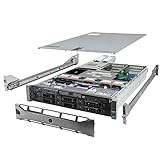
- Dell PowerEdge R710 6B LFF Server.
- 2x 2.80GHz X5660 12-Cores Total / 128GB RAM / 6x 2TB 7.2K SATA 3.5" HDD
- H700 w/ 512MB / DVD-ROM / 2x 870W PSU
- Includes Bezel and Rails / No Operating System
- Deployment: manages interchangeable Pods, commonly used for stateless services.
- StatefulSet: manages Pods that need stable identities and persistent-storage relationships.
- DaemonSet: runs a Pod on selected nodes, often for node-local services.
- Job: runs a task to completion.
- CronJob: creates Jobs on a schedule.
Choosing among these resources is about how a containerized workload should run. It does not determine whether the cluster’s underlying machines are VMs or physical servers.
Two different ways Kubernetes and VMs fit together
Run Kubernetes nodes inside VMs
A hypervisor can host the VMs that serve as Kubernetes nodes. Kubernetes then manages containers on those nodes; the virtualization layer remains underneath the cluster. This is one way to separate infrastructure and cluster operations, but it is not required: Kubernetes can also run on bare-metal servers.
Rank #2

- HP Proliant DL360 G9 4-Bay LFF Server | 2x E5-2695v4 2.10GHz 18-Core CPU (36-Cores Total)
- 256GB DDR4 RAM | 4x 4TB 7.2K SATA 3.5" HDD
- Smart Array P440ar w/ 2GB FBWC | 4x1Gbe NIC
- 2x 500W PSU | Windows Server 2019 Standard Evaluation
Manage VMs through Kubernetes
KubeVirt adds VM management capabilities to Kubernetes. Its project describes itself as “a virtual machine management add-on for Kubernetes.” It introduces VM resource types and the additional controllers and agents needed to manage their lifecycle; these capabilities are not part of core Kubernetes. See the KubeVirt project.
Free tools Windows power users keep installed
One-click scans. No signup required.
Using Kubernetes APIs for VM management may suit teams that want to manage containers and VMs through a shared platform. It does not, by itself, establish feature-for-feature equivalence with an existing virtualization system or remove the need to plan storage, networking, backup, resizing, and support.
Choose the approach by workload and operating needs
| Decision | Factors to assess | Practical framing |
|---|---|---|
| Keep an application in a VM or package it as a container | Guest OS or kernel requirements, dependencies, portability, state, isolation needs, and team skills | Containerize components when their dependencies and operating model fit. Retaining a VM can make sense when an application depends on its guest OS, legacy integrations, or established VM practices. |
| Run Kubernetes on VMs or bare metal | Performance and latency, hardware access, tenant isolation, fault domains, version flexibility, resource guarantees, and lifecycle operations | VM-backed nodes can support isolation and cluster-version flexibility; bare metal can remain relevant for specialized or latency-sensitive workloads. Validate the tradeoffs in the actual environment rather than treating either as universally faster or better. See the CNCF comparison of Kubernetes on VMs and bare metal. |
| Use an existing virtualization platform or manage VMs with KubeVirt | Current VM workflows, Kubernetes integration, storage and networking, backup and resizing, migration needs, and support model | KubeVirt brings VM lifecycle management into Kubernetes, but adopting it can require changes to operational procedures. Assess the workflows and support requirements before moving workloads. |
Migration can be gradual, but it changes operations
Applications do not all need to move at once. A team can containerize suitable components while leaving workloads with VM-specific dependencies in VMs. The CNCF discussion of VM migration to KubeVirt highlights operational differences such as resizing, backup, and workload certification. Treat those as migration work to plan, not details that disappear because VM resources are managed through Kubernetes.
A useful first step is to classify workloads by their dependencies and lifecycle needs. Then decide separately where Kubernetes nodes should run and whether VM management belongs in the same platform. Keeping those decisions separate avoids treating “adopt Kubernetes” as a requirement to eliminate virtualization.
Quick Recap
Rank #4

- Secure private cloud - Enjoy 100% data ownership and multi-platform access from anywhere
- Easy sharing and syncing - Safely access and share files and media from anywhere, and keep clients, colleagues and collaborators on the same page
- Automated Backup Protection - Set-and-forget backups for Macs, PCs and mobile devices to multiple destinations including cloud and external drives
- Home Security System - Record and monitor your property 24/7 with support for multiple IP cameras and remote viewing
- 2-Year Warranty - Reliable hardware backed by Synology's expert customer support team and ongoing software updates
Product prices and availability are accurate as of the date/time indicated and are subject to change. Any price and availability information displayed on Amazon at the time of purchase will apply.
Recommended Free Tools

