
Recommended Free Tools
iTechGuides is reader-supported. When you buy through links on our site, we may earn an affiliate commission. As an Amazon Associate I earn from qualifying purchases. Learn more
Kardinal announced a self-serve route optimization API on September 29, 2026, giving developers and AI agents a way to submit vehicles, stops, and operational constraints and receive route plans. The launch includes a developer console, API keys, usage tracking, a Python SDK, machine-readable documentation, and public modeling guides. The key engineering challenge is not just sending a valid request: it is representing the rules and conditions that shape real operations.
What Kardinal launched
Kardinal says it has worked on route optimization technology since 2015 and is now making it available through an API for technical teams and AI agents. The launch materials show a POST /v1/optimize workflow, with Python and TypeScript SDK examples. In practical terms, an application sends information about vehicles, stops, and constraints; the API returns planned routes.
| # | Preview | Product | Price | |
|---|---|---|---|---|
| 1 |

|
Hardwired GPS Tracker for Vehicles by FEELION, No Subscription, Real-Time Vehicle Tracking,... | $99.99 | Buy on Amazon |
| 2 |
|
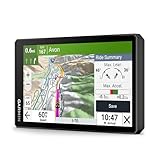
Garmin zūmo® XT3, 6” Rugged Motorcycle GPS Navigator | $599.99 | Buy on Amazon |
This is software for integration into an existing system, not a dispatch device or vehicle product. Kardinal positions the API for operations such as parcel delivery, field services, bulky-goods delivery, fresh delivery, waste collection, and retail or e-commerce. Those are vendor-described use cases, not independently verified performance results. Kardinal’s launch and product information
PC Slower Than It Used to Be?
A free scan shows the junk files, broken settings and background clutter dragging Windows down - then fixes them in one click.Free scan · Windows 10 & 11Crashes, No Sound, or Screen Glitches?
Random freezes, missing sound and display glitches usually trace back to one bad driver. Find and replace yours safely.Free scan · under a minuteWhy modeling the operation matters
A route can be mathematically valid and still be unusable if the model omits a business rule or field condition. Kardinal’s product materials list constraints including time windows, vehicle capacity, pickup-and-delivery pairing, driver breaks, route balancing, traffic prediction, preferred zones, and mixed vehicle profiles such as bikes, walkers, and vans. Teams need to determine which of these apply, how they interact, and how to encode them in the request.
#1 Best Overall
- [No Monthly Fees or Subscription Required] — Built-in 4G SIM included with no monthly fees, no activation fees, and no contracts. Enjoy full network coverage across the United States and Canada—simply install and start tracking right awa
- Real-Time GPS Tracking & Live Location Sharing — Get accurate real-time location updates as fast as every 20 seconds while the vehicle is in motion. Easily share live tracking access with family or friends through a secure link and set custom sharing durations anytime.
- Smart Security Alerts Built-in 3.7V 150mAh Li-ion backup battery (0.555Wh) supports power disconnection alerts if external power is removed.
- 180-Day Route History Playback — Review driving history, parking records, and travel routes directly in the app for up to 180 days.
- Easy Hardwired Installation — Connect the red wire to positive and the black wire to negative for normal operation. The orange ACC wire is optional and can be left unconnected if ignition monitoring is not needed. Compatible with 9V–90V powered vehicles and devices.
That modeling problem helps explain the launch’s emphasis on guidance alongside API access. Kardinal says developers can use modeling guides, agent-oriented documentation, command-line tooling, and an SDK intended to catch mistakes early. A useful evaluation should therefore include the quality of the fit between the API’s model and the operation—not just whether an endpoint responds.
What developers and AI agents can use at launch
Kardinal lists a developer console, API keys, usage tracking, a Python SDK, machine-readable documentation, and public modeling guides among the launch materials. The official page also provides Python and TypeScript examples for the optimization workflow. Teams should check the current documentation for the exact SDK coverage and setup details relevant to their stack.
Some items shown on the company’s site are marked “SOON,” including MCP and CLI guardrails; they should be treated as planned rather than available launch capabilities. Kardinal’s co-founder Cédric Hervet described the company’s broader bet this way: “With this launch, we are making a bet: thanks to AI, route optimization will not just be faster, it will be more reliable.” That is the company’s ambition, not an independently established result. Kardinal’s launch announcement
What’s actually slowing this PC down?
Pick the symptom - the matching free tool is one click away.
What Kardinal’s developer survey says—and does not say
Kardinal reports that it surveyed 145 professionals from July 1 to September 8, 2026, with detailed results for 99 technical respondents. The results are company-published and self-reported, so they offer context about the audience Kardinal surveyed rather than a representative census of route-optimization buyers or evidence of the API’s quality.
| Reported finding | What it describes |
|---|---|
| 56% | Of the 99 technical respondents, cited the gap between an optimization model and real field conditions as a difficulty. |
| 47% | Of technical respondents, cited performance or compute time as a difficulty. |
| 43% | Of technical respondents, cited changing business needs as a difficulty. |
| 45% | Of technical respondents, preferred a self-hosted or open-source approach for a capability like route optimization. |
| 35% | Of technical respondents, said AI agents were part of their daily workflow; 17% said they did not use agents at all. |
| 39% and 26% | Among 92 technical respondents asked about missing public pricing, 39% said it bothered them a lot and 26% called it a dealbreaker. |
The findings suggest that modeling fit, operational flexibility, and transparent costs are relevant questions for developers considering an API. They do not show that Kardinal performs better than another approach. Kardinal’s survey and product materials
Rank #2
- Large 6" high-definition display; built for riding the open road or track with an IP67 rating to withstand handlebar vibration, harsh weather and rough road conditions
- Preloaded with detailed street maps and high-definition topographic maps; easily download high-resolution satellite imagery directly to the device
- See how far you’ve leaned over in each turn with the live lean angle gauge; view your ride summary in the Tread smartphone app to see all your data — such as G-force, max speed, acceleration, deceleration and more
- Make a custom route on the device with the visual route planner or in the Tread smartphone app
- Ride the more curvy, scenic, thrilling roads with the Garmin Adventurous Routing setting; find the best-rated routes from other riders with the great rides database via the Tread smartphone app; see popular roads for riding on the map with popular moto paths
How pricing works, and what to verify
Kardinal says it charges per optimized stop rather than per vehicle or user. The launch announcement also says that re-optimizing the same stop within a 24-hour window does not incur another charge. Its public pricing page displays a 1,000-stop free allowance and prepaid packs, but explicitly labels the listed currency and amounts as placeholders to confirm.
| Displayed allowance or pack | Displayed amount | Pricing status |
|---|---|---|
| Free allowance | 1,000 stops | Listed on the public pricing page; confirm current terms. |
| 2,000 stops | €99 | Displayed as a placeholder to confirm. |
| 10,000 stops | €299 | Displayed as a placeholder to confirm. |
| 50,000 stops | €999 | Displayed as a placeholder to confirm. |
| 250,000 stops | €2,999 | Displayed as a placeholder to confirm. |
The pricing page says credits remain valid while the account is active and that optional auto top-up can be turned off. It directs very high-volume users and teams with sequencing or appointment-scheduling needs to contact the company. Confirm live prices, the free allowance, and billing terms with Kardinal before using the displayed figures in a budget. Kardinal’s pricing page
For a realistic cost and fit check, estimate optimized stops and re-optimizations, then assess whether the model covers the operation’s constraints, whether the SDK and documentation fit the team’s language and workflow, and how usage balances and top-ups are managed. Per-stop pricing alone cannot answer whether an implementation will be economical or operationally suitable.
Independent reader supportYour contribution helps us test, update, and keep practical guides available for everyone.When self-serve is enough—and when to consider Factory
A standard API integration is most plausible when the operation can be expressed with the available model and the team has the engineering capacity to map its data, integrate the endpoint, and tune constraints. Kardinal describes Factory as its supported route for needs that go beyond that self-serve path.
- Custom modeling: Kardinal says Factory can model a nonstandard problem and provide a specification benchmarked on the customer’s data.
- Deployment support: The company describes help with data mapping, integration, and constraint tuning.
- Full application: Factory can build an application on top of Kardinal for teams seeking a broader implementation.
The choice turns on how closely the problem fits the standard API, the team’s engineering and optimization expertise, the need for custom modeling, how much implementation ownership it wants, and what support is needed to reach production. Kardinal says route optimization is self-serve today, while other products in its catalog are delivered with Factory support. Kardinal Factory
Quick Recap
What to evaluate before integrating
- Map real operating rules. Identify required constraints—such as capacity, time windows, breaks, or paired pickups and deliveries—and confirm they are supported in the current API model.
- Check the integration surface. Review the current endpoint documentation, SDKs, examples, and machine-readable docs against the languages and systems your team uses.
- Test representative data. Validate that the input data captures field conditions and that the resulting route plans are usable for your operation; the launch announcement itself is not an independent benchmark.
- Model expected usage and cost. Estimate stop volume and re-optimization patterns, and confirm current pricing and credit terms directly with Kardinal.
- Decide whether you need support. If the model is nonstandard or the team needs help mapping data, integrating, or tuning constraints, ask about Factory rather than assuming self-serve covers that work.
Product prices and availability are accurate as of the date/time indicated and are subject to change. Any price and availability information displayed on Amazon at the time of purchase will apply.

