
Recommended Free Tools
iTechGuides is reader-supported. When you buy through links on our site, we may earn an affiliate commission. As an Amazon Associate I earn from qualifying purchases. Learn more
Partly, but not in a way that lets us predict an individual’s sour sensitivity from a known gene. Twin research suggests that inherited differences contribute to how people perceive sourness. Scientists have also identified OTOP1, a proton channel involved in sour-taste signaling. But that discovery does not show that common OTOP1 variants explain why one person finds a lemon more sour than another, and the available genetic-association research is limited.
How does sour taste work?
Acids release protons, and those protons are a key stimulus for sour taste. In 2022, physiologists Heather N. Turner and Emily R. Liman reviewed evidence identifying OTOP1 as a proton channel involved in sour-taste transduction in taste cells. The receptor’s biological role is well established as part of the mechanism; that is different from showing that variation in the gene predicts ordinary differences in people’s sourness ratings. Turner and Liman’s review describes the cellular and molecular basis of sour taste.
Strongly acidic foods can also produce oral sensations beyond taste. A person’s experience of a very sour food may therefore include more than the taste-bud response alone. This matters when comparing reactions: “sour intensity” is not necessarily a single, isolated sensation.
Quick wins for a faster PC:
Repair Windows errors before they cause bigger problemsFix Now →Scan for outdated or missing drivers - takes under a minuteDriver Scan →Clear out junk files and repair common Windows errorsFree Scan →What does heritability mean for sourness?
Human twin research has reported heritable variation in sour perception. Heritability means that genetic differences contribute to observed variation within the studied group and conditions; it does not mean genes determine an individual’s experience or that the same result applies to every population. An earlier review noted the twin findings while emphasizing that more work was needed to connect sour-perception differences to candidate sour-receptor genes. The review on genetics of taste receptors discusses that distinction.
#1 Best Overall

- TOP-SELLING CONSUMER DNA TEST: From your origins in over 3,600 places around the world to the most connections to living relatives, no other DNA test kit delivers an experience as unique and interactive as AncestryDNA.
- YOUR DATA, YOUR CONTROL: We give you full control over your genetic information. You decide what to share, and with whom.
- A FEW SIMPLE STEPS: Simply activate your DNA kit online and return your saliva sample in the prepaid package to our state-of-the-art lab. Your results will be available online in roughly six weeks.
- ORIGINS AND INHERITANCE: AncestryDNA provides more precise ancestral origins with greater geographic detail. Our innovative SideView technology takes your results even further by showing your origins and matches by parental side. *Some DNA features require an Ancestry subscription.
- BUILD YOUR FAMILY TREE: Combine what you learn from your DNA results with an Ancestry subscription and gain access to millions of family trees and the world's largest collection of online family history records. *Access to record collections varies depending on subscription level.
No population heritability percentage for sour perception is established in the sources cited here, so a precise percentage would be misleading. Perception can also differ from preference: finding a food intensely sour does not by itself tell us whether someone likes it or chooses to eat it.
Do particular genes explain why some people find sour foods more intense?
Not yet on the evidence available. The existence of OTOP1 explains an important part of how sour signals are detected, but it is not proof that common variants in OTOP1 account for differences in everyday sour sensitivity.
Rank #2

- TOP-SELLING CONSUMER DNA TEST: From your origins in over 3,600+ places around the world to the most connections to living relatives, no other DNA test kit delivers an experience as unique and interactive as AncestryDNA.
- YOUR DATA, YOUR CONTROL: We give you full control over your genetic information. You decide what to share, and with whom.
- DNA + TRAITS: Ever wondered where your freckles came from, or why you hate cilantro? AncestryDNA + Traits lets you discover 75+ genetic traits, allowing you to explore how your genes might have influenced a range of appearance, sensory, performance, nutrient, and other personal characteristics.
- A FEW SIMPLE STEPS: Simply activate your DNA kit online and return your saliva sample in the prepaid package to our state-of-the-art lab. Your results will be available online in roughly six weeks.
- ORIGINS AND INHERITANCE: AncestryDNA is the only DNA test that can show your origins results, DNA matches, and traits by each side of the family, without your parents taking a DNA test.
A 2019 systematic review counted four studies investigating associations between genetic polymorphisms and sour-taste qualities. Those studies considered outcomes including responses to citric acid and perceptions of berry products and wine. The limited evidence did not establish a simple, reliable genetic predictor of an individual’s sour sensitivity or a straightforward causal sour-receptor gene. The systematic review describes the scope and limits of the association research.
Research on inherited differences in chemosensory receptors offers broader context for variation in perception and preference, but it spans multiple taste and chemesthetic modalities. It does not establish a specific sour-sensitivity variant. The 2020 review on genetic differences in taste receptors discusses that wider context.
Rank #3

- Discover your ancestry and find relatives you never knew existed on both your maternal and paternal sides.
- Get a detailed ethnicity breakdown with the most comprehensive list of ethnicities in the industry: 42 regions, including 7 East Asian regions.
- Simple DNA test kit with a cheek swab - takes only 2 minutes to complete.
- Huge global database enables you to get worldwide DNA Matches.
- Affordable price - includes access to test results. Uses the highest technological standards.
Can a DNA test tell you whether you’re a sour “supertaster”?
The evidence described above does not support using a consumer DNA test to diagnose sour sensitivity or label someone a sour “supertaster.” A test result for a taste-related gene would not, by itself, establish how intensely that person experiences sourness. The genetic-association literature is too limited to make that inference reliable.
Keep three questions separate: how intense sourness feels, whether someone likes sour foods, and whether they choose particular foods. Evidence about one does not automatically answer the others.
Quick Recap
Best Value
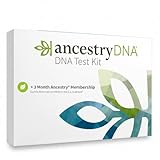
- TOP-SELLING CONSUMER DNA TEST: From your origins in over 3,600 places around the world to the most connections to living relatives, no other DNA test kit delivers an experience as unique and interactive as AncestryDNA
- YOUR DATA, YOUR CONTROL: We give you full control over your genetic information. You decide what to share, and with whom.
- FAMILY HISTORY MEMBERSHIP: The 3-month “World Explorer” membership gives you access to billions of family history records. The membership is redeemable during the AncestryDNA activation process only by the person activating the AncestryDNA test. The person redeeming the membership may choose to convert to an auto-renewing membership by submitting valid billing information.
- BUILD YOUR FAMILY TREE: Combine what you learn from your DNA results with an Ancestry subscription and gain access to millions of family trees and the world's largest collection of online family history records.
- ORIGINS AND INHERITANCE: AncestryDNA is the only DNA test that can show your origins results, DNA matches, and traits by each side of the family, without your parents taking a DNA test.
Rank #4

- MAP YOUR ORIGINS ACROSS 5,000+ REGIONS: Ancestry Composition breaks down your ethnicity across 5,000+ geographic regions worldwide, the most detailed ancestry breakdown of any consumer DNA service. Ancestry Timeline estimates how many generations ago your most recent ancestor from each population lived.
- FIND LIVING RELATIVES: Opt in to DNA Relatives to see up to 1,500 people in the 23andMe database who share DNA with you, from close family to distant cousins, and message them directly. Your Family Tree builds itself automatically based on your DNA.
- DISCOVER WHAT MAKES YOU UNIQUE: See how your DNA may influence physical features, sensory preferences, and habits across 30+ traits, including cilantro taste aversion to hair texture to deep sleep.
- TRACE ANCIENT MIGRATIONS: Maternal and Paternal Haplogroup reports follow your ancestors' migration paths across continents over thousands of years (paternal haplogroup requires a Y chromosome). Find out how much of your ancestry can be traced back to the Neanderthals.
- PRIVATE BY DESIGN: Your DNA data is encrypted, protected, and always under your control. Enhanced security measures are implemented to keep your information safe. Subject to 23andMe’s Terms of Service and Privacy Statement at 23andMe online.
Product prices and availability are accurate as of the date/time indicated and are subject to change. Any price and availability information displayed on Amazon at the time of purchase will apply.
What’s actually slowing this PC down?
Pick the symptom - the matching free tool is one click away.

