
Packaging can be a major assembly expense, but the evidence does not show that it now costs more than capital equipment across manufacturing. The claim traces to historical reporting about semiconductor assembly economics; newer studies show packaging among manufacturers’ largest expense categories, while also measuring different costs, industries and time periods.
What the original claim actually compared
The headline traces to EE Times reporting from 1999 about semiconductor assembly. At the time, analysts expected equipment, software and systems to push the cost of an average chip-assembly plant toward $40 million, compared with about $20 million for a packaging plant. Those were historical plant-cost estimates, not a current, industry-wide comparison of annual packaging expenses against equipment spending.
The same reporting described automation as a way to reduce manufacturing costs. A company executive cited an estimated utilization rate of 80% or more and claimed productivity improvements of up to fivefold. Those figures were company-attributed expectations from that period, not independently established benchmarks for today’s factories.
What newer manufacturing data says about packaging costs
The MPI Group’s 2024 Manufacturing Study, published in 2025, surveyed 413 plants globally. It identified raw materials, energy and packaging as manufacturers’ top three expense categories. That places packaging among important operating costs, but the study does not establish that packaging is the largest cost or that it exceeds capital equipment spending.
The Tool Desk
Outbyte Driver Updater FREEScan for outdated or missing drivers - takes under a minuteDriver Scan →Outbyte PC Repair FREEClear out junk files and repair common Windows errorsFree Scan →#1 Best Overall

- 【AUTOMATIC WEIGHING & SEALING】 - The automatic powder filling machine is combined with a weighing machine and sealing machine. The weighing, blanking, packaging, and cutting processes are controlled by micro-computer. It is equipped with two vibration systems, so the packaging will be smooth. Note: The machine does not come with film rolls, and you need to purchase them separately.
- 【THREE SIDE SEALED & 100G】 - The filling sealing machine features 3-side seal design, sealing the product from left and right. Packing speed: 10-15 bag/min(depending on the items and product quality). Paper width: 7 inch/18 cm(means the finished product bag width 3.2 inch/8 cm). Paper length: 0.4-6.3 inch/1-16 cm(Adjustable). Packing range: 1-100g/ 0.035 -3.53 oz.
- 【MICROCOMPUTER CONTROL】 - The automatic weighing filling packing machine uses microcomputer control, the calculation is more accurate and faster. It makes the weighing and filling process scientific and less error. Double digital control screens are easy to understand, saving your time.
- 【STAINLESS STEEL CONSTRUCTION】 - The nuts packaging machine is made of food-grade stainless steel, safe for food processing, resistant to corrosion, rust, acid, and alkali. 4 casters are convenient for the move. Easy to operate and maintain for better operation of the machine.
- 【WIDE APPLICATION】 - This particle filler sealing machine is suitable for the filter paper, composite film, aluminum foil bags, non-woven fabrics, oil paper, heat-sealed plastic bags, and other heat-sealing packaging materials.
The study also found cost pressure across manufacturing more broadly: cost of goods sold rose from 60% of plant sales in the 2020 study to 67% in 2024. Production labor made up 30% of labor costs, nearly three times the second-largest labor-cost category, material handling. These figures describe different cost measures; neither is a packaging share.
A product-level example
A 2025 MDPI Machines case study of hub assembly estimates the following shares of cost. It is a single case, not a benchmark for every product or factory.
Rank #2

- Automatic Packaging: Our powder filling machine weighs, portions, and bags like nuts, seeds, fertilizer, feed, grains, spices, tea, glitter. Not for fine powder (cocoa, matcha), sticky (gummy), or smooth metal items. Very light items choose 2–3x capacity model
- Accuracy: Dual vibration motors plus precision sensor help reduce material buildup and achieve accuracy . This particle filling machine easily pack 1–99.9g of powders or granules. Speed: approx 3–10 bags/min
- Three-side Sealing: Adjustable temperature for different films helps this filling machine achieve an airtight seal. Compatible films: color aluminum, foil, clear, filter paper, non-woven, and sealed bags. Film size: sealing height 1.2-6.3in/30–160mm, film width 6.3in/160mm (fixed)
- Smart Control: This automatic powder dispenser allows easy setup for weight, speed, seal temp, and seal length via the panel. Save settings for repeat use. Includes one-touch empty and count function – track portions and clear leftovers for next batch
- Long-lasting Material: The powder dispenser's core parts(hopper/vibratory tray/discharge outlet) use food-grade 304 stainless steel, ensure reliable performance with every use
| Cost category | Estimated share in the hub-assembly case |
|---|---|
| Raw materials and semi-finished products | 25–35% |
| Direct labor | 15–20% |
| Consumables and packaging | 5–10% |
Packaging machinery industry totals are not plant packaging costs
U.S. Census Bureau data distributed by FRED reports total material costs for packaging-machinery manufacturing. These are industry-wide material costs for making packaging machinery, not the amount an assembly plant spends on its packaging or the share of that plant’s total cost.
| Year | Packaging-machinery manufacturing material costs |
|---|---|
| 2020 | $4,150,596 thousand |
| 2021 | $4,865,286 thousand |
| 2022 | $5,200,440 thousand |
| 2023 | $5,303,166 thousand |
| 2024 | $4,972,018 thousand |
Why packaging and material handling can weigh heavily
Packaging costs can include consumables as well as the work and movement needed to prepare goods for shipment. In an assembly operation, the relevant expense is not just the packaging material: moving items, tracking work and keeping equipment and people productive also affect the cost of getting a finished product through the plant. That makes production volume, product mix and automation relevant to any comparison.
Recommended Free Tools
Rank #3
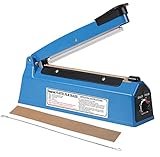
- Instantly use: No warm up time needed, Lightweight Design 8 stalls temperature adjustme impulse manual hand bag sealer to meet any different materials bags. Important: This machine can't cut any bags!
- Manual Impulse Sealer: Built-in fuse for safe using, Easy to use and to clean,ideal for household, retail, produce, grocery Stores, and industrial sealing with a certain quality superiority.
- Easy operation:Place the bag on the original seal, Keep the handle pressed down for 2-3.5 seconds to get seals optimal results.
- Energy Conservation Manual Impulse Sealer,Non-Toxic, Odorless, Durable, Reinforced and Compression,could seal more than 10000 bags.
- 100% Satisfied Guarantee: If there is any problem with our products, please contact us and we would offer you a satisfy solution.
The ASSEMBLY 2024 Capital Spending Survey found that material handling was the process respondents most commonly planned to automate in the coming year. Its reporting also describes automated transport and work-tracking as cost levers in the historical semiconductor case. Automation aimed at material flow may therefore address a broader operational bottleneck than packaging alone.
Capital equipment remains a substantial investment
ASSEMBLY’s 2024 survey projected $6.24 billion in U.S. assembly-plant equipment spending for 2025, up from its $6.18 billion projection for 2024. These are survey projections for equipment spending, not a measure of packaging costs or a direct comparison with a particular plant’s annual operating expenses.
Rank #4

- ★【Outstanding Performance】: Adopting a dual vibration design, strong magnetic vibration feeding and motor vibration filling can ensure a more accurate quantity of materials for each packaging, reducing packing errors. The entire body is designed with high-quality stainless steel, which is sturdy and durable. It has great anti-corrosion capability guaranteeing a long service li
- ★【Intelligent Filling】: Equipped with an intelligent control panel including weight adjustment and speed control, it can accurately complete weighing and packaging based on your needs.
- ★【Multiple Choices】: It has a large filling range (0.02-2.2lbs) and two filling outlets of different sizes, which is suitable for different materials and packaging containers.
- ★【User-friendly Design】: Large-capacity machine (77.16lbs rice) can complete production tasks faster, which can save time and improve production efficiency. The automatic weighing and quantitative filling can reduce labor costs and reduce material waste.
- ★【Safe to Use】: Not only does it have an insulated power interface, but will automatically shut down when there is a shortage of materials. It even has a protective function to prevent dust from entering the mainboard wire, strongly ensuring the safety and stability of use.
Equipment purchases and packaging expenses also appear differently in cost comparisons: equipment is generally treated as a capital investment, while materials and packaging are operating expenses. A claim that one “costs more” needs a defined period and accounting basis. Comparing a plant’s equipment investment with a year’s packaging bill, for example, would not by itself show which is the larger recurring burden.
Independent reader supportYour contribution helps us test, update, and keep practical guides available for everyone.How to decide whether packaging deserves investment first
For a plant-level decision, compare costs on the same basis before choosing between packaging improvements and equipment investment.
Best Value

- Automatic Packaging: Our powder filling machine weighs, portions, and bags like nuts, seeds, fertilizer, feed, grains, spices, tea, glitter. Not for fine powder (cocoa, matcha), sticky (gummy), or smooth metal items. Very light items choose 2–3x capacity model
- Accuracy: Dual vibration motors plus precision sensor help reduce material buildup and achieve accuracy . This particle filling machine easily pack 10-500g of powders or granules. Speed: approx 2–10 bags/min
- Back Sealing: Adjustable temperature for different films helps this filling machine achieve an airtight seal. Compatible films: color aluminum, foil, clear, filter paper, non-woven, and sealed bags. Film size: sealing height 2-8.7in/50–220mm, film width 13.4in/340mm (fixed)
- Smart Control: This automatic powder dispenser allows easy setup for weight, speed, seal temp, and seal length via the panel. Save settings for repeat use. Includes one-touch empty and count function – track portions and clear leftovers for next batch
- Long-lasting Material: The powder dispenser's core parts(hopper/vibratory tray/discharge outlet) use food-grade 304 stainless steel, ensure reliable performance with every use
- Set the scope: distinguish plant construction or equipment investment from recurring operating expense and per-unit cost.
- Use the same time period: compare annualized equipment cost with annual packaging and handling expense, or compare both on a per-unit basis.
- Match the operation: account for production mix, output volume and the plant’s current automation level.
- Separate the cost buckets: include packaging materials and consumables, labor, material handling and equipment rather than treating them as one category.
- Measure the bottleneck: determine whether expense or lost capacity comes from packaging work, material movement, equipment utilization or another stage.
NIST’s assembly-centric manufacturing analysis supports looking across the value chain, using input-output, labor and asset data for machinery, computers, electronics and transportation equipment. It is a useful reminder that an assembly station or packaging step alone may not account for where resources are consumed across production.
What the evidence can—and cannot—establish
The available figures establish that packaging is a significant expense category in broad manufacturing data and that it can represent 5–10% of cost in one hub-assembly case. They also show substantial equipment investment in U.S. assembly plants. Because the sources differ in date, geography, industry and accounting scope, they do not establish a universal point at which packaging becomes more expensive than capital equipment.
PMMI’s March 2026 quick survey offers context on how packaging and processing equipment companies calculate fully burdened labor costs. It included 41 member-company respondents and reported costs as of December 31, 2025; it is a limited sample, and the full report is restricted. It is not a broad comparison of assembly-plant packaging expenses and capital spending.
Quick Recap
Product prices and availability are accurate as of the date/time indicated and are subject to change. Any price and availability information displayed on Amazon at the time of purchase will apply.
Free tools Windows power users keep installed
One-click scans. No signup required.

