
Outdated Drivers Are Slowing You Down
One free scan finds every outdated or missing driver and matches the right update for your exact hardware.Free scan · exact hardware matchWindows Errors? Fix Them Before They Spread
Repair common Windows errors and clear accumulated junk for a smoother, more stable PC - no reinstall needed.Free scan · no reinstallThere is no single best IoT communication protocol. Efficient integration comes from matching an application protocol to the device’s resources, network conditions, message pattern, delivery requirements, security model and data contract—and then checking that every layer, gateway and cloud service supports the result.
Which IoT protocol should you use?
Start with the kind of exchange your system needs, not with a protocol name. MQTT is usually a strong candidate for brokered telemetry and commands across variable connections. CoAP fits constrained, REST-style devices that need request/response, observation or discovery. HTTPS is useful when existing web infrastructure or a platform endpoint requires it, although its exact capabilities and trade-offs depend on the service.

| Protocol | Primary communication model | Where it fits | Important qualification |
|---|---|---|---|
| MQTT | Publish/subscribe messaging through a broker | Telemetry and commands; limited bandwidth; remote, high-latency or intermittently connected deployments | Choose QoS and session behavior for the application’s tolerance for loss, duplicates, latency and reconnects. QoS does not make an entire application universally exactly-once. |
| CoAP | Constrained REST-style request/response, with observation and group extensions | Low-resource devices and networks where a compact UDP-based application protocol is appropriate | Confirm that the device, gateway and service support the required CoAP extensions and security transport. |
| HTTPS | Web request/response | Existing HTTP systems and cloud APIs; in AWS IoT Core, device publishing through HTTPS | Features, overhead and authentication depend on the implementation. AWS’s comparison with MQTT is specific to AWS IoT Core, not a universal benchmark. |
Keep protocol layers separate
Protocol names often describe different layers. MQTT and CoAP are application protocols; they define how application data and commands are exchanged. IPv6 adaptation for constrained networks, low-power and lossy routing, Bluetooth Low Energy, Z-Wave-related networks and LPWAN technologies address network, adaptation or radio/link concerns. They are not interchangeable alternatives in one flat list.
A device might therefore use a constrained radio and routing stack underneath CoAP, or an IP connection underneath MQTT. Select each layer for its own constraints, then verify that the layers interoperate through the device, gateway and platform.
Free tools Windows power users keep installed
One-click scans. No signup required.
#1 Best Overall

- UNIVERSAL REMOTE - SMART HUB FOR 8,000+ BRANDS: Matter-certified IR & IoT hub with built-in alarm. Control TVs, ACs, fans and other smart devices from anywhere with 2.4 GHz WiFi. Voice commands, automations and fast alerts deliver a seamless connected home.
- EXPANSIVE COMPATIBILITY ACROSS YOUR HOME: Supports 18 appliance types and thousands of IR brands—TV, Air Conditioner, Set-Top Box, Robot Vacuum, Fan, Light, Air Purifier, Humidifier, Water Heater, Electric Heater, Electric Curtain, Projector, Amplifier, DVD, Camera, Foot Tub, Drying Rack, and Box devices. Easily consolidate control for both new and legacy electronics within IR range, replacing multiple remotes with one powerful smart home hub.
- SEAMLESS VOICE ASSISTANT SUPPORT: Hands-free control with Alexa, Google Assistant or Siri through Matter. Adjust temperature, switch channels and activate routines without touching a remote or phone.
- REAL-TIME ALERTS WITH BUILT-IN 93 DB ALARM: Connect Tapo sensors for real time alerts on motion, door or window activity. Hear important events with loud audible feedback and customizable tones.
- FULL REMOTE ACCESS IN THE TAPO APP: Use the Tapo app on iOS or Android to access devices wherever you are. Turn off forgotten appliances, adjust AC settings before arriving home and keep energy use under control.
MQTT: brokered messaging for telemetry and commands
MQTT is an OASIS-standard publish/subscribe messaging transport designed for IoT and machine-to-machine use, including systems with small code footprints or limited bandwidth. A broker decouples senders from receivers: devices publish to topics and authorized consumers subscribe to them.
The OASIS MQTT Technical Committee describes the standard this way: “The standard supports bi-directional messaging to uniformly handle both signals and commands, deterministic message delivery, basic QoS levels, always/sometimes-connected scenarios, loose coupling, and scalability to support large numbers of devices.”
How to choose MQTT delivery behavior
- Decide whether a lost message, a duplicate, or delayed delivery is the more serious failure.
- Select the available QoS level and session behavior to match that decision.
- Define what happens after a disconnect: whether state is retained, which commands can be replayed, and how missed telemetry is handled.
- Make the application idempotent where retries can produce duplicates; transport delivery settings cannot define business meaning by themselves.
When MQTT is a good fit
MQTT is attractive when many devices send updates to multiple consumers, when commands need to travel back to devices, or when links are remote, low-power, low-bandwidth, high-latency or only intermittently available. The broker and topic design become part of the architecture, so include authorization, topic naming, device identity and failure handling in the design rather than treating MQTT as only a socket choice.
Rank #2
CoAP: a constrained REST-style option
CoAP is an IETF application protocol for constrained environments. The European Commission’s 2026 overview characterizes it as a simplified UDP-based analogue to HTTP. Its extensions cover group communication, observing resources, discovery and larger resources, and CoAP can also run over TCP with TLS.
CoAP’s resource-oriented model is useful when devices expose state or actions that map naturally to resources and methods. Check whether the target stack implements the specific capabilities you need instead of assuming that every CoAP implementation includes every extension.
Payload representation
CBOR is a compact binary-data representation suited to low-resource implementations. It can reduce the data representation burden, but interoperability still requires an agreed schema, units, semantics and versioning rules.
Rank #3

- 【Apple Homekit Support】This Apple HomeKit compatible smart plug fully integrates into your Apple ecosystem, just ask Siri to turn on/off the devices in your home. (Apple HomeKit remote control requires an additional networked Apple device at home such as an iPad, HomePod or Apple TV.)
- 【Energy Monitoring & 15A Max Load】Use the smart Wi-Fi home plug to monitor your connected device's energy usage in real-time and view its historical power consumption within the Kasa Smart app. 1800W, 15A max load supported.
- 【Super Easy Setup】Enjoy an extremely easy and quick setup process with this Amazon Frustration-Free Setup (FFS) & Google Seamless Setup (GSS) supported smart plug. You can also setup in a few steps with the Kasa App.
- 【Compact & Flame Retardant Design】Avoid blocking additional outlets with its compact design, and plug in your WiFi smart plug with confidence thanks to its UL certified flame retardant design and 2-year limited warranty.
- 【App & Voice Control】Control your WiFi smart plug from anywhere, anytime via the free Kasa App or just give voice commands to Siri, Amazon Alexa, Google Assistant or Samsung SmartThings. Your favorite smart assistant enables you to have a truly hands-free experience. Operating Humidity: 5%~90% RH, Non-condensing
MQTT versus CoAP
The choice is mainly about interaction style and operating conditions, not a universal performance ranking.
| Decision question | MQTT direction | CoAP direction |
|---|---|---|
| Do publishers and consumers need loose coupling through a broker? | Prefer MQTT when topic-based fan-out and broker-mediated commands are central. | Prefer CoAP when direct resource access is the simpler model. |
| Is the device exposing resources, observation or discovery? | Model those concepts over topics and application conventions. | Use CoAP’s resource, observation and discovery capabilities when supported by the stack. |
| Are connections intermittent or bandwidth constrained? | MQTT provides QoS and session choices that can be matched to reconnect and delivery requirements. | CoAP’s constrained-environment design may fit, but validate the required UDP, TCP/TLS and extension support. |
| Will an enterprise platform, firewall or gateway dictate the path? | Check broker, gateway and cloud support, including secure MQTT or MQTT over WebSocket. | Check proxying, gateway translation and end-to-end security across the constrained network. |
HTTPS and platform-specific MQTT support
In the current AWS IoT Core documentation, MQTT and MQTT over WebSocket Secure support publish/subscribe, while HTTPS supports device publishing. AWS recommends secure MQTT or MQTT over WSS for most device communication through its endpoints, while also supporting HTTPS.
AWS documents TLS 1.2 and TLS 1.3 for encrypted communication. Its authentication choices include X.509 certificates, AWS Signature Version 4 and custom authorizers, with compatibility depending on the protocol. Device onboarding, credential provisioning, authorization and credential rotation therefore need to be designed alongside message selection.
Rank #4

- Reliable Long-Range Connections: The Tapo Hub operates on a lower frequency broadband, resulting in fewer signal interferences and ensuring stable connectivity for all your devices throughout your home. With a maximum connection distance of up to 30m, the Tapo Hub outperforms wireless network systems in the 2.4 GHz band. Our internal laboratory tests confirm the coverage and range of the Tapo Hub, but keep in mind that actual results may vary depending on environmental conditions.
- A Low-Power Way to Connect Everything- The Tapo Hub serves as the central hub for your Tapo smart home, linking smart sensors, switches, and buttons via an ultra-low power wireless protocol. This technology extends the battery life of devices by up to 10 times, in contrast to devices powered by the Wi-Fi protocol.
- Smart Action- With Tapo Smart Hub H100, you can trigger a Shortcut or control Tapo devices (such as smart plugs, smart lights and smart switches) based on sensor detection or with a button press. (Tapo H100 cannot directly connect to Tapo smart plugs or smart lighting, 2.4GHz Wi-Fi is required.)
- All Devices in One Hub- Each Tapo Hub can connect up to 64 Tapo devices throughout your home. Build and manage your smart home ecosystem with ease.
- Protect Your Home Day and Night- By integrating with Tapo motion sensors, door/window sensors, and other devices, the Tapo Hub can activate a high-decibel siren (up to 90 dB) to alert of potential hazards or discourage intruders.
AWS reports lower protocol overhead and power consumption for MQTT than HTTPS in its own service comparison. That is an AWS IoT Core implementation comparison, not a cross-vendor or all-network measurement; payload size, connection pattern, radio and firmware can change the result.
Why a shared protocol does not guarantee interoperability
Two devices that both support MQTT, CoAP or IP may still fail to work together. They can disagree about payload encoding, field names, units, resource paths, device capabilities, discovery, permissions or lifecycle operations.
ISO/IEC 30162:2022 frames industrial compatibility across protocol interaction, data interoperability and management, the connectivity framework, connectivity transport and connectivity network. Use that broader view when evaluating an integration.
Quick wins for a faster PC:
Clear out junk files and repair common Windows errorsFree Scan →Scan for outdated or missing drivers - takes under a minuteDriver Scan →Best Value
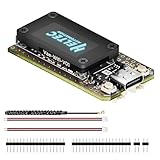
- V4 Upgraded ESP32-S3 & LoRa SX1262 Development Board: This Lora V4 Development Board features the latest ESP32-S3R2 chip with 2MB PSRAM and 16MB Flash, delivering superior processing for complex IoT applications and Meshtastic projects. This major upgrade from V3 models provides enhanced performance for Meshtastic devices, LoRa development boards, and sophisticated user interfaces, ensuring smooth operation of advanced firmware.
- High Power 27dBm Long-Range LoRa Radio Communication: The Meshtastic device experience exceptional wireless range with 27dBm transmission power and -137dBm sensitivity. Perfect for building reliable Meshtastic nodes, LoRa radio networks, smart home IoT devices, and industrial applications. This LoRa module provides greater communication distance across large properties and urban environments.
- Integrated OLED Display & Complete LoRa Meshtastic Kit: This heltec V4 includes a 0.96-inch OLED display for real-time data visualization without additional hardware. The protective casing features FPC antenna for stable Wi-Fi/Bluetooth and external antenna for enhanced LoRa performance. Provides a complete Meshtastic development board experience ready for immediate deployment.
- Advanced Power Management with Solar & GPS Connectivity: The ESP32 LoRa 32 V4 Designed for outdoor use with optimized battery management and 20μA sleep current. Includes solar panel interface for Meshtastic solar nodes and GNSS port for Meshtastic GPS applications. Type-C interface with voltage regulation ensures reliable operation for asset tracking and remote monitoring.
- Fully Compatible ESP32 LoRa Development Board: The ESP32 Lora V4 Development Board Maintains complete pin compatibility with Heltec LoRa 32 V3 for seamless project migration. Ready for Arduino and PlatformIO development, this versatile board supports LoRaWAN, Wi-Fi, and Bluetooth protocols for smart agriculture, industrial IoT, and wireless security systems.
Interoperability checklist
- Payload contract: define schema, encoding, units, ranges, timestamps, quality flags and versioning.
- Meaning: document what each measurement, command, state and error actually means.
- Identity and authorization: assign stable device identities and permissions for publishing, subscribing or resource access.
- Discovery: specify how a platform learns device capabilities, endpoints and supported operations.
- Onboarding: define enrollment, credential issuance, replacement and revocation.
- Lifecycle: cover configuration, health reporting, firmware updates, decommissioning and recovery.
- Translation: when stacks differ, define what a gateway converts and how it preserves timestamps, errors, security context and delivery status.
How to connect different IoT devices
- Inventory constraints and traffic. Record memory, CPU, battery or power budget, packet-size limits, bandwidth, latency, loss, cost and expected connectivity. Classify traffic as telemetry, commands, request/response, observation or group communication.
- Map each layer. Choose the radio or link, constrained-network adaptation and routing approach separately from the application protocol. Do not substitute a radio technology for MQTT or CoAP in the design.
- Shortlist supported stacks. Verify libraries, firmware support, gateways, brokers, firewall traversal and cloud endpoints for the exact device and software versions.
- Set delivery and offline rules. Choose QoS or equivalent behavior, persistence, reconnect handling, duplicate tolerance and missed-message recovery before writing topic or resource conventions.
- Define the data and identity contract. Agree on schemas, semantics, discovery, permissions, provisioning, key or certificate handling and lifecycle operations.
- Design translation points. If one device uses CoAP and another service uses MQTT, place an explicit gateway or adapter between them and document the conversion rather than claiming native interoperability.
- Test the complete path. Exercise representative payloads, intermittent links, reconnects, duplicates, delayed delivery, gateway failures and security settings on the actual hardware and network.
Security is part of protocol selection
Transport encryption alone is not an integration strategy. Evaluate encryption in transit, authentication, authorization, credential storage and rotation, secure onboarding, updates, logging and incident recovery together.
Feature support is implementation-specific. A protocol may be standardized while a particular device library, gateway or cloud service supports only a subset of transports, extensions or authentication methods. Confirm those details in the official documentation for every component.
Operational tests that prevent expensive surprises
- Measure behavior with the largest expected payload, not only a small laboratory message.
- Disconnect devices during publishing, command delivery and firmware or configuration changes.
- Verify whether reconnects create duplicates, lose commands or leave stale state.
- Test gateway translation with malformed, out-of-range and unknown-version data.
- Attempt unauthorized publish, subscribe or resource access and confirm the expected rejection and audit trail.
- Repeat tests after certificate, key, firmware and schema changes.
Common selection mistakes
- Declaring a universal winner: protocol suitability depends on constraints and interaction patterns.
- Comparing unlike layers: a link technology, routing protocol and application protocol solve different problems.
- Confusing transport delivery with business correctness: QoS does not remove the need for idempotency, state reconciliation and application-level acknowledgements.
- Assuming shared protocol means shared meaning: interoperability requires common data, discovery, identity and lifecycle rules.
- Generalizing one cloud vendor’s comparison: AWS IoT Core’s MQTT-versus-HTTPS observations do not establish a universal power or overhead ranking.
Bottom line
Choose MQTT when brokered, bidirectional publish/subscribe messaging and resilient delivery behavior fit the system. Choose CoAP when constrained devices need a compact, resource-oriented protocol with the required observation, discovery or group features. Use HTTPS where an existing web or cloud integration calls for it, while checking the platform’s exact capabilities. In every case, efficiency comes from validating the whole integration path—layers, payloads, security, gateways, discovery and lifecycle—not from selecting a protocol in isolation.
Quick Recap
Product prices and availability are accurate as of the date/time indicated and are subject to change. Any price and availability information displayed on Amazon at the time of purchase will apply.

