
iTechGuides is reader-supported. When you buy through links on our site, we may earn an affiliate commission. As an Amazon Associate I earn from qualifying purchases. Learn more
Intel N-series processors are Intel’s low-power, entry-level chips for affordable laptops, mini PCs, education devices, and light office or home computing. N100, N150, N200, and N250 are four-core, four-thread 6 W parts; Core-branded N-series models move to eight cores, but N-series is not a mainstream gaming or workstation platform.
Intel uses N-series branding across more than one current family. The official Intel Processor N-series family page and Intel’s N-series comparison chart show why the exact model matters: N100 and N150 are not the same class as Core 3 N355. Most retail buyers encounter these processors inside complete laptops or mini PCs, not as standalone desktop chips.
Key takeaways
- Intel N-series is a broad entry-level processor family that includes the four-core N100, N150, N200, and N250, as well as higher-tier eight-core Core N-series models.
- According to Intel’s official comparison chart (2025), N100, N150, N200, and N250 each have four cores, four threads, and 6 W processor base power; maximum turbo frequency ranges from 3.4 GHz on N100 to 3.8 GHz on N250.
- Core N-series models such as i3-N300, i3-N305, Core 3 N350, and Core 3 N355 have eight cores and eight threads, but their 7 W or 15 W power classes still indicate entry-level, low-power systems rather than workstation performance.
- Intel lists up to 16 GB of memory and support for DDR4-3200, DDR5-4800, or LPDDR5-4800 on cited current N-series specifications, but the computer maker decides whether memory is soldered, socketed, single-channel, or limited to a lower capacity.
- N-series processors are best suited to browsing, office work, education, media playback, light multitasking, compact desktops, and modest home-server duties; demanding gaming, professional creation, heavy virtualization, and sustained compute are poor fits without testing the exact system.
Intel N-Series Processors Explained: what does N-series mean?
Intel N-series is a family label for low-power, entry-level processors, not the name of one specific chip. Intel’s official Processor N-series family page lists products such as N100, N150, N200, N250, and embedded N97, while Intel’s broader catalog separately includes Core-branded N-series parts.
The Tool Desk
Outbyte PC Repair FREEClear out junk files and repair common Windows errorsFree Scan →Outbyte Driver Updater FREEFix the driver behind crashes, sound loss and screen glitchesFind Drivers →The N-series name normally appears in affordable laptops, education computers, compact desktops, and mini PCs. Intel lists the current Processor N-series parts as mobile processors, so most buyers encounter N100, N150, or N200 inside a complete computer rather than as a conventional, user-installed desktop CPU. A particular motherboard can expose a processor differently, but the processor name alone does not tell you that a socket, replacement path, or upgrade option exists.
#1 Best Overall

- Get ultra-efficient with Intel Core Ultra desktop processors that improve both performance and efficiency so your PC can run cooler, quieter, and quicker.
- Core and Threads 24 cores (8 P-cores plus 16 E-cores) and 24 threads. Integrated Intel Graphics included
- Performance Hybrid Architecture Integrates two core microarchitectures, prioritizing and distributing workloads to optimize performance
- Performance Unlocked Up to 5.7 GHz unlocked. 40MB Cache
- Compatibility Compatible with Intel 800 series chipset-based motherboards
Intel’s official naming guidance says, The Intel® CoreTM processor N-Series provides a boost in performance for entry-level computing on both laptops and desktops.
That sentence describes Intel’s market positioning, not an independent performance ranking. The exact model, power limit, cooling design, memory configuration, storage, and software determine how a finished computer feels in daily use.
Which Intel N-series processors are available?
Intel’s current naming is easiest to understand by separating the basic Processor N-series from the higher-tier Core N-series. According to Intel’s official comparison chart (2025), the basic four-core examples include N100, N150, N200, and N250, while the Core-branded group includes i3-N300, i3-N305, Core 3 N350, and Core 3 N355.
| Processor | Launch timing shown by Intel | Cores / threads | Maximum turbo | Processor base power | Position in the family |
|---|---|---|---|---|---|
| N100 | Q1 2023 | 4 / 4 | Up to 3.4 GHz | 6 W | Basic current Processor N-series option |
| N200 | Q1 2023 | 4 / 4 | Up to 3.7 GHz | 6 W | Faster four-core Processor N-series option on paper |
| N150 | Q1 2025 | 4 / 4 | Up to 3.6 GHz | 6 W | Newer Twin Lake four-core Processor N-series option |
| N250 | Q1 2025 | 4 / 4 | Up to 3.8 GHz | 6 W | Fastest cited four-core Processor N-series option |
| i3-N300 | Current Intel catalog | 8 / 8 | Up to 3.8 GHz | 7 W | Higher-tier Core N-series option |
| i3-N305 | Current Intel catalog | 8 / 8 | Up to 3.8 GHz | 15 W | Higher-power eight-core Core N-series option |
| Core 3 N350 | Q1 2025 | 8 / 8 | Up to 3.9 GHz | 7 W | Twin Lake Core 3 N-series option |
| Core 3 N355 | Q1 2025 | 8 / 8 | Up to 3.9 GHz | 15 W | Higher-power Twin Lake Core 3 option |
According to Intel’s 2025 N-series comparison chart, the figures in the table are processor specifications, not benchmark results. Maximum turbo is a peak frequency under appropriate conditions; maximum turbo does not guarantee that a mini PC or laptop will sustain that speed during a long workload.
Recommended Free Tools
What is the difference between Processor N-series and Core N-series?
The main difference is the tier and core count: the cited basic Processor N-series parts have four cores and four threads, while the cited Core N-series parts have eight cores and eight threads.
| Family tier | Representative models | Cores / threads | Processor base-power classes shown | Practical interpretation |
|---|---|---|---|---|
| Processor N-series | N100, N150, N200, N250 | 4 / 4 | 6 W | Lowest-power, entry-level computing for basic laptops and compact systems |
| Core i3 N-series | i3-N300, i3-N305 | 8 / 8 | 7 W or 15 W | More parallel CPU capacity, with system size and cooling varying by power class |
| Core 3 N-series | Core 3 N350, Core 3 N355 | 8 / 8 | 7 W or 15 W | Newer eight-core entry-level designs, with the 15 W versions allowing a different system design than 7 W models |
Intel’s current processor catalog is therefore more useful than the word N-series by itself. An N100, an i3-N305, and a Core 3 N355 can all be called N-series processors, but their core counts and power classes are different enough that the label alone cannot predict performance.
How do N100, N150, N200, and N250 compare?
N100, N150, N200, and N250 belong to the same basic low-power class: each is a four-core, four-thread processor with 6 W processor base power. The meaningful paper differences are launch timing and maximum turbo frequency, while the finished computer’s cooling and memory configuration can change the real-world result.
| Question | N100 | N150 | N200 | N250 |
|---|---|---|---|---|
| Which is newer? | Q1 2023 | Q1 2025 | Q1 2023 | Q1 2025 |
| How many cores and threads? | 4 cores / 4 threads | 4 cores / 4 threads | 4 cores / 4 threads | 4 cores / 4 threads |
| Maximum turbo frequency | Up to 3.4 GHz | Up to 3.6 GHz | Up to 3.7 GHz | Up to 3.8 GHz |
| Processor base power | 6 W | 6 W | 6 W | 6 W |
| Best paper-based reason to choose it | Usually the lowest-cost route into the current four-core class | Newer four-core option with a higher listed turbo than N100 | Higher listed turbo and more graphics execution units than N100 in Intel’s 2023 product material | Highest listed turbo among these four-core examples |
The specifications in this comparison come from Intel’s official product comparison material for N100, N150, N200, and N250, published in 2023 or 2025 depending on the model. The Intel N250 specification page specifically identifies N250 as a Twin Lake mobile processor with four cores, four threads, up to 3.8 GHz, and 6 W processor base power.
Do these 3 things before closing this tab:
1Scan for outdated or missing drivers - takes under a minute2Clear out junk files and repair common Windows errors3Fix the driver behind crashes, sound loss and screen glitchesIs Intel N150 better than N100?
Intel N150 is a newer four-core, four-thread 6 W processor with a listed maximum turbo of 3.6 GHz, while Intel N100 is a Q1 2023 four-core, four-thread 6 W processor listed at up to 3.4 GHz. N150 is the stronger specification on paper, but a cheaper N150 system can still be a worse purchase than a better-configured N100 system.
Rank #2
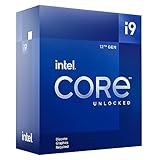
- Built for the Next Generation of Gaming. Game and multitask without compromise powered by Intel’s performance hybrid architecture on an unlocked processor.
- Discrete graphics required
- Compatible with Intel 600 series and 700 series chipset-based motherboards
- The processor features Socket LGA-1700 socket for installation on the PCB
- 30 MB of L3 cache memory provides excellent hit rate in short access time enabling improved system performance
When comparing an N150 laptop or mini PC with an N100 model, check the installed RAM, memory channel configuration, SSD, cooling, ports, operating system, warranty, and price. A higher model number does not compensate for inadequate memory, slow or replaceable storage concerns, poor cooling, or a less suitable chassis.
What is the difference between Intel N100 and N200?
Intel N200 and N100 both have four cores, four threads, 6 MB cache, and 6 W processor base power, but Intel lists N200 at up to 3.7 GHz versus 3.4 GHz for N100. Intel’s 2023 product presentation also lists 32 graphics execution units for N200 versus 24 for N100.
Those specifications make N200 the stronger paper option, particularly for workloads that can benefit from its higher listed CPU frequency or graphics resources. Graphics execution-unit counts are not the same as a gaming benchmark, however. The exact memory arrangement, cooling, drivers, display resolution, and game or application still determine what the finished computer can do. Intel’s 2023 N-series product presentation supplies the graphics-unit comparison; the dossier contains no independent benchmark result.
Why do 6 W, 7 W, and 15 W matter?
Processor base power gives a useful clue about the system design: a 6 W, 7 W, or 15 W processor can be placed in a different class of chassis and cooling solution. Base power is not a complete measurement of speed, battery life, noise, or sustained performance, but it helps explain why two N-series computers with similar-looking model names may be built differently.
A 15 W Core N-series computer may have more thermal headroom than a 6 W N100 mini PC, but the conclusion still depends on the manufacturer’s firmware, cooler, power settings, memory, and enclosure. A 7 W system may be attractive for a very small or quiet computer, while a 6 W system may be sufficient for office work and media playback. Do not use processor base power as a substitute for testing or reading the exact system specifications.
What is Intel N-series good for?
Intel N-series processors are a good fit for everyday, relatively light computing where low system cost, compact size, and modest power use matter more than high sustained performance.
| Workload | Fit | What to check before buying |
|---|---|---|
| Web browsing, email, and online services | Good fit | Enough system RAM, a responsive SSD, and current browser support |
| Microsoft Office or comparable productivity software | Good fit | RAM capacity, display quality, keyboard, and operating-system compatibility |
| Schoolwork and remote learning | Good fit | Webcam, microphone, Wi-Fi, display, and the school’s required applications |
| Streaming video and ordinary media playback | Good fit for the specific supported configuration | Video-output capabilities, display resolution, network connection, and media software |
| Light multitasking | Reasonable fit | Memory amount, single- or dual-channel configuration, cooling, and the number of simultaneous applications |
| Point-of-sale terminals, kiosks, or small-office workstations | Reasonable fit | Peripheral ports, support lifecycle, warranty, networking, and vendor software requirements |
| Compact home desktop or low-power always-on system | Conditional fit | Storage expandability, networking, cooling, operating system, and the software’s hardware requirements |
These recommendations are an inference from Intel’s entry-level positioning, documented core counts, integrated graphics, memory limits, and 6 W to 15 W power classes. They are not claims that every N-series configuration performs identically, and they are not independent benchmark results.
Is Intel N100 good enough for office work?
Yes, an Intel N100 computer is generally well matched to office work such as documents, spreadsheets of ordinary size, email, web applications, video meetings, and light multitasking. The complete system still needs sufficient RAM, a usable SSD, a suitable display, current software support, and a cooling design that does not throttle under its normal workload.
Rank #3

- Next‑Gen Platform Support: Compatible with Intel 800 Series Chipset‑based motherboards with LGA1851 Socket enabling PCIe 5.0/4.0 and high‑speed DDR5 memory (up to 7200 MT/s).
- High‑Performance Core Configuration: Features up to 24 cores (8 P‑cores + 16 E‑cores) for demanding gaming and creator
- Ultra‑Fast Boost Clocks: Reaches up to 5.5 GHz max turbo frequency for top‑tier responsiveness and performance
- Built for Enthusiasts: Unlocked for performance tuning when paired with Intel Z‑series chipsets, making it ideal for overclockers and power users.
- Robust Power & Thermal Design: Engineered with 125W base power and 250W max turbo power to sustain high‑intensity
An N100 system becomes a less comfortable office choice when the workload involves very large spreadsheets, many demanding browser tabs, simultaneous heavy applications, complex local data processing, or professional creation tools. Those limits are workload and configuration dependent; the processor name does not provide a universal application-performance guarantee.
Can an Intel N100 mini PC run Plex or a home server?
An Intel N100 mini PC can be a candidate for a lightweight home server or media setup, but the N100 label alone cannot establish Plex stream capacity or guarantee reliable transcoding. Storage, Ethernet or Wi-Fi, operating system, media formats, concurrent users, transcoding requirements, cooling, and the exact Plex configuration must be checked separately.
For a file server, backup target, home-automation host, or similar modest service, the system’s storage options and software support may matter more than a small difference between N100 and another four-core N-series processor. For multiple intensive virtual machines, demanding media conversion, or sustained compute, choose only after verifying the exact system or testing it; the dossier contains no independent Plex or home-server benchmark.
Crashes, No Sound, or Screen Glitches?
Random freezes, missing sound and display glitches usually trace back to one bad driver. Find and replace yours safely.Free scan · under a minutePC Slower Than It Used to Be?
A free scan shows the junk files, broken settings and background clutter dragging Windows down - then fixes them in one click.Free scan · Windows 10 & 11What workloads are a poor fit for Intel N-series?
Intel N-series should not be presented as a universal replacement for mainstream Core, Core Ultra, or workstation processors. The low-power design and entry-level positioning are advantages for compact everyday computers, but they also establish realistic limits.
| Workload | Verdict | Why caution is warranted |
|---|---|---|
| Modern demanding AAA gaming | Poor fit as a primary buying requirement | Integrated graphics and entry-level power limits are not a substitute for a dedicated gaming platform |
| Serious 3D rendering | Poor fit | Long, sustained compute workloads exceed the typical purpose of these low-power parts |
| Professional video production with demanding effects or timelines | Poor fit without exact-system testing | CPU, integrated graphics, memory ceiling, storage, and cooling can all become constraints |
| Large software builds | Poor fit for frequent or time-sensitive builds | Four-core models have limited parallel capacity, and eight-core Core N models remain entry-level parts |
| Heavy data analysis | Poor fit | Memory capacity and sustained multicore performance can limit larger workloads |
| Multiple intensive virtual machines | Poor fit | Core count, memory capacity, storage, and sustained cooling all constrain the host |
| High-end emulation | Poor fit without testing | Emulation performance varies by software, graphics workload, and exact system configuration |
This limitation assessment is an inference from Intel’s published four- and eight-core configurations, integrated graphics, 6 W to 15 W processor base-power figures, and cited 16 GB maximum-memory figures. No unsupported benchmark percentages are implied.
Is Intel N100 better than an old Core i5?
Intel N100 is not automatically better than an old Core i5, and an old Core i5 is not automatically better than N100. Core i5 covers many generations, desktop and mobile power classes, core counts, graphics configurations, and cooling designs, so the exact i5 model and the workload must be identified before making a meaningful comparison.
N100’s advantages may include a newer low-power platform, a compact system design, and lower system requirements. An older Core i5 may offer stronger sustained performance, more memory capacity, or different expansion options, but that depends entirely on the generation and computer. Compare the exact processor, installed memory, SSD, graphics, power behavior, ports, operating system, warranty, and price rather than comparing the badges alone.
What’s actually slowing this PC down?
Pick the symptom - the matching free tool is one click away.
How much RAM does Intel N100 support?
The safe answer is that the N100 processor name does not by itself tell you how much RAM a particular mini PC or laptop contains or permits you to install. Intel’s cited current N-series specifications list up to 16 GB of memory for models including N150 and N250 and list DDR4-3200, DDR5-4800, and LPDDR5-4800 support depending on the platform.
Rank #4

- Game and multitask without compromise powered by Intel’s performance hybrid architecture on an unlocked processor.
- Discrete graphics required
- Compatible with Intel 600 series and 700 series chipset-based motherboards
- Intel and reg; Core and reg; i5 processor offers hyper-threading architecture that delivers high performance for demanding applications with improved onboard graphics and turbo boost
- The processor features Socket LGA-1700 socket for installation on the PCB
According to Intel’s 2025 documentation, the cited N-series specifications support up to 16 GB and several memory types. That maximum is a processor-platform specification, not a promise that every N100 computer has 16 GB available or can be upgraded to 16 GB.
| Memory question | What the processor specification tells you | What the finished computer decides |
|---|---|---|
| Maximum capacity | Up to 16 GB is listed for cited current models such as N150 and N250 | Installed capacity and the manufacturer’s supported limit for the exact model |
| Memory type | DDR4-3200, DDR5-4800, or LPDDR5-4800 may be supported depending on the model | The actual memory type used in the motherboard design |
| Upgrade path | The processor specification does not promise a removable module | Soldered memory, SO-DIMM slots, available slots, and service access |
| Channel configuration | The processor supports a platform configuration | Whether the manufacturer installs single-channel or another supported arrangement |
Before buying, search for the exact mini-PC or laptop model’s service manual and specifications. Look for phrases such as soldered memory, onboard RAM, SO-DIMM, one memory slot, two memory slots, maximum supported capacity, and whether opening the system affects warranty coverage.
Are Intel N100 and N150 processors upgradeable?
Usually, buyers do not replace the N100 or N150 processor in a typical laptop or mini PC because these are mobile-oriented parts integrated into the system design. RAM and storage may be upgradeable, but upgradeability belongs to the particular computer rather than to the N100 or N150 name.
For memory, verify whether the system uses soldered LPDDR5 or removable modules. For storage, verify whether the system includes an accessible M.2 slot, a 2.5-inch drive bay, replaceable media, or a proprietary design. A listing that says an N100 or N150 computer supports a particular storage capacity does not prove that a second SSD can be added or that the installed drive can be replaced easily.
What should you check before buying an N-series computer?
Start with the complete computer, not just the processor label. Intel’s processor specification describes the chip; the manufacturer’s specification describes the machine you will actually use.
- Confirm the exact processor. N100, N150, N200, N250, i3-N300, i3-N305, Core 3 N350, and Core 3 N355 are not interchangeable names.
- Check installed RAM and its upgrade path. Record the amount, memory type, channel arrangement, number of slots, and maximum supported capacity.
- Check the SSD. Confirm capacity, interface, M.2 or SATA format, replaceability, and whether an additional drive can be installed.
- Inspect cooling. A small fanless enclosure, a compact active cooler, and a larger ventilated chassis may sustain workloads differently even when they use the same processor.
- Count the ports and displays. Confirm USB types, HDMI or DisplayPort outputs, audio, Ethernet, Wi-Fi, card readers, and the number and resolution of displays you need.
- Verify the operating system and software. Check Windows edition, Linux compatibility, required drivers, remote-management features, and support for the applications you intend to run.
- Check the seller and warranty. System brand, regional warranty, return terms, included power adapter, and support quality are separate from Intel’s processor warranty.
- Compare the complete price. Memory, SSD size, operating system, cooling, ports, and warranty can make two computers with the same N100 substantially different purchases.
What is the most realistic Intel N100 mini PC buying strategy?
The most realistic buying strategy is to choose a complete Intel N100 mini PC when the goal is an inexpensive compact computer for office work, browsing, media playback, education, or a modest home service. Do not shop for an N100 as though it were a normal socketed desktop CPU; compare finished systems and their specifications.
Marketplace products built around N100, N97, or N150 can differ in RAM, SSD, networking, display outputs, cooling, operating system, warranty, and upgradeability. Intel makes the processor, but third-party system brands assemble and sell the finished mini PCs. Do not assume that an Intel-branded processor means Intel manufactured the complete computer.
Free tools Windows power users keep installed
One-click scans. No signup required.
For an N100 mini PC, the best value is usually the configuration that meets the workload without sacrificing memory, storage access, cooling, or support. A slightly faster processor in a system with soldered low-capacity memory or inadequate storage may be less useful than a well-configured N100 system. Check current availability and pricing immediately before purchase because those details change by seller and region.
Best Value

- Game Without Compromise. Play harder and work smarter with Intel Core 14th Gen processors
- 20 cores (8 P-cores plus 12 E-cores) and 28 threads. Integrated Intel UHD Graphics 770 included
- Up to 5.6 GHz with Turbo Boost Max Technology 3.0 gives you smooth game play, high frame rates, and rapid responsiveness
- Compatible with Intel 600-series (with potential BIOS update) or 700-series chipset-based motherboards
- DDR4 and DDR5 platform support cuts your load times and gives you the space to run the most demanding games
Can maintenance software make an N-series PC faster?
Maintenance software can help with some Windows clutter or software problems, but maintenance software cannot add CPU cores, increase the processor’s memory ceiling, improve integrated-graphics hardware, or replace inadequate physical cooling.
For a Windows N-series computer with drive clutter, common system issues, or general maintenance needs, Outbyte PC Repair is an optional tool to evaluate rather than a performance upgrade. Outbyte’s PC Repair product page states, PC Repair is designed to complement an antivirus program rather than replace it.
Use the computer manufacturer’s and Intel’s official support channels first for hardware-specific drivers, and treat third-party repair or driver tools as optional. Outbyte’s driver materials describe backup, restore, and rollback features but acknowledge that compatibility cannot be guaranteed for every unique system.
A driver tool cannot turn N100 into N200 or convert a four-core processor into an eight-core Core N model. If a computer is slow because of insufficient RAM, a full SSD, thermal throttling, or an application that exceeds the processor’s capabilities, software cleanup may not address the real bottleneck.
Quick wins for a faster PC:
Fix the driver behind crashes, sound loss and screen glitchesFind Drivers →Repair Windows errors before they cause bigger problemsFix Now →Scan for outdated or missing drivers - takes under a minuteDriver Scan →Can StreamNeo replace an N-series PC for continuous streaming?
StreamNeo is an adjacent cloud service, not an N-series processor or a hardware upgrade. A creator or digital-signage operator may use 24/7 cloud livestreaming to loop recorded video as a continuous YouTube livestream from the cloud, with the service handling automatic recovery according to its product description.
Keep a YouTube Channel Live Without Leaving an N-Series PC On
StreamNeo fits creators and digital-signage operators who need to turn an owned or licensed prerecorded video into an always-on YouTube Live stream. Upload the video and paste a YouTube stream key; the stream runs in the cloud while the N-series PC stays off.
StreamNeo checks stream health every 30 seconds and automatically restarts dropped streams, reducing the need to leave a PC or encoder running continuously. This workflow is useful when the N-series computer is needed for setup, control, or playback rather than continuous broadcasting.
A practical next step is the free 24-hour 720p/30fps trial, which requires no card at signup. Test the recorded content and YouTube workflow before deciding whether continuous cloud broadcasting fits the channel.
This approach can reduce the need for a local N-series computer to remain continuously responsible for the broadcast. An N-series PC could still serve as a control, playback, signage, or setup device, but the processor dossier does not establish that every N-series system is suitable for professional live production. Review the StreamNeo service description and StreamNeo terms for supported destinations, content-management features, service conditions, and current availability.
Which Intel N-series processor should you choose?
Choose by workload and complete-system design rather than by the N-series label alone.
| Your priority | Reasonable starting point | What could change the decision |
|---|---|---|
| Lowest-cost everyday computer | N100 | A better-equipped N150, N200, or N250 system may offer better overall value if pricing and memory are similar |
| Newer four-core low-power option | N150 or N250 | Check the actual RAM, SSD, cooling, ports, warranty, and price rather than assuming the newer chip wins |
| More CPU parallelism in the N-series family | i3-N300, i3-N305, Core 3 N350, or Core 3 N355 | Compare 7 W versus 15 W cooling, chassis size, memory, and sustained-performance behavior |
| Compact home server or media device | A well-configured N100 or another suitable N-series mini PC | Storage, networking, software support, transcoding needs, and concurrent users are decisive |
| Demanding gaming, rendering, or professional creation | Usually look beyond basic N-series | Choose only after comparing a tested system with the application’s requirements |
The short verdict is straightforward: N100, N150, N200, and N250 are sensible low-power entry-level processors when the finished computer is intended for everyday computing. Core N-series parts provide a higher tier within the same broad naming family, but the N-series badge still should not be mistaken for a mainstream performance or workstation platform.
The Bottom Line
Bottom line: Intel N-series processors are affordable, low-power chips best suited to browsing, office work, education, media playback, compact desktops, and modest home systems. N100 is often the sensible starting point, N150 and N250 are newer four-core alternatives, N200 is stronger than N100 on paper, and Core N-series models add eight cores. Buy the complete system by checking RAM, storage, cooling, ports, software support, and warranty—not the processor name alone.
What’s actually slowing this PC down?
Pick the symptom - the matching free tool is one click away.
Quick Recap
Product prices and availability are accurate as of the date/time indicated and are subject to change. Any price and availability information displayed on Amazon at the time of purchase will apply.

