
Free tools Windows power users keep installed
One-click scans. No signup required.
The Intel Core i7-975 Extreme Edition is a 2009, four-core LGA1366 processor with an unlocked multiplier and a 3.33 GHz base clock. It remains an interesting upgrade for a compatible X58 system, but its small advantage over the i7-965 does not make it a sensible foundation for most new PCs. Intel officially supports DDR3-1066, and the chip’s age makes BIOS support, cooling, authenticity, and condition central to any used purchase.
What the Core i7-975 Extreme Edition offers
Intel launched the i7-975 in Q2 2009 as a 45 nm Bloomfield processor for desktop systems using the LGA1366 socket and Intel X58-class motherboards. It has four physical cores, eight threads through Hyper-Threading, 8 MB of shared L3 cache, and a 130 W thermal design power (TDP).
| Specification | Core i7-975 Extreme Edition |
|---|---|
| Launch | Q2 2009 |
| Microarchitecture and process | Bloomfield / Nehalem, 45 nm |
| Socket and platform | LGA1366; Intel X58-class desktop boards |
| Base clock and maximum Turbo Boost | 3.33 GHz / up to 3.6 GHz |
| Cores and threads | 4 cores / 8 threads with Hyper-Threading |
| Cache | 8 MB shared L3 |
| TDP | 130 W |
| Official memory support | DDR3-1066 |
| Box order code | BX80601975 |
Intel’s processor comparison chart and specification update are the sources for these specifications.
How it compares with the i7-965
The i7-975’s main advantage over the i7-965 is its higher clock, not a new core configuration. In a June 2009 review, bit-tech reported that the 3.33 GHz speed came from a 25× multiplier rather than a QPI increase. The processor retained the 965’s 8 MB cache configuration and used the newer D0 stepping. The Extreme Edition multiplier is unlocked, giving enthusiasts more direct control over CPU frequency, but that does not guarantee a particular overclock: results depend on the individual chip, motherboard, cooling, and settings.
#1 Best Overall

- Game Without Compromise. Play harder and work smarter with Intel Core 14th Gen processors
- 20 cores (8 P-cores plus 12 E-cores) and 28 threads. Integrated Intel UHD Graphics 770 included
- Up to 5.6 GHz with Turbo Boost Max Technology 3.0 gives you smooth game play, high frame rates, and rapid responsiveness
- Compatible with Intel 600-series (with potential BIOS update) or 700-series chipset-based motherboards
- DDR4 and DDR5 platform support cuts your load times and gives you the space to run the most demanding games
Bit-tech found the performance gain over the i7-965 modest. Its test system drew 245 W under load with the i7-975 and 257 W with the i7-965; these are measurements of that complete system, not universal CPU power figures. The review’s conclusion is useful as period context, not as a current comparison with modern processors. Read bit-tech’s i7-975 review.
Is the i7-975 still good for gaming?
It can run games in a functioning LGA1366 system, but “good for gaming” depends on the game, graphics card, resolution, and performance target. The i7-975 has four cores and eight threads, and its clock was high for its era; that is not enough to establish how it performs against a particular current CPU or guarantees smooth results in newer games. The available period testing used a GeForce GTX 260, Windows Vista Ultimate x64, and an Asus P6T X58 board, so its results should not be treated as a modern gaming benchmark.
Rank #2
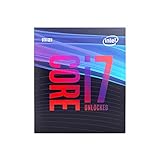
- 8 Cores / 8 Threads
- 3.60 GHz up to 4.90 GHz / 12 MB Cache
- Compatible only with Motherboards based on Intel 300 Series Chipsets
- Intel Optane Memory Supported
- Intel UHD Graphics 630
Tom’s Hardware documented that test configuration, including the 975 at 3.33 GHz with 6.4 GT/s QPI and 8 MB L3 cache. See Tom’s Hardware’s test details. For a retro gaming PC or an existing X58 machine, the processor may be adequate if the rest of the system suits the games. For a new gaming build, judge the total cost and performance of the complete platform rather than buying this CPU on clock speed alone.
What motherboard and BIOS does it need?
The i7-975 uses LGA1366 and was designed for Intel X58-class desktop motherboards. A matching socket is necessary but does not by itself guarantee that a particular board will boot it. Check the motherboard manufacturer’s CPU support list and BIOS notes for the exact board revision and processor before buying; the BIOS must recognize the i7-975.
Recommended Free Tools
Rank #3

- 4 Cores / 8 Threads
- 3.60 GHz up to 4.20 GHz Max Turbo Frequency / 8 MB Cache. Sockets Supported: FCLGA1151, Max Memory Size: 64 GB, Memory Types: DDR4-2133/2400, DDR3L-1333/1600 at 1.35V
- Compatible only with Motherboards based on Intel 100 or 200 Series Chipsets
- Intel Optane Memory Supported
- Intel UHD Graphics 630
If upgrading an existing X58 computer, confirm board support first, then follow the board maker’s BIOS update procedure while the current processor is still installed if the update requires it. Intel’s LGA1366 processor support article covers Core i7-9xx Extreme Edition processors and includes installation, fan-heatsink, integration, and thermal-management guidance.
Does the i7-975 support DDR3-1600?
Not as an officially supported memory speed. Intel specifies DDR3-1066 support for the i7-975. Its specification update says that although some units are factory-configured for a 1333 MHz integrated memory-controller frequency, Intel does not support operation beyond 1066 MHz; it also notes that the processor provides a way to override the controller frequency.
Rank #4

- Model: Intel Core i7 Processor i7-3770
- Clock Speed: 3.4 GHz
- Max Turbo Frequency: 3.9 GHz
- DMI: 5 GT/s
- Intel Smart Cache: 8 MB
Some users may configure memory above the official limit through compatible motherboard settings, but that is outside Intel’s supported specification and depends on the CPU, board, memory, and settings. Do not treat a board’s advertised DDR3-1600 capability as proof that Intel officially supports DDR3-1600 on this processor.
Cooling and power requirements
The 130 W TDP calls for an adequate cooler that is compatible with LGA1366 mounting, plus sound case airflow. When installing a used processor, apply fresh thermal interface material and confirm that the heatsink is mounted securely. Do not assume that a modern cooler fits: check for LGA1366 mounting hardware or a suitable adapter, and consult the cooler manufacturer’s compatibility information.
Best Value

- Game Without Compromise. Play harder and work smarter with Intel Core 14th Gen processors
- 20 cores (8 P-cores plus 12 E-cores) and 28 threads. Discrete graphics required
- Up to 5.6 GHz with Turbo Boost Max Technology 3.0 gives you smooth game play, high frame rates, and rapid responsiveness
- Compatible with Intel 600-series (with potential BIOS update) or 700-series chipset-based motherboards
- DDR4 and DDR5 platform support cuts your load times and gives you the space to run the most demanding games
Intel’s installation and thermal guidance for LGA1366 processors is available in its support article. The bit-tech system power readings cited above describe one test rig; they should not be used as a standalone measurement of the processor’s power consumption.
Independent reader supportYour contribution helps us test, update, and keep practical guides available for everyone.Is an i7-975 worth buying used?
It can make sense as a verified, inexpensive upgrade for an existing X58 owner who wants to keep a period-correct system running or experiment with overclocking. It is much harder to justify for a new build: the LGA1366 platform is discontinued, the processor has a 130 W TDP, and memory speeds above DDR3-1066 are not officially supported by Intel. The total cost of a compatible board, cooling, memory, and a tested CPU can matter more than the processor’s asking price.
Intel lists both tray and boxed versions as discontinued, so current stock and pricing vary and should be checked at the time of purchase. Before paying, use this checklist:
- Verify the processor’s identity and condition with clear photos and, where possible, a working-system test.
- Check the exact motherboard model and BIOS version against its CPU support information.
- Confirm the cooler has LGA1366 mounting support and can handle a 130 W part.
- Price the complete upgrade, including any required board, cooling, and replacement parts—not just the CPU.
- Prefer a returnable or otherwise verifiable purchase over an untested chip when the seller’s claims cannot be confirmed.
Verdict
The i7-975 Extreme Edition is a historically notable unlocked Bloomfield CPU, but its advantage over the i7-965 was modest even in contemporary testing. Buy it for a compatible X58 system, restoration, or retro benchmarking—not as a default choice for a new PC. For an existing owner, verified motherboard support and a sound used chip are the deciding factors.
What’s actually slowing this PC down?
Pick the symptom - the matching free tool is one click away.
Quick Recap
Product prices and availability are accurate as of the date/time indicated and are subject to change. Any price and availability information displayed on Amazon at the time of purchase will apply.

