
What’s actually slowing this PC down?
Pick the symptom - the matching free tool is one click away.
Integrate probabilistic programming by starting with a material business decision, then modeling the uncertainties that could change it. Use the model to make assumptions and ranges of possible outcomes visible—not as a standalone forecast or substitute for risk appetite, independent challenge, and management judgment.
What is probabilistic programming?
Probabilistic programming is a way to describe statistical models in code, including uncertain quantities and the relationships between them, and then use inference to estimate distributions after conditioning on observed data. In a Bayesian model, prior distributions represent assumptions or knowledge before considering the observations; a likelihood describes how the observations relate to the unknown quantities; inference produces posterior distributions that combine the two. PyMC’s official introductory overview describes this model-building and inference workflow.


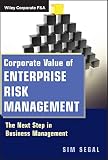

The practical difference from a single-point estimate is that a probabilistic model can express a range of plausible outcomes and uncertainty about model parameters. That is useful only when the range, dependencies, or tail outcomes could affect a decision. A distribution is not a complete map of uncertainty: it reflects the structure, data, and assumptions put into the model, and cannot guarantee that unrecognized risks are represented.
How can probabilistic programming be integrated into enterprise risk management?
Use it within the organization’s existing process for identifying risks, setting appetite, making decisions, validating models, and monitoring outcomes. The sequence below keeps the model tied to an action instead of treating a simulation as the end product. McKinsey’s paper on probabilistic modeling as a decision-making tool similarly discusses prioritizing material upside and downside risks before quantifying the risks that matter.
Quick wins for a faster PC:
Repair Windows errors before they cause bigger problemsFix Now →Fix the driver behind crashes, sound loss and screen glitchesFind Drivers →Clear out junk files and repair common Windows errorsFree Scan →#1 Best Overall
- Define the decision. State what management will decide, what action could change as the risk estimate changes, the decision horizon, and who owns the decision. Specify the threshold or risk appetite the decision will be judged against.
- Identify and rank risk drivers. Map the value drivers and uncertainties relevant to that decision with domain experts. Prioritize material risks rather than attempting to model every conceivable uncertainty.
- Make the evidence and assumptions reviewable. Record data provenance and quality, missing information, dependencies, and expert judgments. Explain how priors and likelihoods represent the evidence. Where data are sparse or the model structure itself is uncertain, communicate those limits instead of presenting the output as precise fact.
- Build a model that fits the decision. Choose distributions, dependency structure, and inference methods suited to the risk and available evidence. PyMC’s documentation covers model specification, fitting, posterior analysis, and multiple computational backends; implementation still requires technical choices that fit the use case.
- Validate independently. Have reviewers who are sufficiently independent of development challenge the model’s conceptual basis, data, code, numerical behavior, and sensitivity to assumptions. Assess predictive or outcome performance where suitable outcomes are available. Validation should test whether the model is fit for its stated purpose, not merely whether it runs as intended.
- Translate the results into decisions. Present ranges, tail outcomes, scenarios, and decision sensitivity in terms decision-makers can use. Compare the resulting risk profile with appetite and capacity, and discuss uncertainties the model does not capture.
- Monitor and govern the model. Assign an owner and a genuinely independent challenger. Track changes in input data, realized outcomes, overrides, model versions, and intended use. Scale review and controls to materiality, exposure, purpose, and the organization’s context.
The computation is only one part of the work. Inference can be computationally demanding, while complex dependencies and assumptions can make review harder. Model use also creates risk: outputs consistent with a model’s design can still lead to flawed decisions if users misunderstand or misuse them. The Federal Reserve’s model-risk guidance says model risk depends on factors including assumptions, complexity, input quality, data constraints, exposure, purpose, and use.
When is a probabilistic model worth using instead of a deterministic one?
A deterministic calculation can be preferable for a stable calculation or a transparent rule. A probabilistic model may be more useful when uncertainty, dependencies, or a range of possible outcomes can change the choice management makes. Neither approach is automatically superior; consider the decision value and operating burden together.
Rank #2
| Consideration | Deterministic model | Probabilistic model |
|---|---|---|
| Decision value | Useful when a stable calculation or clear rule is sufficient to support the action. | Useful when uncertainty or dependencies could change the action or its timing. |
| Evidence and assumptions | Inputs and rules still require scrutiny, but the output may not represent uncertainty explicitly. | Data, prior choices, likelihoods, dependencies, and expert judgments need to be defensible and reviewable. |
| Scenarios and tails | Can calculate specified scenarios, but does not by itself describe a distribution of outcomes. | Can represent distributions, asymmetries, and tail outcomes when the model structure and evidence support them. |
| Validation and explanation | Rules may be easier to trace, though the calculation and its intended use still need review. | Reviewers need to challenge the model structure, code, inference behavior, diagnostics, and interpretation. |
| Compute and operations | May have lower computational demands for a simple calculation. | Inference runtime, reproducibility, deployment, monitoring, and maintenance must be practical for the use. |
| Governance fit | Controls should reflect the model’s materiality, exposure, and purpose. | Controls must also address the added assumptions and validation demands, scaled to materiality, exposure, and purpose. |
Before choosing the probabilistic approach, ask whether uncertainty changes the decision or merely makes a report look more sophisticated. If the answer is the latter, a simpler baseline may be the more useful and governable choice.
How is Bayesian modeling used in financial risk management?
Bayesian modeling can estimate posterior predictive distributions for financial outcomes, including uncertainty about parameters rather than treating estimates as fixed. Depending on the evidence and model design, those distributions can represent asymmetric or heavy-tailed returns and support analysis of measures such as value at risk (VaR), expected shortfall, or stress scenarios.
For an example of the approach, PyMC Labs’ article on Bayesian computation in finance illustrates a Bayesian VaR model using a Student’s t likelihood for an equally weighted portfolio of Apple, JPMorgan, and Pfizer. That is an illustration of one model and portfolio setup, not evidence that Bayesian VaR is universally better or that the example establishes performance in enterprise deployment.
How do you validate a probabilistic risk model?
Validation should challenge both what the model represents and how people use it. A technically correct implementation can still be inappropriate for its decision, data, or operating context. Reviewers should examine whether the outputs behave plausibly under changes to assumptions and inputs, and whether the model’s limitations are clear to users.
Rank #4
- Conceptual soundness: Check whether the modeled relationships, probability distributions, and dependency structure are justified for the risk and decision.
- Data and evidence: Review data quality, provenance, missingness, representativeness, and the treatment of expert judgment. Determine what the data cannot establish.
- Implementation and numerical behavior: Inspect code and inference behavior, reproduce results where practical, and review relevant diagnostics rather than relying on a successful run as proof of validity.
- Sensitivity and scenarios: Test how conclusions move under plausible changes in assumptions and inputs, including stress cases material to the decision. Identify choices that drive the result.
- Predictive or outcome performance: Compare predictions with realized outcomes where appropriate data and time horizons exist. Explain when limited observations prevent strong conclusions.
- Use and controls: Check whether decision-makers understand the output, whether overrides and model changes are tracked, and whether actual use matches the approved purpose.
For banking organizations, the 2026 U.S. interagency guidance discusses development and use, validation and monitoring, governance and controls, and third-party model considerations. It emphasizes risk-based oversight and effective challenge; the guidance is not an enforceable, prescriptive standard.
Independent reader supportYour contribution helps us test, update, and keep practical guides available for everyone.What governance requirements apply?
Requirements depend on jurisdiction, institution, and model use. The cited supervisory materials address particular regulated settings; they should not be treated as universal rules for every enterprise.
U.S. banking organizations
The OCC’s Bulletin 2026-13 describes revised interagency model-risk guidance issued by the OCC, Federal Reserve, and FDIC. It says the guidance is expected to be most relevant to banking organizations with more than $30 billion in total assets, while noting that smaller organizations with significant model-risk exposure may also find it relevant. That figure is a scope statement for the guidance, not a general threshold for enterprise model governance. The bulletin expressly says the guidance does not establish enforceable or prescriptive requirements.
Specified UK regulated firms
The Bank of England Prudential Regulation Authority’s current SS1/23 page describes five model-risk principles: model identification and classification; governance; development, implementation and use; independent validation; and mitigants. The page marks the current version as published and effective on 23 April 2026. These principles apply to specified regulated UK firms, not to every business in every jurisdiction.
What are the main limits of this approach?
- Assumptions can dominate the output. Sparse or poor-quality data, uncertain dependencies, or weakly supported prior choices can produce distributions that look rigorous without being well grounded.
- Not every uncertainty is quantifiable. Structural uncertainty and unrecognized risks may sit outside the model. A narrow probability distribution does not prove that the business faces little uncertainty.
- Complexity adds operating cost. Inference runtime, reproducibility, deployment, specialist skills, independent validation, and ongoing monitoring all require resources.
- Good outputs can still be misused. Decision-makers may treat estimates as certainties, apply results beyond the intended use, or ignore limitations and appetite. Governance must address people and decisions as well as code.
- Adoption evidence should not be overstated. The cited examples and vendor materials do not establish a representative cross-industry adoption rate or prove that probabilistic programming has become standard ERM practice.
Probabilistic programming is most defensible when a material decision genuinely depends on uncertainty and when the organization can support transparent assumptions, independent validation, and monitoring. Keep a simpler method where it answers the question adequately; use probabilistic outputs as one input to appetite and managerial judgment, not as a replacement for either.
Quick Recap
Product prices and availability are accurate as of the date/time indicated and are subject to change. Any price and availability information displayed on Amazon at the time of purchase will apply.
The Tool Desk
Outbyte PC Repair FREERepair Windows errors before they cause bigger problemsFix Now →Outbyte Driver Updater FREEScan for outdated or missing drivers - takes under a minuteDriver Scan →
