
Do these 3 things before closing this tab:
1Clear out junk files and repair common Windows errors2Fix the driver behind crashes, sound loss and screen glitches3Repair Windows errors before they cause bigger problemsiTechGuides is reader-supported. When you buy through links on our site, we may earn an affiliate commission. As an Amazon Associate I earn from qualifying purchases. Learn more
The available evidence does not show why people have not run Glasshouse. Its creator, woochan, points to plausible practical hurdles—building an ingest path, paying for LLM judging, and handling a reported 1.97-million-token standard run—but presents them as guesses, not established causes. There is also a release-status mismatch: a September 28, 2026 article describes a standard run, while the linked GitHub repository, accessed October 7, calls v0.1 a draft, says no Glasshouse benchmark has been released, and shows no submissions.
That leaves two open questions: whether prospective participants can currently run the benchmark as described, and what specifically has stopped them. The repository’s rules offer a thoughtful account of intended fairness; they are not evidence of a completed, independently reproduced evaluation.

What is Glasshouse meant to measure?
In a September 28, 2026 DEV Community post, woochan describes Glasshouse as an evaluation of long-term memory across conversations, multiple languages, and photographs. The post reports 2,847 questions, 10 languages, and 50 photographs. Those are the author’s descriptions of the intended benchmark, not independently verified measurements from a released evaluation.
Free tools Windows power users keep installed
One-click scans. No signup required.
The design aims to report different evaluation axes separately rather than compressing performance into one headline score. It also treats uncertainty and conflicting memories as behaviors to test. If an earlier fact has changed, the expected behavior is to acknowledge uncertainty rather than confidently repeat the obsolete fact. If stored facts conflict and the conflict has not been resolved, the system should say so.
#1 Best Overall

- Wide range of professional automotive specialy tools
- Professional grade
- Heavy duty design
The author says the reader and judge are fixed by version, and that each submission includes records for individual questions so others can recompute the result. The repository’s rules similarly emphasize fixed readers, judges, and prompts, public per-question records, a harness intended for customers to use, and recorded runs. These are design commitments. They do not establish that a released benchmark has been run or that a reported score has been reproduced by someone else.
What do the “15 stars, 0 runs” numbers tell us?
They describe a moment, not a durable measure of interest. In the September 28 post, woochan reported 15 stars, 0 forks, 0 issues, and 0 submissions. When the repository was accessed on October 7, it displayed 16 stars. The star count had already changed, and stars alone cannot tell us whether readers tried to run the project, where they stopped, or why.
Rank #2

- Effortless DIMM Installation: Seat memory modules with minimal effort, reducing hand strain and fatigue.
- Textured Base for Better Grip: Enhanced grip ensures secure handling during DIMM installation.
- Custom Channels for Memory Protection: Specially designed channels protect your non-shielded or bare DIMMs from damage during installation.
- 100% Designed, Made, Shipped in USA. Support Small Business
The same post says the standard run involves 1.97 million tokens. The repository’s contribution rules set a different kind of threshold: three runs count as a result, and five count as certified. Those run-count rules describe how results are classified; they are not evidence that any Glasshouse runs have been completed.
Recommended Free Tools
Which barriers does the author suspect?
Woochan names several possible sources of friction, but does not establish that any one of them caused the lack of submissions. The post does not provide participant interviews, per-run prices, or a cost comparison.
- Participants must build an ingest path. The author says the project does not ship a benchmark runner for storing the corpus, leaving participants to implement ingestion themselves.
- Judging uses a paid API. The judge runs through OpenRouter with the participant’s own key, according to the author. The post does not state a total cost per run.
- The reported standard workload is large. The author reports 1.97 million tokens for a standard run. The post does not break that figure down into components or establish what it costs across providers.
- The selected reader model may be costly. The post identifies the fixed reader as “claude-opus-5.5” and says it is not the cheap option. It gives no price comparison or estimate of the model’s contribution to overall run cost.
These are credible things for a prospective participant to inspect, but the available information cannot say whether they are the reason participation is low. It also cannot establish how much setup or expense a runnable release would actually require.
Is there a runnable release, and what might lower the barrier?
The project’s status is unclear from the two dated sources. The September 28 article discusses a standard run and says the author had not mentioned a core tier and dry mode. A commenter suggested publishing baseline runs and offering a small, low-cost introductory split so people would have something concrete to compare. That was a reader’s proposal, not evidence that these changes would bring participants in.
Rank #4

- Effortless DIMM Installation: Seat memory modules with minimal effort, reducing hand strain and fatigue.
- ESD Safe! Printed in a ESD safe filament using carbon nano tubes.
- Textured Base for Better Grip: Enhanced grip ensures secure handling during DIMM installation.
- Custom Channels for Memory Protection: Specially designed channels protect your non-shielded or bare DIMMs from damage during installation.
- 100% Designed, Made, Shipped in USA. Support Small Business
The repository accessed October 7 calls v0.1 a draft, says no Glasshouse benchmark has yet been released, and has an empty submissions directory. It does not establish whether the core tier or dry mode can currently be used as an accessible, runnable release. Until the project’s status is clarified, it is difficult to distinguish “people tried it and stopped” from “people could not yet run the intended benchmark.”
The Tool Desk
Outbyte Driver Updater FREEFix the driver behind crashes, sound loss and screen glitchesFind Drivers →Outbyte PC Repair FREERepair Windows errors before they cause bigger problemsFix Now →If you opened the project and closed the tab, the most useful information would be the exact point that happened: finding the corpus, building ingestion, configuring the judge, understanding expected costs, or something else. That would help identify a practical obstacle without assuming one in advance.
Best Value
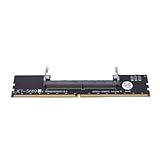
- Works with all standard DDR5 modules, letting you use laptop RAM in a desktop PC. Perfect for repair shops, IT teams, and PC builders who deal with different system types.
- Converts laptop DDR5 memory for desktop use with and smooth data transfer. Great for testing, upgrading, or benchmarking without compatibility worries.
- Easy plug-and-play setup—no drivers or software needed. Just connect and go, whether you're running diagnostics, upgrading memory, or optimizing system performance.
- Built with premium black PCB and reinforced contacts for long-lasting use in busy work environments. Compact and sturdy, it handles repeated installations and testing with ease.
- Designed for reliable memory testing, it reduces signal interference so you can accurately check for faulty modules or benchmark performance. A trusted tool for technicians and DIY builders.
How does Glasshouse address benchmark fairness?
Its stated approach is to make evaluation conditions and evidence inspectable. Fixing reader, judge, and prompts by version is intended to make submissions more comparable. Publishing per-question records is intended to let others examine and recompute a result. The contribution guide requires both a manifest and per-question records, with enough detail for someone else to check how the result was produced.
The repository says three runs count as a result and five as certified. Repetition and public records can make a claim more auditable, but rules alone cannot demonstrate that runs happened, that they followed the rules, or that the benchmark produces a fair comparison in practice. That requires accessible execution and reproducible submissions.
What about the operator’s conflict of interest?
The repository acknowledges that Wontopos builds memory infrastructure and therefore competes in the area it administers. It says Wontopos submissions follow the same process, that the host does not approve its own submissions, and that the published rules govern inclusion and verification. It also invites other memory companies to co-administer.
Those are relevant safeguards, but they do not make bias impossible. Independent co-administration, transparent records, and consistent application of the rules would matter in practice, especially if the operator or a competitor submits a result.
What remains unanswered?
The benchmark has a specific fairness rationale and a set of proposed safeguards. The adoption question remains open: the author’s suspected barriers are not confirmed causes, and the article and repository do not clearly establish whether the described benchmark is currently released in runnable form. For a useful answer, the project needs both a clear statement of what can be run now and candid feedback from people who considered participating but did not.
Quick Recap
Product prices and availability are accurate as of the date/time indicated and are subject to change. Any price and availability information displayed on Amazon at the time of purchase will apply.

