
What’s actually slowing this PC down?
Pick the symptom - the matching free tool is one click away.
iTechGuides is reader-supported. When you buy through links on our site, we may earn an affiliate commission. As an Amazon Associate I earn from qualifying purchases. Learn more
You can build a searchable monster reference for your own D&D games in Google Gemini Canvas, and one writer has done exactly that: a layout that puts each monster’s stat block, short lore, and quick notes on abilities, weaknesses, and encounter use in one place. Canvas is a general document and code workspace, not a built-in D&D feature, so the value lies in how you set it up and what you verify. This guide explains what Canvas offers, how to organize a monster reference inside it, and how to choose the edition and source your notes should follow.
What Google Canvas is and what it is not
Google describes Gemini Canvas as an interactive workspace for creating and refining documents and code. In Google’s March 18, 2025 announcement, Dave Citron, Senior Director of Product Management for the Gemini app, said: “Canvas is a new interactive space within Gemini designed to make creating, refining and sharing your work easy.” According to the same announcement, changes appear in real time, work can be exported to Google Docs, and generated web app code can be previewed.
![The Young Adventurer's Collection Box Set 1 [Dungeons & Dragons 4 Books]: Monsters & Creatures, Warriors & Weapons, Dungeons & Tombs, and Wizards & ... & Dragons Young Adventurer's Guides)](https://m.media-amazon.com/images/I/41A0YrQYoQL._SL160_.jpg)
That description is about what the tool is for. It does not promise factual accuracy about any game, and it does not include a monster database. Any D&D content in Canvas comes from you, from the text you paste or dictate, and from the sources you check it against.
The Tool Desk
Outbyte PC Repair FREEClear out junk files and repair common Windows errorsFree Scan →Outbyte Driver Updater FREEFix the driver behind crashes, sound loss and screen glitchesFind Drivers →What the writer built
According to the author’s own account, as reported in a syndicated excerpt of the article, the project is a searchable layout. Each monster entry combines a stat block, concise lore, and quick-reference notes about abilities, weaknesses, and encounter use. The stated problem is familiar to most Dungeon Masters: a session involves frequent lookups in the Monster Manual, and the physical book is not laid out for speed.
#1 Best Overall
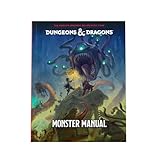
- MONSTERS GALORE—Venture into the mightiest Monster Manual yet! In addition to iconic D&D favorites like dragons and mind flayers, this monstrous menagerie introduces over 75 brand-new monsters and contains over 500 unique creatures in total.
- INTRIGUING NEW ENCOUNTERS—Inject more variety into your games with unique encounters! Raise the stakes with terrifying new monsters for higher level play, such as the arch-hag and blob of annihilation. Craft unusual and memorable NPC encounters by using over 40 humanoid stat blocks as inspiration.
- STUNNING ARTWORK—Gaze upon the legendary D&D dragons in all their splendor. In this book of majestic beasts, we’ve created stunning redesigns of the chromatic and metallic dragons, and over 300 pieces of breathtaking new artwork for almost every monster.
- DESIGNED JUST FOR YOU—Easily locate whatever monster you’re looking for and save prep time with revised, easy-to-use stat blocks. We’ve categorized all monsters by creature type and have redesigned their stat blocks to be easier to use and understand. Running encounters has never been easier!
- PART OF THE 2024 CORE COLLECTION—1 of 3 revised Dungeons & Dragons core rulebooks, the 2024 Monster Manual is designed for use with the fifth edition 2024 Player’s Handbook and 2024 Dungeon Master’s Guide
The reported result is faster retrieval of the details a Dungeon Master needs at the table. The author’s account is the only description of the project available here, so treat the layout as one reasonable pattern rather than a verified template.
One platform limit appears in the same excerpt. The author found that the text-formatting work was easier on desktop than on mobile, and reports that Google’s Canvas page confirmed this. Whether that still holds for the version you use is not established here, so check the layout on the device you plan to use at the table before relying on it.
Rank #2

- COMPLETE YOUR COLLECTION—Get all three 2024 Core Rulebooks and discover new character options you’ll love, creative world-building inspiration, stunning artwork, and monsters galore
- STUNNING ARTWORK—Delight in spectacular new artwork for character classes, subclasses, weapons, armor, legendary D&D figures, almost every monster, and so much more
- FRESH & ENGAGING GAMEPLAY—Change up your combat style with fascinating new Weapon Masteries for your character class. Our new Tools and Crafting system lets you use your tools to craft items and impact travel and exploration
- NEW CHARACTER OPTIONS YOU’LL LOVE—Create unforgettable characters with 12 core classes, 48 intriguing subclasses, and 10 distinctive species. Buff up your character’s backstory with 16 compelling backgrounds and 75 fantastic feats
Choose the edition before you build anything
The most common error in a home-built monster reference is mixing editions. A stat block from one edition can look plausible next to a stat block from another, and nothing in a plain document warns you. Decide which edition your table uses, label every entry with it, and treat any other edition as a separate reference. The sources below illustrate the differences you will need to track.
Quick wins for a faster PC:
Scan for outdated or missing drivers - takes under a minuteDriver Scan →Repair Windows errors before they cause bigger problemsFix Now →Fix the driver behind crashes, sound loss and screen glitchesFind Drivers →| Source | Edition or label | Coverage and format |
|---|---|---|
| 2014 5e Monster Manual (D&D Beyond listing) | 2014 edition, marked Legacy on the listing | Coverage not stated on the listing; the listing is a legacy product page |
| 2024 Monster Manual (official D&D store search result) | 2024 edition | Listed as a digital plus physical bundle; full product details were not visible in the search result |
| SRD v5.2.1 (D&D Beyond) | Open rules resource covering a selection of 5.5e material | Broad but intentionally incomplete; some monsters and setting names are omitted, and it is not meant to replicate the whole D&D brand or setting |
The table shows why the SRD is useful but limited. It can support many rules lookups, yet it cannot stand in for a complete Monster Manual. If your reference needs a creature that the SRD omits, you will need an authorized book or product for that edition.
Rank #3

- NIFTY RESOURCES FOR DUNGEON MASTERS—We've packed this book with incredibly useful tools and advice for Dungeon Masters of all levels. Make your game sessions special with over 400 total and 18 new magic items, practical solutions for common Dungeon Master pitfalls, and Greyhawk, a customizable premade campaign setting.
- WONDERFUL WORLDBUILDING INSPIRATION—Introduce inspiring new mechanics into your game! Tinker away with revised rules for crafting magic items, creating NPCs, and more. Excite your party and keep them engaged between sessions with the new system for bastions, which are strongholds built and controlled by players.
- STUNNING ARTWORK—Delight in spectacular artwork featuring new magic items, legendary D&D figures, cinematic fantasy landscapes, a double-sided poster map of the Greyhawk setting, and more!
- LEVEL UP YOUR DUNGEON MASTER EXPERIENCE—We’ve built useful handouts and resources to help you keep track of your campaigns and added a Lore Glossary that helps you easily find information about key D&D characters and locations.
- PART OF THE 2024 CORE COLLECTION—1 of 3 revised Dungeons & Dragons core rulebooks, the 2024 Dungeon Master’s Guide is designed for use with the fifth edition 2024 Player’s Handbook and 2024 Monster Manual
How to build a monster reference in Canvas
- Name the edition in the document title. For example, use a heading such as “Monster reference, 2024 edition” so every page you print or share carries the label.
- Ask Gemini to build a searchable document in Canvas. Request one entry per creature with consistent fields. The fields below mirror the layout the author describes; they are a suggested starting point, not the author’s exact prompt.
- Creature name and creature type
- Key abilities and special traits
- Weaknesses and resistances
- Source book and page number
- Encounter notes, such as tactics or common pairings
- Edition label
- Separate your table notes from source text. Keep your own shorthand in a clearly labeled field, and keep any text taken from the book in its own field with the book and page recorded. This makes it obvious what to re-check and what you wrote yourself.
- Check each rules detail against the official source for that edition. Do this before the session, not during it. A monster’s damage, save, or recharge value that you mistype will be read aloud with confidence.
- Edit and export as needed. Use Canvas to refine entries as you go. If you want a copy outside Gemini, Canvas can export the work to Google Docs. Open the finished document on the device you will use at the table and confirm that the layout reads cleanly.
- Use an authorized Monster Manual for complete coverage. Do not assume the SRD contains every monster or setting detail. For creatures it omits, your own entry is only as reliable as the book you copied from.
Advantages and trade-offs
- Faster scanning. One layout with consistent fields lets you find a creature’s key traits without flipping through a book. This is the core benefit the author reports.
- Your own priorities. You can record only the notes you use, such as encounter tactics that match your table’s play style.
- Manual upkeep. Every entry is something you wrote or pasted, so errors and omissions are yours to fix. Canvas does not verify rules.
- Edition risk. Entries from different editions can sit side by side and look equally valid unless you label them.
- Source and copying questions. Reproducing large blocks of published text in a personal document may not suit every use, so many readers prefer short paraphrased notes with page references.
What this experiment does and does not establish
The project is a reported personal setup. The available description does not include an independent test of speed, accuracy, or reliability, and there is no comparison showing that a Canvas reference retrieves information faster or more accurately than the book. The official 2024 and 2014 products differ in format and coverage, so any speed claim depends on your own layout and how well you know the book. What the evidence supports is narrower: Canvas is a flexible workspace in which you can build a labeled, searchable monster reference, provided you keep edition labels, source notes, and verification in place.
If the goal is a complete, authoritative monster reference, start with an official book for your edition and use a Canvas document as a fast index on top of it.
Quick Recap
Best Value

- UNLEASH NEW POSSIBILITIES—Introducing the 2024 Player’s Handbook, the new and improved guide for fifth edition Dungeons and Dragons. Redesigned with 10 years of feedback from the D and D community, the essential Dungeons and Dragons rulebook is bigger and better than ever before
- NEW CHARACTER OPTIONS YOU’LL LOVE—Create unforgettable characters with 12 core classes, 48 intriguing subclasses, and 10 distinctive species. Buff up your character’s backstory with 16 compelling backgrounds and 75 fantastic feats.
- STUNNING ARTWORK—With vibrant new illustrations of every single character class, subclass, background, species, weapon, and armor, our thrilling artwork also features new and familiar spells, brought to life for the first time ever.
- FRESH and ENGAGING GAMEPLAY—Change up your combat style with fascinating new Weapon Masteries for your character class. Our new Tools and Crafting system lets you use your tools to craft items and impact travel and exploration.
- DESIGNED JUST FOR YOU—We’ve thoughtfully redesigned this book with an improved layout, better organization, and an alphabetized Rules Glossary. Find whatever you’re looking for with ease

