
Hungary’s electronics industry is more than a low-cost assembly base: it combines export-oriented contract manufacturing with automotive electronics, industrial equipment, batteries, consumer products and selected R&D. HIPA’s 2025 Q3 profile puts the sector’s production value at €30.3 billion and employment at 161,000, while its investment-promotion figures show electronics attracting more than half of supported investment volume in 2025.
What Hungary manufactures in electronics
The sector covers a broad mix of production rather than one dominant product category. HIPA’s industry profile includes electronics manufacturing services (EMS), cable and construction products, IT and communications equipment, automotive electronics, batteries, industrial equipment, consumer electronics and R&D.


EMS and contract manufacturing are a major foundation. Flex, Jabil, Foxconn and Hungarian-owned Videoton are among the prominent examples. HIPA says five of the world’s eight largest EMS manufacturers have operations in Hungary. These companies are not interchangeable: their activities span different customers, product types and engineering capabilities.
Automotive electronics is one of the clearest routes into higher-value work. Flex’s expansion in Zalaegerszeg is aimed at electric- and hybrid-vehicle components for BMW, Ford, Volkswagen and Tier 1 suppliers. HIPA describes the project as a €90 million investment creating 210 jobs, including 20 R&D positions.
#1 Best Overall
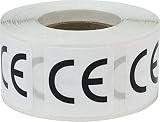
- CE Mark Labels for Compliance Identification: These square labels display the European Conformity CE symbol, helping identify products that meet applicable European safety standards.
- 500 Total 1 Inch Square Labels Per Roll: Each roll includes 500 adhesive CE stickers measuring 1 inch square, providing a dependable supply for product labeling.
- Ideal for Manufacturing and Product Labeling: Perfect for electronics, equipment, tools, machinery, and components that require clear CE marking for identification.
- Easy to Peel and Apply: Stickers peel smoothly from the roll and apply easily to product packaging, equipment surfaces, devices, and manufacturing labels.
- Made in the USA with Durable Label Material: Manufactured in the USA using dependable adhesive and quality label stock designed for consistent use on products and packaging.
Other companies on HIPA’s list illustrate the industry’s range: Bosch, GE, Infineon, Lenovo, Samsung Electronics, Schneider Electric and Siemens, alongside the EMS companies. Their presence does not mean every company makes the same products or performs the same part of the value chain.
Why the industry is changing
Hungary’s electronics base developed around multinational production and contract manufacturing. Its newer story is not that the country designs every layer of the global electronics stack; it is that an established production base can support integrated manufacturing, supplier networks, export logistics and selected engineering work.
Rank #2
Flex’s Hungarian R&D project offers a concrete example of that progression. It focuses on predicting the lifetime of high-voltage automotive electronic units through modeling and simulation, in cooperation with the University of Pannonia and Budapest University of Technology and Economics. The combination of production, supplier capability and targeted R&D is a more precise description of the shift than simply calling Hungary a technology-design hub.
How large and export-oriented the sector is
In HIPA’s 2025 Q3 industry profile, electronics production value was €30.3 billion, equivalent to 23.7% of total manufacturing production. The profile reported 161,000 employees, a 93.8% export ratio and a 30.7% share of Hungary’s total exports. These are sector-wide profile figures for that reporting period, not a count of projects supported by HIPA.
Quick wins for a faster PC:
Repair Windows errors before they cause bigger problemsFix Now →Fix the driver behind crashes, sound loss and screen glitchesFind Drivers →Recent export performance also shows why the product mix matters. In its April 2026 analysis of 2025 trade, HIPA reported that exports of digital data-processing units rose 64.4%, an increase of €2.7 billion, to €6.8 billion. In the same period, lithium-ion battery exports fell 23.1% to €5.2 billion. Digital data-processing units thus overtook batteries among the export categories highlighted in that analysis.
The shift illustrates both diversification and exposure to changing demand. Electronics output and exports can move with orders for computers and automotive products, battery demand and conditions in European industry. KSH’s 2025 manufacturing snapshot recorded a 14.5% rise in output for computer, electronic and optical-product manufacturing; it was one of only two manufacturing subsections to grow in that snapshot. That output measure is not the same as HIPA’s broader electronics-sector production value or export figures.
Rank #4
Where investment is going
HIPA-supported project figures indicate sustained investor interest in electronics, but they should not be read as a census of all investment in Hungary. They cover projects under HIPA’s investment-promotion mandate.
| Year | HIPA-supported investment | Electronics share | Electronics-related jobs |
|---|---|---|---|
| 2024 | €10.3 billion in supported investment | 38.7%, or €3.98 billion | 3,368 planned jobs |
| 2025 | €7.069 billion in supported investment | More than 55%, or €3.88 billion | 6,232 jobs |
The reported electronics investment amount was similar in the two years, while its share of the HIPA-supported total was higher in 2025 because that year’s total supported investment was lower. The jobs figures are reported for the respective supported project portfolios; the 2024 figure is explicitly described as planned jobs.
Free tools Windows power users keep installed
One-click scans. No signup required.
Location is not synonymous with Budapest. More than 84% of HIPA-supported projects in 2025 were outside the capital, making regional industrial parks and local labor pools part of the investment picture. Flex’s Zalaegerszeg project is one example of activity beyond Budapest.
Independent reader supportYour contribution helps us test, update, and keep practical guides available for everyone.What Hungary offers manufacturers—and what to assess
The strongest case for Hungary is the combination of an established EMS base, automotive and industrial suppliers, export-oriented production, and a workforce pipeline spanning university engineering and vocational training. HIPA cites 29,000 engineering university students, 10,800 graduates and 63,000 technical vocational students. These are talent-pipeline figures in HIPA’s profile, not a guarantee that a specific company can recruit a given number of workers in a particular location.
For a company comparing European manufacturing locations, the headline sector totals are only a starting point. Assess the actual site and supply chain against:
- Export connectivity and logistics: determine whether transport routes, lead times and customer locations fit the plant’s products.
- Labor availability and cost: test recruitment prospects for both engineers and vocationally trained technicians in the specific region.
- Supplier depth: check whether the required EMS, automotive, testing and industrial suppliers are accessible for the intended production process.
- Incentive terms: confirm eligibility, timing and conditions directly; HIPA-supported project totals do not establish that a particular investment will receive support.
- Site readiness and resilience: compare industrial-park capacity, utilities and disaster-risk exposure for candidate locations.
- Demand-cycle exposure: model how automotive, battery and broader European industrial cycles could affect orders and capacity use.
The outlook: meaningful momentum, not immunity from cycles
Hungary has a substantial electronics manufacturing base and evidence of movement into more specialized automotive electronics and engineering. The export growth of digital data-processing units alongside falling battery exports shows that the sector’s leading products can change quickly. Its prospects therefore depend not only on investment announcements, but on whether companies can sustain orders, develop suppliers and recruit the skills needed for increasingly complex production.
What’s actually slowing this PC down?
Pick the symptom - the matching free tool is one click away.
HIPA CEO István Joó summarized one part of the mobility-sector argument this way: “The future of mobility in Europe lies in innovation and cooperation, not in tariffs.” The statement reflects the importance of collaboration to automotive electronics; it does not remove the need for manufacturers to evaluate cost, demand and site-specific risks.
Quick Recap
Product prices and availability are accurate as of the date/time indicated and are subject to change. Any price and availability information displayed on Amazon at the time of purchase will apply.

