
What’s actually slowing this PC down?
Pick the symptom - the matching free tool is one click away.
iTechGuides is reader-supported. When you buy through links on our site, we may earn an affiliate commission. As an Amazon Associate I earn from qualifying purchases. Learn more
A Northwestern University team has demonstrated a lab-scale process that uses pulsed electricity, a nonthermal methane plasma, copper oxide and water to make methanol in one step. It runs at ambient pressure, but it is not energy-free—and the available results do not establish that the methanol has lower lifecycle emissions. The process is promising; its efficiency, emissions and commercial viability remain open questions.
How does zapping methane make methanol?
The reactor sends methane through a porous glass tube, or frit, coated with copper oxide. Pulses of high-voltage electricity ionize some of the methane, creating a nonthermal plasma. The reaction takes place across the plasma, solid catalyst and surrounding liquid—a deliberately engineered interface rather than a plasma acting alone. Northwestern described the process in a university release in 2026 (Northwestern University); the one-step, ambient-pressure pathway was also described in the article abstract published in the Journal of the American Chemical Society on April 15, 2026 (ACS publication record).
As methane reacts, methanol dissolves into the water. The researchers present this transfer as a way to quench the reaction quickly and help limit methanol’s further oxidation into other products. Under optimized conditions, argon dilution improved the reported selectivity, according to Northwestern’s account.
The electricity is essential: the plasma is generated by electrical pulses. “Ambient-pressure” describes the operating pressure, not the energy demand or the absence of other process requirements.
#1 Best Overall
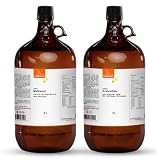
- MAXIMUM PURITY: Lab-grade Acetonitrile & Methanol for superior chromatographic results.
- OPTIMAL SEPARATION: Achieve precise analyte elution and peak resolution with our solvents.
- ENHANCED PERFORMANCE: Boost efficiency and accuracy in HPLC applications.
- This LiChrom-03 consist of 2 (Two) 4L Bottles of LiChrom Acetonitrile HPLC grade, and 2 (Two) 4L Bottle of LiChrom Methanol HPLC grade
- VERSATILE USAGE: Ideal for pharmaceutical, environmental, and research laboratories.
What do the reported methanol figures mean?
Northwestern reported two figures that describe different denominators. They should not be treated as interchangeable or as measures of how much methane was converted.
| Reported result | What it measures |
|---|---|
| 96.8% methanol selectivity | Share of the liquid products that was methanol under optimized conditions with argon. |
| About 57% of all products | Share of the combined gas and liquid products that was methanol. |
Neither figure is a methane conversion percentage. The reported results also do not provide a complete product mass balance, so they cannot by themselves show how much of the methane feed became methanol or how much remained unreacted.
Rank #2
![[239 PCS] Organic Chemistry Model Kit | Molecular Model Kit for Students](https://m.media-amazon.com/images/I/511A7UN+wEL._SL160_.jpg)
- 𝐇𝐀𝐍𝐃𝐒-𝐎𝐍 𝐂𝐇𝐄𝐌𝐈𝐒𝐓𝐑𝐘 𝐋𝐄𝐀𝐑𝐍𝐈𝐍𝐆: Take chemistry beyond memorizing formulas with an interactive learning experience students can physically handle. Manipulating the pieces of this molecule kit gives learners a more engaging way to practice identifying atoms, connecting bonds, and studying molecular structures.
- 𝐓𝐔𝐑𝐍 𝟐𝐃 𝐃𝐈𝐀𝐆𝐑𝐀𝐌𝐒 𝐈𝐍𝐓𝐎 𝟑𝐃 𝐌𝐎𝐃𝐄𝐋𝐒: Make textbook structures easier to interpret by transforming flat molecular diagrams into physical 3D models. With the help of this chemistry modeling kit students can see the position of atoms and bonds from different angles, helping them better understand molecular shape and arrangement.
- 𝐁𝐔𝐈𝐋𝐃, 𝐄𝐗𝐏𝐋𝐎𝐑𝐄 & 𝐑𝐄𝐁𝐔𝐈𝐋𝐃: Encourage active discovery by letting students construct a structure, adjust its arrangement, and build it again for continued practice. The reusable pieces make it easy to explore different molecular configurations without needing a new model for every lesson.
- 𝐄𝐅𝐅𝐎𝐑𝐓𝐋𝐄𝐒𝐒 𝐀𝐒𝐒𝐄𝐌𝐁𝐋𝐘: Designed for smooth, straightforward model building, the pieces connect easily so students can spend less time figuring out how to assemble the kit and more time exploring chemistry. Simple construction also makes it convenient for repeated classroom or study use.
- 𝐆𝐈𝐕𝐄 𝐓𝐇𝐄 𝐆𝐈𝐅𝐓 𝐎𝐅 𝐃𝐈𝐒𝐂𝐎𝐕𝐄𝐑𝐘: Bring a creative twist to science gifting with this organic chemistry molecular model kit made for curious students, chemistry fans, and STEM enthusiasts. Whether for a birthday, classroom reward, holiday, or special occasion, it gives recipients something interesting to build, examine, and enjoy.
Is the plasma process really low-emission?
It may offer a route to methanol with lower emissions, but that has not been demonstrated by the reported results. The process uses electricity and avoids the conventional sequence of high-temperature steam reforming followed by high-pressure methanol synthesis. Whether that translates into lower greenhouse-gas emissions depends on factors including the electricity source, energy use, product recovery and the full lifecycle of the system.
Northwestern’s release gives conventional steam reforming temperatures above 800°C and methanol synthesis pressures 200–300 times standard atmospheric pressure as background figures—not as results from a controlled, like-for-like energy or emissions comparison. The sources do not report energy consumed per unit of methanol, a lifecycle greenhouse-gas assessment or net emissions. The work therefore supports describing a potentially cleaner production pathway, especially with low-carbon electricity, but not claiming zero emissions or a proven emissions reduction.
Rank #3
![[118 PCS] Organic Chemistry Model Kit | Molecular Model Kit for Students](https://m.media-amazon.com/images/I/41sdPAEl5gL._SL160_.jpg)
- 𝐇𝐀𝐍𝐃𝐒-𝐎𝐍 𝐂𝐇𝐄𝐌𝐈𝐒𝐓𝐑𝐘 𝐋𝐄𝐀𝐑𝐍𝐈𝐍𝐆: Take chemistry beyond memorizing formulas with an interactive learning experience students can physically handle. Manipulating the pieces of this molecule kit gives learners a more engaging way to practice identifying atoms, connecting bonds, and studying molecular structures.
- 𝐓𝐔𝐑𝐍 𝟐𝐃 𝐃𝐈𝐀𝐆𝐑𝐀𝐌𝐒 𝐈𝐍𝐓𝐎 𝟑𝐃 𝐌𝐎𝐃𝐄𝐋𝐒: Make textbook structures easier to interpret by transforming flat molecular diagrams into physical 3D models. With the help of this chemistry modeling kit students can see the position of atoms and bonds from different angles, helping them better understand molecular shape and arrangement.
- 𝐁𝐔𝐈𝐋𝐃, 𝐄𝐗𝐏𝐋𝐎𝐑𝐄 & 𝐑𝐄𝐁𝐔𝐈𝐋𝐃: Encourage active discovery by letting students construct a structure, adjust its arrangement, and build it again for continued practice. The reusable pieces make it easy to explore different molecular configurations without needing a new model for every lesson.
- 𝐄𝐅𝐅𝐎𝐑𝐓𝐋𝐄𝐒𝐒 𝐀𝐒𝐒𝐄𝐌𝐁𝐋𝐘: Old nobby molecular kit is designed for smooth, straightforward model building, the pieces connect easily so students can spend less time figuring out how to assemble the kit and more time exploring chemistry. Simple construction also makes it convenient for repeated classroom or study use.
- 𝐆𝐈𝐕𝐄 𝐓𝐇𝐄 𝐆𝐈𝐅𝐓 𝐎𝐅 𝐃𝐈𝐒𝐂𝐎𝐕𝐄𝐑𝐘: Bring a creative twist to science gifting with this organic chemistry molecular model kit made for curious students, chemistry fans, and STEM enthusiasts. Whether for a birthday, classroom reward, holiday, or special occasion, it gives recipients something interesting to build, examine, and enjoy.
How does it compare with conventional production?
The distinction established so far is mainly about process design and operating conditions. The researchers report a one-step, electrified, ambient-pressure approach; Northwestern describes conventional production as a high-temperature reforming step followed by high-pressure synthesis. That contrast does not establish which route uses less total energy or produces less methanol over a full operating life.
| Comparison point | Plasma demonstration | Conventional process described by Northwestern |
|---|---|---|
| Process sequence | One-step, electrified methane-to-methanol pathway. | Steam reforming followed by methanol synthesis. |
| Operating conditions reported | Ambient pressure; pulsed high-voltage electricity is used. | Steam reforming starts above 800°C; synthesis is reported at 200–300 times standard atmospheric pressure. |
| Emissions and energy comparison | No lifecycle emissions result or energy use per unit of methanol is reported. | The cited figures are background process conditions, not a controlled comparison of energy or emissions. |
The available results do not establish a fair comparison of throughput, catalyst life, operating cost, purification efficiency or lifecycle emissions. Those questions require measurements beyond the reported laboratory demonstration.
Rank #4

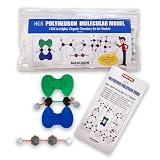
- ★ ADVANCED LEARNING SCIENCE EDUCATION KIT --- Perfect chemistry model kit for modeling simple and small to more advanced and complex chemical structures for schools and college level, students of all ages, researchers and enthusiasts. Fun and interactive early learning molecular set for kids of all years and for use in the classroom.
- ★ HIGH QUALITY --- Made from high quality durable materials designed for easy construction and perfect fit. These Molecular Model Kit pieces are color coded to national standards for easy ID. Organic Chemistry Model Kit includes box for easy storage and transport with your other textbooks, notes, and books. Excellent for the classroom.
- ★ POWERFUL FUNCTIONS --- This Molecular Model Kit has a total of 122 pieces including short link remover tool. Super easy to build models for organic and inorganic chemistry, This model contains C, H, O, N, S and a variety of single and double bonds, Can be put high school, university chemi stry in most of the organic or inorganic molecular structure model for the study of experimental operation.
- ★ QUICK AND EASY ASSEMBLY OF COMPLEX STRUCTURES --- Atoms and bonds that are perfectly suited to being connected and disconnected easily without making your fingers hurt. We've also included a link remover to make the task of easy.
- ★ CONVENIENT STORAGE --- The pieces come in a slim plastic box for convenient storage. See the pictures on this listing for a full understanding of what's inside!
What remains before this could be used at scale?
This is a laboratory-scale demonstration, not a deployed methane-capture system or a commercially ready process. Northwestern identifies further optimization and efficient recovery and separation of purified methanol as next steps. The available sources do not establish catalyst durability, reactor lifetime, throughput, economic competitiveness or the full efficiency of methanol purification.
Quick wins for a faster PC:
Scan for outdated or missing drivers - takes under a minuteDriver Scan →Repair Windows errors before they cause bigger problemsFix Now →Treating methane from leaks or stranded resources such as wellheads is a proposed future application if the system can be scaled. The researchers have not shown that the reactor is already operating at those sites or that it is cleaning up wellhead emissions.
Quick Recap
Best Value
- Scale: Results so far come from a laboratory setup; commercial throughput has not been established.
- Product recovery: The methanol must be separated and purified efficiently for practical use.
- Performance over time: The available sources do not establish catalyst durability or reactor lifetime.
- Climate impact: Energy use and lifecycle emissions still need to be quantified for the relevant electricity supply and recovery process.
Product prices and availability are accurate as of the date/time indicated and are subject to change. Any price and availability information displayed on Amazon at the time of purchase will apply.

