
Free tools Windows power users keep installed
One-click scans. No signup required.
Use a normal <img src="/logo.png"> for a straightforward image, property-bind a URL when it changes, and use Angular’s NgOptimizedImage directive with ngSrc for production images that need lazy loading, responsive candidates, and layout-shift protection. Put local files in the workspace’s public/ directory (or configure another folder in the build target’s assets array), preserve the source aspect ratio, and mark only the likely Largest Contentful Paint (LCP) image as priority.
Choose the right Angular image technique
| Need | Use | Important detail |
|---|---|---|
| One local, fixed image | Standard <img src> |
Store the file in public/ and reference its emitted URL. |
| A URL held in component state | [src] property binding |
Angular updates the element when the value changes. |
| Performance optimization | NgOptimizedImage and ngSrc |
Provide dimensions (or use fill mode), meaningful sizes, and priority only for LCP-critical images. |
| Images transformed by a CDN | An Angular image loader | Use a supported loader or write a custom loader that honors requested widths. |
Display a local image from the public folder
Angular workspaces serve files in public/ as static assets during development and copy them as-is into a production build. Create this structure:
my-app/
├── public/
│   └── logo.png
└── src/
    └── app/
Then reference the file from a component template:
<img src="/logo.png" alt="Company logo">The leading slash means “from the deployed application root.” If your application is hosted under a sub-path, use the URL strategy appropriate for that deployment rather than assuming the domain root.
Using a configured assets directory
Some projects keep files in a folder such as src/assets. The build target must list that folder in its assets configuration, and the template must use the path that the build emits. For example, if the configuration copies src/assets to assets:
Do these 3 things before closing this tab:
1Repair Windows errors before they cause bigger problems2Fix the driver behind crashes, sound loss and screen glitches3Clear out junk files and repair common Windows errors#1 Best Overall

- 16MP Sensor: Captures detailed photos with a CMOS sensor for everyday shooting
- Optical Zoom: 4x optical zoom with a 27mm wide angle lens for flexible framing indoors or outdoors
- Full HD Video: Records 1080p video for travel clips, family moments, or simple vlogging
- Memory Support: Works with Class 10 SD, SDHC, or SDXC cards up to 512GB
- LCD Screen and Battery: 2.7in LCD screen with 2 AA alkaline batteries for convenient on-the-go use
<img src="/assets/logo.png" alt="Company logo">After changing the build configuration, restart the development server. Inspect the browser’s Network panel and request the exact URL directly; a 404 usually means the URL and emitted folder do not match.
Bind a dynamic image URL
Keep the URL in component state and bind the element property with [src]. Do not interpolate an untrusted value into HTML.
import {Component} from '@angular/core';

@Component({
  standalone: true,
  template: `
    <img [src]="photoUrl" alt="Profile photo">
  `,
})
export class ProfileComponent {
  photoUrl = '/images/profile.jpg';
}
When photoUrl changes, Angular updates the image. Use a complete HTTPS URL for a remote image or an emitted application path for a local one. Keep the alt text meaningful; use an empty alt="" only when the image is purely decorative.
Dynamic URLs with NgOptimizedImage
Import NgOptimizedImage from @angular/common and bind ngSrc instead of src:
import {Component} from '@angular/core';
import {NgOptimizedImage} from '@angular/common';

@Component({
  standalone: true,
  imports: [NgOptimizedImage],
  template: `
    <img [ngSrc]="photoUrl"
         width="640"
         height="480"
         alt="Profile photo">
  `,
})
export class ProfileComponent {
  photoUrl = '/images/profile.jpg';
}
For a standalone component, the directive belongs in imports. In an NgModule-based application, import it where the component’s template is declared. If Angular reports that ngSrc is unknown, this import is the first thing to check.
Rank #2
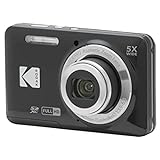
- 16MP Sensor: Captures detailed photos with a CMOS sensor for everyday shooting
- Optical Zoom: 5x optical zoom with a 28mm wide angle lens for flexible framing indoors or outdoors
- Full HD Video: Records 1080p video for travel clips, family moments, or simple vlogging
- Memory Support: Works with Class 10 SD, SDHC, or SDXC cards up to 512GB
- LCD Screen and Battery: 2.7in LCD screen and a rechargeable lithium-ion battery for on-the-go use
Use NgOptimizedImage for production images
NgOptimizedImage enforces image-loading best practices. It requires intrinsic width and height for ordinary images, lazy-loads non-priority images by default, and can generate a responsive srcset. The dimensions reserve layout space and help prevent cumulative layout shift; they must preserve the source aspect ratio.
import {Component} from '@angular/core';
import {NgOptimizedImage} from '@angular/common';

@Component({
  standalone: true,
  imports: [NgOptimizedImage],
  template: `
    <img ngSrc="hero.jpg"
         width="1600"
         height="900"
         priority
         sizes="100vw"
         alt="Product hero image">

    <img ngSrc="detail.jpg"
         width="800"
         height="600"
         sizes="(max-width: 700px) 100vw, 50vw"
         alt="Product detail">
  `,
})
export class ProductPageComponent {}
Mark the LCP image as priority
Set priority on the image most likely to be the page’s LCP element, normally an above-the-fold hero or product image. Angular applies high fetch priority and eager loading, and server rendering can emit a preload hint. Do not mark every image as priority: below-the-fold content should remain lazy unless measurements show otherwise.
Make responsive images select the right candidate
Use the file’s intrinsic dimensions in width and height, then describe the image’s rendered share of the viewport with sizes. Use 100vw for a full-width mobile or desktop image. For a two-column layout, a value such as (max-width: 700px) 100vw, 50vw tells the browser that the image occupies the full viewport on narrow screens and about half on wider screens. An inaccurate sizes value can make the browser download an unnecessarily large file.
Use fill mode for a positioned image container
If the image should fill a card or hero whose dimensions come from CSS, use fill mode and give the parent a predictable size and positioning context:
<div class="hero-frame">
  <img ngSrc="hero.jpg" fill priority sizes="100vw" alt="Mountain landscape">
</div>
.hero-frame {
position: relative;
min-height: 320px;
}
.hero-frame img {
object-fit: cover;
}If you use explicit dimensions instead, resolve CSS conflicts with an appropriate aspect ratio and commonly height: auto or width: auto. Never stretch a source by assigning unrelated width and height values.
Rank #3
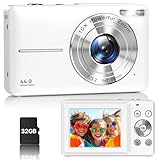
- Latest Digital Camera Built-in Fill Light : This compact digital camera is paired with a powerful CMOS processor and image stabilization to help you take & record the most exciting moments in 44 MP quality images & FHD 1080P quality videos anywhere, anytime. Plus, there is also a built-in fill light to help you take high quality pictures even in low light&dark settings, making this the perfect camera for all indoors/outdoors situations.
- Long-Lasting Battery Life & 16X Digital Zoom :This point and shoot camera will retain its battery charge even after long use. The controls and functions are easy to operate making this the perfect choice for children, teens and younger. This kids camera supports 16x digital zoom, you can zoom in or out the subject by pressing the W/T button for taking still photos to zoom in or out on distant objects and capture all the details you need.
- Multifunctional & Portable Digital Camera: This cheap digital camera is slim enough to fit in your pocket. You'll easily be able to take it with you on all your indoor/outdoor activities and adventures and ideal for beginners, children and teenagers. This kids digital camera is equipped with 20 filters, anti-shaking, self-timer, continuous shooting, date stamp, time-lapse recording, smile capture, internal MIC and speaker (recording sound videos), great for your daily photography needs.
- WEBCAM & PAUSE FUNCTION : More than just a FHD 1080p digital camera, it also works as a webcam for video calls and vlogging. Connect the camera to the computer, press shutter and power button at the same time and the camera will automatically turn on webcam mode for all your video calling and live streaming needs. The pause function allows you to pause when seeing playback videos.
- A Must Have Photography Device : This digital camera with SD card made from high-quality materials, this retro camera is safe and durable. Perfect for all ages to develop & improve their photographic abilities and observation skills. Our dedicated and experienced 24/7 support team is available for all after purchase troubleshooting, questions and technical help.
Configure an image loader and CDN
The generic loader leaves an image URL unchanged. A CDN loader can construct transformation URLs and provide width-aware srcset candidates. Angular documents preconfigured loaders for Cloudflare Image Resizing, Cloudinary, ImageKit, Imgix, and Netlify. If your service is not supported, use a custom loader.
A loader receives an ImageLoaderConfig containing src and optional width, height, and loaderParams. A custom loader must use the requested width when it is present; otherwise generated responsive candidates will not actually request different widths.
The Tool Desk
Outbyte PC Repair FREEClear out junk files and repair common Windows errorsFree Scan →Outbyte Driver Updater FREEScan for outdated or missing drivers - takes under a minuteDriver Scan →Configure the loader at the application level according to your Angular version and the provider documented for your image service. Then verify the rendered srcset and the Network panel: each candidate should point to a valid transformation URL, return an image with the expected dimensions, and preserve your authentication and cache policy.
Lazy loading, caching, and accessibility decisions
- Leave ordinary below-the-fold
NgOptimizedImageinstances at their default lazy behavior. - Use
priorityfor the one or small number of images needed to render the first viewport. - Write alt text that conveys the image’s purpose, not its filename. For decorative visuals, use
alt="". - Serve modern formats when your source pipeline supports them, but keep a fallback strategy for browsers or CDN responses that do not.
- Measure your own application with browser performance traces and Core Web Vitals rather than assuming a fixed percentage improvement.
Why an Angular image is not loading
404 or a blank image area
- Confirm the file is in
public/or in a folder listed by the build target’sassetsarray. - Match the URL to the emitted path:
/logo.pngis different from/assets/logo.png. - Open the image URL directly and inspect the Network panel for status, redirects, and the response content type.
- Check case sensitivity. A file named
Logo.pngis not the same aslogo.pngon case-sensitive hosts.
ngSrc errors
- Import
NgOptimizedImagein the standalone component or the relevant NgModule. - Add
widthandheight, or switch tofillwith a correctly sized, positioned parent. - Ensure dimensions match the source aspect ratio.
- For a dynamic value, bind
[ngSrc]="photoUrl"; do not place the variable name in quotes as a literal URL.
Images are distorted or layout shifts occur
Use intrinsic dimensions, preserve the aspect ratio, and inspect CSS rules that override one dimension without the other. For responsive layouts, add a truthful sizes value. With fill mode, size the parent before the image is painted.
The CDN returns the wrong size or srcset fails
Verify that the configured loader matches the actual service and that it honors the width supplied in ImageLoaderConfig. A loader that ignores width defeats responsive selection. Check each generated URL independently, including query parameters, authorization, and cache behavior.
Rank #4

- 16MP Sensor: Captures detailed photos with a CMOS sensor for everyday shooting
- Optical Zoom: 5x optical zoom with a 28mm wide angle lens for flexible framing indoors or outdoors
- Full HD Video: Records 1080p video for travel clips, family moments, or simple vlogging
- Memory Support: Works with Class 10 SD, SDHC, or SDXC cards up to 512GB
- LCD Screen and Battery: 2.7in LCD screen and a rechargeable lithium-ion battery for on-the-go use
The page feels slower after adding priority
Priority is not a universal speed switch. Remove it from non-LCP images and leave those images lazy. Keep it on the image that actually controls LCP, based on a trace of the target route and viewport.
Capture Angular pages as images without browser setup
When you need a screenshot of a deployed Angular route for documentation, visual checks, or an image in a report, ScreenshotNeo provides a GET-based screenshot API and an MCP server for AI agents. It accepts consent banners before capture and removes more than 60 known consent platforms, newsletter popups, and chat widgets. Bot checks, blank pages, timeouts, failed loads, and cache hits are not billed as clean shots; response headers identify the page verdict and billing result.
Or skip the browser setup
Use the API documented at https://screenshotneo.com/docs/:
curl -G "https://api.screenshotneo.com/v1/shot" -d access_key=YOUR_API_KEY --data-urlencode url=https://your-angular-app.example/products/42 -o shot.webpimport requests
r = requests.get(
"https://api.screenshotneo.com/v1/shot",
params={"access_key": "YOUR_API_KEY", "url": "https://your-angular-app.example/products/42"},
timeout=90,
)
r.raise_for_status()
open("shot.webp", "wb").write(r.content)const q = new URLSearchParams({
access_key: 'YOUR_API_KEY',
url: 'https://your-angular-app.example/products/42'
});
const res = await fetch(`https://api.screenshotneo.com/v1/shot?${q}`);
if (!res.ok) throw new Error(`${res.status} ${res.statusText}`);
const fs = await import('node:fs/promises');
await fs.writeFile('shot.webp', Buffer.from(await res.arrayBuffer()));ScreenshotNeo also offers full-page and element captures, device and viewport settings, retina scale, custom CSS and JavaScript, waits for selectors or network idle, request blocking, cookies and headers, PDF output, caching with a chosen TTL, signed links, asynchronous webhooks, bulk capture of up to 100 URLs per call, and an MCP server with take_screenshot, get_page_info, and capture_pdf. Every plan includes every feature. The Free plan includes 1,000 screenshots per month without a card; paid plans start at $5 for 3,000 shots. Create a free ScreenshotNeo account.
Angular image implementation checklist
- Put local files in
public/, or confirm the custom folder is present in the build target’sassetsarray. - Use
srcfor a fixed image and[src]for a changing URL. - Import
NgOptimizedImagebefore usingngSrc. - Provide accurate dimensions or use fill mode with a sized, positioned parent.
- Add
sizeswhenever the rendered width changes with the viewport. - Mark only the measured LCP image as
priority. - Configure a matching CDN loader when you need transformed, width-aware candidates.
- Check the actual network response, rendered dimensions, alt text, and Core Web Vitals on the deployed route.
Frequently Asked Questions
Can I use an external image URL with Angular?
Yes. Use a normal src or bind the URL with [src]; with NgOptimizedImage, bind it through [ngSrc] and provide the required dimensions or fill mode.
Recommended Free Tools
Should every Angular image be marked priority?
No. Reserve priority for the image that is likely to be LCP-critical. Other optimized images are lazy-loaded by default.
What does the sizes attribute control?
It tells the browser how wide the image will render at different viewport widths, allowing it to choose an appropriate generated srcset candidate.
Quick Recap
Product prices and availability are accurate as of the date/time indicated and are subject to change. Any price and availability information displayed on Amazon at the time of purchase will apply.

