
iTechGuides is reader-supported. When you buy through links on our site, we may earn an affiliate commission. As an Amazon Associate I earn from qualifying purchases. Learn more
To stream a playlist from an Azure Linux VM to YouTube, put the media files on the VM, list them in an FFmpeg concat manifest, then send the resulting stream to the RTMPS endpoint and stream key shown in YouTube Live Control Room. Use FFmpeg’s concat demuxer for sequential playback, choose stream-copy only when the files are compatible, and otherwise encode to a consistent YouTube-ready profile. The command below is a starting template, not a tested Azure deployment.
What you need before starting
- A Linux Azure VM with the playlist files present and enough outbound network capacity for the selected stream bitrate.
- FFmpeg installed from a trusted distribution or release source. Confirm your build includes the required demuxer, codecs, and output protocol before relying on a command.
- A YouTube channel that can go live, plus the current ingest URL and stream key from YouTube Live Control Room.
- Media files whose streams you have inspected. Consistent codecs, parameters, and stream layouts make concat and stream-copy workflows more predictable.
VM size, region, licensing, and cost depend on whether FFmpeg will encode on the CPU or use hardware assistance, the output profile, stream duration, and budget. There is no universally best Azure VM size for this job. The Azure FFmpeg sample discussed below targets Azure Media Services ingest; it is not a VM-to-YouTube deployment guide.
Prepare a sequential playlist on the VM
Create the concat manifest
In the directory containing the files, create a UTF-8 text file named playlist.ffconcat:
Crashes, No Sound, or Screen Glitches?
Random freezes, missing sound and display glitches usually trace back to one bad driver. Find and replace yours safely.Free scan · under a minutePC Slower Than It Used to Be?
A free scan shows the junk files, broken settings and background clutter dragging Windows down - then fixes them in one click.Free scan · Windows 10 & 11ffconcat version 1.0
file 'video-01.mp4'
file 'video-02.mp4'
file 'video-03.mp4'FFmpeg will read the listed files in order. Use paths that resolve from the working directory where you run FFmpeg, or provide absolute paths. Quote or escape filenames carefully when they contain special characters. The FFmpeg formats documentation describes the concat demuxer; the FFmpeg FAQ also covers concatenating files.
#1 Best Overall

- 【1080P 60FPS Video Capture Card】 This HDMI game capture card is based on USB3.0 high speed transmission port, input resolution up to 4K@30HZ, output resolution up to 2K@30Hz or 1920×1080@60Hz. Type c and USB interface can meet most of the devices in daily life. Easily meet the online capture, real-time recording, online meetings, live gaming and other functions, so you have a better visual enjoyment. Note: For capture use only; requires capture software to function and is not intended for direct screen casting to a monitor or TV
- 【Ultra Low Latency Screen Sharing】 HDMI capture card is made of good quality aluminum alloy with strong heat dissipation, allowing you to enjoy ultra low latency while live gaming or video recording or live streaming, avoiding blue screens and lag. This HDMI to USBC capture card supports easy recording of good quality audio or HD video and transferring it to your computer or streaming platform, allowing you to record 60 fps HD video directly on your hard drive and real-time preview
- 【Plug and Play, Easy to Carry】 This HDMI 1080P video capture card does not require any additional drivers or external power supply, just plug and play for fast capture. The capture card is small and lightweight, so you can put it in your bag for emergencies, making it very portable for outdoor live streaming. It's also a great way to share content in game recording, video conference, video recorder and online teaching
- 【Wide Compatibility USB Capture Card】 Easily streams to Facebook, Youtube or Twitch. With the connection, this HDMI to USB C/3.0 video capture devices can be working on several Operating Systems and various software: Windows 7/ 8/ 10, Mac OS or above, Linux, Android, Laptop, Xbox One, PS3/PS4/PS5, Camera, DVDs, Set Top Box, Webcame, DSLR, Switch/Switch 2, TV BOX, HDTV, Potplayer/VLC, ZOOM, OBS Studio etc.
- 【Package Content & Note】 1x HD Audio Capture Card , 1x USB 3.0 to USB C Adapter (A-side 3.0, B-side 2.0), 1x user manual. Please note that you need to restart the OBS Studio software after the audio setup is complete, otherwise it will result in no sound output. When using an adapter, if the device is recognized as USB 2.0, try using the other side with the USB-C port. Simply flip the capture card and reconnect it to be recognized as USB 3.0
Check whether the files are compatible
The concat demuxer works best when each item has matching stream structure, codecs, and parameters. Inspect the video and audio streams in every file before deciding to stream-copy. If frame rates, dimensions, codecs, time bases, or audio layouts differ, normalize the sources or transcode the playlist to one consistent profile. Do not assume that a playlist of arbitrary files can be joined seamlessly by copying its compressed streams.
Get the YouTube ingest URL and stream key
- Open YouTube Live Control Room and create or select the live stream.
- Find the stream settings and copy the current ingest URL and stream key. YouTube notes that the interface may show ordinary RTMP by default; select or confirm the RTMPS endpoint when available. RTMPS is RTMP carried over TLS.
- Keep the key private. Do not put it in a public script, screenshots, or logs, and avoid commands that leave it in shell history. If a key is exposed, rotate it in the service UI; labels and exact steps can change.
Use the endpoint currently provided for your stream rather than treating any example URL as permanent. YouTube’s RTMPS guidance explains endpoint selection and connection troubleshooting. It also describes port 443 as a troubleshooting option when applicable to the endpoint.
Rank #2

- [Enhanced 4K-1080P Video Capture Experience] Capture the Magic: Elevate your video recordings to new heights with our upgraded anti-static 1080P Video Capture Card. Immerse yourself in stunning visuals, supporting HDMI input at 4K 60FPS and USB output for capturing in 1080P, complete with rich stereo sound. Enjoy crystal-clear video recordings, dynamic gaming live streams, and professional conference broadcasts. Note: HDMI resolution: Max input can be 3840×2160@30Hz / Video output resolution: Max output can be 1920×1080@30Hz
- [Seamless Real-Time Preview] Stay in the Moment: Our advanced ultra-low latency technology ensures seamless real-time transmission of video streams. Experience instant, lag-free previews, allowing you to capture every detail precisely. Effortlessly record video directly to your hard disk, all without compromising on quality or introducing any delays.
- [Versatility and Broad Compatibility] Your Creative Hub: Connect your DSLR, camcorder, or action camera to a wide range of operating systems, including Windows, MacOS, and Linux. Unlock a world of possibilities with real-time streaming to popular platforms like Twitch, Youtube, OBS, Zoom, Potplayer, and VLC, giving you the tools to share your content effortlessly.
- [Effortless Plug and Play] Simplicity Redefined: Say goodbye to complex installations. Our plug-and-play design eliminates the need for drivers or external power supplies. Seamlessly integrate high-definition acquisition into various scenarios, whether it's educational recordings, immersive gaming, precise medical imaging, captivating live streams, or professional broadcasting.
- [Seize Every Detail with Precision] Unleash your creativity and attention to detail with our video capture card. Capture every nuance, every color, and every moment with precision, thanks to the enhanced capabilities of our technology. Whether you're a content creator, a gamer, or a professional, our capture card empowers you to seize the finest elements and bring them to life in your recordings and live streams.
Choose stream-copy or transcoding
| Approach | When it fits | Trade-off |
|---|---|---|
| Stream-copy | All playlist items already use compatible codecs, stream layouts, timestamps, and settings that meet YouTube’s current requirements. | Uses less CPU and avoids another encode, but gives you little control over output bitrate, frame rate, pixel format, or keyframe cadence. Verify transitions and keyframes rather than assuming compatibility. |
| Transcoding | Inputs differ, or you need to control output codec, resolution, frame rate, bitrate, pixel format, or keyframe interval. | Requires encoding resources on the VM and can increase CPU demand. Choose a profile that the VM can sustain and test it with the actual playlist. |
FFmpeg’s command-line documentation describes input/output options, mapping, and codec settings. Your exact command depends on the media streams and the endpoint YouTube provides.
Do these 3 things before closing this tab:
1Fix the driver behind crashes, sound loss and screen glitches2Repair Windows errors before they cause bigger problems3Scan for outdated or missing drivers - takes under a minuteBuild a YouTube-compatible FFmpeg command
This transcoding example shows the command structure for H.264 video and AAC audio at 1080p30-style settings. It is illustrative, not a tested command or a universal recipe. Replace the endpoint and key, confirm the installed FFmpeg build supports the selected options, and adjust mappings if files have no audio or contain multiple streams.
Rank #3
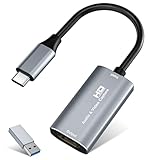
- 【4K HDMI Input, 2K@30Hz Recording】Powered by a true USB 3.0 high-speed interface, the capture card supports up to 4K@30Hz HDMI input and records at 2K@30Hz or 1080P@60Hz. Perfect for gamers, streamers, and professionals who need crisp, smooth video for live streaming, gameplay recording, or online meetings.
- 【Ultra Low Latency Screen Sharing】Built with a premium aluminum alloy shell and advanced chipset for stable heat dissipation, ensuring ultra-low latency transmission. Capture high-quality video and dual-channel audio in real time—no lag, no frame drop—ideal for Twitch, YouTube, or OBS streaming.
- 【Easy Plug and Play, Compact & Portable】No driver or external power required—just plug and play via USB 3.0 or Type-C connection to your Windows or macOS computer. Lightweight and compact design makes it easy to carry for outdoor streaming, live shows, or mobile recording setups.
- 【Wide Compatibility & Multi-Device Support】Compatible with Windows 7 8 10 11, macOS, Linux,Android and supports most popular software such as OBS, Zoom, VLC, Twitch Studio, and more. Works seamlessly with PS4, PS5, Xbox, Switch, DSLR cameras, TV boxes, and other HDMI-output devices for streaming to YouTube, Twitch, etc.
- 【What You Get】Includes: HDMI Capture Card, USB 3.0 to USB-C Adapter, User Manual. Tips: Make sure your tablet’s OTG function is enabled before connecting. Test your HDMI device with a monitor first to confirm video and audio output, then connect to the Video Capture Card for recording.
ffmpeg -re -f concat -safe 0 -i playlist.ffconcat
  -map 0:v:0 -map 0:a:0?
  -c:v libx264 -preset veryfast -pix_fmt yuv420p
  -r 30 -g 60 -keyint_min 60 -sc_threshold 0
  -b:v 4500k -maxrate 4500k -bufsize 9000k
  -c:a aac -b:a 128k -ar 44100 -ac 2
-f flv 'rtmps://<YouTube-RTMPS-endpoint>/<stream-key>'-rereads file media at a real-time pace rather than sending it as fast as possible.-f concat -i playlist.ffconcatselects the concat demuxer and the manifest.-safe 0permits absolute or otherwise non-default paths; use it only with a manifest you control.-map 0:v:0 -map 0:a:0?selects the first video stream and optional first audio stream. Change the maps if the files’ stream layouts require it.-g 60at 30 fps requests a 60-frame GOP, or about two seconds. The bitrate options in this illustration are not a claim that YouTube recommends 4.5 Mbps for every 1080p30 stream.- The output URL combines the actual RTMPS endpoint and secret key from Live Control Room. Protect the key when storing or launching the command.
If every file has compatible encoded streams, replacing the video and audio encoders with stream-copy may reduce CPU use. Before doing so, check codecs, keyframe cadence, timestamps, audio presence, and transitions against YouTube’s current requirements. If the playlist is heterogeneous, use a consistent transcode or suitable filter workflow instead.
Set bitrate, frame rate, and keyframes
YouTube’s current encoder settings guidance lists H.264, H.265 (HEVC), or AV1 video; up to 60 fps; AAC or MP3 audio; and CBR. It recommends a two-second keyframe frequency and says not to exceed four seconds. At 30 fps, two seconds corresponds to 60 frames; at another frame rate, calculate the GOP from that rate and target interval.
Rank #4

- 【1080P HD High Quality】Capture resolution up to 1080p for video source and it is ideal for all HDMI devices such as PS4, PS3, Xbox One, Xbox 360, Wii U, DVDs, DSLR, Camera, Security Camera and set top box. Note: Video input supports 4K30/60Hz and 1080p120/144Hz. Does not support 4K120Hz/144Hz. Output supports up to 2K30Hz.
- 【Plug and Play】No driver or external power supply required, true PnP. Once plugged in, the device is identified automatically as a webcam. Detect input and adjust output automatically. Won't occupy CPU, optional audio capture. No freeze with correct setting.
- 【Compatible with Multiple Systems】suitable for Windows and Mac OS. High speed USB 3.0 technology and superior low latency technology makes it easier for you to transmit live streaming to Twitch, Youtube, Facebook, Twitter, OBS, Potplayer and VLC.
- 【HDMI LOOP-OUT】Based on the high-speed USB 3.0 technology, it can capture one single channel HD HDMI video signal. There is no delay when you are playing game live.
- 【Support Mic-in for Commentary】Rybozen capture card has microphone input and you can use it to add external commentary when playing a game. Please note: it only accepts 3.5mm TRS standard microphone headset.
| Setting | Guidance |
|---|---|
| 1080p at 30 fps, H.264 | YouTube lists 5 Mbps as recommended and 4 Mbps as minimum on its encoder-settings page, accessed 2026. |
| Keyframe interval | YouTube recommends 2 seconds and says not to exceed 4 seconds, per its encoder-settings page, accessed 2026. |
| Bitrate mode | YouTube lists CBR in its encoder guidance. Match the chosen bitrate to the output resolution and frame rate using its current table. |
These are YouTube recommendations, not a guarantee that the VM’s network path can sustain the stream. Leave headroom instead of saturating outbound capacity. YouTube’s streaming tips advise: “Make sure that your outbound connection is enough to send your stream bitrate.” Test upload capacity and stream stability from the deployed VM; no universal Azure throughput figure applies across VM sizes and deployments.
The Tool Desk
Outbyte PC Repair FREEClear out junk files and repair common Windows errorsFree Scan →Outbyte Driver Updater FREEFix the driver behind crashes, sound loss and screen glitchesFind Drivers →Test the playlist before the intended broadcast
- Start the stream as an unlisted or otherwise appropriate test in Live Control Room, using the actual endpoint and key.
- Include representative motion and audio, and test the entire range of file types and transitions in the playlist.
- Check that items play in the intended order, audio is present, and the stream remains stable at the chosen bitrate.
- Watch YouTube’s stream health indicators and check what happens at file boundaries, at the end of the manifest, and if FFmpeg is restarted.
- Adjust resolution or bitrate if the outbound path is inconsistent, then repeat the test before relying on the setup for a scheduled broadcast.
YouTube recommends testing with audio and video motion like the real event and monitoring stream health during the event in its encoder settings guidance.
Best Value

- AV TO USB Converter: Capture videos and audios from VHS, VCR, Hi8, DV tapes to a PC, with the help of our USB Video Converter. Save room while digitizing your favorite old memories
- Quality Capture Card: Our USB Video Capture Card converting anolog RCA composite input into HD 720P USB output and capturing audio without any sound card. Advanced signal processing technology provides you with great precision, colors, resolutions, and details.
- Plug and Play: Automatically install the driver once you hook up this RCA to USB Converter to a PC. No external power is needed. User-friendly and easy to operate
- Wide Compatibility: The Video Capture Card can work with video devices with RCA connector or S-Video connector, such as VHS, VCR, Hi8, camcorder, compatible with Windows and Mac OS. Support video formats like NTSC, PAL, and support brightness, contrast, hue, and saturation control
- Note: The Video Converter is used with acquisition software. We recommend OBS Studio or PotPlayer for Windows, and QuickTime Player for Mac. They can be downloaded for free online. Please operate according to the steps in User Manual or contact us if you have any questions
Troubleshooting common problems
FFmpeg cannot connect or times out
- Re-copy the current URL and key from Live Control Room, verify that the chosen protocol is RTMPS, and confirm the installed FFmpeg supports the output protocol.
- Check outbound network policy and connectivity from the VM. If using a port-based workaround, follow YouTube’s endpoint-specific guidance rather than changing ports arbitrarily.
YouTube reports poor stream health or dropped frames
- Compare the chosen bitrate with measured upload capacity from the VM, leaving headroom. Reduce bitrate or resolution if capacity varies.
- Run a representative test and monitor stream health rather than relying only on the VM’s nominal network specification.
FFmpeg saturates the CPU
- Check whether the command is re-encoding and whether the preset/profile is practical for the selected VM.
- Use stream-copy only after confirming the files are compatible and the resulting stream meets YouTube’s codec, bitrate, and keyframe requirements. Otherwise normalize or transcode consistently.
Audio is missing or transitions break
- Inspect the audio/video streams in each input, and check whether the optional audio map is appropriate for the playlist.
- Test every file boundary. Mixed stream layouts and parameters may require separate normalization or a different mapping/filter workflow.
The stream key appears in a script or log
Treat the key as compromised and rotate it in YouTube’s service UI. Move the replacement out of public files, screenshots, shell history, and logs; the safest storage and launch method depends on your VM’s access controls.
Azure-specific scope and costs
Azure VM charges vary with VM size, region, licensing, and how long the machine runs; encoding workload can also affect which size is appropriate. Compare those factors for your own deployment before selecting a SKU. The Azure Samples FFmpeg example uses real-time pacing, H.264, AAC, and an RTMP output in an Azure Media Services live-ingest context. It illustrates command shape, but does not show that Azure Media Services is required for YouTube or establish a VM configuration for this workflow.
Or let it run in the cloud
If the goal is an always-on YouTube stream built from uploaded videos, StreamNeo is a cloud alternative: upload the video or build a playlist, add your YouTube stream key once, and go live. The service loops uploaded video on YouTube, so your computer and home connection do not have to stay on. It automatically recovers if YouTube drops the stream, supports any uploaded quality up to 4K 60fps at one flat price per slot, and gives the first day free with no card. The monthly option is $9.99 per month. UPI and cards are accepted in India; card checkout is available worldwide. See StreamNeo or its pricing page for plan details. Start the free first day with StreamNeo.
Quick Recap
Product prices and availability are accurate as of the date/time indicated and are subject to change. Any price and availability information displayed on Amazon at the time of purchase will apply.

