
Short answer: run Azure MCP Server as a locally isolated process, connect your MCP-capable editor or agent to its supported transport (stdio is the documented default), and authenticate to Azure with Microsoft Entra ID through Azure Identity. Docker can package and constrain the process, but it does not grant Azure access or bypass Azure RBAC. Microsoft has not published a stable image tag or local Docker invocation in the documentation covered here, so obtain the current image name, tag, entrypoint, and client configuration from the official Azure MCP Server repository before running it.
What the pieces do
Model Context Protocol (MCP) separates the application that wants to use tools from the process that provides them. In this setup:


- Host/client: an MCP-capable editor, coding agent, or custom application.
- Azure MCP Server: Microsoft software implementing MCP and exposing tools for Azure services.
- Azure: the subscriptions and resources reached by those tools.
- Docker: a packaging and isolation boundary around the local server process.
The server authenticates through Microsoft Entra ID using Azure Identity. Every operation is still limited by the identity’s Azure RBAC assignments. A container does not create a subscription, add permissions, or replace sign-in.
Prerequisites and a safe scope
- Docker Desktop or Docker Engine suitable for your operating system.
- An MCP client that can launch a local server, normally through stdio.
- An Azure account and a supported credential flow, commonly Azure CLI authentication or managed identity.
- RBAC permissions limited to the subscriptions, resource groups, and actions your task needs.
- The current Azure MCP Server repository instructions. Image names, tags, entrypoints, and flags are implementation details that can change.
Start with a non-production subscription or resource group. Microsoft’s security guidance says: “Don’t use a local Azure MCP Server to handle production data or production credentials.” Treat that as a hard boundary for local Docker experiments.
Decide identity before starting the container
Azure CLI or another developer credential
The tools reference documents a default credential method that can use Azure CLI authentication or managed identity. For a workstation, sign in with the Azure CLI on the host and follow the current repository guidance for making that credential available to the container. Do not assume that a host-side token or ~/.azure directory should be mounted: mounting credential files expands the container’s access and may expose tokens to code running inside it.
Managed identity
Managed identity is generally associated with an Azure-hosted workload rather than an ordinary laptop. If you choose it, confirm where the identity exists, how the container obtains its token, and which RBAC roles are assigned. The identity’s permissions, not Docker, determine what tools can do.
Subscription and resource-group context
The server can resolve a subscription from the Azure CLI profile or from AZURE_SUBSCRIPTION_ID. Most operations need a subscription or resource-group context. Set the intended subscription explicitly and check it before allowing an agent to call tools; an authenticated user may have access to several subscriptions.
Obtain the current image and invocation
The Microsoft pages covered here do not specify a current local Docker image tag, registry path, or exact docker run command. Do not copy an old blog’s image name blindly. Instead, use the Azure MCP Server repository’s current container instructions to identify:
Rank #2
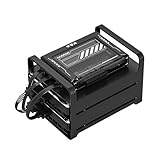
- 【Build Your Own NAS & Homelab — Not Just Storage】 More than a traditional NAS, ZimaBlade 7700 is a flexible x86 mini server for building your own homelab, personal cloud, or Docker host. Perfect for DIY NAS, self-hosting, container apps, and even retro systems — not limited like typical ARM-based NAS devices.
- 【x86 Platform — Broad Compatibility, Real Freedom】 Powered by an Intel quad-core x86 processor, it runs a wide range of operating systems and software with native compatibility. Ideal for Linux, Docker, CasaOS, and more — designed for flexibility and experimentation rather than locked-down appliance use.
- 【16GB RAM for Smooth Multi-Service Workloads】 Handle file sharing, media streaming, backups, and multiple lightweight services at once. Optimized for low-power, always-on operation — a great fit for home labs and personal servers running 24/7.
- 【Smooth 4K Media Streaming — Plex Direct Play Ready】 Stream your personal media library smoothly with Plex and similar media servers. Supports 4K playback on compatible devices via direct play, delivering a reliable home media experience without the need for heavy transcoding.
- 【Complete 2-Bay NAS Kit — Ready to Build】 Includes power supply, 16GB RAM, metal drive cage for 2 HDD/SSD, and dual SATA cables — everything you need to start building your own NAS right out of the box.
- the image registry and immutable or recommended tag;
- the container entrypoint and required arguments;
- environment variables for credential and subscription selection;
- the transport mode and any port requirement;
- the documented MCP-client configuration.
Once you have those values, pull the image and inspect it with ordinary Docker commands:
docker pull CURRENT_IMAGE:CURRENT_TAG
docker image inspect CURRENT_IMAGE:CURRENT_TAG
docker run --rm CURRENT_IMAGE:CURRENT_TAG --help
Replace the first two tokens with the exact image reference published by Microsoft. If the image has no help command, use the repository’s documented entrypoint instead. Keep the container attached during initial testing so startup errors are visible.
Configure the smallest useful tool surface
Namespaces
Azure MCP Server groups capabilities into namespaces. Enable only the namespaces required for the task. A deployment that needs resource discovery does not automatically need write-capable storage or management tools.
Individual tools
Where the client or server supports individual tool selection, expose only those operations an agent must call. Narrow selection reduces accidental actions and makes audit logs easier to interpret.
Free tools Windows power users keep installed
One-click scans. No signup required.
Read-only mode
Use read-only operation when it satisfies the workflow. Read-only is preferable for inventory, diagnosis, documentation generation, and planning. If a change is required, enable the smallest write surface temporarily and restore the restricted configuration afterward.
Confirmation and transport
Do not disable confirmation for high-risk actions merely to make an agent autonomous. The tools reference lists stdio as the default transport. Configure your MCP client for the transport actually used by the server invocation; a client expecting HTTP cannot communicate with a process that only speaks stdio.
Connect an MCP client
- Install or update the MCP client and verify that it supports launching a command in a container.
- Copy the server command, arguments, environment variables, and transport settings from the current Azure MCP Server repository.
- Configure the client to launch that command rather than exposing the container to your LAN.
- Pass only the required Azure credential settings and subscription context.
- Enable a small, read-only namespace first.
- Start the client and confirm that it lists the expected Azure tools.
- Call a harmless read operation and verify the returned subscription and resource-group context.
Because the exact image and flags are version-sensitive and were not established in the Microsoft pages used for this guide, treat the repository’s client snippet as authoritative. Do not invent a port mapping for a stdio server; publishing a port can unnecessarily expose a local endpoint.
Docker isolation that actually helps
- Run as a non-root user when the image supports it.
- Mount no host directories unless a documented feature requires one; use read-only mounts where possible.
- Keep the container on a restricted Docker network. Permit only Azure endpoints and services required by the enabled tools.
- Do not publish the MCP endpoint to
0.0.0.0for convenience. A local server should not be reachable by untrusted users or networks. - Use a read-only filesystem and drop Linux capabilities when compatible with the image.
- Pin the image tag or digest after validating an upgrade, and keep the server and dependencies current.
- Store secrets in the client’s approved secret mechanism, not in a Dockerfile or shell history.
Local Docker versus remote Azure Container Apps
| Concern | Local container | Azure Container Apps |
|---|---|---|
| Where it runs | Your workstation or development host | Azure-managed hosting |
| Client connection | Typically local stdio | Microsoft’s guide describes an HTTPS endpoint |
| Authentication pattern | Credential available to the local process | Official template uses on-behalf-of (OBO) |
| Permission model | Caller or server credential’s RBAC | Delegated signed-in user permissions through OBO |
| Recommended use | Development and controlled testing | Separately designed remote service |
OBO is not a privilege escalator: downstream Azure calls use the signed-in user’s delegated token and cannot exceed that user’s permissions. The remote Container Apps pattern is not the same thing as putting a local stdio server in Docker. Choose it only when you need a managed HTTPS endpoint, multi-user access, and the operational controls that entails.
Crashes, No Sound, or Screen Glitches?
Random freezes, missing sound and display glitches usually trace back to one bad driver. Find and replace yours safely.Free scan · under a minuteWindows Errors? Fix Them Before They Spread
Repair common Windows errors and clear accumulated junk for a smoother, more stable PC - no reinstall needed.Free scan · no reinstallRank #4

- Dell PowerEdge R730xd 24B SFF 2U Server
- 2x Intel Xeon E5-2690 v4 2.6Ghz 14-Core (28-cores Total)
- 128GB DDR4 RAM – 4x 1.2TB 10K SAS 2.5” 12Gb/s
- Dell H730P mini 2GB 12Gb/s RAID
- 2x 750W PSU - 2x 10Gb SFP+ 2x 1Gb (RJ45) NIC
Troubleshoot in layers
The container exits immediately
Run it attached and inspect the logs. An incorrect image tag, entrypoint, missing argument, or unsupported flag is more likely than an Azure RBAC problem. Compare every argument with the current repository documentation.
The MCP client shows no tools
Check that the client launches the container command exactly, uses stdio when the server is in stdio mode, and does not merge diagnostic output into the protocol stream. Enable one namespace and one harmless tool while testing.
Authentication fails
Verify the selected credential method, sign-in state, and whether the container can reach the identity endpoint. A host login is not automatically visible inside a container. Avoid solving this by mounting broad host credential directories.
The wrong subscription is selected
Inspect the Azure CLI account and active subscription, then set AZURE_SUBSCRIPTION_ID to the intended subscription if the documented configuration supports it. Confirm the subscription in a read-only tool response before enabling writes.
Quick wins for a faster PC:
Scan for outdated or missing drivers - takes under a minuteDriver Scan →Clear out junk files and repair common Windows errorsFree Scan →Fix the driver behind crashes, sound loss and screen glitchesFind Drivers →Best Value

- Ateco #1357 Dough Docker for use with pastry or pizza dough for best baked results
- Roll over pizza dough, pie dough, pastries before baking, the small depressions help reduce blistering or air pockets from forming while crust bakes
- Measures 5.25-Inches wide, 2.25-Inch diameter, 8.25-Inches long including handle
- Hand wash suggested for best results; made from high impact plastic
- Family owned and operated since 1905, Ateco has produced specialized professional quality baking and decorating tools for professional pastry chefs and discerning home bakers alike
A tool is missing
The namespace or individual tool may not be enabled, or RBAC may hide operations the identity cannot perform. Compare the client’s requested surface with the server’s namespace and tool-selection settings.
Network calls time out
Check Docker DNS, outbound firewall rules, proxy settings, and any resource-type blocking you configured. A restricted network should be narrow, but it must still allow the Azure endpoints required by the selected tools.
A local endpoint is exposed unexpectedly
Remove unnecessary port publishing, bind only to localhost when a network transport is required, and review Docker’s network and host-firewall rules. Do not share a development endpoint with untrusted users.
Operational checklist
- Use a current image reference from Microsoft’s repository.
- Confirm Entra authentication and the intended subscription.
- Assign least-privilege RBAC.
- Enable only required namespaces and tools.
- Prefer read-only mode and retain user confirmation for risky actions.
- Restrict filesystem, network, and endpoint exposure.
- Test with non-production data and credentials.
- Record image updates and review permissions after changes.
Or skip the browser setup
If your goal is simply to obtain clean website screenshots for an agent workflow, ScreenshotNeo provides a separate screenshot API and MCP server. One request returns PNG, JPEG, WebP, or PDF; it accepts cookie-consent banners before capture and removes more than 60 known consent platforms, newsletter popups, and chat widgets. Bot checks, blank pages, timeouts, failed loads, and cache hits are not billed, and response headers identify the page verdict and billing result.
cURL (see the ScreenshotNeo documentation):
curl -G "https://api.screenshotneo.com/v1/shot" -d access_key=YOUR_API_KEY --data-urlencode url=https://stripe.com -o shot.webpPython:
import requests
r = requests.get("https://api.screenshotneo.com/v1/shot", params={"access_key": "YOUR_API_KEY", "url": "https://stripe.com"}, timeout=90)
open("shot.webp", "wb").write(r.content)
Node.js:
const q = new URLSearchParams({ access_key: 'YOUR_API_KEY', url: 'https://stripe.com' });
const res = await fetch(`https://api.screenshotneo.com/v1/shot?${q}`);
Its MCP server includes take_screenshot, get_page_info, and capture_pdf for Claude, Cursor, and other MCP clients. The free plan includes 1,000 screenshots per month without a card; paid plans start at $5 for 3,000 shots. Create a free ScreenshotNeo account.
Frequently Asked Questions
Does Docker provide Azure permissions?
No. Azure MCP Server still uses an Entra credential, and Azure RBAC determines what its tools can do.
Should I expose the local MCP server on a public port?
No. Keep local use private and use the documented stdio connection unless you have a specific, secured network-transport requirement.
Is Azure Container Apps just Docker running locally?
No. It is a separate remote-hosting pattern using HTTPS; Microsoft’s documented template uses on-behalf-of authentication.
The Tool Desk
Outbyte Driver Updater FREEScan for outdated or missing drivers - takes under a minuteDriver Scan →Outbyte PC Repair FREEClear out junk files and repair common Windows errorsFree Scan →Quick Recap
Product prices and availability are accurate as of the date/time indicated and are subject to change. Any price and availability information displayed on Amazon at the time of purchase will apply.

