
Free tools Windows power users keep installed
One-click scans. No signup required.
Use a language model as a bounded component that gathers, summarizes, classifies, or recommends—not as an unexamined substitute for the application’s decision process. Before connecting it to a consequential action, define what it may influence, what it must not decide, how people can review or override it, and how you will test and monitor the whole workflow.
1. Define the decision before choosing the model
Start with the real-world decision your application supports. “Use an LLM to process requests” is not a decision scope; “summarize submitted documents so a trained reviewer can decide whether a request needs further review” is more specific.
Write down the intended scope
- Decision and owner: What action or judgment is being informed, and who remains accountable for it?
- People affected: Who may benefit or be harmed if the system is wrong, incomplete, or unavailable?
- Permitted role: May the model extract facts, classify, summarize, rank, recommend, or take an action? Specify the allowed function.
- Out-of-scope cases: Identify situations where the model must abstain, ask for more information, or route the case to a person.
- Inputs and tools: List the records, user-provided data, retrieval sources, APIs, and other tools the model can access.
- Consequences of error: Consider both false positives and false negatives, delay, inconsistent treatment, privacy exposure, and unsafe or unauthorized actions.
NIST’s AI Risk Management Framework (AI RMF) recommends documenting the application scope in light of system capabilities and context, including expected benefits and costs. The framework is voluntary guidance, not a substitute for requirements that may apply to a particular industry or jurisdiction.
2. Map the complete workflow and its risks
A language model is only one part of an application workflow. A decision can also be affected by the quality of source data, retrieval, prompts, permission checks, business rules, third-party services, user interfaces, and the way staff interpret an output. Map those elements from input to final action rather than assessing a sample model response in isolation.
What’s actually slowing this PC down?
Pick the symptom - the matching free tool is one click away.
#1 Best Overall
![Arduino® UNO™ Q 4GB [ABX00173]- Hybrid Board, Qualcomm Dragonwing QRB2210 microprocessor (MPU) & STM32U585 Microcontroller(MCU), AI Vision, Voice, IoT, Robotics, Linux Debian OS, Wi-Fi 5, USB-C](https://m.media-amazon.com/images/I/51cl4xygwGL._SL160_.jpg)
- Dual-Brain Hybrid Power: Combines the Qualcomm Dragonwing QRB2210 MPU (Quad-core Arm Cortex-A53 @ 2.0 GHz CPU, Adreno GPU, AI acceleration) and the real-time, low-power STM32U585 MCU for advanced applications like object recognition, voice commands, and motion detection.
- AI & Linux Capabilities: Unlocks AI-powered vision and sound solutions; runs Linux Debian OS for coding in Python and supports the Arduino ecosystem with libraries and Sketches; quick start with Arduino App Lab.
- Advanced Features: Equipped with 4 GB LPDDR4 RAM, 32 GB eMMC built-in storage, ideal for single-board computer (SBC) mode, running multiple simultaneous high-level processes, more complex AI or ML models, extensive logs. Dual-band Wi-Fi 5 (2.4/5 GHz), Bluetooth 5.1, and high-speed headers for vision, audio, and display peripherals.
- Seamless Expansion & Connectivity: Features the classic UNO form factor for shields compatibility, an 8x13 LED matrix, and a Qwiic connector for easy expansion with Modulino nodes; power and connect via the USB-C connector.
- Intended Use & Development: The perfect platform for prototyping robotics or IoT projects, empowering innovators with a unified development experience to mix Arduino Sketches, Python scripts, and containerized AI models in a single interface.
Trace the path from request to action
- Input: What information enters the workflow, where it came from, and whether it is complete and appropriate to use.
- Context assembly: Which records or retrieved passages are supplied to the model, and how stale, conflicting, or missing information is handled.
- Model operation: The model and configuration in use, its permitted tools, and the output format expected by the application.
- Validation and policy checks: What software checks whether the output is well-formed, supported, within policy, and authorized for its intended use.
- Human review or automated action: Who sees the result, what evidence they receive, and which actions can follow without further approval.
- Outcome and correction: How the decision is recorded, challenged, corrected, or escalated when new information arrives.
Use this map to assess relevant trustworthiness concerns in context: validity and reliability, safety, security, accountability, transparency, explainability, privacy, and harmful bias. NIST’s AI RMF FAQs describe the framework’s risk-management approach; the risks and controls that matter most depend on the application.
3. Give the model a bounded role in the application
Design the workflow so a model output cannot silently become a final decision unless that use is explicitly intended, authorized, and tested for the context. For many applications, a safer first role is to prepare information for a person or a deterministic rule to evaluate.
Separate model output from permission to act
- Have the model return a recommendation or structured result, then let application code enforce permissions, required fields, thresholds, and allowed state changes.
- Require evidence references for factual claims when the workflow relies on supplied documents or retrieved records. Show reviewers the supporting material, not just a fluent summary.
- Constrain tool access to the minimum needed. Distinguish reading data from changing records, sending messages, approving requests, or triggering other consequential actions.
- Define what happens when the model is uncertain, returns malformed output, lacks evidence, encounters conflicting sources, or is unavailable. Depending on the stakes, the workflow may need to pause, request clarification, or route the case for review.
- Make the model’s limits and intended use visible to the people who rely on its output, including what it cannot verify or decide.
There is no single architecture that is right for every application. The boundary between model assistance, software rules, and human judgment should reflect the decision’s consequences, the quality of available evidence, privacy and security needs, and the ability to recover from an error.
Rank #2
- Dual-Brain Hybrid Power: Combines the Qualcomm Dragonwing QRB2210 MPU (Quad-core Arm Cortex-A53 @ 2.0 GHz CPU, Adreno GPU, AI acceleration) and the real-time, low-power STM32U585 MCU for advanced applications like object recognition, voice commands, and motion detection.
- AI & Linux Capabilities: Unlocks AI-powered vision and sound solutions; runs Linux Debian OS for coding in Python and supports the Arduino ecosystem with libraries and Sketches; quick start with Arduino App Lab.
- Advanced Features: Equipped with 2 GB LPDDR4 RAM, 16 GB eMMC built-in storage, ideal to develop in PC-connected mode, running the OS, Python scripts, and basic network services (SSH) without a demanding GUI or heavy multitasking; great for lightweight AI and memory-optimized TinyML applications, needing local storage for basic OS and core libraries. Dual-band Wi-Fi 5 (2.4/5 GHz), Bluetooth 5.1, and high-speed headers for vision, audio, and display peripherals.
- Seamless Expansion & Connectivity: Features the classic UNO form factor for shields compatibility, an 8x13 LED matrix, and a Qwiic connector for easy expansion with Modulino nodes; power and connect via the USB-C connector.
- Intended Use & Development: The perfect platform for prototyping robotics or IoT projects, empowering innovators with a unified development experience to mix Arduino Sketches, Python scripts, and containerized AI models in a single interface.
4. Set human oversight and escalation rules
Human involvement is useful only when reviewers have enough information, authority, and time to exercise judgment. Decide whether review happens for every case, for specified high-risk cases, or when the system detects a condition that requires escalation. NIST’s AI RMF Core calls for human oversight processes to be defined, assessed, and documented.
Quick wins for a faster PC:
Scan for outdated or missing drivers - takes under a minuteDriver Scan →Clear out junk files and repair common Windows errorsFree Scan →Specify the reviewer’s job
- State what the reviewer must verify—for example, whether cited evidence supports a summary or whether a recommendation follows the application’s policy.
- Present relevant source information alongside the model output so review does not depend on trusting the model’s wording.
- Give reviewers a practical way to reject, correct, or override the output, and a route to escalate cases outside their authority.
- Set stop conditions for unsafe or unsupported outputs, repeated errors, missing evidence, or failures in connected systems.
- Record when a person accepts, changes, or rejects a model result and why, where appropriate for the application.
Do not treat a nominal “human in the loop” as a guarantee of safety. If the interface hides evidence, the workload makes careful review impractical, or the reviewer cannot change the outcome, the oversight mechanism may not provide meaningful control.
5. Evaluate the integrated workflow before launch
Test the application as it will actually be used: with the expected data, retrieval and tools, interface, software checks, human review, and failure paths. A model that performs well on isolated prompts may behave differently when context is missing, sources conflict, tools fail, or an output feeds another system. NIST advises evaluating performance under conditions similar to deployment. OpenAI also notes that evaluation results for frontier models depend on the environment and setup used for actions, as well as the model itself (shared playbook for trustworthy third-party evaluations).
Rank #3
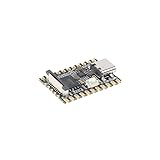
- Single core ARM Cortex-A7 32-bit core, integrated with NEON and FPU
- Built in Micro's self-developed 4th generation NPU, with high computational accuracy and support for mixed quantization of int4, int8, and int16. Among them, int8 has a computing power of 0.5 TOPS and int4 has a computing power of up to 1.0 TOPS
- Built in self-developed 3rd generation ISP3.2, supports 4 million pixels, and supports various image enhancement and correction algorithms such as HDR, WDR, and multi-level denoisin
- It has powerful encoding performance, supports intelligent encoding, adapts to save bit rates according to the scene, and saves more than 50% of the bit rate compared to conventional CBR mode, making the captured images high-definition, smaller in size, and doubling the storage space
- The design with built-in RISC-V MCU supports low-power fast startup, 250ms fast capture, and simultaneous loading of AI model library, enabling facial recognition to be completed within 1 second
Build tests around real decisions and failure cases
- Assemble representative cases: Include ordinary cases, edge cases, incomplete or contradictory inputs, and cases where abstaining or escalating is the correct result. Protect personal or sensitive data in the test process.
- Create reference judgments: Have qualified people establish expected outcomes or acceptable ranges, documenting ambiguity rather than pretending every case has one obvious answer.
- Choose measures tied to harm: Measure the errors that matter for the decision, not just whether an output looks plausible. Include the handling of unsupported claims, missing information, tool failures, and escalation.
- Test the whole path: Verify data retrieval, permissions, validation, display of evidence, reviewer actions, logging, and the eventual application action—not just the model’s text.
- Compare alternatives consistently: If comparing models or workflow designs, use the same representative cases and criteria. Consider error consequences, oversight needs, privacy and security requirements, traceability, latency, and integration fit.
- Set acceptance and rollback criteria: Decide in advance what results block release, what failures require a narrower scope, and how to disable or revert the feature.
NIST describes work on evaluation probes for agentic AI that compares outputs with a human-curated corpus and develops structured audit trails connecting agent decisions to supporting evidence. This is described as developing research, not as a generally validated product or a required implementation. See NIST’s evaluation-probe project.
Independent reader supportYour contribution helps us test, update, and keep practical guides available for everyone.6. Monitor behavior after deployment
Launch does not end risk management. Real inputs, user behavior, data sources, connected tools, and model configurations can change. Monitor the workflow for both model-related problems and failures in surrounding components, and make clear who can respond.
Plan for detection and response
- Track workflow outcomes and error categories relevant to the decision, including escalations, overrides, unsupported outputs, and failures in retrieval or tool use.
- Watch for changes in input patterns, source-data quality, model behavior, or the population and conditions in which the feature is used.
- Define alert thresholds and response owners. Specify when to investigate, restrict a capability, require more human review, pause the feature, or revert to a prior process.
- Re-run relevant evaluations after material changes to the model, prompts, retrieval sources, policies, tools, or application code.
- Provide a way for users or affected people, where appropriate, to report an issue or seek correction.
NIST describes risk management as continuous across the AI system lifecycle. Its AI RMF is organized around Govern, Map, Measure, and Manage; the AI RMF Playbook offers suggested actions rather than a rigid checklist. NIST’s framework page says AI RMF 1.0 is being revised, so check the official framework and applicable sector or jurisdiction requirements when planning a deployment.
Rank #4

- 【POWERFUL ESP32‑S3 CONTROLLER】Built‑in Xtensa 32‑bit LX7 dual‑core processor, 512KB SRAM, 8MB PSRAM, 16MB Flash for stable AI voice computing and multitask processing.
- 【Preloaded Dual AI Platforms】Comespre-installed with complete Deepseek and OpenAI voice dialogue projects.Experience intelligent voice interaction instantly. (Note: OpenAI functionality requires your own API key.)
- 【STABLE WIRELESS & CLEAR AUDIO】Integrated 2.4GHz Wi‑Fi + Bluetooth 5 (LE); dedicated audio decoding module for natural, responsive voice interaction.
- 【USER‑FRIENDLY VISUAL & PLUG‑AND‑PLAY】2” TFT‑SPI color screen shows real‑time chat; modular design, no extra wiring, ready to use after setup.
- 【FULL LEARNING SUPPORT】45 programmable GPIOs, rich interfaces, online web tutorials, free technical support for beginners & developers.
7. Keep the decision traceable
Maintain enough information to reconstruct how the application reached an outcome, investigate an incident, and improve the workflow. The amount and retention period should fit the application’s privacy, security, operational, and legal requirements; do not retain sensitive data by default merely to create a more detailed log.
Record what is needed to understand an outcome
- The relevant input or a privacy-appropriate reference to it, plus the context supplied to the model.
- The model and workflow version, including material prompt, policy, retrieval, or tool configuration changes.
- The model output and any evidence or source references used to support it.
- Validation results, tool calls or failures, and whether the workflow abstained or escalated.
- Human review, correction, override, and the action ultimately taken, where applicable.
NIST’s evaluation-probe work emphasizes structured audit trails that link agent decisions to supporting evidence. Traceability should serve a concrete operational purpose—such as review, incident response, or quality improvement—while respecting access controls and data-minimization needs.
8. Use the NIST framework as guidance, not a compliance shortcut
NIST released AI RMF 1.0 on January 26, 2023. Its Generative AI Profile was published on July 26, 2024. Those publication dates identify the guidance versions; they are not performance claims or proof that an application is compliant. The framework is voluntary, and the legal and technical obligations for a real deployment depend on its sector, jurisdiction, decision, and affected people.
A practical way to use the framework is to revisit the four functions as the application evolves: Govern to assign responsibility and policy; Map to understand use context and impacts; Measure to evaluate risks and performance; and Manage to prioritize and respond to risks. The AI RMF Core supplies the functions and outcomes. Use it to organize work, then identify any additional requirements that apply to the specific deployment.
Quick Recap
Product prices and availability are accurate as of the date/time indicated and are subject to change. Any price and availability information displayed on Amazon at the time of purchase will apply.

