
To upload a picture with HTML, put an <input type="file"> inside a form that submits with method="post" and enctype="multipart/form-data". Give the input a name, and set the form’s action to a server endpoint that accepts the file. HTML provides the file picker and sends the request; server-side code must validate and store the uploaded picture.
Make a basic HTML picture-upload form
This form lets a visitor choose one JPEG or PNG file and submit it to the site’s /upload endpoint:

<form action="/upload" method="post" enctype="multipart/form-data">
  <label for="picture">Choose a picture</label>
  <input id="picture" name="picture" type="file"
         accept="image/jpeg,image/png" required>
  <button type="submit">Upload</button>
</form>
Use the code in an HTML page served by your website. The form is usable only if /upload is a real server route configured to receive multipart form data. Replace that path with the route your application provides; an HTML file alone cannot create the route or save the file.
What the attributes do
action="/upload"identifies the URL that receives the submission. It must be implemented by your server.method="post"sends the form data in the HTTP request body, rather than trying to place the file in URL parameters.enctype="multipart/form-data"tells the browser to send separate form parts, including the binary file data and any ordinary text fields.type="file"opens the browser’s local file picker. The website does not gain access to the visitor’s files merely because the page contains this control.name="picture"is the submitted field name. The server uses it to identify the uploaded part; it is different from the input’sid, which connects it to the label.accept="image/jpeg,image/png"suggests which file types the picker should show. It improves the selection experience but is not a security check.requiredasks the browser to prevent an empty form submission. The server should still handle missing files, because client-side checks can be bypassed.
MDN describes the key distinction this way: “Files are binary data — or considered as such — whereas all other data is text data.” Multipart encoding lets the browser send both kinds of form data in one request.
What’s actually slowing this PC down?
Pick the symptom - the matching free tool is one click away.
#1 Best Overall
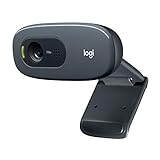
- Compatible with Nintendo Switch 2’s new GameChat mode
- Crisp HD 720p/30 fps video calls with diagonal 55° field of view and auto light correction. Compatible with popular platforms including Skype and Zoom.
- The built-in noise-reducing mic makes sure your voice comes across clearly up to 1.5 meters away, even if you’re in busy surroundings.
- C270’s RightLight 2 feature adjusts to lighting conditions, producing brighter, contrasted images to help you look good in all your conference calls.
- The adjustable universal clip lets you attach the camera securely to your screen or laptop, or fold the clip and set the webcam on a shelf. You’re always ready for your next video call.
What must happen on the server
When the visitor presses Upload, the browser sends the selected file to the URL in action. The server endpoint must parse the multipart request, decide whether the file is acceptable, and store it or pass it to another service. Without that server-side work, the form cannot persist an upload. As MDN puts it, “The problems never come from the HTML forms themselves — they come from how the server handles data.”
The precise implementation depends on the backend framework and hosting environment. Configure a multipart parser or the platform’s equivalent, and define where accepted files go. A form that returns an error, displays a success page without saving anything, or sends only a filename usually indicates that the endpoint is missing, misconfigured, or expecting a different request format.
Apply authoritative checks before storing a file
Do not trust the browser to enforce upload policy. On the server:
- Set request and per-file size limits appropriate to your application, and reject oversize requests before they exhaust storage or processing resources.
- Verify the actual content type and inspect the file signature, rather than accepting a file solely because its name ends in
.jpgor the picker allowed it. - Reject formats your application does not intend to handle. Decode or process images with suitable server-side tooling if that is part of your workflow.
- Generate a safe storage name instead of trusting a visitor-supplied filename. Preserve the original name separately only if the application needs it and handles it safely.
- Authorize the visitor before accepting uploads when the feature is intended only for signed-in or otherwise permitted users.
- Choose storage that is not an executable-code path where appropriate, and define how stored images are served, retained, or deleted.
These checks are separate from the HTML attributes: accept and required guide the browser, while the server makes the decision that protects the application.
Quick wins for a faster PC:
Clear out junk files and repair common Windows errorsFree Scan →Fix the driver behind crashes, sound loss and screen glitchesFind Drivers →Rank #2

- Compatible with Nintendo Switch 2’s new GameChat mode
- Auto-Light Balance: RightLight boosts brightness by up to 50%, reducing shadows so you look your best—compared to previous-generation Logitech webcams (1)
- Privacy with a Slide: The integrated webcam cover makes it easy to get total, reliable privacy when you're not on a video call
- Built-In Mic: The built-in microphone lets others hear you clearly during video calls
- Easy Plug-And-Play: The Brio 101 works with most video calling platforms, including Microsoft Teams, Zoom and Google Meet—no hassle; it just works
Allow more than one picture
For a multi-file picker, add the multiple attribute:
<input id="pictures" name="pictures" type="file"
       accept="image/jpeg,image/png" multiple>
Keep the server’s expected field name and the form’s name aligned. How a backend represents multiple uploaded parts varies, so configure its multipart handling to accept multiple files for that field. Set a maximum number of files as well as a per-file size limit if your application needs bounded uploads. Selecting multiple files does not mean the server must accept every one.
Submit the upload with JavaScript
Use JavaScript when the page should upload without a full navigation, show progress or display a response in place. The browser’s FormData object gathers the selected file and sends it as multipart data. Here is a complete minimal page-side example that submits the form and reports the endpoint’s response:
<form id="upload-form" action="/upload" method="post"
      enctype="multipart/form-data">
  <label for="picture">Choose a picture</label>
  <input id="picture" name="picture" type="file"
         accept="image/jpeg,image/png" required>
  <button type="submit">Upload</button>
</form>
<p id="upload-status" role="status"></p>

<script>
  const form = document.querySelector('#upload-form');
  const status = document.querySelector('#upload-status');

  form.addEventListener('submit', async (event) => {
    event.preventDefault();
    status.textContent = 'Uploading…';

    try {
      const response = await fetch(form.action, {
        method: 'POST',
        body: new FormData(form)
      });
      const message = await response.text();

      if (!response.ok) {
        throw new Error(message || `Upload failed (${response.status})`);
      }
      status.textContent = message || 'Upload complete.';
    } catch (error) {
      status.textContent = error.message || 'Upload failed.';
    }
  });
</script>
Do not set the request’s Content-Type header yourself when sending FormData. The browser needs to generate the multipart boundary and include it in that header. If you set the header manually to just multipart/form-data, the boundary information may be absent and the server may not be able to parse the body.
Do these 3 things before closing this tab:
1Fix the driver behind crashes, sound loss and screen glitches2Clear out junk files and repair common Windows errors3Scan for outdated or missing drivers - takes under a minuteRank #3

- 1080P HD Webcam: This HD webcam delivers crisp 1080p video quality, ideal for PCs, desktops, and laptops. Perfect for video calls, online classes, meetings, live streaming, gaming, and everyday recording. It provides clear, sharp images and smooth video at up to 30 frames per second. This live streaming webcam works with platforms such as Zoom, Teams, FaceTime, Google Meet, and YouTube.
- USB Plug and Play Webcam: Designed for PCs, this webcam is easy to use. No drivers or software are required; simply connect the webcam to your computer and start using it immediately. Operation is smooth and convenient. XWEIRYN webcams are compatible with multiple operating systems, including Mac/Windows XP/7/8/10/11/PC/Laptops.
- Widely Compatible Webcam: This versatile webcam is compatible with most operating systems and major video platforms. As a reliable computer webcam, it supports video conferencing, remote learning, live streaming, and gaming, meeting your various needs for daily work and entertainment.
- Smooth and Stable Performance: This webcam uses a stable transmission chip to ensure smooth, lag-free video streaming, synchronized audio and video, and no dropped frames. Even after prolonged use, this durable webcam maintains stable performance. It performs excellently even in low-light environments. It automatically adjusts to adapt to low-light conditions, reducing noise and restoring vibrant colors, ensuring clear and sharp images even without additional studio lighting.
- Compact and Adjustable Design: This lightweight and portable webcam saves space and comes with an adjustable clip. Our USB webcam uses a reliable USB 2.0/3.0 connection and comes with an upgraded 1.5-meter (5-foot) braided cable. It is compatible with Desktop most monitors and Laptop. Its portable design makes it easy to place and carry, ideal for home, office, or travel use.
Native form or JavaScript?
| Approach | Use it when | What to plan for |
|---|---|---|
| Native form submission | A normal page navigation after uploading is acceptable. | The form still needs a working multipart endpoint; the server determines the response page. |
JavaScript with FormData and fetch() |
You want to handle the response in the current page. | Handle network and HTTP errors, show a useful status, and let the browser set the multipart content type and boundary. |
Both approaches send a file to a server. JavaScript changes how the page submits and responds; it does not remove the need for a receiving endpoint or server-side validation.
Troubleshoot common upload problems
The server receives a filename but not the picture
Check that the form uses method="post" and enctype="multipart/form-data", and that the file input has a name. Then check the server’s multipart parser and confirm it reads the same field name. A filename displayed by the browser is not the file contents.
The endpoint says the file field is missing
Confirm that the input’s name matches the field the endpoint expects, that a file was selected, and that the request is reaching the intended action URL. If using JavaScript, construct FormData from the form or append the selected file, and do not replace its generated multipart content type.
The form navigates to an error or not-found page
Verify that the action path is correct and that the server has a POST route there. A relative path is resolved against the current page URL, so inspect the resulting request URL in the browser’s network tools if the form posts somewhere unexpected.
Free tools Windows power users keep installed
One-click scans. No signup required.
Rank #4

- 1080P Webcam with Cover for Video Calls - EMEET computer webcam provides design and Optimization for professional video streaming. Realistic 1920 x 1080p video, 5-layer anti-glare lens, providing smooth video. C960 computer camera delivers 1920x1080 video with fixed focus (11.8–118.1 inches), so as to provide a clearer image. C960 USB webcam has a cover and can be removed automatically to meet your needs for privacy. For optimal image performance, use the webcam in a well-lit environment.
- Built-in 2 Omnidirectional Mics - EMEET webcam with microphone for desktop features 2 built-in omnidirectional microphones, picking up your voice to create clear audio for communication. When installing the webcam, select EMEET C960 as the default microphone input device in your computer and video applications and select C960 as the default device in Zoom/Teams and ensure microphone permissions are enabled for proper use. Please note that C960 does not include built-in speakers.
- Automatic Light Adjustment - Automatic exposure adjustment is applied in EMEET HD webcam 1080p so that the streaming webcam can deliver stable image performance. EMEET C960 camera for computer also features color adjustment and exposure optimization to help you look your best. For optimal video quality, it is recommended to use the webcam in normal or well-lit environments and select suitable video settings in your application. Proper lighting helps achieve a clearer and more balanced image.
- Plug-and-Play & Upgraded USB Connectivity - New C960 webcam features both USB Type-A & A-to-C adapter connections for wider compatibility. For stable performance, connect the webcam directly to the computer's main USB port and ensure the device is recognized correctly. If a hub or docking station is used, please ensure it provides sufficient power and stable data transmission, as limited ports may affect performance. 90° wide-angle lens captures more participants without frequent adjustments.
- High Compatibility & Multi Application - C960 webcam for laptop is compatible with Windows 10/11, macOS 10.14+, and Android TV 7.0+. Not supported: Windows Hello, TVs, tablets, or game consoles. It works with Zoom, Teams, Facetime, Google Meet, YouTube and more. Please select C960 webcam as the default camera and microphone device in your application and ensure camera/microphone permissions are enabled, especially on macOS. (Tips: Incompatible with Windows Hello)
Some pictures are rejected even though the picker accepts them
accept is a picker hint, not a promise that the server will accept the selection. The backend may correctly reject a file based on its actual content, type, size, authorization, or application policy. Compare the server’s validation rules with the allowed formats and limits shown in the interface.
Large files fail or requests time out
Inspect the upload-size limits and timeouts at each layer: the application, the multipart parser, the web server or hosting platform, and any upstream service. The effective limit may be set outside the HTML page. If the application is meant to accept large files, select compatible limits and storage handling throughout the request path; do not simply remove safeguards without considering resource use.
The JavaScript version reports an error but gives no useful detail
Check the HTTP status and response body in the browser’s network panel, and check server logs for the corresponding request. The example displays the response text for a non-success response when available, but a network failure may occur before any HTTP response exists. Make the endpoint return an appropriate status and a clear, non-sensitive error message.
Independent reader supportYour contribution helps us test, update, and keep practical guides available for everyone.Review the upload flow before publishing
- Confirm the page is served from the expected site and the form’s
actionresolves to the intended upload route. - Submit a permitted test image and confirm the endpoint receives the file part under the expected field name.
- Test an unsupported format, an over-limit file, and a request from a user without upload authorization; each should be handled according to the server’s policy.
- Verify where an accepted image is stored and how the application exposes or uses it afterward.
- If JavaScript handles submission, test success, server rejection, and network failure states rather than treating every completed
fetch()as a successful upload.
Or skip the browser setup
ScreenshotNeo is for capturing a webpage as an image or PDF; it does not upload a visitor’s picture to your site. If you need a screenshot of the resulting upload page or another URL, its API takes one GET request. See the ScreenshotNeo documentation for options.
The Tool Desk
Outbyte Driver Updater FREEScan for outdated or missing drivers - takes under a minuteDriver Scan →Outbyte PC Repair FREEClear out junk files and repair common Windows errorsFree Scan →Best Value
curl -G "https://api.screenshotneo.com/v1/shot" -d access_key=YOUR_API_KEY --data-urlencode url=https://stripe.com -o shot.webpBefore capture, ScreenshotNeo accepts cookie or consent banners like a visitor and removes more than 60 known consent platforms, newsletter popups, and chat widgets; each of those steps can be turned off. Bot checks or CAPTCHAs, blank pages, timeouts, failed loads, and cache hits are not billed, and response headers report the page verdict and billing status. Its MCP server provides take_screenshot, get_page_info, and capture_pdf tools for Claude, Cursor, and other MCP clients.
The Free plan includes 1,000 shots per month with no card. Paid plans start at $5 for 3,000 shots; every feature is on every plan, and annual billing gives two months free. If screenshotting a page is the job, see ScreenshotNeo and sign up for 1,000 free screenshots a month with no card.
Frequently Asked Questions
Can I save an uploaded picture using only HTML?
No. HTML provides the form and file picker; a server endpoint or another upload service must receive and store the file.
Does adding an image preview upload the file?
No. A preview only displays a local selection in the page; the file is sent only when the form or JavaScript submits it to an endpoint.
Quick Recap
Product prices and availability are accurate as of the date/time indicated and are subject to change. Any price and availability information displayed on Amazon at the time of purchase will apply.

