
Recommended Free Tools
Yes, the Dell Latitude 15 5580 has upgradeable RAM. It uses two DDR4 SO-DIMM slots—not full-size desktop DIMMs—and Dell lists a maximum of 32 GB. For most owners, a matched 2 × 8 GB kit is a sensible 16 GB upgrade; the supported memory speed depends on the processor.
Latitude 5580 RAM specifications
Dell’s Latitude 5580 memory specifications list two SO-DIMM slots, DDR4 SDRAM, and a 32 GB maximum. The manual lists 4 GB, 8 GB, and 16 GB module capacities.
| Specification | Latitude 5580 |
|---|---|
| Memory type and form factor | DDR4 SDRAM SO-DIMM |
| Slots | 2 |
| Maximum capacity | 32 GB total, typically 2 × 16 GB |
| Supported module capacities | 4 GB, 8 GB, or 16 GB |
| Memory speed | Up to 2133 MHz with dual-core processors; up to 2400 MHz with quad-core processors |
A desktop DIMM is physically too large. Check your exact processor before choosing a speed: Dell’s Latitude 5580 manual distinguishes the dual-core and quad-core limits. A faster-rated DDR4 module may run at a lower supported speed, but Dell’s specifications do not guarantee every faster module will work.
Choose an upgrade configuration
Choose based on your current modules and how much memory you need. The best general-purpose target for many owners is 16 GB; 32 GB is Dell’s documented maximum.
#1 Best Overall

- A-Tech 8GB RAM Module, DDR4 SO-DIMM 260-Pin, 2666MHz / 2667MHz PC4-21300 (PC4-2666V)
- Non-ECC Unbuffered, JEDEC DDR4 Standard 1.2V Operating Voltage
- Compatible with select DDR4 SODIMM capable Laptop, Notebook, Mini PC, and All-in-One (AIO) computer systems. Please verify your system's memory type, form factor, and maximum supported capacity before purchasing
- Not compatible with desktop (DIMM), DDR2, DDR3, DDR5, ECC Registered (RDIMM), ECC Load Reduced (LRDIMM), or ECC Unbuffered (ECC UDIMM) memory types
- Increases available memory capacity to enhance system responsiveness, application performance, and multitasking capabilities.
| Target | Typical configuration | Best for |
|---|---|---|
| 8 GB | Keep a 4 GB module and add a compatible 4 GB module, or use one 8 GB module if a slot is free | Basic Windows use, office applications, and light browsing |
| 12 GB | Keep a 4 GB module and add an 8 GB module | More capacity without replacing a working module; mixed capacities may not run symmetrically in dual-channel mode |
| 16 GB | 2 × 8 GB | General-purpose use and a matched configuration |
| 32 GB | 2 × 16 GB | Heavy multitasking, virtual machines, development tools, or large spreadsheets |
If one slot is empty, adding a module can be the least expensive path. If you want predictable compatibility and symmetric dual-channel operation, replace the modules with a matched pair. Mixed capacities can work, but do not assume that every byte will operate in dual-channel mode. Match capacity, DDR4 specifications, voltage, and preferably the model or kit. Buy from a reputable seller with a return policy; a module’s label alone does not guarantee compatibility.
Prioritize the right capacity and compatibility rather than paying extra for a headline speed. For example, a DDR4-3200 module will not make this laptop run at 3200 MHz; the processor and platform set the operating limit.
Rank #2

- A-Tech 16GB RAM Module, DDR4 SO-DIMM 260-Pin, 3200MHz PC4-25600 (PC4-3200AA)
- Non-ECC Unbuffered, JEDEC DDR4 Standard 1.2V Operating Voltage
- Compatible with select Laptop, Notebook, Mini PC, and All-in-One (AIO) systems. Please verify your system's memory type, form factor, and maximum supported capacity before purchasing
- Not compatible with desktop DIMM, non DDR4 memory, or ECC memory types such as RDIMM, LRDIMM, and ECC UDIMM
- Increases available memory capacity to enhance system responsiveness, application performance, and multitasking capabilities.
Check the installed memory before buying
- In Windows, open Settings → System → About to check installed memory. For more detail, open Task Manager and select Performance → Memory; it may show speed and slot usage.
- To check firmware detection, restart the laptop and press F2 at the Dell logo. Look in the system-information area for memory details.
- If you need the module’s exact label or configuration, inspect it physically after following the safe removal procedure below. A Dell Service Tag lookup can show factory configuration, but it may not reflect RAM installed later.
Install the memory safely
You will need a small Phillips screwdriver suitable for the laptop screws and a plastic pry tool or guitar pick. Work on a clean, non-carpeted surface, and touch grounded metal before handling a module. Use Dell’s owner’s manual for the model’s screw locations and detailed removal diagrams; do not force the cover or a memory module.
Prepare the laptop
- Back up important files, then shut down Windows completely.
- Disconnect the AC adapter and all peripherals. Hold the power button for several seconds after disconnecting power to discharge residual power.
- Close the display and place the laptop upside down on the work surface.
Open the base and disconnect the battery
- Remove the base-cover screws as shown in Dell’s manual. Screw type and number can vary, so follow the diagrams for your machine.
- Use a plastic pry tool to release the cover around its perimeter, then lift it carefully.
- Disconnect the internal battery before touching the memory or other internal components. Follow the manual’s battery-disconnection procedure.
Remove and install the modules
- Locate the two memory slots. To remove a module, push its retaining clips outward; when the module rises at an angle, pull it out by the edges without touching the gold contacts.
- Align the notch on the replacement SO-DIMM with the key in the slot, then insert it at an angle.
- Press the module down until the retaining clips lock into place. Install the second module the same way if using a kit.
- Reconnect the battery, refit the base cover, and tighten its screws without overtightening.
Start up and verify
- Connect the charger and power on. The first startup after a memory change may take longer while the firmware detects the modules.
- Press F2 at the Dell logo if needed and confirm that BIOS reports the expected total.
- Boot Windows and check the memory in Settings → System → About or Task Manager’s Performance → Memory page.
- If the laptop reports an error or behaves unexpectedly, run Dell ePSA diagnostics using the procedure in the owner’s manual.
Troubleshoot an unsuccessful upgrade
The laptop will not start or shows a memory error
- Power off and disconnect the charger. Reopen the laptop using the safe procedure above.
- Remove the new module and reinstall the original module alone. If the system starts, test the new module by itself.
- Test each module individually in each slot, ensuring it is fully seated and both clips are engaged.
- If needed, disconnect the battery and hold the power button to discharge residual power, then reconnect and test again.
- Run Dell ePSA diagnostics if the system starts. If one module fails in both slots, suspect that module; if modules work in one slot but not the other, the slot or motherboard may be at fault.
BIOS or Windows reports less memory than expected
First compare the BIOS total with Windows. If BIOS itself reports too little, check seating, test modules individually, and consider module compatibility or a defective module or slot. If BIOS reports the expected total but Windows shows slightly less as usable, some memory may be reserved for hardware such as integrated graphics. A 32-bit operating system can also limit usable memory, though modern Windows installations are normally 64-bit.
Quick wins for a faster PC:
Repair Windows errors before they cause bigger problemsFix Now →Fix the driver behind crashes, sound loss and screen glitchesFind Drivers →Clear out junk files and repair common Windows errorsFree Scan →Rank #3
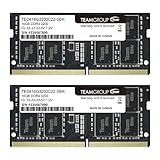
- Actual memory speed may vary depending on the system, CPU, motherboard, BIOS settings, and supported memory configuration. DDR4 3200MHz modules may operate at lower speeds such as 2933MHz or 2666MHz when supported by the host system. Please check your device specifications and compatibility before purchase.
- Adherence to JEDEC and compliance to RoHS with respect to environmental protection regulation, production and manufacturing
- All new generation product of DRAM module. Strict test and verification procedures are performed for products
- Lifetime warranty and Free technical support
- Installation video is attached in product image. ※Refer to the latest version on the official website. In case of discrepancies, the official website prevails.
The module does not fit
Stop; never force it. Check that you bought DDR4 SO-DIMM rather than a full-size DIMM, DDR3, or DDR5, and align the notch before inserting. If the notch does not line up, the module is the wrong type or orientation.
The laptop becomes unstable or runs at a lower speed
Mixed modules can lead to a lower common operating speed or less symmetrical channel operation. Confirm that both modules are compatible DDR4 SO-DIMMs, then test each one separately. Verify the processor’s supported speed before treating 2133 MHz or 2400 MHz as an error.
Rank #4

- 16GB Module ( 1x 16GB ) | DDR4 3200 MHz ( PC4-25600 / PC4-3200AA )
- DDR4 SO-DIMM ( 260-Pin ) | Non-ECC Unbuffered | 2Rx8 - Dual Rank x8 | 1.2V - DDR4 Standard Voltage
- High performance Memory RAM upgrade compatible with select DDR4 Laptop, Notebook, & All-in-One (AIO) Computers
- Boosts the performance of your system by speeding up loading times, improving system responsiveness, and increasing your system's ability to handle greater workloads
- All modules undergo quality assurance testing to ensure dependable and reliable performance
When support information conflicts
Dell’s model-specific memory specification is the controlling reference for the Latitude 5580’s two SO-DIMM slots. An AnandTech forum thread describes one owner being told SO-DIMM was incompatible despite the manual specifying SO-DIMM slots. That is a user-reported support interaction, not evidence that all Dell support responses are wrong. Use the manual for the model specification and a Service Tag lookup for the factory configuration.
Quick Recap
Best Value

- DDR4 8GB 3200MHz (PC4-25600) CL22 SODIMM 260-Pin Laptop Notebook Memory
- All new generation product of DRAM module
- 1.2V memory module
- Backed by lifetime warranty
Product prices and availability are accurate as of the date/time indicated and are subject to change. Any price and availability information displayed on Amazon at the time of purchase will apply.

