
Train the model as one pipeline that identifies entity spans and types, then predicts typed, directed relations among those entities. The most reliable path is to freeze a clear annotation schema, establish a reproducible repository baseline such as JEREX or UniRE, optimize entity and relation losses together, and select thresholds and candidate-span limits on document-level validation data. Report strict relation scores separately from entity scores; a high NER F1 does not guarantee useful relation extraction.
What a joint entity-and-relation classifier predicts
A joint system returns entity mentions (their character or token spans and types) plus relation triplets connecting compatible mentions. Instead of training NER first and feeding its output to a separate relation model, both decisions share representations and are optimized in one coordinated model. This lets relation evidence help resolve entity boundaries or types, while entity representations constrain which relation pairs are considered.
For document-level extraction, the input is a complete document rather than an isolated sentence. The output must therefore preserve document offsets, sentence membership, relation direction, and—when the annotation supports it—coreference links between mentions that refer to the same entity.
Fix the schema before choosing an architecture
Most costly failures begin with inconsistent labels, not with the transformer. Write the annotation contract before collecting or converting data.
Recommended Free Tools
#1 Best Overall

- Ergonomic Posture Correction: Designed to elevate your laptop to the perfect eye level, this adjustable laptop stand significantly reduces neck, shoulder, and spinal fatigue. Transform your desk into a healthier workstation, ideal for long hours of typing, Zoom meetings, or gaming.
- Unshakable Dual-Rod Stability: Unlike single-hinge models, our stand features a highly engineered dual-support rod mechanism. It perfectly distributes weight to ensure a 100% wobble-free typing experience, safely supporting heavy-duty devices up to 22 lbs (10kg).
- Advanced Thermal Cooling Panel: Maximize your device's performance. The unique geometric heat-vent design on the upper panel provides superior airflow compared to standard solid stands. This continuous heat dissipation prevents your laptop from thermal throttling and hardware damage during intensive tasks.
- Universal 10-16” Compatibility: A versatile computer riser that seamlessly fits all 10 to 16-inch laptops. Broadly compatible with MacBook Pro/Air, Dell XPS, HP, Lenovo, ASUS, Chromebook, and large gaming laptops. The anti-slip silicone pads firmly grip your device and protect it from scratches.
- Foldable, Portable & Ready to Go: Maximize your productivity anywhere. The dual-foldable design allows the stand to collapse completely flat in seconds. Easily slip it into your backpack or briefcase, making it the ultimate portable office accessory for business trips, cafes, or hybrid work setups.
Define entities and boundaries
- List every entity type and give one boundary rule for punctuation, determiners, nested mentions, and discontinuous spans.
- Specify whether overlapping or nested entities are legal. A flat BIO tagger cannot represent all nested spans; a span-based or graph model can, if candidates and labels are designed for them.
- Record original document offsets so subword tokenization never changes the gold span.
Define relations
- Name each relation and state its argument types.
- Mark whether a relation is directed. Store subject and object in a fixed order; do not treat a reversed edge as equivalent unless the schema explicitly says so.
- Specify whether multiple relations may connect one pair, whether self-relations are allowed, and how “no relation” is represented.
- State whether links may cross sentence boundaries and how coreference is represented.
Set the document boundary
Decide whether a training example is a sentence, paragraph, or full document. Keep that choice consistent in annotation, batching, evaluation, and production inference. A model trained on sentence windows cannot be evaluated fairly on cross-sentence relations without adding the missing context.
Choose data that matches the task
Use an annotated corpus whose entity and relation ontology resembles the target domain. JEREX demonstrates an end-to-end DocRED split for document-level extraction. UniRE includes processing and training examples for ACE2004, ACE2005, and SciERC. NYT and WebNLG are additional relation-extraction benchmarks used by the relational adaptive neural model.
| Corpus or benchmark | Scope or use in the cited implementation | Published figures |
|---|---|---|
| DocRED | Document-level joint extraction example in JEREX | Split details are provided by the JEREX repository; the publication does not state instance totals. |
| ACE2004, ACE2005, SciERC | Datasets with UniRE preprocessing and training commands | UniRE’s released ACE2005 BERT checkpoint reports entity P 89.03%, R 88.81%, F1 88.92%; strict relation P 68.71%, R 60.25%, F1 64.21% (UniRE repository, 2021). |
| NYT | Relational adaptive model benchmark | 24 valid relations; 56,195 training instances and 5,000 test instances in the reported split (authors, 2021). |
| WebNLG | Relational adaptive model benchmark | 246 valid relations; 5,019 training instances and 703 test instances in the reported split (authors, 2021). |
These scores and counts are published results for particular splits and configurations, not guarantees for a new domain. Keep a held-out document set for model selection; do not tune thresholds on the test set.
Rank #2

- 【Adjustable & Ergonomic】:This laptop stand can be adjusted to a comfortable height and angle according to your actual needs, letting you fix posture and reduce your neck fatigue, back pain and eye strain. Very comfortable for working in home, office and outdoor.
- 【Sturdy & Protective】 :Made of sturdy metal, it can support up to 17.6 lbs (8kg) weight on top; With 2 rubber mats on the hook and anti-skid silicone pads on top & bottom, it can secure your laptop in place and maximum protect your device from scratches and sliding. Moreover, smooth edges will never hurt your hands.
- 【Heat Dissipation】 :The top of the laptop stand is designed with multiple ventilation holes. The open design offers greater ventilation and more airflow to cool your laptop during operation other than it just lays flat on the table.
- 【Portable & Foldable】:The foldable design allows you to easily slip it in your backpack. Ideal for people who travel for business a lot.
- 【Broad Compatibility】:Our desktop book stand is compatible with all laptops from 10-15.6 inches, such as MacBook Air/ Pro, Google Pixelbook, Dell XPS, HP, ASUS, Lenovo ThinkPad, Acer, Chromebook and Microsoft Surface, etc.Be your ideal companion in Home, Office & Outdoor.
Pick an architecture that fits span and document requirements
Span-based graph construction
Span models enumerate candidate token spans, classify each as an entity type or non-entity, then score candidate entity pairs for relations. This design naturally supports overlapping and nested mentions and exposes separate controls for maximum span length and pair counts. Its cost grows quickly with document length because both spans and span pairs consume memory.
Autoregressive text-to-graph generation
The 2024 AAAI text-to-graph method by Urchade Zaratiana, Nadi Tomeh, Pierre Holat, and Thierry Charnois uses a transformer encoder-decoder with a pointing mechanism over a dynamic vocabulary of spans and relation types. It generates a linearized graph: text spans become nodes and relation triplets become edges. This avoids explicitly materializing every pair, but generation order, decoding errors, and output constraints become part of the system design.
Coupled entity and relation classifiers
The relational adaptive neural model (2021) combines contextual representations, entity-recognition components, relation-extraction components, and graph convolutions. Its reported setup initializes BERT representations at 768 dimensions, concatenates 15-dimensional POS and 25-dimensional character features, uses two Bi-GCN layers and three densely connected GCN layers, Adam with learning rate 0.0001, dropout 0.1, batch size 10, and joint-loss weight alpha 3. Treat these as published experiment settings to reproduce, then retune them for your corpus.
Rank #3

- 【Adjustable & Ergonomic】:This laptop stand can be adjusted to a comfortable height and angle according to your actual needs, letting you fix posture and reduce your neck fatigue, back pain and eye strain. Very comfortable for working in home, office and outdoor.
- 【Sturdy & Protective】 :Made of sturdy metal, it can support up to 17.6 lbs (8kg) weight on top; With 2 rubber mats on the hook and anti-skid silicone pads on top & bottom, it can secure your laptop in place and maximum protect your device from scratches and sliding. Moreover, smooth edges will never hurt your hands.
- 【Heat Dissipation】 :The top of the laptop stand is designed with multiple ventilation holes. The open design offers greater ventilation and more airflow to cool your laptop during operation other than it just lays flat on the table.
- 【Portable & Foldable】:The foldable design allows you to easily slip it in your backpack. Ideal for people who travel for business a lot.
- 【Broad Compatibility】:Our printer stand is compatible with all laptops from 10-15.6 inches, such as MacBook Air/ Pro, Google Pixelbook, Dell XPS, HP, ASUS, Lenovo ThinkPad, Acer, Chromebook and Microsoft Surface, etc.Be your ideal companion in Home, Office & Outdoor.
| Design | Best fit | Main trade-off |
|---|---|---|
| Span-based graph | Nested or overlapping entities; explicit document graphs | Candidate spans and pairs can exhaust CPU/GPU memory. |
| Text-to-graph generation | A unified output format with dynamic span and relation labels | Autoregressive decoding can propagate an early span or label error. |
| Coupled classifiers with graph layers | Experiments that need separate entity and relation objectives plus interaction layers | More components and hyperparameters require careful ablation and validation. |
Train the model step by step
- Freeze the annotation contract. Version the entity and relation label maps, direction rules, overlap policy, document boundaries, and treatment of coreference.
- Convert annotations to offsets and token indices. Tokenize with the chosen pretrained transformer, retain a mapping from every subword token to its original character span, and reject or repair annotations that cannot be aligned exactly.
- Create candidates. A span model enumerates mention spans up to a configured maximum length and creates entity-pair candidates. A text-to-graph model prepares the target sequence of span and relation decisions instead.
- Compute the joint objective. Sum entity and relation losses, mask invalid labels and padding, and apply any weighting only after checking validation behavior. The relational adaptive neural model’s published objective sums two entity-recognition losses and two relation-extraction losses, with alpha reported as 3 in its experiment settings.
- Validate on documents, not only individual sentences. Tune confidence thresholds, maximum span length, and candidate limits on held-out documents. Preserve each prediction’s document ID, offsets, label, direction, confidence, and model version.
- Export and audit predictions. Emit normalized triples such as
(subject_span, relation_type, object_span), retain provenance to the source document, and log rejected or truncated candidates for later error analysis.
Reproduce a working baseline
JEREX for joint DocRED training
JEREX requires Python 3.7 or newer plus PyTorch, PyTorch Lightning, Transformers, Hydra, scikit-learn, tqdm, NumPy, and Jinja2. After installing those dependencies and obtaining the repository’s data and model assets, its README gives this sequence:
bash ./scripts/fetch_datasets.shbash ./scripts/fetch_models.shpython ./jerex_train.py --config-path configs/docred_joint- Run
jerex_test.pywith the corresponding evaluation configuration to score the held-out split.
JEREX exposes separate mention-localization, coreference, entity-classification, and relation-classification components. That separation is useful when an error report needs to distinguish a missed span from a wrong type or an incorrect relation.
Windows Errors? Fix Them Before They Spread
Repair common Windows errors and clear accumulated junk for a smoother, more stable PC - no reinstall needed.Free scan · no reinstallOutdated Drivers Are Slowing You Down
One free scan finds every outdated or missing driver and matches the right update for your exact hardware.Free scan · exact hardware matchUniRE for ACE and SciERC experiments
UniRE supplies dataset processing and training commands for ACE2004, ACE2005, and SciERC, along with a downloadable ACE2005 BERT checkpoint. Use its repository’s commands and configuration files rather than mixing label maps from another corpus. The checkpoint’s published strict relation F1 of 64.21% is a reference point for that release and split, not a target that transfers automatically to a different ontology.
Rank #4
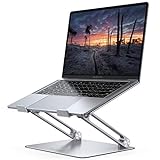
- Wide Compatibility: The laptop stand for desk is compatible with all laptops from 10" up to 17.3", including popular models like MacBook, MacBook Air, MacBook Pro, Surface Laptop, Dell XPS, Google Pixelbook, HP, ASUS, Acer, Chromebook, Alienware, etc.
- Adjustable & Portable Design: The laptop riser can be easily adjusted to comfortable height and angle based on your actual need. Besides, you also can fold the laptop stand up to carry around for travel and business trips or store it in your laptop bag.
- Upgrade Large Base: Made of high-quality aluminum alloy, the larger heavier base greatly improves the stability of the notebook stand. The laptop stand will never shaking, sliding and falling when you type on your laptop with this notebook holder.
- Ergonomic Design: The MacBook air pro stand holder works as a raiser to elevate the laptop screen to your eye level. The office computer stand let you fix posture and relieves neck, shoulder and spinal pain, it's very comfortable for working at home, office and outdoor, make typing more easier.
- Heat Dissipation: The multiple ventilation holes offers better ventilation and more airflow to cool your laptop and prevent from overheating and crashes. Anti-skid silicone and smooth edge can protects your laptop from sliding and scratches.
Control memory and candidate explosion
Span-pair search is often the first practical bottleneck. JEREX warns that token-span and span-pair search can be demanding on both CPU and GPU memory.
- Lower
max_spansto retain fewer candidate mentions. - Lower
max_coref_pairswhen coreference candidates dominate memory. - Lower
max_rel_pairsto reduce relation-pair scoring. - Reduce maximum span size when the domain uses short mentions.
- Decrease document length per batch or batch size if the configuration still exceeds available memory.
Every reduction trades coverage or throughput for memory: too-small limits can remove the gold span or pair before classification begins. Track how often gold annotations are truncated, and raise the relevant limit if that rate is nonzero.
Evaluate entities and relations separately
Publish entity precision, recall, and F1 alongside relation precision, recall, and F1. State whether matching is strict or relaxed. Strict relation scoring should require the documented entity boundaries, entity types, relation label, and direction to match; if your benchmark defines a different rule, quote that rule with the result.
Best Value

- ✔️[Foldabe & Protable] - Foldable laptop stand for desk & Protable computer stand, It combines the advantages of market brackets, convenient travel laptop stand. Easy to use. Suitable for working at home, office and outdoor, improve comfort.
- ✔️[360°Rotation] - The computer stand with 360° rotating base, 360° rotation connected with the base is more flexible, the computer stand allows you to rotate the laptop to any angle.
- ✔️[Stable & Durable] - The Computer stand is made of one-piece fiber metal material, which is more durable and stable than ordinary aluminum alloy computer stands. The upgraded rotating base makes the stand performance more stable, and the non-slip silicone protects the laptop from sliding.Only supports laptops up to 16 inches.
- ✔️[Ergonmic Desing] - You can freely adjust the height and angle of the laptop stand to keep it at eye level, which helps to reduce the pressure on your body while working. Whether sitting or standing, there is a comfortable angle.
- ✔️[Wide Compatibility] - Our laptop stand is compatible with all laptops from 10-16 inches, such as MacBook Air/Pro, Google PixelBook, Dell XPS, HP, ASUS, Lenovo ThinkPad, Acer, Chromebook and Microsoft Surface, etc. It is an ideal companion for computer workers.
Slice errors by cause
- Boundary: the predicted span starts or ends incorrectly.
- Type: the span is correct but its entity label is wrong.
- Direction: the right pair and relation are found in reverse order.
- Overlap: a nested or overlapping mention is missed or suppressed.
- Cross-sentence: the relation requires context outside the sentence containing one mention.
- Coreference: the relation links mentions whose canonical entity must be resolved first.
- Candidate truncation: the gold span or pair was excluded by a maximum-span or pair limit.
Use these slices to decide whether to change the schema, candidate limits, architecture, or loss weights. Relation F1 is the decisive metric for a system intended to populate a knowledge graph; entity F1 alone can conceal unusable edges.
Which design should you choose?
Start with JEREX when you need a reproducible document-level baseline, explicit candidate controls, and DocRED-style joint components. Start with UniRE when your experiments center on ACE2004, ACE2005, or SciERC and you want its released preprocessing and checkpoint. Consider a text-to-graph encoder-decoder when a linearized graph output and dynamic span vocabulary fit your deployment constraints. Use a coupled graph-classifier design when you want to reproduce the published NYT or WebNLG setup and investigate separate entity and relation losses.
Whichever architecture you select, representative annotations and a consistent schema usually matter more than swapping encoders. Establish strict entity and relation metrics first, then tune candidate limits, thresholds, and loss weights against domain-specific validation documents.
Quick Recap
Product prices and availability are accurate as of the date/time indicated and are subject to change. Any price and availability information displayed on Amazon at the time of purchase will apply.
Quick wins for a faster PC:
Repair Windows errors before they cause bigger problemsFix Now →Fix the driver behind crashes, sound loss and screen glitchesFind Drivers →
