
iTechGuides is reader-supported. When you buy through links on our site, we may earn an affiliate commission. As an Amazon Associate I earn from qualifying purchases. Learn more
To photograph bright lights without washing out the rest of the scene, decide first whether the light itself needs detail. For one exposure, protect important highlights and check the histogram or highlight warning; for a static scene that needs detail in both bright and dark areas, capture bracketed exposures and merge them as HDR. RAW gives you more editing flexibility, but it cannot restore detail that was clipped when you took the photo.
Choose what the bright light should look like
A lamp or bare bulb can appear as a featureless white spot without harming the picture if its surface has no detail you want to keep. An illuminated sign, shop window or set of letters is different: if its shape or texture matters, expose to retain that highlight. The surroundings may then look dark, because one exposure cannot always preserve detail across the scene’s full brightness range.
Fujifilm gives approximate explanatory figures of about 20 stops between details the human eye can detect in highlights and shadows, compared with about 12 to 14 stops for digital cameras. These are general estimates, not specifications for every camera. The practical point is to choose which parts of a high-contrast scene matter most rather than expecting every light and shadow to retain detail.
Quick wins for a faster PC:
Repair Windows errors before they cause bigger problemsFix Now →Fix the driver behind crashes, sound loss and screen glitchesFind Drivers →Choose a single exposure or an HDR bracket
| Approach | Best suited to | Tradeoffs |
|---|---|---|
| One exposure, preferably RAW if you plan to edit | Moving subjects, changing lights, or a quick and simple capture | Protect important highlights; shadows may remain dark. RAW allows more adjustment than JPEG in Fujifilm’s described workflow, but cannot recreate clipped data. |
| Bracketed exposures merged as HDR | A static, high-contrast scene where you want more highlight and shadow detail | Requires extra frames and editing. Movement can cause ghosting, and processing can produce halos, shadows or uneven shading. |
| Reflector or fill flash | A nearby subject, such as a portrait, whose shadows need brightening | Changes the light falling on the subject rather than recovering detail in post-processing; it is mainly practical at a small scale. |
| Graduated neutral-density filter | A composition with a relatively straight bright/dark boundary, such as a horizon | It is a poor general solution for individual lamps scattered through the frame; whether it fits depends on the scene’s geometry. |
Fujifilm suggests considering exposure bracketing by ±2 stops for a nighttime cityscape when its in-camera dynamic-range approach is not enough, followed by an HDR merge. Treat that as one manufacturer’s suggested workflow, not a universal setting: the right bracket depends on the scene and camera.
#1 Best Overall

- 【Shoot Like DSLR】This clip-on CPL filter kit from K&F CONCEPT includes a K&F CONCEPT Nano-K series CPL filter and a clip for phone, it is fit for travel shots, street photography, outdoor landscape, and time-lapse photography, Instagram, weddings, vacations, and other fun shooting, etc. For reflection reduction, keep the lens at 30–40° to the surface. For sky enhancement, shoot sideways (90°) to the sun. Adjust as needed. NOTE:Not compatible with iPhone 18 Pro & 18 Pro Max.
- 【K&F CONCEPT 52mm Nano-K Series CPL Filter 】Made by Japanese imported AGC glass, no effect on the image color, and restores the natural color. Adopt 18-layer MRC coating, which reduces reflection, and glare and improves color saturation and contrast. It only reduces glare, making reflections look clearer or darker, but not disappear. To fully remove them, change your angle or physically remove the reflective object.
- 【Enhance Color & Contrast】CPL filter can enhance the color and contrast, and remove non-metallic reflections such as water, and glass to show the true color, especially used in white cloud and blue sky photography. It only reduces reflections from non-metallic surfaces like glass or water. It has little effect on metal or mirrors. Please set realistic expectations.
- 【Widely Compatibility】The clip can be clamped on most smartphones to take pictures like a professional SLR camera. The 52mm CPL filter can also work with the DSLR cameras with ø 52mm lens thread. Please check the product images for compatible phone models.
- 【Quick Install & Easy Operation】Simply screw the filter on the phone clip, then clamp it on your phone, during a photo shoot, easily rotate the filter and adjust shoot angle to get the best polarizing effect. Please check whether it is compatible with your mobile phone.
Make a reliable single exposure
- Identify the highlight to protect. Decide whether detail in a sign, window or other bright source is important. If only a tiny bulb is allowed to become white, you can expose for the rest of the image instead.
- Use the histogram or highlight warning. Review these tools after a test frame to see whether important highlights are clipped. The rear-screen preview alone can be misleading; Nikon discusses histogram review as part of its exposure-bracketing workflow.
- Capture RAW if you intend to edit. RAW leaves more latitude for exposure and white-balance adjustments than JPEG in Fujifilm’s described workflow. It cannot restore highlight information the sensor never recorded.
- Review the result and adjust deliberately. If important lights have lost their detail, reduce exposure and take another frame. If the light detail is expendable and the scene’s subject matters more, let the brightest point go white rather than sacrificing the whole composition.
Bracket and merge a static scene
Bracketing means taking multiple frames at different exposure levels so that a merge can use detail from more than one exposure. It is most useful when both the bright source and its dark surroundings matter, and the scene is still enough for the frames to align.
- Keep the framing steady. A tripod can help prevent camera movement between exposures. It is useful for multi-frame capture, not a requirement for every photograph containing a bright light.
- Capture a range of exposures. Use your camera’s exposure-bracketing controls if available, or adjust exposure between frames. There is no universal required frame count: Nikon’s educational article discusses three-, five- and seven-frame brackets, while Canon’s Digital Photo Professional manual says three source images—low, normal and high exposure—are ideal for its HDR workflow.
- Merge the frames with alignment enabled. Adobe Lightroom’s HDR merge documentation describes automatic alignment and deghost controls. These can help when frames differ slightly or something moves, but cannot guarantee a clean result in every scene.
- Inspect bright edges and moving objects. Look for halos, shadows around lights, uneven shading and ghosting. Nikon’s D780 manual warns that movement can compromise an in-camera HDR result; Adobe identifies movement between frames as a cause of ghosting.
- Use only as much processing as the image needs. A high-contrast look can be a deliberate choice. HDR is a way to combine exposures, not a requirement to make every dark area bright or every light look subdued.
Camera-specific HDR options differ. For example, Nikon’s D780 manual describes an in-camera mode that combines two shots at different exposures, recommends Matrix metering, and warns that the edges may be cropped. Those instructions apply to the D780, not to cameras generally.
Rank #2

- 【Reduces Glare & Enhances Color】: This 67mm CPL filter is a must - have for photography enthusiasts. Using advanced optical glass, rotate the filter to adjust it for optimal results, can accurately filter the polarized components of light, effectively get rid of harsh reflections on water, glass, plant leaves and other non-metallic surfaces. Enhances the purity and saturation of colors in your landscape photos, giving them a strong visual impact and helping you capture the true beauty of nature.
- 【Pro-Photography Excellence】: This CPL filter for iPhone at the beach, it makes the sea look blue and clear, and you can even see the sand and rocks under the water. It also makes the colors of the leaves in the forest look richer. In the city, it can make your photos of glass buildings look better by reducing reflections. This filter helps make colors in photos more vivid and the details more noticeable, whether you are a beginner or a professional photographer.
- 【CNC Metal Frame & 28-Layer Nano Coating】: This CPL filter has a precision - machined CNC aluminum alloy frame. It's durable and won't loosen. The frame is sandblasted and anodized for a fine texture and resistance to scratches and corrosion. Both sides of the CPL filter have an 28 layer nano coating, which offers excellent water, dust, fingerprint, and scratch resistance, it can maintain stable optical performance in various harsh environments. Ditch cheap plastic filters, embrace true quality.
- 【2-IN-1, CPL Filter for Phone & 58mm/67mm Camera】: Widely compatible, this clip on 67mm circular polarizer filter kit is designed for all smartphones and any DSLR cameras with a 58mm/67mm filter thread. The newly upgraded universal cell phone clamp is compatible with iPhone 17 16 15 14 13 12 11 Samsung Galaxy S25 S24 S22 Ultra and other models. Essential photography accessories for professional content creators and must-have gear for influencers. (Includes 58mm-67mm threaded adapter ring)
- 【Lightweight & Packing List】: The package includes 67mm CPL Filter X 1, Metal Threaded Phone Clip X 1, Storage Case X 1, Cleaning Cloth X 1 and 58mm-67mm Adapter Ring X 1. Weighing in at only 150g, the package comes with a high-quality storage bag that makes it easy to keep your filters and all your accessories together. Whether you're heading to remote mountainous areas for nature photography or traveling through city streets to capture humanistic moments, keep your gear organized.
Control color and flare as part of the composition
Night scenes often mix differently colored lights. Fujifilm notes there is no single correct white balance for such a scene: choose the rendering that suits the mood and the relationships between colors. RAW makes it easier to adjust white balance later. If mixed colors distract from the subject, consider black-and-white to emphasize shapes, textures and patterns.
Bright sources can also create soft-edged flare or veiling glare. Decide whether that effect supports the image or obscures something important; it is not automatically a mistake. If the scene’s color is the distraction, changing white balance or choosing monochrome addresses a different problem from exposure: neither will restore clipped highlight detail.
Quick Recap
Best Value
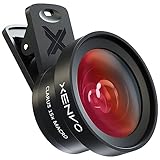
- ✔ COMPATIBLE WITH ALL SMARTPHONES, TABLETS, and LAPTOPS including ALL iPhone models, Samsung Galaxy and Note, Google Pixel, Huawei and more. CONTENTS INCLUDE: TruView 0.45x Wide Angle Lens, Clarus 15x Macro Lens, TruGrip Lens Clip, GlowClip Mini Rechargeable LED Light + Charging Cable, Quick-Release Lanyard, DuraCase, EasyClip, and Cleaning Cloth.
- ✔ TRUVIEW 0.45x WIDE ANGLE LENS - CAPTURE 45% MORE PICTURE WITH EVERY SNAP: Shoot stunning photos of people, pets, travel scenery, landscapes, architecture, selfies and more. NO DARK CORNERS (vignetting) like cheaper lenses. Crafted from aircraft-grade aluminum and premium optical glass for durability and clarity. Multi-element, coated glass lenses minimize ghosting, reflections, lens flare, and other artifacts. Xenvo cell phone lens attachment is ideal for hobbyists and photography pros alike.
- ✔ CLARUS 15x MACRO LENS - MARVEL YOUR SENSES. MAGNIFY NEARBY SUBJECTS FOR BREATHTAKING, SUPER CLOSE-UP PHOTOS: Capture all the intricacies and details with precision-focus for razor crisp macro photos every time. (For best results, position macro lens approximately 1/2 inch from subject. Not designed for zooming in on distant subjects.) THE TRUGRIP LENS CLIP offers SUPERIOR GRIPPING POWER to fasten your lenses to your cell phone when you're in action mode, framing your next perfect shot.
- ✔ GLOWCLIP RECHARGEABLE LED FILL LIGHT - The GlowClip LED light clips ANYWHERE on your phone to instantly illuminate your subject and surroundings with warm continuous light. The warm and natural LED light is superior to your smartphone's built in flash—which can be blinding and unnatural—especially in darker settings and venues. FEATURES 3 BRIGHTNESS SETTINGS: Low, Medium and High. Say goodbye to frustrating photo "retakes" and hello to brilliant photos the first time.
- ✔ QUICK-RELEASE LANYARD AND TRAVEL CASE - TRANSPORT AND PROTECT YOUR LENS KIT: Perfect for taking your Xenvo lenses with you on the fly. The travel case stores and protects all lens kit components snugly and safely while the quick-release lanyard is the perfect way to carry your lenses on your next outing. Just drape the lanyard and lens around your neck. The quick-release lanyard head makes it a cinch to access your Xenvo lenses in a flash so you never miss another photo moment.
Rank #4

- 【1-10 Stop ND2-400 Filter】: The 67mm ND2 - 400 filter for iphone/DSLR camera is a master of light control, adjustable light reduction from 1 - 10 stops by rotating. Its 28 - layer nano - coating effectively reduces glare and enhances image quality. It supports slow shutter speeds and wide apertures, perfect for dynamic blur effects and precise depth - of - field control. Whether you're capturing landscapes, cityscapes, astrophotography, or video, this filter delivers professional - quality results.
- 【Fantastic Photography Effects】: In landscape photography, it can create a dreamy effect for flowing water and enhance sky colors. For urban settings, it can produce light trails from traffic while maintaining architectural details. It also reduces light pollution for astrophotography and offers consistent exposure in changing light conditions for stable video footage. Whether you're a beginner or a professional, this filter helps achieve creative results and elevate your visual projects.
- 【CNC Metal Frame & 28-Layer Nano Coating】: This ND2-400 filter has a precision - machined CNC aluminum alloy frame. It's durable and won't loosen. The frame is sandblasted and anodized for a fine texture and resistance to scratches and corrosion. Both sides of the filter have an 28 layer nano coating, which offers excellent water, dust, fingerprint, and scratch resistance, it can maintain stable optical performance in various harsh environments. Ditch cheap plastic filters, embrace true quality.
- 【2-IN-1, ND2-400 Filter for Phone & 58mm/67mm Camera】: Widely compatible, this clip on 67mm adapter neutral density filter kit is designed for all smartphones and any DSLR cameras with a 58mm/67mm filter thread. The newly upgraded universal cell phone clamp is compatible with iPhone 17 16 15 14 13 12 11 Samsung Galaxy S25 S24 S22 Ultra and other models. Essential photography accessories for professional content creators and must-have gear for influencers. (Includes 58mm-67mm threaded adapter ring)
- 【Lightweight & Packing List】: The package includes 67mm ND2-400 Filter X 1, Metal Threaded Phone Clip X 1, Storage Case X 1, Cleaning Cloth X 1 and 58mm-67mm Adapter Ring X 1. Weighing in at only 150g, the package comes with a high-quality storage bag that makes it easy to keep your filters and all your accessories together. Whether you're heading to remote mountainous areas for nature photography or traveling through city streets to capture humanistic moments, keep your gear organized.
Rank #3

- Apply slow shutter speed under strong sunlight exposure.
- Filters are great for removing unwanted reflections from non-metallic surfaces and increase contrast and color saturation.
- Neutral density filter, used to filter light.
- Control the amount of light in the 1 to 9 stepless adjustment.
- The outer ring can adjust the gray level arbitrarily, and can be transferred from ND2 to 400.
Sources and model-specific guidance
- Fujifilm: Using Mixed Lighting at Night — mixed-light color, RAW flexibility and exposure bracketing.
- Nikon: High Dynamic Range Photography — highlight exposure, histogram review and bracket examples.
- Nikon D780 Online Manual: Preserving Detail in Highlights and Shadows — D780-specific in-camera HDR behavior and limitations.
- Canon Digital Photo Professional Manual: Creating HDR Images — guidance for that software’s HDR workflow.
- Adobe Lightroom: Merge photos to create HDRs, panoramas, and HDR panoramas — alignment and deghosting options.
- Fujifilm: Boost Dynamic Range in Your Images — approximate dynamic-range figures and the scene-dependent fit of graduated neutral-density filters.
Product prices and availability are accurate as of the date/time indicated and are subject to change. Any price and availability information displayed on Amazon at the time of purchase will apply.

