
What’s actually slowing this PC down?
Pick the symptom - the matching free tool is one click away.
iTechGuides is reader-supported. When you buy through links on our site, we may earn an affiliate commission. As an Amazon Associate I earn from qualifying purchases. Learn more
“Switch screens” can mean several different things in Windows. You may want to change the display mode, move the active window to another physical monitor, switch to a virtual desktop, or simply choose another open app. Each action has a different keyboard shortcut.
The most important distinction is this: Windows + P changes how Windows uses connected displays, while Windows + Shift + an arrow moves the active window between physical monitors.
Quick reference: the Windows screen-switching shortcuts
| What you want to do | Shortcut | What it does |
|---|---|---|
| Choose a display mode | Windows + P | Opens the project settings menu |
| Move the active window to another monitor | Windows + Shift + Left arrow or Right arrow | Moves the focused window to the neighboring physical display |
| Switch between virtual desktops | Windows + Ctrl + Left arrow or Right arrow | Changes the virtual desktop, not the physical monitor |
| Open Task view | Windows + Tab | Shows open windows and virtual desktops |
| Switch between open apps | Alt + Tab | Cycles through application windows |
| Connect to a wireless display | Windows + K | Opens the wireless display connection panel |
1. Change the display mode with Windows + P
Use this shortcut when you want Windows to decide whether to use one monitor, mirror the desktop, or extend it across multiple displays.
Recommended Free Tools
- Press Windows + P.
- Select one of the four options in the project settings panel:
| Option | Result |
|---|---|
| PC screen only | Uses the main PC display and turns off the other connected screens. |
| Duplicate | Shows the same desktop on every display. This is useful when presenting from a laptop. |
| Extend | Creates one larger desktop across the monitors. You can drag windows and the pointer between screens. |
| Second screen only | Uses the external display and turns off the PC’s built-in or primary screen. |
Windows + P does not select “Monitor 1” or “Monitor 2.” It changes the display arrangement mode. If you need to move a particular application to another physical monitor, use the window-moving shortcut below.
#1 Best Overall

- Reliable Plug and Play: The USB receiver provides a reliable wireless connection up to 33 ft (1), so you can forget about drop-outs and delays and you can take it wherever you use your computer
- Type in Comfort: The design of this keyboard creates a comfortable typing experience thanks to the low-profile, quiet keys and standard layout with full-size F-keys, number pad, and arrow keys
- Durable and Resilient: This full-size wireless keyboard features a spill-resistant design (2), durable keys and sturdy tilt legs with adjustable height
- Long Battery Life: MK270 combo features a 36-month keyboard and 12-month mouse battery life (3), along with on/off switches allowing you to go months without the hassle of changing batteries
- Easy to Use: This wireless keyboard and mouse combo features 8 multimedia hotkeys for instant access to the Internet, email, play/pause, and volume so you can easily check out your favorite sites
2. Move the active window to another physical monitor
First activate the window you want to move by clicking it or selecting it with Alt + Tab. Then press:
- Windows + Shift + Left arrow to move it to the monitor on the left.
- Windows + Shift + Right arrow to move it to the monitor on the right.
Windows moves the focused window, usually preserving its size and position relative to the destination display. Press the shortcut repeatedly to move the same window through multiple connected monitors.
Example
- Click a browser window on your laptop screen.
- Press Windows + Shift + Right arrow.
- The browser moves to the monitor Windows considers to be on the right.
This shortcut requires the displays to be in an extended configuration. If the screens are duplicated, there is no separate desktop area to which a window can move.
Free tools Windows power users keep installed
One-click scans. No signup required.
3. Fix the left and right monitor order
If the window moves in an unexpected direction, Windows may have the monitors arranged differently from their physical positions.
Rank #2
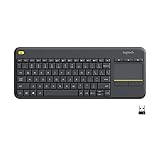
- Media-Friendly: The K400 Plus wireless touch TV keyboard gives you integrated, comfortable control of your PC-to-TV entertainment, eliminating the clutter of a separate keyboard and mouse
- Plug-and-Play: Simply plug the Unifying receiver into a USB port and the wireless touchpad keyboard is ready to go; adjust controls using the Logitech Options Software to save preferred settings
- Power-Packed: Built with laid-back control in mind, this wireless TV keyboard has a reliable and long battery life of up to 18 months (2), including an on/off button to help it go even longer
- Wireless Freedom: Designed for seamless comfort and control, this HTPC keyboard boasts a range of up to 33 ft (1) wireless connectivity, with quiet keys and a large touchpad for easy navigation
- Broad Compatibility: Designed for use with Windows 7, Windows 8, Windows 10 and later, Android 7 or later, and Chrome OS
- Open Start > Settings > System > Display.
- Select Identify. Windows places a number on each physical monitor so you can tell which display is Display 1, Display 2, and so on.
- In the display diagram, click and drag the numbered rectangles until they match the monitors on your desk.
- Select Apply.
The arrangement controls how the pointer and windows travel between screens. For example, if your second monitor is physically to the left but its rectangle is to the right, the left and right window shortcuts will feel reversed.
4. Detect a missing monitor
If a connected screen does not appear in Display settings, check the cable, adapter, or docking station first. Then run Windows’ detection tool:
- Open Start > Settings > System > Display.
- Expand Multiple displays.
- Select Detect.
After Windows finds the display, choose Extend from Windows + P if you want to move windows between screens.
5. Switch between virtual desktops
Virtual desktops are separate workspaces inside Windows. They do not represent separate monitors. For example, Desktop 1 might contain work applications while Desktop 2 contains personal apps, even though both use the same physical screen.
Rank #3

- All-day Comfort: This USB keyboard creates a comfortable and familiar typing experience thanks to the deep-profile keys and standard full-size layout with all F-keys, number pad and arrow keys
- Built to Last: The spill-proof (2) design and durable print characters keep you on track for years to come despite any on-the-job mishaps; it’s a reliable partner for your desk at home, or at work
- Long-lasting Battery Life: A 24-month battery life (4) means you can go for 2 years without the hassle of changing batteries of your wireless full-size keyboard
- Simply plug the USB receiver into a USB port on your desktop, laptop or netbook computer and start using the keyboard right away without any software installation
- Simply Wireless: Forget about drop-outs and delays thanks to a strong, reliable wireless connection with up to 33 ft range (5); K270 is compatible with Windows 7, 8, 10 or later
Use keyboard shortcuts
- Press Windows + Ctrl + Right arrow to move to the next virtual desktop.
- Press Windows + Ctrl + Left arrow to move to the previous virtual desktop.
- Press Windows + Ctrl + D to create a new virtual desktop and switch to it.
- Press Windows + Ctrl + F4 to close the current virtual desktop.
To see the desktops visually, press Windows + Tab. Task view displays the open windows and the virtual desktops at the top. Select a desktop with the mouse or keyboard.
Configure which windows appear on each desktop
- Open Settings > System > Multitasking.
- Expand Desktops.
- Configure whether the taskbar shows windows from only the desktop you are using or from all desktops.
- Configure whether Alt + Tab shows windows from all desktops or only the current desktop.
6. Switch between open apps, not screens
Press and hold Alt, then press Tab repeatedly to highlight an open application. Release Alt to select it. This changes the active window; it does not change monitors or virtual desktops.
You can also press Windows + Tab to view all open windows and select one. If you have multiple monitors, Windows + T cycles through taskbar applications across the available displays. It does not directly select a monitor.
7. Connect to a wireless display
For a Miracast-compatible TV, projector, or wireless monitor:
Rank #4

- 【Ergonomic Wireless Keyboard Mouse 】: Wireless ergonomic keyboard is equipped with adjustable height tilt legs to increase comfort and prevent your wrists injury when typing for a long time. The full size wireless keyboard with numeric keypad and 12 multimedia shortcut keys, such as play/ pause, volume increase and decrease, and email, to help you improve work efficiency
- 【Stable & Reliable Wireless Connection】: This wireless keyboard and mouse combo share the same USB receiver(stored in the mouse), and they can also be used separately. Plug & play, no need to download any software, 2.4 GHz wireless provides a powerful and reliable connection up to 33 feet(10m) without any delays.You can enjoy the convenience and freedom of wireless connection at home or at work
- 【Comfortable Optical Mouse】: This compact lightweight wireless mouse features a hand-friendly contoured shape for all-day comfort, and smooth, precise tracking.1600 DPI to meet your daily needs. Perfect for home & office work and entertainment
- 【Long Battery Life】: Up to 365 Days of battery life for keyboard and mouse wireless, say goodbye to the hassle of charging cables and replacing batteries. After 10 minutes of inactivity, the wireless keyboard mouse combo will automatically go into sleep mode to save energy. The wireless keyboard requires one AAA battery, and the wireless mouse requires one AA battery.
- 【Less Noise, More Quiet Keys】: Soft membrane keys provide a quiet and comfortable typing experience, So you can type with confidence on a wireless keyboard crafted for comfort, precision and fluidity. The wireless mouse adopts silent micro-motion technology, which is almost completely silent when clicked. No more concerns about disturbing others.
- Press Windows + K.
- Select the target display from the available devices.
- Once connected, press Windows + P and choose Duplicate, Extend, or another suitable mode.
If a Windows PC should receive a wireless projection, open Start > Settings > System > Projecting to this PC. If the required feature is missing, go to Optional features > View features, search for wireless display, select Wireless Display, choose Next, and select Install.
On Windows 11 version 22H2 and later, Microsoft provides the Wireless Display app. On earlier versions, the documented fallback is the Connect app. If the target PC is not listed, make sure Wi-Fi is enabled and that the required Wireless Display app or Connect app is installed and running.
Shortcuts that are commonly confused
| Shortcut | Actual function |
|---|---|
| Windows + P | Opens display modes; it does not directly choose a numbered monitor. |
| Windows + Ctrl + Left/Right arrow | Switches virtual desktops. |
| Windows + Shift + Left/Right arrow | Moves the active window between physical monitors. |
| Alt + Tab | Switches open applications or windows. |
| Windows + Left/Right arrow | Snaps the active window to the left or right side of the current screen; it does not move the window to another monitor. |
What to use in each situation
- Want one screen to turn off? Press Windows + P and choose PC screen only or Second screen only.
- Want the same picture on two displays? Choose Duplicate.
- Want different windows on different monitors? Choose Extend, then use Windows + Shift + an arrow.
- Want a separate workspace? Use Windows + Ctrl + Left/Right arrow for virtual desktops.
- Want another running program? Use Alt + Tab or Windows + Tab.
FAQ
What is the keyboard shortcut to switch between two monitors in Windows?
To move the active window between physical monitors, press Windows + Shift + Left arrow or Right arrow. Use Windows + P when you want to change the display mode instead.
Why does Windows + Ctrl + Arrow not move my window to another monitor?
That shortcut switches between virtual desktops. Add Shift and use Windows + Shift + Left/Right arrow to move the active window between physical displays.
Best Value

- Connect in seconds: Fast, easy Bluetooth wireless technology simply connects without the need for a dongle or USB port
- Durable and reliable: Built for quality, K250 offers long-lasting keys, a spill-resistant design (2)
- Comfort is key: Deep-profile keys and an adjustable tilt-leg design make typing feel great
- Space-saving: with a compact layout that still includes number pad, arrow keys, and handy F-key shortcuts
- Made responsibly: Designed to last, K250 plastic parts are durably made with minimum 64% recycled plastic (3) to withstand everyday use
How do I make Windows use both monitors separately?
Press Windows + P and select Extend. If the monitor order is wrong, open Settings > System > Display, use Identify, drag the display rectangles into the correct arrangement, and select Apply.
Can Alt + Tab switch between monitors?
No. Alt + Tab switches between open application windows. It may select a window that is on another monitor, but it does not switch the display itself.
How do I switch to a wireless monitor?
Press Windows + K and select the wireless display. After connecting, use Windows + P to choose whether to duplicate or extend the desktop.
Outdated Drivers Are Slowing You Down
One free scan finds every outdated or missing driver and matches the right update for your exact hardware.Free scan · exact hardware matchWindows Errors? Fix Them Before They Spread
Repair common Windows errors and clear accumulated junk for a smoother, more stable PC - no reinstall needed.Free scan · no reinstallThe Bottom Line
For physical monitors, use Windows + Shift + Left/Right arrow to move the active window, and Windows + P to change the display mode. For virtual desktops, use Windows + Ctrl + Left/Right arrow. Alt + Tab only switches applications.
Quick Recap
Product prices and availability are accurate as of the date/time indicated and are subject to change. Any price and availability information displayed on Amazon at the time of purchase will apply.

