
Free tools Windows power users keep installed
One-click scans. No signup required.
iTechGuides is reader-supported. When you buy through links on our site, we may earn an affiliate commission. As an Amazon Associate I earn from qualifying purchases. Learn more
You can stream gaming VODs stored on a NAS by opening the files from a computer, using OBS Studio’s VLC Video source to play them in sequence, and sending OBS’s output to YouTube Live Control Room. The NAS supplies the files; OBS (or another compatible encoder) creates the live stream. A NAS can run the encoder itself only if its specific model and software support the required tools and workload.
What you need before you start
- A NAS containing the VOD files, with a network share the computer running OBS can access.
- A computer with OBS Studio and VLC installed. OBS’s VLC Video source can play a playlist and provides loop and shuffle controls.
- A YouTube channel able to create a live stream, plus the stream URL and stream key from YouTube Live Control Room.
- A stable connection between the computer and NAS, and an upload connection suitable for the encoder’s output. The right capacity depends on the files, output settings, hardware, and network; there is no universal bitrate or bandwidth figure for every setup.
Test that each file plays from the network share before configuring the broadcast. A NAS media-library or DLNA feature may serve media to compatible devices, but it is not itself a YouTube encoder input. Synology’s older DSM 6.2.3 media-server guide is an example of LAN media serving, not a general recipe for mounting every NAS share in OBS.
Prepare and access the VOD playlist
Arrange the files
- Put the VODs in the order you want them played. Confirm that every video and audio track opens and plays correctly.
- Decide whether the playlist should repeat in order or shuffle. For a planned sequence, leave shuffle off; enable it only if varied ordering is intentional.
- Check available NAS storage and share permissions. The account used by the computer must be able to read every file.
Open the NAS share from the OBS computer
Connect to the share using your operating system’s normal network-share method, then verify that the files are reachable from that computer. Exact mount steps depend on the NAS, operating system, and network configuration; the cited Synology material does not establish a universal procedure. Keep the share available for the entire broadcast, and test playback from its network path rather than from a local copy.
Configure OBS to play the playlist
- Install VLC on the computer running OBS. OBS’s VLC Video source depends on VLC being installed.
- In OBS, select or create the scene for the broadcast. Under Sources, add a VLC Video Source.
- In that source’s properties, add the VOD files from the NAS share to the playlist. Check their order, then set loop and shuffle to match your plan.
- Preview the scene and listen through the full start of playback. Confirm that the picture is visible, audio is present at an appropriate level, and transitions between files behave as intended.
- Run a private or unlisted rehearsal if appropriate. Watch for missing files, pauses, audio problems, or a share connection that drops during playback.
OBS describes the VLC source as supporting a playlist, similar to an image slideshow, with loop and shuffle controls. See its Media Sources documentation for source details. This workflow uses OBS to read and play files; it does not guarantee that every codec or NAS connection will perform well on every computer.
#1 Best Overall
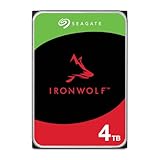
- IronWolf internal hard drives are the ideal solution for up to 8-bay, multi-user NAS environments craving powerhouse performance
- Store more and work faster with a NAS-optimized hard drive providing ultra-high capacity up to 16TB and cache of up to 256MB
- Purpose built for NAS enclosures, IronWolf delivers less wear and tear, little to no noise/vibration, no lags or down time, increased file-sharing performance, and much more
- Easily monitor the health of drives using the integrated IronWolf Health Management system and enjoy long-term reliability with 1M hours MTBF
- Three-year limited warranty protection plan included and three year Rescue Data Recovery Services included
Connect OBS to YouTube and start the live stream
- In YouTube Studio, open Live Control Room and create or schedule a stream. Follow the current YouTube setup flow for your channel and event.
- Copy the stream URL and stream key shown for the stream. In OBS’s stream settings, enter the YouTube server URL and key. YouTube’s encoder setup guidance instructs creators to enter those values in their encoder.
- Keep the stream key private. Anyone who obtains it may be able to send video to the associated stream.
- Start streaming from OBS. For a scheduled stream, check the preview in Live Control Room and use YouTube’s controls to take the stream live when ready.
- Monitor the YouTube preview and OBS while the playlist plays. When finished, end the broadcast using YouTube’s live-stream controls.
YouTube’s linked guidance says streams shorter than 12 hours are automatically archived. It does not support promising an automatic archive for streams lasting 12 hours or more.
OBS, FFmpeg, or running the encoder on the NAS?
OBS on a computer: the straightforward option
With OBS on a computer, the NAS remains storage and the computer reads the playlist and sends the encoded output to YouTube. This keeps the encoder setup on a general-purpose system with a visible preview, but that computer, its network access to the NAS, and its internet connection must remain available while it is streaming.
Rank #2

- Store more, compute faster, and do it confidently with the proven reliability of BarraCuda internal hard drives
- Build a power house gaming computer or desktop setup with a variety of capacities and form factors
- The go to SATA hard drive solution for nearly every PC application from music to video to photo editing to PC gaming. Ax. Sustained transfer rate OD: 190MB/s
- Confidently rely on internal hard drive technology backed by 20 years of innovation
- Frustration Free Packaging - This is just an anti-static bag. No cables, no box.
FFmpeg: a command-line alternative
FFmpeg documents real-time output of a file to an RTMP server using the -re option and an RTMP output URL in its protocol documentation. That demonstrates a general file-to-RTMP capability, not a ready-to-run YouTube playlist command. The cited example does not specify YouTube’s current endpoint, authentication handling, playlist concatenation, restart behavior, or safe handling of a stream key. Check current YouTube instructions and configure those details for your system before relying on FFmpeg.
Outdated Drivers Are Slowing You Down
One free scan finds every outdated or missing driver and matches the right update for your exact hardware.Free scan · exact hardware matchPC Slower Than It Used to Be?
A free scan shows the junk files, broken settings and background clutter dragging Windows down - then fixes them in one click.Free scan · Windows 10 & 11Running an encoder directly on the NAS
Whether a NAS can run OBS or FFmpeg is model- and software-dependent. It needs a suitable runtime, codecs, processing capacity, network access, and a secure way to handle the stream key. General NAS media-server documentation does not establish that a particular model can encode and send a YouTube live stream. Confirm compatibility for your exact NAS before treating it as the encoder.
Rank #3

- IronWolf internal hard drives are the ideal solution for up to 8-bay, multi-user NAS environments craving powerhouse performance.date transfer rate:6.0 gigabits_per_second
- Store more and work faster with a NAS-optimized hard drive providing 8TB and cache of up to 256MB
- Purpose built for NAS enclosures, IronWolf delivers less wear and tear, little to no noise/vibration, no lags or down time, increased file-sharing performance, and much more
- Easily monitor the health of drives using the integrated IronWolf Health Management system and enjoy long-term reliability with 1M hours MTBF
- Three-year limited product warranty protection plan and three year Rescue Data Recovery Services included
Choose a YouTube ingest protocol
Use the protocol supported by your encoder and the stream configuration in YouTube Live Control Room. YouTube documents HLS for compatible encoders and notes that it has higher latency than RTMP because it sends segments. See YouTube’s HLS setup guidance. For an ordinary prerecorded gaming VOD playlist, the cited material does not establish a need to choose HLS; avoid adding protocol complexity unless your requirements call for it.
Copyright and channel-policy checks
Before broadcasting, make sure you have the rights needed to stream every VOD and any included music, game audio, overlays, or other third-party material. A file being stored on your NAS does not establish permission to rebroadcast it. YouTube’s copyright and monetization decisions are separate from whether OBS can play the file; review the rules applicable to your channel and content before scheduling a long-running stream.
Rank #4

- Available in capacities ranging from 2 to 22TB(1) | (1) 1GB = 1 billion bytes and 1TB = 1 trillion bytes. Actual user capacity may be less depending on operating environment.
- For RAID-optimized NAS systems with unlimited number of bays
- Rated for 550TB/yr workload rate(2) | (2) Annualized Workload Rate = TB transferred x (8760 / recorded power-on hours). The maximum rated workload is specified for operating at typical temperature of 40C. Workload Rate will vary depending on your hardware and software components and configurations.
- Designed to handle the demands of high-intensity 24x7 multi-user NAS environments
- Western Digital partners with a wide range of NAS system vendors for extensive testing to ensure compatibility with most NAS enclosures
Troubleshoot common problems
- A VOD is missing or will not open: Confirm the share is mounted, the computer account has read access, the file path has not changed, and the installed VLC can play that file.
- The playlist stops when a file ends: Check the VLC Video source’s playlist and loop setting. Confirm the source contains all intended files and that shuffle is not changing the planned order.
- Playback pauses or disconnects: Check whether the NAS share remains reachable and whether the computer’s network connection is stable. Test the affected files from the same network path; a local test does not validate the NAS connection.
- YouTube does not receive the stream: Recheck the stream URL and key in OBS, confirm the correct stream is selected in Live Control Room, and look for a preview before using the scheduled-stream go-live control.
- The live stream has more delay than expected: Verify which ingest protocol the encoder is using. YouTube describes HLS as higher-latency than RTMP because it uses segments.
- A long broadcast is not archived: YouTube’s cited automatic-archive statement applies to streams under 12 hours; it does not establish automatic archiving for longer streams.
Or let it run in the cloud
If you want the playlist to continue without leaving a computer running at home, StreamNeo is a YouTube-only cloud option. Upload the recording or build a playlist, add your YouTube stream key once, and go live. The cloud plays the uploaded videos, so no home computer or OBS session has to stay on.
The Tool Desk
Outbyte PC Repair FREEClear out junk files and repair common Windows errorsFree Scan →Outbyte Driver Updater FREEScan for outdated or missing drivers - takes under a minuteDriver Scan →- Each slot streams the uploaded quality as provided, up to 4K 60fps, at one flat price per slot, with no re-encode or quality tiers.
- It can recover automatically if YouTube drops the stream.
- The first day is free with no card required, one free day per account.
- Monthly: $9.99 per month.
See StreamNeo for details, then start the free first day.
Quick Recap
Product prices and availability are accurate as of the date/time indicated and are subject to change. Any price and availability information displayed on Amazon at the time of purchase will apply.

