
What’s actually slowing this PC down?
Pick the symptom - the matching free tool is one click away.
iTechGuides is reader-supported. When you buy through links on our site, we may earn an affiliate commission. As an Amazon Associate I earn from qualifying purchases. Learn more
A Raspberry Pi can run an encoder that sends a continuous music-and-visual feed to YouTube Live, but it cannot make uncleared music safe to rebroadcast. To reduce the risk of a copyright interruption, get permission that explicitly covers the livestream and any archive, and ask the rights holder to add your channel to YouTube’s Content ID allowlist. Even then, no setup can promise that a stream will never receive a claim or interruption.
Can a Raspberry Pi stream a 24/7 playlist to YouTube Live?
Yes. In this setup, the Pi reads a playlist and a visual source, encodes them as an audio/video feed, and sends that feed to YouTube Live using the stream configuration from YouTube Studio. YouTube’s live-stream API documentation describes a live broadcast linked to a live stream that carries the feed.
The Pi handles the technical transmission; it does not grant music rights. YouTube Help says all live streams are scanned for matches to third-party content, including copyrighted content in another live broadcast. A match can cause YouTube to replace the live video with a placeholder, interrupt the stream, or terminate it.
How do I avoid copyright claims and live interruptions?
Clear the music for the exact use
Before building the playlist, confirm with the rights holder that permission covers your intended YouTube livestream, the territories where it will be available, and whether the stream will be monetized. If you plan to keep an archive, confirm that the permission covers the recorded video too. Ask for the terms in writing and clarify whether they allow a continuous, repeating broadcast.
#1 Best Overall

- Includes Raspberry Pi 4 4GB Model B with 1.5GHz 64-bit quad-core CPU (4GB RAM)
- Includes Pre-Loaded 32GB EVO+ Micro SD Card (Class 10), USB MicroSD Card Reader
- CanaKit Premium High-Gloss Raspberry Pi 4 Case with Integrated Fan Mount, CanaKit Low Noise Bearing System Fan
- CanaKit 3.5A USB-C Raspberry Pi 4 Power Supply (US Plug) with Noise Filter, Set of Heat Sinks, Display Cable - 6 foot (Supports up to 4K60p)
- CanaKit USB-C PiSwitch (On/Off Power Switch for Raspberry Pi 4)
- A purchase, subscription, credit, noncommercial purpose, or private or unlisted broadcast does not by itself establish that you may rebroadcast a track.
- Permission to use a song in an ordinary video may not cover continuous live use or an archived livestream. Check the terms for your specific use with the rights holder.
- Ask the rights holder whether they can add your YouTube channel to their Content ID allowlist. YouTube Help warns that a live stream can be interrupted even when the creator has licensed the third-party content if the channel is not allowlisted.
Understand live interruption versus an archived-video claim
These are different events. YouTube may act on a match while the stream is live. If you choose to archive the broadcast, YouTube says a Content ID claim on the archived live stream is made after the live stream ends. That timing is not a guarantee against live interruption or other rights enforcement.
Evaluate Creator Music track by track
YouTube Creator Music offers some tracks with no-cost licenses and some tracks with revenue sharing, subject to the relevant requirements. Its help page describes the service for videos; it does not establish blanket permission for continuous livestream use or confirm that any particular track can be used in a 24/7 broadcast. Check each track’s usage terms and get rights-holder confirmation for your planned live and archived use. The help page describes Creator Music as available to U.S. creators in the YouTube Partner Program, with expansion outside the U.S. pending; availability may change.
Rank #2
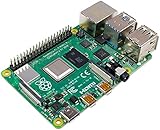
- Broadcom BCM2711, quad-core Cortex-A72 (ARM v8) 64-bit SoC @ 1. 5GHz
- 2. 4 GHz and 5. 0 GHz IEEE 802. 11b/g/n/ac wireless LAN, Bluetooth 5. 0, BLE
- 2 × USB 3. 0 ports, 2 x USB 2. 0 Ports
- 2 × micro HDMI ports supproting up to 4Kp60 video resolution
- Micro SD card slot for loading operating system and data storage
What you need for the Raspberry Pi setup
- A Raspberry Pi and suitable power supply: use a supply matched to your Pi model. Raspberry Pi’s official hardware and setup guidance does not establish a minimum Pi model or guarantee performance for a particular codec, resolution, or frame rate.
- Boot media: Raspberry Pi’s current Getting started documentation recommends at least 32 GB for Raspberry Pi OS Desktop or at least 8 GB for Raspberry Pi OS Lite. Those figures are OS boot-media recommendations, not estimates for storing a music library.
- Network access: Wi-Fi or Ethernet can connect the Pi. Ethernet is a practical choice for a continuously running encoder, but it does not eliminate outages.
- A playlist and visual source: prepare the audio you have permission to use and a visual element for the live feed. Confirm rights for both audio and any visuals.
- An encoder and YouTube Live configuration: the encoder must read your media, create the audio/video feed, and send it to the current live stream configuration in YouTube Studio.
Raspberry Pi documentation covers setup and headless use, including access over Wi-Fi or Ethernet with SSH or Raspberry Pi Connect. It is not a 24/7 encoding benchmark. The available official guidance does not verify a specific encoder application, installation command, or copy-ready bitrate, resolution, frame rate, or keyframe setting for this workload. Choose an encoder whose current documentation matches your Pi model and media, then use the live-stream settings shown for your YouTube stream and run a sustained local test before relying on it.
Crashes, No Sound, or Screen Glitches?
Random freezes, missing sound and display glitches usually trace back to one bad driver. Find and replace yours safely.Free scan · under a minutePC Slower Than It Used to Be?
A free scan shows the junk files, broken settings and background clutter dragging Windows down - then fixes them in one click.Free scan · Windows 10 & 11Set up and test the do-it-yourself stream
- Clear the playlist first. Obtain written permission for the live broadcast and archive, if any, and request Content ID allowlisting for your channel. Do not start with commercial tracks on the assumption that a working stream key is permission.
- Prepare the Pi. Install Raspberry Pi OS on suitable boot media, connect a model-matched power supply, and set up network access. For a headless installation, use SSH or Raspberry Pi Connect as described in Raspberry Pi’s setup documentation.
- Choose the encoder based on your workload. Confirm that it can read your playlist and visual source and send a continuous audio/video feed. Select resolution, frame rate, bitrate, audio format, and keyframe interval according to the encoder’s documentation and the settings YouTube Studio provides for the stream. Do not assume a setting suitable for one Pi model or codec will work on another.
- Create or configure the YouTube live stream. In YouTube Studio, open the live-streaming controls and create or select the broadcast and its associated stream configuration. Copy the current stream key into the encoder’s stream settings. Treat the key as a password: anyone who obtains it may be able to send a feed to your channel. If it is exposed, replace or reset it in YouTube Studio and update the encoder.
- Connect the media and start a preview. Point the encoder at the cleared playlist and visual source, then send the feed to YouTube. Check the Studio preview for video, audio level, and synchronization before making the broadcast public. Confirm that the intended broadcast is selected; a stream key can be associated with the wrong event or configuration.
- Test continuity before launch. Let the Pi run for a sustained period with the playlist cycling. Check for overheating, power or network interruptions, playback gaps, and encoder errors. The official Pi setup guidance does not promise uninterrupted operation, so monitor the initial public run rather than treating the setup as self-recovering.
- Decide whether to archive. Enable an archive only if your music and visual permissions cover the recorded video. Remember that YouTube says a Content ID claim on an archived live stream is made after the broadcast ends.
Prelaunch checklist
- Written rights cover the specific YouTube livestream, territories, monetization status, and any archive.
- The rights holder has confirmed whether the channel can be allowlisted in Content ID.
- The playlist contains only cleared tracks, and the visual source is cleared as well.
- The Pi has appropriate boot media, model-matched power, and a network connection.
- The encoder’s output settings match the selected YouTube stream configuration.
- The YouTube Studio preview has been checked for audio, video, and synchronization.
- Someone will monitor the initial broadcast and respond if YouTube interrupts it.
Troubleshooting common problems
YouTube interrupts or replaces the live video
A third-party-content match may have triggered live enforcement. Stop and review the affected material; do not assume that restarting with the same playlist will resolve the issue. Confirm that the rights permission covers live use and ask the rights holder about Content ID allowlisting. A license without allowlisting may still leave the live stream vulnerable to interruption.
Rank #3
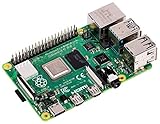
- Broadcom BCM2711, Quad core Cortex-A72 (ARM v8) 64-bit SoC @ 1.5GHz
- 1GB, 2GB, 4GB or 8GB LPDDR4-3200 SDRAM (depending on model)
- 2.4 GHz and 5.0 GHz IEEE 802.11ac wireless, Bluetooth 5.0, BLE Gigabit Ethernet
- 2 USB 3.0 ports; 2 USB 2.0 ports.
- Raspberry Pi standard 40 pin GPIO header (fully backwards compatible with previous boards)
The stream does not appear in the expected YouTube broadcast
Check that the encoder is using the current stream key and the intended live-stream configuration in YouTube Studio. A stale key, an incorrect event selection, or a replaced key can send the feed to the wrong place or prevent connection. Reset an exposed key and update the encoder rather than continuing to use it.
The preview has no audio, video, or synchronized playback
Check the encoder’s selected playlist and visual input, then compare its output settings with the active YouTube stream configuration. Test a short cleared playlist and a simple visual source separately to isolate whether the fault is in the media, input selection, or encoder settings.
Rank #4

- Vilros Complete Starter Kit for Pi 4 Includes Raspberry Pi 4 Model B Board and all the accessories you need to get started.
- 9-PART KIT WILL HAVE YOU READY TO GET UP AND RUNNING: Kit Includes 1. Raspberry Pi 4 Model B Board 2. Case With Easy to connect Built-in fan 3. 64GB Micro SD card Preloaded with RP OS 4. Vilros Pi 4 Compatible Power Supply with Inline on/off switch (power supply color may vary white/black) 5. Micro HDMI to Standard HDMI cable (5ft) 6. Micro SD to USB adapter to reflash card if desired 7. Neoprene Storage Bag to store all parts when not in use 8. Set of 4 Heatsinks 9. Vilros QuickStart Guide instruction booklet for Pi 4
- PASSIVE & ACTIVE COOLING: The included case is well-vented and the kit also includes a set of heatsinks with thermal stickers for easy application and a pre-installed fan to keep the board cool in any use.
- CONVENIENT ACCESSORIES: The power supply features an inline on/off switch neoprene bag that holds and protects all the parts when not in use and the QuickStart guide is updated and written for Raspberry Pi 4.
- IMPORTANT: Kit does NOT include Keyboard, Mouse or Monitor
The Pi stops sending a feed after running for a while
Inspect power, network connectivity, encoder logs, and the Pi’s operating condition. Verify that the power supply matches the model and test with a stable network connection. Raspberry Pi’s general setup documentation does not establish that a model can sustain a particular 24/7 encoding workload, so a successful brief test is not proof of continuous reliability.
A claim appears on the archived stream after it ends
YouTube says Content ID claims on archived live streams are made after the broadcast ends. Review the claim and the permission for the specific track and archive; allowlisting for live transmission does not replace the need for archive rights.
Best Value

- Includes Raspberry Pi 4 4GB Model B with 1.5GHz 64-bit quad-core CPU (4GB RAM)
- CanaKit 3.5A USB-C Power Supply with Noise Filter (UL Listed) specially designed for the Raspberry Pi 4 (5-foot cable)
- CanaKit USB-C PiSwitch (On/Off Power Switch)
- Set of 3 Aluminum Heat Sinks for the Raspberry Pi 4
Or let it run in the cloud
If you want a continuous YouTube stream without keeping a Pi or home computer running, StreamNeo is a cloud service for looping uploaded videos on YouTube. Upload a recording or build a playlist, add your YouTube stream key once, and go live. It plays uploaded videos rather than broadcasting from a camera, and it does not provide music rights: you still need permission for the tracks and archive.
Quick Recap
- Nothing has to stay on at home; the stream runs from the cloud.
- Each slot streams the uploaded quality up to 4K 60fps at one flat price per slot, without re-encoding or quality tiers.
- It automatically recovers if YouTube drops the stream.
- The first day is free with no card required.
- The monthly option is $9.99 per month.
See StreamNeo, then start the free first day.
Product prices and availability are accurate as of the date/time indicated and are subject to change. Any price and availability information displayed on Amazon at the time of purchase will apply.

