
Quick wins for a faster PC:
Clear out junk files and repair common Windows errorsFree Scan →Scan for outdated or missing drivers - takes under a minuteDriver Scan →iTechGuides is reader-supported. When you buy through links on our site, we may earn an affiliate commission. As an Amazon Associate I earn from qualifying purchases. Learn more
To start an IPTV business legally, begin with rights and authorization, not equipment. Before you sell a single subscription, you need written permission to distribute each channel or title you plan to offer, covering the territories, platforms and devices your customers will use. You also need to know whether your service requires a telecom, broadcasting, cable or other authorization where those customers live. Only after those answers are settled does the technical build matter. A live channel or on-demand library reaches viewers through a chain of source, encoding, packaging, content delivery network (CDN) and player. Each link is a design choice you make and pay for. Calling the product “IPTV” does not make it lawful, reliable or scalable.
Start with the model you are actually running
“IPTV” describes a delivery method: television or video carried over IP networks. It does not tell you what legal position you hold. Three models are worth separating, because each carries different obligations.
| Model | What the business supplies | Main legal question | Technical emphasis |
|---|---|---|---|
| Retransmitter of third-party broadcast channels | Redistribution of channels it does not own | Whether a statutory license or other authorization applies to the service, and on what conditions | Live ingest, transcoding, packaging and delivery |
| Distributor of its own or licensed on-demand content | A catalog it holds rights to | The scope of each license: territory, term, platforms and permitted commercial use | Storage, encoding, packaging and delivery of stored video |
| Authorized reseller | Access to a service run by an authorized provider | Whether the upstream provider holds the required authorization, and what your reseller terms permit | Depends on the upstream contract; confirm which parts you operate yourself |
A service can combine these models, for example by retransmitting some channels while distributing its own on-demand library. Analyze each content stream separately.
Free tools Windows power users keep installed
One-click scans. No signup required.
Do I need a license to start an IPTV service?
Usually you need some form of permission, but its form depends on what you distribute and where. No single “IPTV license” applies everywhere. The U.S. framework discussed below covers a different category of service and does not automatically cover internet television delivery.
#1 Best Overall
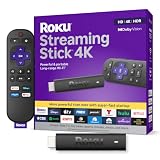
- Stunning 4K and Dolby Vision streaming made simple: With America’s number 1 TV streaming platform,* exploring popular apps—plus tons of free movies, shows, and live TV—is as easy as it is fun. *Based on hours streamed—Hypothesis Group
- Breathtaking picture quality: Stunningly sharp 4K picture brings out rich detail in your entertainment with four times the resolution of HD. Watch as colors pop off your screen and enjoy lifelike clarity with Dolby Vision and HDR10+.
- Seamless streaming for any room: With Roku Streaming Stick 4K, watch your favorite entertainment on any TV in the house, even in rooms farther from your router thanks to the long-range Wi-Fi receiver.
- Shows on the go: Take your TV to-go when traveling—without needing to log into someone else’s device.
- Compact without compromises: Our sleek design won’t block neighboring HDMI ports, so you can switch from streaming to gaming with ease. Plus, it’s designed to stay hidden behind your TV, keeping wires neatly out of sight
Content rights and territory
Rights are the foundation of the business. For every channel or title, document the rights holder, the permitted distribution territory, the term, the platforms or devices covered, and whether commercial resale is allowed. A license that covers a channel for viewers in one country may not cover viewers in another. A license written for a website or app may not extend to a set-top box or smart TV app unless the agreement says so.
The U.S. statutory license for cable retransmission (Section 111)
The U.S. Copyright Office describes Section 111 as a statutory license for secondary transmissions made by qualifying cable systems. The license carries conditions. The Office’s overview says it requires statements of account and statutory royalty payments, and its current page notes electronic filing procedures and payment updates. Check the Office’s current filing procedures before your first filing, because payment and filing details change, and treat these obligations as recurring operating work rather than a one-time formality.
Operating an internet video service does not make you eligible. The Office’s regulation defines a cable system for copyright purposes as a facility that receives broadcast signals and makes secondary transmissions to subscribing members of the public. The same regulation says a facility meeting that definition may be treated as a cable system for copyright purposes even where the FCC excludes it from that category. Legal status therefore turns on how your service receives and transmits signals, not on whether your marketing says “IPTV.” Obtain a written, fact-specific analysis from a copyright attorney before you rely on any statutory license.
What’s actually slowing this PC down?
Pick the symptom - the matching free tool is one click away.
Rank #2

- Ultra-speedy streaming: Roku Ultra is 30% faster than any other Roku player, delivering a lightning-fast interface and apps that launch in a snap.
- Cinematic streaming: This TV streaming device brings the movie theater to your living room with spectacular 4K, HDR10+, and Dolby Vision picture alongside immersive Dolby Atmos audio.
- The ultimate Roku remote: The rechargeable Roku Voice Remote Pro offers backlit buttons, hands-free voice controls, and a lost remote finder.
- No more fumbling in the dark: See what you’re pressing with backlit buttons.
- Say goodbye to batteries: Keep your remote powered for months on a single charge.
Telecom, broadcasting or cable authorization outside the U.S.
Outside the United States, the question moves to local telecom, broadcasting and cable rules. India’s Ministry of Information and Broadcasting guidelines, for example, identify categories of telecom access providers and cable operators that may provide IPTV under specified permissions and declaration conditions. That describes India’s framework only. It is not a global rule and does not tell you what applies in your country. Ask local counsel and the relevant regulator which authorization, if any, your service model needs.
What not to build on
- Unlicensed channel feeds sold as cheap channel packages.
- Shared logins or restreaming access you have no right to resell.
- Reseller panels that route subscribers to content the panel operator does not hold rights to.
These are not shortcuts. They do not remove the legal work; they replace it with liability, including takedowns and loss of platform access.
How IPTV streaming services work
Every IPTV service, live or on demand, must get video from a source to a player in a format the player can decode, at a rate the network can sustain. AWS’s documentation describes two main workflows, and the difference between them drives most of your infrastructure choices.
Rank #3

- The Google TV Streamer (4K) delivers your favorite entertainment quickly, easily, and personalized to you[1,2]
- HDMI 2.1 cable required (sold separately)
- See movies and TV shows from all your services right from your home screen[2]; and find new things to watch with tailored recommendations for everyone in your home based on their interests and viewing habits
- Watch live TV and access over 800 free channels from Pluto TV, Tubi, and more[3]; if you find an interesting show or movie on your TV, mobile app, or Google search, you can easily add it to your watchlist, so it’s ready when you are[2]
- Up to 4K HDR with Dolby Vision delivers captivating, true-to-life detail[4]; and you can connect speakers that support Dolby Atmos for more immersive 3D sound
Live streams
- Upstream source. The feed arrives from a licensed provider or from your own production.
- Encoding and transcoding. The source is encoded to compress it and format it for viewing devices. For adaptive bitrate delivery, transcoding produces several renditions at different quality levels so the player can switch between them as bandwidth changes.
- Packaging and origin. The output is packaged into streaming formats such as HLS, MPEG-DASH and CMAF, and served from an origin.
- CDN delivery. A content delivery network distributes the segments to viewers across regions.
- Playback. The player on the viewer’s device requests the manifest and segments and renders the stream.
Video on demand (VOD)
In a VOD workflow, stored video is encoded and packaged into segments and manifest files, then stored and delivered to viewers. AWS’s documentation names MPEG-DASH, Apple HLS, Microsoft Smooth Streaming and CMAF as common packaging formats in this workflow. Because content is prepared before anyone watches it, the pipeline is not under time pressure per event, though rights windows and catalog management still apply.
Do these 3 things before closing this tab:
1Scan for outdated or missing drivers - takes under a minute2Clear out junk files and repair common Windows errors3Fix the driver behind crashes, sound loss and screen glitchesLive and VOD compared
| Aspect | Live | VOD |
|---|---|---|
| When content is processed | As events happen | Before viewing, then stored |
| Core pipeline | Source, encode and transcode, package and origin, CDN, playback | Encode, package into segments and manifests, store, CDN delivery |
| Packaging formats named in AWS’s documentation | HLS, MPEG-DASH and CMAF in the reference example | MPEG-DASH, Apple HLS, Microsoft Smooth Streaming and CMAF |
| Ingest redundancy | Central: the reference example uses redundant inputs | Not a per-event concern, because content is stored before delivery |
An example architecture
AWS’s reference architecture for live streaming shows one arrangement. Redundant inputs feed MediaLive for adaptive bitrate transcoding. MediaPackage packages the output into HLS, DASH and CMAF. CloudFront delivers the streams. The reference also describes CDN authorization between CloudFront and MediaPackage, which limits access to the origin to your CDN. These are example components, not required vendors or the only valid design. Many operators use other encoders, packagers and CDNs.
What equipment do I need to stream live TV?
The answer depends on whether you produce the live feed yourself. If a licensed provider delivers a feed you are authorized to redistribute, your immediate needs are ingest, transcoding, packaging and delivery. You may not need a studio or on-site production hardware at all.
Rank #4

- The newest Fire TV experience (2026) – Our biggest update to Fire TV has a new, modern design that gets you to your entertainment fast. Browse dedicated content categories, pin more of your favorite apps, and get personalized recommendations from Alexa+. Spend less time scrolling, and more time watching.
- Elevate your entertainment experience with a powerful processor for lightning-fast app starts and fluid navigation.
- Smarter picks with Alexa+ – Getting to what you love has never been easier. Press the voice remote button and talk naturally to find what to watch across your apps, manage your smart home, or dive into virtually any topic.
- Enjoy the show in 4K Ultra HD, with support for Dolby Vision, HDR10+, and immersive Dolby Atmos audio.
- Fire TV Ambient Experience lets you display over 2,000 pieces of museum-quality art and photography.
When you produce your own live content
A hardware video encoder is a plausible piece of equipment for this case. It takes your camera or program output and encodes it into a stream your downstream workflow can use. AWS’s technical documentation supports the encoder’s role, but it does not name a specific model or make hardware universally necessary. Software or cloud encoding may suit other business models better.
Checklist before buying an encoder
- The input connections your cameras and program sources actually output.
- Supported codecs and output protocols that your packager and CDN accept.
- The maximum resolution and frame rate you need.
- Whether the unit supports redundant inputs or failover, if your workflow requires them.
- Compatibility with the rest of the chain, including any managed encoding, packaging or CDN services you plan to use.
Design decisions to make before you build
Calling a service IPTV does not make it resilient, compatible, secure or scalable. Each of the following is a choice with cost and trade-offs.
Recommended Free Tools
Quick Recap
- Live versus on-demand workload. Live delivery requires real-time processing for every event; VOD allows processing before viewing. Decide which you offer, or whether you run both, before choosing services.
- Formats and device coverage. The players and devices your customers use determine which packaging formats you must produce. HLS, MPEG-DASH, CMAF and Smooth Streaming are not interchangeable across every device.
- Ingest redundancy and recovery. A single failed feed interrupts a live channel. Decide what backup inputs and recovery paths you need, and what you will do during an outage.
- Packaging and access control. Define how subscribers authenticate and how the origin is protected. The CDN authorization pattern in AWS’s example is one approach among several.
- Geographic audience and delivery scale. Where viewers are and how many may watch at once shape your CDN choice and your capacity planning.
- Operating cost and vendor dependence. Each managed service ties your pricing and your ability to migrate to that vendor. Weigh this against the convenience of a single provider.
A practical launch sequence
- Define the market. Choose the target country, the customer segment and the service model: retransmission, own or licensed on-demand, or authorized reseller. Write down what each model requires in that market.
- Document the content. For each channel or title, record the rights holder, territory, term, platforms and whether commercial use is permitted. Keep the signed agreements on file.
- Confirm authorization. Ask local counsel and the relevant regulator whether your service needs telecom, broadcasting, cable or other authorization. For U.S. Section 111 questions, get a fact-specific analysis. Do not assume the U.S. statute or India’s guidelines apply in your market.
- Map the workflow. Choose live, VOD or both. List the target devices and formats, then design access controls, delivery geography and resilience around them.
- Get written quotes. Obtain quotes for encoding, packaging, CDN and any hardware, and model costs against your expected viewing demand. The official documentation cited here does not establish prices for these components, so check any figure you find online against a written quote before relying on it.
- Pilot before launch. Run the authorized service on the devices and networks your customers actually use. Measure startup time, stalls and quality switching before you open sales to the public.
Product prices and availability are accurate as of the date/time indicated and are subject to change. Any price and availability information displayed on Amazon at the time of purchase will apply.

