
There is no safe shutdown temperature that applies to every computer. The emergency threshold is set by the CPU and platform firmware and exposed to the operating system through thermal controls. Windows and Linux can act on a critical thermal trip, while processor protection may reduce performance first. Monitoring software can show temperatures, but it does not replace those built-in protections.
What triggers an automatic thermal shutdown?
Thermal protection is handled by several layers, not by one universal setting or retail utility. The CPU may throttle as it approaches a model-specific limit; firmware and the operating system can then take more severe action if a critical threshold is reached.
Firmware and ACPI
Platform firmware supplies thermal-zone data and safety limits to the operating system. In Microsoft’s ACPI design, _HOT identifies a threshold for a critical action such as hibernation, while _CRT marks the critical shutdown temperature. Microsoft says at least one thermal zone must specify _CRT. The exact values and any related BIOS/UEFI menu names depend on the computer and firmware; see Microsoft’s Windows thermal-management design guide.
Windows
Windows uses ACPI thermal zones. Microsoft documents that “When the critical shutdown threshold is met, the system immediately starts the critical thermal action.” Depending on the platform and configuration, this normally means hibernating if enabled, or shutting down otherwise. Windows does not notify apps or services before acting, so they cannot autosave or close; see Microsoft’s thermal-management documentation.
Recommended Free Tools
#1 Best Overall
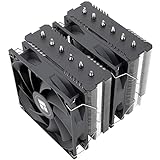
- [Brand Overview] Thermalright is a Taiwan brand with more than 20 years of development. It has a certain popularity in the domestic and foreign markets and has a pivotal influence in the player market. We have been focusing on the research and development of computer accessories. R & D product lines include: CPU air-cooled radiator, case fan, thermal silicone pad, thermal silicone grease, CPU fan controller, anti falling off mounting bracket, support mounting bracket and other commodities
- [Product specification] Thermalright PA120 SE; CPU Cooler dimensions: 125(L)x135(W)x155(H)mm (4.92x5.31x6.1 inch); heat sink material: aluminum, CPU cooler is equipped with metal fasteners of Intel & AMD platform to achieve better installation, double tower cooling is stronger((Note:Please check your case and motherboard for compatibility with this size cooler.)
- 【2 PWM Fans】TL-C12C; Standard size PWM fan:120x120x25mm (4.72x4.72x0.98 inches); fan speed (RPM):1550rpm±10%; power port: 4pin; Voltage:12V; Air flow:66.17CFM(MAX); Noise Level≤25.6dB(A), leave room for memory-chip(RAM), so that installation of ice cooler cpu is unrestricted
- 【AGHP technique】6×6mm heat pipes apply AGHP technique, Solve the Inverse gravity effect caused by vertical / horizontal orientation, 6 pure copper sintered heat pipes & PWM fan & Pure copper base&Full electroplating reflow welding process, When CPU cooler works, match with pwm fans, aim to extreme CPU cooling performance
- 【Compatibility】The CPU cooler Socket supports: Intel:115X/1200/1700/17XX AMD:AM4;AM5; For different CPU socket platforms, corresponding mounting plate or fastener parts are provided(Note: Toinstall the AMD platform, you need to use the original motherboard's built-in backplanefor installation, which is not included with this product)
Linux
Linux thermal zones expose current readings and trip points. The kernel documentation says that when a critical trip temperature is crossed, the thermal framework triggers a hardware-protection power-off or reboot, depending on configuration. This kernel protection is distinct from a user-space monitoring program; see the Linux thermal sysfs API documentation.
CPU-level protection
Processor protection may reduce power and performance before the computer shuts down. Intel thermal monitoring automatically reduces processor power at predetermined limits. Linux’s coretemp documentation describes TjMax as the model-dependent maximum junction temperature at which protection acts to cool the processor; the coretemp documentation also identifies package and core readings. These CPU limits are not necessarily identical to the firmware’s separate emergency cutoff.
Rank #2
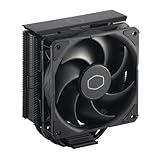
- Cool for R7 | i7: Four heat pipes and a copper base ensure optimal cooling performance for AMD R7 and Intel i7.
- Quiet Cooling Fan: SickleFlow 120 Edge with Dynamic PWM control (690–2,500 RPM), designed for low noise and peak cooling performance.
- Simplify Brackets: Redesigned brackets simplify installation on AM5 and LGA 1851|1700 platforms.
- Versatile Compatibility: 152mm tall design offers performance with wide chassis compatibility.
- Easy Installation: Easy to install with included thermal paste for hassle-free setup and optimal cooling performance.
Why there is no universal shutdown temperature
Critical limits vary with the CPU model and platform, and firmware can reserve its own fail-safe trip point. A temperature that is a normal operating value for one system may be near a limit on another. The primary documentation describes platform-provided or model-dependent thresholds rather than one generally safe number.
Do not set an arbitrary shutdown value based on a generic temperature chart. First identify the computer, CPU and sensor being reported. A CPU package or core reading is not interchangeable with a motherboard, GPU or other sensor reading.
Rank #3

- CONTACT FRAME FOR INTEL LGA1851 | LGA1700: Optimized contact pressure distribution for longer CPU life and better heat dissipation
- ARCTIC's P12 PRO FAN: More power at any speed - more powerful and quieter than the P12, especially at low speeds. Higher maximum speed for optimal cooling performance under high load
- NATIVE OFFSET MOUNTING FOR INTEL AND AMD: Shifting the cold plate center towards the CPU hotspot ensures more efficient heat transfer
- INTEGRATED VRM FAN: PWM-controlled fan that lowers the temperature of the voltage converters and thus ensures reliable performance
- INTEGRATED CABLE MANAGEMENT: The PWM cables of the radiator fans are integrated in the sheathing of the hoses so that only a single visible cable is connected to the motherboard
How to check CPU temperature and thermal limits
Start with the exact hardware
- Record the CPU model and the exact motherboard or laptop model.
- Identify the BIOS/UEFI vendor and version before following menu-specific directions; labels and available controls vary.
- Check whether the temperature label identifies a CPU core or package, rather than another component.
On Linux, inspect available sensors
The lm-sensors package provides sensors to display readings, sensors-detect to identify supported monitoring hardware, and sensord for monitoring. Sensor names and available chips depend on the board; some laptops expose temperatures through ACPI instead of a conventional hardware-monitoring chip. See the Linux coretemp documentation and the sensors.conf manual.
Linux thermal-zone interfaces can expose current temperatures and trip points, but which zones and values are available depends on the platform. Treat a displayed reading as useful only after confirming what hardware it represents.
Rank #4
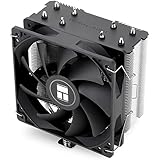
- [Brand Overview] Thermalright is a Taiwan brand with more than 20 years of development. It has a certain popularity in the domestic and foreign markets and has a pivotal influence in the player market. We have been focusing on the research and development of computer accessories. R & D product lines include: CPU air-cooled radiator, case fan, thermal silicone pad, thermal silicone grease, CPU fan controller, anti falling off mounting bracket, support mounting bracket and other commodities
- [Product specification]AX120R SE; CPU Cooler dimensions: 125(L)x71(W)x148(H)mm (4.92x2.8x 5.83 inch); Product weight:0.645kg(1.42lb); heat sink material: aluminum, CPU cooler is equipped with metal fasteners of Intel & AMD platform to achieve better installation
- 【PWM Fans】TL-C12C; Standard size PWM fan:120x120x25mm (4.72x4.72x0.98 inches); fan speed (RPM):1550rpm±10%; power port: 4pin; Voltage:12V; Air flow:66.17CFM(MAX); Noise Level≤25.6dB(A), the fan pairs efficient cool with low-noise-level, providing you an environment with both efficient cool and true quietness
- 【AGHP technique】4×6mm heat pipes apply AGHP technique, Solve the Inverse gravity effect caused by vertical / horizontal orientation. Up to 20000 hours of industrial service life, S-FDB bearings ensure long service life of air-cooler radiators. UL class a safety insulation low-grade, industrial strength PBT + PC material to create high-quality products for you. The height is 148mm, Suitable for medium-sized computer case
- 【Compatibility】The CPU cooler Socket supports: Intel:1150/1151/1155/1156/1200/1700/17XX/1851,AMD:AM4 /AM5; For different CPU socket platforms, corresponding mounting plate or fastener parts are provided
Understand monitoring limits and hysteresis
Monitoring tools report what sensors expose; they do not configure or replace firmware safety controls. The sensors.conf format supports high and critical limits as well as hysteresis: the clearing threshold is lower than the trigger threshold, which helps prevent rapid cycling around a limit. A reported software limit should not be assumed to be the machine’s firmware shutdown point.
What to do if the computer shuts off under load
An abrupt power-off during demanding work can indicate thermal protection, but the symptom alone does not identify the cause. If shutdowns recur, investigate cooling and hardware rather than trying to raise or disable a safety limit.
Best Value

- [5-inch IPS LCD Screen] The radiator features a magnetic top cover with a built-in display, offering a resolution of 480x854. It allows real-time monitoring of various system parameters and, combined with the TRCC control software, supports custom background themes for personalized display.
- [Excellent Cooling Performance] The CPU cooler is primarily composed of a dual-tower design, two fans, and a magnetically attached top cover featuring a 5-inch IPS LCD screen. Six pure copper heat pipes paired with a nickel-plated copper base ensure optimal contact with the CPU. Combined with a high-speed rotation of 2150 RPM, this configuration delivers superior cooling efficiency for the heatsink.
- [Heatsink Specifications] Overall dimensions of the CPU cooler: 125x135x164mm (LxWxH), fan dimensions: 120x120x25mm, fan speed: 2150 RPM±10%, airflow: 69 CFM, operating noise ≤27 dB(A), fan power interface: 4-pin PWM, RGB interface: 5V 3-pin ARGB. The dual fans included with the heatsink feature S-FDB V2 bearings, known for their longevity, ensuring sustained cooling performance over time.
- [AGHP Heat Pipe Technology] The 6x6mm heat pipes utilize AGHP Gen 5.0 technology, effectively countering the adverse effects of gravity in both vertical and horizontal orientations. The pure copper heat pipes, combined with a nickel-plated micro-engraved copper base via reflow soldering, enhance cooling performance across dual platforms while accommodating GPU and RAM clearance with a designed offset.
- [164mm Height] The heatsink cooler stands at 164mm in height, ensuring compatibility with mainstream ATX cases. The cooling towers feature a matte black coating, while the magnetic top cover incorporates a display screen, blending high-performance cooling with innovative design. The dual-tower, dual-fan layout is engineered for seamless compatibility with tall RAM heat spreaders and GPU installations.
- Save work frequently. A Windows critical thermal action gives applications no opportunity to autosave, and a firmware-level cutoff may be abrupt.
- Check the reading and its label. Use a platform-appropriate monitor and confirm it is a CPU core or package sensor, not a different component.
- Observe the sequence. Increased fan speed or reduced performance can happen before shutdown. Throttling, an orderly operating-system action, and a sudden firmware power cut are different events.
- Inspect cooling. Check for dust or blocked airflow, confirm fans operate, and investigate heatsink contact if the problem persists. A cooling pad, replacement fan or CPU cooler may remedy a confirmed cooling problem, but it does not set the shutdown policy.
- Use model-specific guidance. Because firmware controls and thresholds vary, consult documentation for the exact computer or motherboard before changing BIOS/UEFI settings.
Can you configure a custom automatic shutdown?
Do not assume a generic monitoring utility can safely configure the computer’s emergency cutoff. The built-in protections rely on firmware-provided limits and operating-system thermal handling; third-party monitoring is mainly for observing temperatures. The available BIOS/UEFI controls, if any, depend on the model. If a system is repeatedly reaching a critical trip, correcting the cooling fault is safer than overriding the protection.
Quick Recap
Product prices and availability are accurate as of the date/time indicated and are subject to change. Any price and availability information displayed on Amazon at the time of purchase will apply.

