
Outdated Drivers Are Slowing You Down
One free scan finds every outdated or missing driver and matches the right update for your exact hardware.Free scan · exact hardware matchWindows Errors? Fix Them Before They Spread
Repair common Windows errors and clear accumulated junk for a smoother, more stable PC - no reinstall needed.Free scan · no reinstalliTechGuides is reader-supported. When you buy through links on our site, we may earn an affiliate commission. As an Amazon Associate I earn from qualifying purchases. Learn more
To hear a source locally while streaming, select a monitoring device in OBS → Settings → Audio → Monitoring Device, then choose that source’s monitoring mode in Advanced Audio Properties. The right mode depends on how sound already reaches OBS: monitoring is a local listening route, and it does not by itself mean the source is included in the stream. Map the audio paths first, then verify the result with a rehearsal recording.
How OBS audio monitoring works
OBS monitoring sends audio from a source to a local output, such as a computer headphone jack or an interface’s headphone output. The stream mix is a separate route. Depending on the source and your setup, you may need to enable monitoring, stream output, or both.
For a church service, the distinction matters when OBS plays a pre-recorded video while the room’s soundboard or computer output is also being captured. If the same sound reaches OBS by two routes, viewers may hear it twice. Labels and behavior can vary with your operating system, OBS version, interface, and mixer, so treat the rehearsal recording—not a menu choice alone—as the final check.
Do these 3 things before closing this tab:
1Fix the driver behind crashes, sound loss and screen glitches2Repair Windows errors before they cause bigger problems3Scan for outdated or missing drivers - takes under a minuteSet up monitoring without doubling the sound
1. Map the existing signal paths
Before changing settings, write down how each sound reaches OBS and where the operator listens:
#1 Best Overall
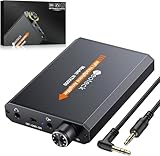
- 【16-300 Ohm Hi-Fi Impedance Compatibility】This headphone amplifier supports 16-300Ω impedance headphones, compatible with low,mid,and high-end devices. With SNR>120dB and THD+N=0.0003%, it effectively reduces noise and delivers pure sound quality. It’s perfect for mobile devices and it offers a premium audio experience
- 【Immersive Surround Sound】This 3.5 mm headphone amp featuring a two-stage gain switch to enhance signal input and a 3.5mm audio jack for output, it boosts power output while refining sound quality and tone, delivering clear, true stereo. Music lovers enjoy lifelike surround sound and immerse in precise audio effects.Meanwhile,this amplifier suAApports volume adjustment according to your needs,which is ideal for the elderly to enjoy music clearly
- 【Aluminum Matte Surface】Neoteck headset amp with fashion design provides you a comfortable handheld feeling while the aluminum matte surface makes it reduce interference and improves heat resistance.Besides,internal HiFi structure in amplifier supports more stable audio signal transmission
- 【12 Hours Long Battery Life】This long-lasting headset amplifier is powered by a 1500mAh lithium battery(Type-C power Cable Included) With over 12 hours of continuous use,whether you're on the go or using it for extended periods at home or in the studio, it ensures a high-quality audio experience
- 【Compact Smartphone-Sized Design】With a design similar in size to a smartphone and weighing only 102g, this portable headphone amplifier is lightweight and portable, taking up minimal space. Ideal for on-the-go travel, it lets you enjoy high-quality music anytime, anywhere
- Do microphones and instruments enter OBS through a mixer or audio interface?
- Is computer playback captured as desktop or output audio?
- Does a media source in OBS play the pre-recorded video?
- Are headphones connected to the computer, interface, or a mixer/monitor output?
This map helps you choose a monitoring mode that fits the actual routing rather than accidentally adding a second capture path.
2. Choose the monitoring output device
- In OBS, open Settings → Audio.
- Find Monitoring Device and select the output the operator will use: for example, the computer’s headphone output, the interface’s headphone output, or a connected mixer/monitor output.
- Apply the setting and listen for monitored audio at that output.
Select an output that is physically connected to the operator’s listening point. Changing this setting selects where OBS plays monitored sources; it does not establish that those sources are in the outgoing stream.
Rank #2

- HEADPHONE AMP: LZSIG LHA2 4-channel stereo headphone amp specially designed for home studios. It features ultra-low noise & high-power stereo sound with independent volume control per channel, supporting up to 4 pairs of 32~100Ω headphones with 50mm drivers. No adapter needed, works with both 3.5mm (1/8”) and 6.35mm (1/4”) headphones. Widely compatible with PC, phones, audio interfaces, DJ mixers, tablets and all devices with 3.5/6.35mm audio output. Pair perfectly with professional headphones for crisp, steady sound in personal & shared monitoring
- BASS BOOST: New function, when this switch is pressed, the audio effects of the two frequency bands of 400~600 Hz and 3000~7200 Hz are immediately increased, so that the intensity of vocals and bass is further enhanced. Even when used as an audio distributor, each channel can output the corresponding effect
- ULTRA-LOW-NOISE & HI-FI SOUND: LZSIG headphones amplifier system Equipped with 5 ROHM low-noise and high-quality operational amplifiers, it guarantees the highest sound quality, ultra-low noise, and distortion-free performance. It is ideal for distributing up to 4 audio signals, allowing multiple headphones to enjoy an ultra-low noise monitoring and music system. The 4-channel headphone amplifier is compatible with 1/4" or 1/8" TS and TRS plugs, making it perfect for both studio and stage applications
- S/M MODE: This earphone amplifier has Stereo/Mono switch button to switch freely according to the type of input audio.Compatible with 1/4" and 1/8" TS and TRS plugs.Ultra-compact headphone amplifier system for studio and stage applications
- FOUR INDEPENDENT LEVEL CONTROL: LZSIG headphone amp features high-fidelity analog circuitry, high power output, great dynamics, and low distortion sound quality! When you use the 4-way headphone splitter and your friends share a source, the circuit is designed to be anti-crosstalk interference noise and is ideal for distributing up to 4 audio signals. Each headphone output can independently control its volume
3. Choose a mode for each source
- In the OBS Audio Mixer, open the gear or options menu and choose Advanced Audio Properties.
- Find the relevant source, such as a media source or a VLC video source, and set its monitoring mode:
| Mode | What to use it for |
|---|---|
| Monitor Off | Do not send that source to the local monitoring output. |
| Monitor Only | Hear the source locally when another route already sends the same sound into OBS’s stream mix. Check that the source is in fact present in the mix. |
| Monitor and Output | Send the source to the local monitoring output and to OBS’s stream output. |
These modes describe routing, not a guarantee that your complete service mix is correct. A church-streaming forum answer dated May 13, 2020, gives the same practical distinction for a media source: use Monitor Only if OBS is already capturing the room or computer output carrying that audio; use Monitor and Output if OBS is not hearing that output elsewhere. That advice applies to the described signal path, so confirm your own routing with a recording.
The Tool Desk
Outbyte Driver Updater FREEScan for outdated or missing drivers - takes under a minuteDriver Scan →Outbyte PC Repair FREEClear out junk files and repair common Windows errorsFree Scan →4. Check for a duplicate capture path
OBS can capture a device through global audio settings or through a scene-specific Audio Input Capture or Audio Output Capture source. Avoid selecting the same device in both places unless you have deliberately configured and checked that routing. OBS warns that configuring a device globally and adding it again as a scene source can cause echo.
Rank #3

- Drives four headphones from any source with a 1/4-inch or 1/8-inch output
- Everyone in the session gets their own volume
- Four Independent Outputs: level control per listener
- Compact Build: velcro it to a desk, rack, or stand
- Plug and play, no power supply games
Audio Input/Output Capture sources are available on Windows and macOS. For Linux, OBS’s audio sources guidance directs users to ALSA or PulseAudio sources. Which capture method is appropriate depends on the platform and equipment; do not assume a setting from another operating system maps directly to yours.
Check levels, stereo routing, and the actual recording
Watch the meters while exercising the full mix
Speak into microphones, sing, play instruments, and run representative video playback while watching the OBS meters. OBS’s default channel configuration is stereo, so check left and right assignment: a source routed to one side by mistake can sound incomplete or unbalanced to viewers.
Rank #4
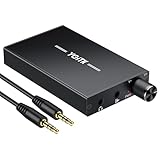
- 【High-Fidelity 16-300Ω Headphone Amplifier】Experience studio-grade clarity with our HiFi portable headphone amplifier,engineered to drive headphones from 16 to 300Ω with ultra-low distortion (THD+N 0.0005%) and a signal-to-noise ratio ≥120dB.Unlike competitors,our advanced circuit design ensures zero audible noise—perfect for audiophiles seeking pure,uncolored sound reproduction
- 【2-Stage Gain Switch And Volume Knob】Optimize your listening with our two-stage gain switch,designed to match low and high-impedance headphones.Fine-tune your listening experience with our smooth,responsive Volume Control Knob,delivering optimal power and clarity whether you're using sensitive IEMs or high-impedance studio monitors
- 【Premium Aluminum Alloy Build & Universal Compatibility】Crafted from aerospace-grade aluminum alloy with a matte finish,our amplifier provides superior RF/EMI shielding to eliminate interference,while remaining lightweight and durable.Its universal 3.5mm AUX input/output works seamlessly with phones, PCs,PS4/PS5,iPads,MP3/4 players
- 【Noise-Free,High-Power Output for Immersive Audio】Unlike other headphone amps that suffer from background noise or low volume,our amplifier delivers clean,powerful sound amplification.With ±4V internal voltage and enhanced output circuitry,it boosts audio without distortion—giving you louder,richer,and more immersive stereo sound
- 【1500mAh Type-C Fast Charging & Extended Playtime】Enjoy up to 10 hours of continuous playback with our large 1500mAh rechargeable battery—outlasting most competitors.The modern Type-C charging port allows for quick,reversible plug-in convenience,so you can recharge faster and get back to your music without hassle
The OBS meter guide describes 0 dBFS as the digital maximum and warns that audio at or above that ceiling can clip in a stream or recording. Keep peaks below 0 dBFS. The guide also describes -20 dBFS as its Alignment Level and -9 dBFS as its Permitted Maximum Level. These are references in OBS’s meter model, not universal loudness targets for every platform or a substitute for listening to the mix.
Free tools Windows power users keep installed
One-click scans. No signup required.
The OBS Audio Mixer Guide dated April 3, 2026, says the peak indicator holds the loudest meter level over 20 seconds. Use that indicator to notice peaks, but remember that meters cannot tell you whether speech is understandable, music is balanced, or a source is doubled.
Best Value

- 1/4" TRS Connector: The signal source has to be connected to this 1/4" TRS connector, Suit for headphones without an amplifier to converter adapters are necessary as they can be used with 1/4 inch headphones. This amplifier suits headphones with 32-100 Ω 50mm drivers. Max. output level approx.40mA in 100Ω. It can power up to four pairs of headphones with four independent volumes
- Low Noise JRC4580 Operational Chip: Adopting lower noise, high fidelity, and high gain upgraded version imported 4580 operational amplifier chip, can provide high-power stereo and output level control for each channel. Based on improving output power, modify the sound quality and timbre to provide high-quality audio enjoyment
- 4-Channel Independent of Control: When you use the headphone splitter to share a source with your friends, everyone can independently control the volume of the headphones Interference noise. When everyone is involved in the recording and monitoring process, HA400 is a perfect solution, perfect for stage and studio performances or applications that require multiple headphone connections
- Ultra Compact & Portable: The metal structure headphone separator with a size of 90X55X40MM resembles the volume of a cassette tape, making it easy to carry. But the configuration is powerful and the functions are complete. You can carry it to any location and scene as well as move it to anyone you want to be controlled
- Multi Scenario Applications: Powered by the accompanying 12V DC adapter, this ultra-compact headphone amplifier system is suitable for studio and stage applications, as well as outdoor performances, small concerts, home and outdoor karaoke, conference speeches, etc; He is the perfect partner for the band! Even in the game, you can fully enjoy the immersive experience with friends
Record and audition a rehearsal
- Run a representative service segment with the actual scene changes, microphones, instruments, and video playback cues.
- Record it in OBS using the setup you plan to use for the broadcast.
- Listen to the recording from beginning to end, including transitions and media playback.
- If audio is missing, doubled, one-sided, clipped, or unexpectedly quiet, revisit the source’s capture path and monitoring mode, then record and check another segment.
This check reveals what the recorded mix contains, including potential duplicate computer audio or missing media playback. OBS’s official Audio Mixer Guide recommends recording a session as usual and listening back before going live.
Independent reader supportYour contribution helps us test, update, and keep practical guides available for everyone.Common monitoring problems and fixes
| What you notice | Likely cause | What to check |
|---|---|---|
| You hear an echo or doubled playback in the recording. | The same device or sound may be entering OBS through more than one path—for example, a scene capture plus a global device, or a media source plus captured desktop audio. | Trace the signal paths. Remove an accidental duplicate capture or choose the monitoring mode that matches the route already feeding the stream. Verify with another recording. |
| The operator hears a source, but it is missing from the recording. | It may be monitored locally without being sent to OBS’s stream output, or a different source may be included than expected. | Check the source’s mode in Advanced Audio Properties and confirm its presence in a test recording. |
| The source appears in the recording but the operator cannot hear it. | The monitoring device may be set to the wrong output, or the source may be set to Monitor Off. | Check Settings → Audio → Monitoring Device, confirm the selected output is connected, and inspect the source’s monitoring mode. |
| Sound comes through only the left or right side. | The source or output may have an unexpected channel assignment. | Check OBS’s stereo channel configuration and listen to a recording through the same kind of playback setup viewers will use. |
| Peaks sound harsh or distorted. | The digital signal may be reaching or exceeding 0 dBFS. | Lower the relevant source or mix level so peaks stay below 0 dBFS, then make and listen to another test recording. |
Build monitoring checks into a continuous-stream preflight
A continuous stream needs a repeatable check before broadcast, especially when scenes or media playback change. Keep a short preflight list beside the streaming workstation:
- Confirm the selected monitoring device is the output the operator will actually use.
- Check each important source’s monitoring mode and verify which route puts it into the stream mix.
- Look for duplicate global and scene-level device captures.
- Exercise microphones, music, and playback while watching the meters.
- Record and listen to a representative rehearsal before going live.
These steps verify the configured audio paths; they do not guarantee that a long-running stream will remain available or that every operating system, interface, and mixer will behave identically.
Or let it run in the cloud
OBS monitoring is the do-it-yourself choice when you need to hear a live church service’s microphones, instruments, or computer playback. StreamNeo is different: it loops videos you upload to a YouTube channel, so it is not a camera or live-room-audio monitoring tool. If your continuous stream is based on uploaded recordings or a playlist, you can upload the video, add your YouTube stream key once, and go live. Nothing has to stay on at home; StreamNeo sends the uploaded quality up to 4K 60fps at one flat price per slot, and automatically recovers if YouTube drops the stream. The first day is free with no card. Monthly: $9.99 per month. See StreamNeo or start the free day.
Quick Recap
Product prices and availability are accurate as of the date/time indicated and are subject to change. Any price and availability information displayed on Amazon at the time of purchase will apply.

