
A proxy changes the network endpoint a website sees; it does not, by itself, change the browser and device signals the site can observe. Choose a browser profile that matches the browser and operating system you actually run, keep its locale and rendering characteristics coherent with the proxy’s geography, and test WebRTC separately. For privacy, prefer stable protections that limit or standardize exposed information over a collection of independently randomized settings.
What a browser fingerprint is—and what a proxy changes
A browser fingerprint is the combination of observable browser and device characteristics that can help a site identify or re-identify a user agent or device. The W3C Privacy Working Group’s Group Note, published September 25, 2025, warns that exposure of browser settings and characteristics can harm privacy by enabling fingerprinting.
A proxy changes the apparent network endpoint, but it does not automatically make the browser’s other signals match that endpoint. WebKit’s tracking-prevention policy identifies installed fonts, the user-agent string, GPU and CPU details, IP address, and the TLS connection as possible fingerprinting vectors. A different exit IP is therefore not the same thing as a different, internally consistent browser profile.
Think of the proxy, browser profile, and session state as one system. The goal for a legitimate privacy workflow is not to claim an arbitrary identity. It is to avoid unnecessary exposure while keeping the browser’s signals plausible for the device and configuration you actually use.
#1 Best Overall
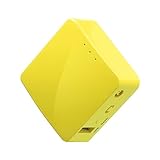
- 【WIRELESS MOBILE MINI TRAVEL ROUTER】 Convert a public network (wired or wireless) to a private Wi-Fi for secure surfing. Tethering. Powered by any laptop USB, power banks or 5V/2A DC adapters (sold separately). 39g (1.41 Oz) only, portable and pocket friendly. 2.4GHz ONLY
- 【OPEN SOURCE & PROGRAMMABLE】 OpenWrt pre-installed, USB disk extendable.
- 【LARGER STORAGE & EXTENDABILITY】 128MB RAM, 16MB Flash ROM, dual Ethernet ports, UART and GPIOs available for hardware DIY.
- 【OPENVPN CLIENT】 OpenVPN client pre-installed, compatible with 30+ VPN service providers.
- 【PACKAGE CONTENTS】 GL-MT300N-V2 (Mango) mini router (2-year Warranty), USB cable, Ethernet cable, User Manual. Please update to the latest firmware.
Choose a profile in six steps
-
Start with the browser and operating system you can genuinely support
Use a normal, current browser family and a profile that reflects the runtime. Do not claim a mobile device while using a desktop environment, or claim an operating system whose rendering and browser APIs do not match the environment. A user-agent string alone cannot make the rest of a profile behave like another device.
-
Align proxy geography with locale signals
Check that the proxy’s country or region, the browser’s language, and its timezone make sense together. An IP geolocated to one region combined with an unrelated timezone or language can create a contradiction. These values do not need to reveal more about you than necessary, but avoid choosing them independently without considering the whole profile.
-
Keep screen and rendering characteristics coherent
Consider screen dimensions, fonts, graphics behavior, and device capabilities alongside the claimed browser and operating system. Do not assume that changing one visible field changes the underlying rendering or hardware behavior. Mozilla documents privacy measures in Firefox that add random data when canvas images are read and exclude non-standard locally installed fonts from its anti-fingerprinting design. Those are browser-level protections; they are not a reason to imitate an unrelated device by hand.
Rank #2
Sale UGREEN NAS DXP2800 2-Bay for Advanced Home Users, Remote Workers & Creators
- 【Advanced Home Data & Media Hub】For advanced home users who need phone backup, file storage, and centralized data management. Centralize family photos, 4K videos, movies, computer backups, and personal files in one place while running multiple apps for home entertainment and everyday data management. Suitable for households with growing digital libraries and multiple NAS use cases.
- 【Built for Creators, Media Servers & Advanced Apps】Powered by the Intel N100 Quad-Core CPU, 8GB DDR5 RAM, 2.5GbE networking, and dual M.2 NVMe slots, DXP2800 handles large files and heavier workloads with ease. Run Docker, virtual machines, and media server applications compatible with Plex—ideal for content creators, tech enthusiasts, and advanced home users managing 4K videos, RAW photos, personal media libraries, and multiple NAS apps.
- 【Up to 80TB for Growing Digital Libraries】 Supports up to 80TB of storage using two HDD bays and two M.2 NVMe SSD slots for family photos, movies, RAW photos, 4K videos, work files, and device backups. AI photo management supports recognition of people, objects, scenes, and locations, album organization, and duplicate photo detection. HDDs and SSDs are not included.
- 【AI-powered Home Surveillance】Turn DXP2800 into a centralized home surveillance hub by connecting compatible network cameras and storing recordings locally on your NAS. AI-powered features include Face Recognition, People Detection, and Pet Detection, helping advanced home users review important events more efficiently while managing home surveillance and personal data in one place.
- 【One data Center Across Your Devices】Keep files from desktops, laptops, phones, tablets, and other devices together instead of scattered across cloud accounts and external drives. Access, back up, organize, and share data across Windows, macOS, Android, iOS, web browsers, and compatible smart TVs—ideal for creators and advanced home users working across multiple devices.
-
Check WebRTC as a separate surface
Do not infer WebRTC behavior from the fact that a proxy is configured. RFC 8827 describes WebRTC’s security architecture and browser-context requirements, but the behavior relevant to your setup depends on the actual browser and proxy combination. Test that combination for peer-connection and address exposure behavior before using it in a workflow where that exposure matters.
PC Slower Than It Used to Be?
A free scan shows the junk files, broken settings and background clutter dragging Windows down - then fixes them in one click.Free scan · Windows 10 & 11Crashes, No Sound, or Screen Glitches?
Random freezes, missing sound and display glitches usually trace back to one bad driver. Find and replace yours safely.Free scan · under a minuteSpecial offer. See more information about Outbyte and uninstall instructions. Please review EULA and Privacy policy. -
Prefer coherent, stable settings over independent randomization
Randomizing canvas, WebGL, fonts, timezone, and other values independently can produce combinations that do not fit together. The 2018 USENIX research on fingerprinting countermeasures discusses approaches such as standardizing or switching attributes and blocking selected APIs, with consistency and replay resistance among the design goals. The practical lesson is to use deliberate, privacy-oriented defaults rather than changing every field on every visit.
-
Revalidate after browser updates
Fingerprint surfaces and privacy defaults can change between browser releases. After updating, recheck the behavior that matters to your workflow: user-agent behavior, WebRTC, canvas and WebGL, fonts, and the TLS characteristics of the connection. Keep a record of your intended configuration so a changed result is easier to notice and diagnose.
Rank #3
Sale Synology DS223 Home & Office Backup Hub - Centralize Files, Protect Data & Monitor Property (2-Bay Diskless NAS)
- One Place for All Your Data - Consolidate scattered files from multiple computers, phones and external drives into one accessible hub with 100% ownership
- Professional File Collaboration - Share projects with clients, sync documents across teams and maintain version control without Dropbox fees
- Automated Backup Protection - Set-and-forget backups for Macs, PCs and mobile devices to multiple destinations including cloud and external drives
- DIY Surveillance System - Transform IP cameras into a professional monitoring solution with motion alerts, recording schedules and remote viewing
- 2-Year Warranty - Reliable hardware backed by Synology's expert customer support team and ongoing software updates
Compare profiles by the trade-offs that matter
There is no universally best fingerprint profile. A privacy-oriented browser, a managed profile, and a minimally modified everyday browser can make different trade-offs. Compare them against your actual lawful use case rather than ranking them by how many values they change.
| Comparison axis | What to check | Why it matters |
|---|---|---|
| Cross-signal consistency | Do operating system, user agent, locale, timezone, fonts, graphics, and proxy geography fit together? | Contradictory signals can undermine the profile’s plausibility. |
| Stability | Does the same legitimate session avoid unnecessary changes in its profile? | Churn can make a returning session less consistent without providing a clear privacy benefit. |
| Privacy exposure | How much information can sites obtain from canvas, WebGL, fonts, WebRTC, and other browser APIs? | Reducing exposed information is a more direct privacy goal than pretending to be a different device. |
| Compatibility | Do sites and features you need still work when APIs are blocked or standardized? | Privacy protections can have usability trade-offs; verify the functions your workflow depends on. |
| Operational isolation | Are cookies, storage, permissions, and login state separated where the lawful workflow requires separation? | Browser state is distinct from the network endpoint and should be managed deliberately. |
Privacy-first defaults versus a custom profile
If your main aim is privacy, consider a browser whose protections are designed to reduce the information available for fingerprinting rather than manually assembling a profile. Tor Project describes Tor Browser’s goal as making it significantly more challenging to gather enough information to uniquely identify users. Its cited protections include blocking canvas image extraction, NoScript integration, and first-party isolation. Mozilla documents comparable information-limiting measures in Firefox.
These approaches do not promise that every site will work identically, or that a proxy makes a browser anonymous. They offer a more coherent starting point than independently altering many attributes. If a site’s required functionality conflicts with a protection, decide whether the feature is worth the additional exposure instead of silently weakening every setting.
Rank #4

- Unlimited bandwidth, unlimited data.
- Super-fast VPN and one tap connect.
- Free worldwide multiple servers.
- Works with all type of data carries. (Wi-Fi, 4G, LTE, 3G).
- No registration, sign up needed.
WebRTC, session state, and practical checks
Review the whole setup before relying on it. A proxy setting is only one part of the connection; browser APIs and stored session state are separate considerations. For a privacy-sensitive workflow, use a test account or non-sensitive session while validating behavior, and avoid assuming that a successful page load proves that all relevant signals are handled as intended.
- Confirm the browser and operating-system profile reflect the runtime you actually use.
- Check proxy region, language, and timezone for obvious conflicts.
- Verify the browser’s canvas, WebGL, font, and WebRTC behavior using the browser’s documented protections and a controlled test.
- Review cookies, storage, permissions, and login state separately from the proxy configuration.
- Repeat checks after browser or profile updates, because implementation details can change.
Do not use fingerprint changes or proxies to bypass a site’s access controls, rate limits, or bot protections. If a site blocks a legitimate workflow, its published support or access process is a safer remedy than trying to disguise the browser.
Troubleshooting common inconsistencies
| Symptom | Possible cause | What to check |
|---|---|---|
| The profile appears inconsistent across visits | Settings or browser behavior changed, perhaps after an update or a manually randomized value. | Compare the current configuration with the intended browser, locale, rendering, and proxy settings; remove unnecessary per-visit changes. |
| Locale signals do not fit the proxy region | Language, timezone, and proxy geography were selected separately. | Review the region, browser language, and timezone together. Do not change unrelated device signals merely to make one value appear to match. |
| A site feature stops working after privacy protections are enabled | The site may depend on an API or behavior that the protection limits or standardizes. | Identify the specific feature and protection involved. Decide whether to use a supported alternative or accept the limited exposure for that site, rather than disabling protections broadly. |
| You are unsure whether WebRTC reveals address information | Proxy configuration alone does not establish how a particular browser and proxy combination handles peer connections. | Test the actual combination in a controlled session and review the browser’s current behavior after updates. |
| A separate login or workflow seems to share browser state | Cookies, storage, permissions, or login state may not be isolated as intended. | Review the profile’s site data and permissions. Treat session isolation as an operational setting, not as a change to the network endpoint. |
Or skip the browser setup
If your actual task is capturing a clean screenshot of a webpage—not configuring a proxy or choosing a fingerprint—ScreenshotNeo provides a screenshot API and MCP server. It does not configure proxy fingerprints or serve as a browser-privacy tool. One GET request can return a PNG, JPEG, WebP, or PDF; the API documentation is at ScreenshotNeo docs.
Best Value

- Complete Phone & Computer Backup - Automatically protect photos, documents and videos from iPhone android, Mac and Windows to one secure location
- Your Private File Cloud - Access files from anywhere and share large projects with family or clients without relying on expensive cloud subscriptions
- Smart Home Security Hub - Monitor your home 24/7 with AI-powered surveillance that detects people, vehicles and sends instant alerts
- 100% Data Ownership - Keep full control of your personal data with multi-platform access and no monthly subscription fees
- 2-Year Warranty - Reliable hardware backed by Synology's expert customer support team and ongoing software updates
For example, this cURL request saves a WebP screenshot of Stripe:
curl -G "https://api.screenshotneo.com/v1/shot" -d access_key=YOUR_API_KEY --data-urlencode url=https://stripe.com -o shot.webpThe same request in Python:
import requests
r = requests.get("https://api.screenshotneo.com/v1/shot", params={"access_key": "YOUR_API_KEY", "url": "https://stripe.com"}, timeout=90)
open("shot.webp", "wb").write(r.content)
Or in Node.js:
const q = new URLSearchParams({ access_key: 'YOUR_API_KEY', url: 'https://stripe.com' });
const res = await fetch(`https://api.screenshotneo.com/v1/shot?${q}`);- Before capture, it accepts the cookie or consent banner like a visitor and removes more than 60 known consent platforms, newsletter popups, and chat widgets; each step can be turned off.
- Bot checks or CAPTCHAs, blank pages, timeouts, failed loads, and cache hits cost nothing; response headers report the page verdict and billing status.
- An MCP server provides
take_screenshot,get_page_info, andcapture_pdftools for Claude, Cursor, and other MCP clients. - The free plan includes 1,000 screenshots per month with no card; paid plans start at $5 for 3,000 screenshots. Every feature is available on every plan.
Sign up for 1,000 free screenshots a month, with no card required.
Sources and scope
The technical points above reflect the W3C Privacy Working Group Group Note published September 25, 2025; WebKit’s tracking-prevention policy; Mozilla’s Firefox privacy documentation; Tor Project’s anti-fingerprinting description; RFC 8827 on WebRTC security architecture; and a 2018 USENIX paper on fingerprinting countermeasures. Browser and site behavior can vary by version and configuration, so validate the combination you actually use rather than treating any one profile as universally reliable.
Frequently Asked Questions
Is a browser fingerprint the same thing as a cookie?
No. A cookie is stored site data; a fingerprint is inferred from observable browser and device characteristics. They can both contribute to recognizing a session, but they are different mechanisms.
Quick wins for a faster PC:
Repair Windows errors before they cause bigger problemsFix Now →Fix the driver behind crashes, sound loss and screen glitchesFind Drivers →Can I choose one fingerprint setting that works for every website?
No single setting guarantees the same privacy, compatibility, or behavior across sites. Browser implementations and site requirements differ, so choose a coherent setup for the workflow and verify the features you need.
Does taking a screenshot reveal whether my proxy fingerprint is consistent?
A screenshot shows rendered page content, not a complete audit of browser APIs, connection characteristics, or stored session state. It should not be treated as a fingerprint or WebRTC leak test.
Quick Recap
Product prices and availability are accurate as of the date/time indicated and are subject to change. Any price and availability information displayed on Amazon at the time of purchase will apply.

