
Free tools Windows power users keep installed
One-click scans. No signup required.
iTechGuides is reader-supported. When you buy through links on our site, we may earn an affiliate commission. As an Amazon Associate I earn from qualifying purchases. Learn more
You can run a YouTube ambient-music stream from a Raspberry Pi by looping prepared media through FFmpeg and sending it to YouTube Live. For the best chance of a stable setup, start with a simple visual and already-encoded audio, test the exact workload on your Pi, and supervise FFmpeg rather than assuming it will run unattended forever. A Pi can send the stream, but neither YouTube’s guidance nor Raspberry Pi’s specifications guarantee uninterrupted 24/7 operation.
What the Raspberry Pi does—and what it does not
In this setup, the Pi is both the playout host and the encoder: FFmpeg reads your media, prepares the outgoing audio/video streams, and sends them to YouTube Live. Use prepared, rights-cleared recordings and a simple still image or low-motion visual to begin. Design work, complex overlays, and media rendering are better done on another machine unless you have measured the Pi’s performance with those exact tasks.
A Raspberry Pi 5 has a 2.4 GHz quad-core Arm CPU, Gigabit Ethernet, dual-band Wi-Fi, and a listed 4Kp60 HEVC decoder. That decoder specification is not evidence that the Pi can encode every 4K format or sustain a particular FFmpeg filter chain. The manufacturer does not publish a 24/7 FFmpeg performance guarantee or power-use figure for this workload. See the Raspberry Pi 5 specifications.
What’s actually slowing this PC down?
Pick the symptom - the matching free tool is one click away.
Use wired Ethernet if the installation permits: it removes Wi-Fi signal quality as one variable, though it cannot prevent ISP or YouTube-side interruptions. Raspberry Pi recommends a high-quality 5V/5A USB-C power supply and says the Pi 5 performs best with active cooling. Its listed supported operating systems include Raspberry Pi OS Trixie and Bookworm; versions older than Bookworm are not listed as supported.
#1 Best Overall

- Includes Raspberry Pi 4 4GB Model B with 1.5GHz 64-bit quad-core CPU (4GB RAM)
- Includes Pre-Loaded 32GB EVO+ Micro SD Card (Class 10), USB MicroSD Card Reader
- CanaKit Premium High-Gloss Raspberry Pi 4 Case with Integrated Fan Mount, CanaKit Low Noise Bearing System Fan
- CanaKit 3.5A USB-C Raspberry Pi 4 Power Supply (US Plug) with Noise Filter, Set of Heat Sinks, Display Cable - 6 foot (Supports up to 4K60p)
- CanaKit USB-C PiSwitch (On/Off Power Switch for Raspberry Pi 4)
Prepare YouTube Live before configuring FFmpeg
- Check channel eligibility. YouTube requires a verified channel with no live-stream restriction in the previous 90 days. If this is the channel’s first live stream, activation may take up to 24 hours. Review YouTube’s live-streaming tips and its encoder setup instructions.
- Create or reuse a stream in YouTube Studio. Open YouTube Studio, select Create > Go live, then create or select a stream in the Live Control Room. Labels can change; follow the current encoder setup flow if the wording differs.
- Copy the connection details. Copy the server URL and stream key shown for that stream. Treat the key like a password: anyone who has it may be able to send video to your channel. Do not publish it, put it in a public script, or include it in screenshots.
- Start with an unlisted test. Send a representative sample, inspect the Live Control Room preview and stream-health indicator, and check the watch page on a phone before making the broadcast public. YouTube recommends testing the actual audio and motion and checking stream health; a successful short test does not establish 24/7 reliability.
Choose an ingest profile the Pi can sustain
Use YouTube’s recommendations as encoder targets, not as proof of what a particular Pi can encode. For a static or low-motion ambient visual, a conservative starting point is H.264 at 1280×720, 30 fps, with a 3 Mbps video bitrate. YouTube’s current encoder guidance lists 5 Mbps for H.264 at 1920×1080, 30 fps. It recommends stereo AAC at 128 kbps and 44.1 kHz, constant bitrate (CBR), and a two-second keyframe interval; the interval should not exceed four seconds. Check the current YouTube encoder settings and bitrate recommendations.
- Resolution and frame rate: 720p30 is a sensible initial target for a mostly static scene. Higher resolution or frame rate increases the encoding and upload demands; adopt it only after a representative test.
- Video bitrate: The 3 Mbps and 5 Mbps figures above are YouTube recommendations for the specified H.264 profiles, not measured Pi limits. Choose an upload connection that can hold the stream reliably with headroom for normal variation.
- Keyframes: At 30 fps, a two-second interval corresponds to 60 frames. The example command below sets that GOP size with
-g 60. - Audio: Confirm the source is stereo and listen for clipping, silence, unwanted gaps, or a level mismatch before going live. FFmpeg’s AAC output settings in the example are 128 kbps and 44.1 kHz.
- Protocol: YouTube recommends RTMPS, the secure form of RTMP. Its current guidance lists H.264, H.265/HEVC, or AV1 video and AAC or MP3 audio, but this example deliberately uses H.264 and AAC for a straightforward starting configuration.
Prepare media and install FFmpeg
Use a supported Raspberry Pi OS installation and install FFmpeg from the operating system’s package manager. For Raspberry Pi OS, the usual commands are:
sudo apt update
sudo apt install ffmpeg
Check which build is installed and which encoders it provides before relying on an option:
Crashes, No Sound, or Screen Glitches?
Random freezes, missing sound and display glitches usually trace back to one bad driver. Find and replace yours safely.Free scan · under a minutePC Slower Than It Used to Be?
A free scan shows the junk files, broken settings and background clutter dragging Windows down - then fixes them in one click.Free scan · Windows 10 & 11Rank #2
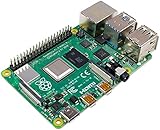
- Broadcom BCM2711, quad-core Cortex-A72 (ARM v8) 64-bit SoC @ 1. 5GHz
- 2. 4 GHz and 5. 0 GHz IEEE 802. 11b/g/n/ac wireless LAN, Bluetooth 5. 0, BLE
- 2 × USB 3. 0 ports, 2 x USB 2. 0 Ports
- 2 × micro HDMI ports supproting up to 4Kp60 video resolution
- Micro SD card slot for loading operating system and data storage
ffmpeg -version
ffmpeg -encoders
Prepare a visual file such as ambient.jpg and an audio file such as ambient-music.mp3. The command below loops the still image and audio input and re-encodes them to the example YouTube profile. It uses the CPU-based libx264 encoder; the veryfast preset reduces encoding effort relative to slower presets, but does not guarantee adequate headroom on every Pi or installation.
Set the two environment variables to the server URL and stream key from YouTube Studio. Use the exact server URL YouTube supplies; append the key as shown only if that URL format calls for it. Do not share the key or leave it in a public shell history or script.
export YOUTUBE_RTMPS_URL='paste-the-server-url-from-YouTube-Studio'
export YOUTUBE_STREAM_KEY='paste-the-private-stream-key'

ffmpeg -hide_banner
  -re -loop 1 -framerate 30 -i ambient.jpg
  -re -stream_loop -1 -i ambient-music.mp3
  -map 0:v:0 -map 1:a:0
  -c:v libx264 -preset veryfast -tune stillimage
  -pix_fmt yuv420p -r 30 -g 60
  -b:v 3000k -maxrate 3000k -bufsize 6000k
  -c:a aac -b:a 128k -ar 44100 -ac 2
  -f flv "${YOUTUBE_RTMPS_URL%/}/${YOUTUBE_STREAM_KEY}"
Here, -loop 1 repeats the still image, -stream_loop -1 repeats the audio input indefinitely, and -re paces file input at its native rate. FFmpeg documents these options and stream copying in its command-line documentation. FFmpeg options apply to the next input or output, so preserve their position when adapting the command. Confirm that your installed build accepts the chosen options and that YouTube receives the expected video and audio before relying on this setup.
Rank #3
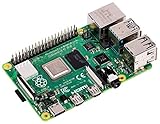
- Broadcom BCM2711, Quad core Cortex-A72 (ARM v8) 64-bit SoC @ 1.5GHz
- 1GB, 2GB, 4GB or 8GB LPDDR4-3200 SDRAM (depending on model)
- 2.4 GHz and 5.0 GHz IEEE 802.11ac wireless, Bluetooth 5.0, BLE Gigabit Ethernet
- 2 USB 3.0 ports; 2 USB 2.0 ports.
- Raspberry Pi standard 40 pin GPIO header (fully backwards compatible with previous boards)
This example re-encodes. If your media already contains compatible streams, -c copy can avoid encoding and lower CPU use, but stream copying will not fix incompatible codecs, containers, or timestamps. Inspect the source files first, and test any copy-based command against YouTube’s accepted formats and the Live Control Room preview. Hardware-acceleration options are build-, driver-, and device-dependent; they are not an automatic shortcut to reliable performance.
Quick wins for a faster PC:
Clear out junk files and repair common Windows errorsFree Scan →Fix the driver behind crashes, sound loss and screen glitchesFind Drivers →Repair Windows errors before they cause bigger problemsFix Now →Test the exact workload before leaving it unattended
- Run the stream long enough to observe the workload. Include the real audio, visual, resolution, filters, and bitrate you intend to use. Watch CPU and memory use, temperature or throttling indicators available on your system, and whether the encoder reports dropped frames or errors. No general Pi benchmark establishes the result for your setup.
- Check the upload path. Use a speed test and observe the actual stream health. A nominal speed-test result does not rule out intermittent packet loss, router problems, or ISP outages.
- Verify the viewer experience. Listen and watch the YouTube preview and public or unlisted watch page on a second device. Confirm that sound remains in sync and the image is not frozen.
- Test recovery deliberately. YouTube recommends testing failover by stopping the primary encoder or disconnecting Ethernet. Do this while the stream is unlisted and confirm what viewers see when FFmpeg reconnects or restarts.
Keep FFmpeg running and make failures visible
A terminal session alone is not a continuity plan. Configure a service manager such as systemd to start the process on boot and restart it after a process failure. Keep logs, check available disk space if recording locally, and arrange an alert or periodic external check for an unhealthy stream. These measures can help recover from a stopped process; they cannot restore power, internet connectivity, or an unavailable YouTube ingest service.
For a simple systemd setup, place the command in a script readable only by the account that runs the stream, keep the stream key out of world-readable files, and create a service with an appropriate Restart=on-failure policy. Enable the service at boot and inspect its status and logs after both normal starts and a forced failure. Exact unit-file paths and service names depend on your OS setup; test boot recovery locally before treating it as operational.
Rank #4

- Vilros Complete Starter Kit for Pi 4 Includes Raspberry Pi 4 Model B Board and all the accessories you need to get started.
- 9-PART KIT WILL HAVE YOU READY TO GET UP AND RUNNING: Kit Includes 1. Raspberry Pi 4 Model B Board 2. Case With Easy to connect Built-in fan 3. 64GB Micro SD card Preloaded with RP OS 4. Vilros Pi 4 Compatible Power Supply with Inline on/off switch (power supply color may vary white/black) 5. Micro HDMI to Standard HDMI cable (5ft) 6. Micro SD to USB adapter to reflash card if desired 7. Neoprene Storage Bag to store all parts when not in use 8. Set of 4 Heatsinks 9. Vilros QuickStart Guide instruction booklet for Pi 4
- PASSIVE & ACTIVE COOLING: The included case is well-vented and the kit also includes a set of heatsinks with thermal stickers for easy application and a pre-installed fan to keep the board cool in any use.
- CONVENIENT ACCESSORIES: The power supply features an inline on/off switch neoprene bag that holds and protects all the parts when not in use and the QuickStart guide is updated and written for Raspberry Pi 4.
- IMPORTANT: Kit does NOT include Keyboard, Mouse or Monitor
YouTube’s encoder guidance recommends monitoring the stream and testing failover. For a channel that must remain available, make sure a person or external monitoring system can notice when the viewer-facing stream is down; a local process showing “active” does not prove YouTube is receiving healthy audio and video.
Plan sessions, handoffs, and replay archives
YouTube can automatically archive a live stream that lasts less than 12 hours; streams longer than 12 hours may not be captured at all. The archive threshold is documented in YouTube’s live-stream archive help. If replays matter, schedule sessions comfortably under that threshold and maintain a local recording backup if storage allows.
Shorter sessions mean planned boundaries, and ending one stream before starting another can create a visible interruption. Test the complete handoff—including the restart, selected stream, stream key, and YouTube auto-start behavior—before relying on it. Confirm that any local archive file continues to grow and can be played back; a configured recording option is not proof that the recording is usable.
Best Value

- Includes Raspberry Pi 4 4GB Model B with 1.5GHz 64-bit quad-core CPU (4GB RAM)
- CanaKit 3.5A USB-C Power Supply with Noise Filter (UL Listed) specially designed for the Raspberry Pi 4 (5-foot cable)
- CanaKit USB-C PiSwitch (On/Off Power Switch)
- Set of 3 Aluminum Heat Sinks for the Raspberry Pi 4
Clear music rights before broadcasting
You are responsible for having the rights needed to use the music in the live broadcast and any replay. YouTube’s livestream terms and conditions put responsibility for necessary rights, including music licensing rights, on the streamer. A license for ordinary playback may not cover a YouTube livestream, an archived video, every territory, or the relevant public-performance rights.
YouTube scans live streams for third-party content. A match can interrupt or terminate the broadcast. YouTube also warns that licensed music may still be interrupted if the rights owner has not added the channel to its Content ID allowlist; see Copyright issues with live streams. Before launch, obtain written confirmation that the license covers livestreaming, archive/VOD use, your intended territories, and the owner’s process for allowlisting your channel.
Understand monetization separately from permission
YouTube Partner Program membership is required to monetize livestreams, and channel-wide monetization review applies to live content. YouTube’s channel monetization policies say repetitive or mass-produced content may be classed as inauthentic. A music license grants neither Partner Program membership nor a guarantee that a repetitive ambient format will qualify for monetization. Original compositions, meaningful variation, and clear creative contribution may help establish the character of the channel, but do not guarantee approval.
The Tool Desk
Outbyte Driver Updater FREEFix the driver behind crashes, sound loss and screen glitchesFind Drivers →Outbyte PC Repair FREERepair Windows errors before they cause bigger problemsFix Now →Common problems and what to check
- YouTube does not show an incoming signal: Recheck the exact server URL and private stream key in Studio, confirm that the channel has live streaming enabled, and inspect FFmpeg’s output for a connection or authentication error.
- The stream connects but video or audio is missing: Verify that both input files exist and that the stream maps point to the intended streams. Check the Studio preview and local media playback before changing encoder settings.
- FFmpeg exits after a while: Read the retained logs for input errors, storage problems, or connection failures; confirm the loop options are attached to the correct inputs; and configure a tested supervisor restart policy.
- Video stutters or stream health degrades: Test wired networking, check actual upload stability, and reduce encoding demands—such as resolution, frame rate, or added filters—then repeat a representative test. Do not infer a Pi’s capacity from its decoder specification.
- Stream appears healthy but an archive is missing: Check session duration against YouTube’s under-12-hour automatic archive guidance and verify that a local recording backup was created and grows as expected.
- Live broadcast is interrupted despite a music license: Contact the rights owner about YouTube Content ID allowlisting and confirm that the license covers live use, archives, and relevant territories.
Or let it run in the cloud
If you do not want a Pi, computer, or home internet connection to be responsible for continuous playback, StreamNeo keeps an uploaded-video YouTube stream running from the cloud. The setup is three steps:
- Upload a recording or build a playlist.
- Add your YouTube stream key once.
- Go live; StreamNeo loops the uploaded videos from the cloud.
Nothing has to stay on at home; the uploaded quality streams as made, up to 4K 60fps, at one price per slot; and StreamNeo automatically recovers if YouTube drops the stream. The first day is free with no card required. Monthly pricing is $9.99 per month. It is for uploaded videos streaming to YouTube, not a live camera feed. Start a free day with StreamNeo.
Quick Recap
Product prices and availability are accurate as of the date/time indicated and are subject to change. Any price and availability information displayed on Amazon at the time of purchase will apply.

