
iTechGuides is reader-supported. When you buy through links on our site, we may earn an affiliate commission. As an Amazon Associate I earn from qualifying purchases. Learn more
Edge AI is worth considering when an operational decision needs to happen near the equipment or people generating the data, or when sending all that data to the cloud is impractical. It is not automatically faster, cheaper, or simpler: the right design may keep only time-sensitive inference local while centralizing model training, monitoring, and longer-term analysis. Start with one operational decision, a measurable baseline, and a pilot that tests the real site conditions.
What edge AI means in a business setting
Edge AI runs an AI or machine-learning function close to where its input data originates: for example, on a sensor, camera, machine, gateway, mobile device, or computer at a site. The term can describe different levels of local capability. NIST distinguishes edge nodes that use models created elsewhere from more advanced arrangements in which edge nodes also learn from local data.
For a business proposal, make the distinction explicit: is the system doing local inference—using a trained model to produce a result—or local training as well? Many operational designs train and manage models centrally, then deploy an approved model for local inference. The site can send selected results, telemetry, or samples back for monitoring and improvement rather than streaming every raw input.
Recommended Free Tools
When to put a workflow at the edge, in the cloud, or across both
Choose the location based on the operational requirement, not on a general claim that one architecture is better. AWS’s industrial edge guidance describes manufacturing execution as a latency-sensitive function that may need an on-premises component; less time-sensitive processing, reporting, and storage can use cloud services. A hybrid split is often practical, but it still needs validation against the actual process.
#1 Best Overall
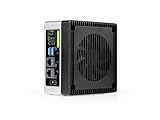
- Supercharged AI Performance: Powered by NVIDIA Jetson Orin NX 16GB, delivers up to 157 TOPS in MAXN Super Mode — ideal for vision AI, robotics, autonomous machines, and generative AI workloads.
- Advanced Thermal Engineering for Full-Power Operation: Equipped with a vacuum copper heat pipe system, ultra-low thermal resistance medium, and high-emissivity black-coated surface combined with high-performance active cooling — ensuring stable full compute power even at 60°C ambient temperature.
- Energy-Efficient & Flexible Power Modes: Adjustable power profile from 10W to 40W, enabling a perfect balance between performance and efficiency for edge AI computing in diverse environments.
- Industrial-Grade Reliability & Design: Ruggedized for operation from -20°C to 60°C at 40W (up to 65°C at 25W), providing dependable performance in industrial automation and outdoor AI deployments.
- Rich Connectivity & AI-Ready Platform: Features 2×RJ45, SIM slot, 4×USB 3.2, HDMI 2.1, CAN, M.2 Key E/M, Mini-PCIe, and 4×CSI camera ports — supporting multi-camera vision, IoT, and robotics projects. Pre-installed with JetPack 6.2 and 128GB NVMe SSD, fully compatible with NVIDIA Isaac, ROS 1/2, and Hugging Face frameworks.
| Architecture | Where the decision is made | When it fits | Trade-off to plan for |
|---|---|---|---|
| Cloud-centered | AI processing is primarily in cloud services. | The process can tolerate a network round trip, and shared central processing suits the workload. | The workflow depends on connectivity and may require transmitting raw or high-volume data. |
| Edge-centered | Inference runs close to the data source. | A local response, continued operation during connectivity interruptions, or reduced raw-data transmission is important. | Devices have more constrained compute and connectivity than cloud instances, and the organization must operate the local hardware and software. |
| Hybrid | Time-sensitive inference runs locally; selected data, telemetry, training, aggregation, or less time-sensitive analysis is handled centrally. | The process needs local responsiveness while also benefiting from shared model management or broader analysis. | The local/cloud boundary, data return, deployment controls, and failure behavior must be designed and maintained. |
Evaluate six factors before choosing:
- Response time: Does a person or machine need to act immediately, or is a cloud round trip acceptable?
- Connectivity: Must the task continue during unreliable or unavailable network service?
- Data movement and privacy: Would transmitting video, sensor readings, or other operational data be costly, impractical, or undesirable? Local inference can reduce transmission, but it does not remove security or governance obligations.
- Compute and site conditions: Can the candidate hardware meet the workload’s inference, memory, power, thermal, and physical-environment requirements?
- Operations and integration: Can teams manage devices, model versions, identity, monitoring, updates, rollback, and interfaces to existing operational-technology and business systems?
- Lifecycle economics: Compare devices, installation, connectivity, cloud services, integration, model operations, and support over the planned service life. The available evidence does not establish a universal cost advantage for edge AI.
Choose a business problem before choosing a model
Define the operational decision that an AI output should change. Identify who—or what system—will act on it, what happens when the output is wrong, and how the current process performs. “Use AI in the factory” is not a pilot scope; “flag a defined defect at this inspection station so an operator can divert the item” is closer to one.
Machine condition monitoring and predictive maintenance
Analyze machine or sensor signals near the equipment to identify anomalies or possible failure. The useful outcome is not an alert by itself: specify which maintenance decision it supports, who reviews it, and how you will compare results with the current maintenance process.
Visual quality inspection
A camera and local inference can flag defects near a conveyor, packaging station, or inspection point without sending every image to the cloud. AWS describes a pattern in which inference runs locally and selected data synchronizes later. Define the defect classes, the action for each result, and acceptable false-alarm and missed-defect rates before trialing the system.
Outdated Drivers Are Slowing You Down
One free scan finds every outdated or missing driver and matches the right update for your exact hardware.Free scan · exact hardware matchWindows Errors? Fix Them Before They Spread
Repair common Windows errors and clear accumulated junk for a smoother, more stable PC - no reinstall needed.Free scan · no reinstallProduction visibility and bottleneck detection
Summarize production signals close to the line, then connect local findings to wider analytics or planning systems. The pilot should name the operational decision—such as investigating a recurring delay—and the baseline measure that will show whether visibility changed the response.
Worker safety and frontline support
Local analysis of relevant site data or access to guidance can be useful where response time or connectivity matters. Microsoft lists safety monitoring and AI support for frontline workers among industrial operations scenarios. Set clear boundaries for what data is collected, who can access outputs, and how a person responds to an alert or recommendation.
Rank #2

- AI-POWERED PRODUCTIVITY & MOBILITY - Experience next-generation computing with the Samsung Galaxy Book4 Edge, featuring a Qualcomm Hexagon NPU with up to 45 TOPS of AI performance to accelerate on-device AI experiences and unlock powerful Copilot+ PC capabilities. Designed to simplify everyday tasks and enhance productivity, it combines intelligent performance with up to 28 hours of battery life in a slim, lightweight design, making it an ideal companion for work, study, travel, and everyday use.
- POWERFUL PERFORMANCE - Powered by the Qualcomm Snapdragon X processor and integrated Qualcomm Adreno graphics, the Samsung Galaxy Book4 Edge handles everyday productivity, streaming, and entertainment with ease. Equipped with 16GB LPDDR5X 8448MHz RAM and 512GB UFS storage, it keeps apps and browser tabs running smoothly while providing ample space for files, apps, and everyday essentials.
- EXCELLENT VISUAL - Enjoy stunning visuals on the 15.6" FHD (1920 x 1080) IPS Anti-glare LED display with 300-nit brightness. USB4 and HDMI support two external 4K monitors @60Hz (without docking station). The enhanced 1080p FHD camera delivers clear, detailed video, while Windows Studio Effects, including background blur and automatic framing, help you look professional during video calls and virtual meetings.
- VERSATILE CONNECTIVITY - Equipped with two USB-C (USB4) ports, USB-A, HDMI, and a 3.5mm audio combo jack for seamless compatibility with monitors, docks, and essential peripherals. Wi-Fi 7 and Bluetooth 5.4 deliver fast, reliable wireless connectivity to keep you productive wherever you work. A full-size keyboard with a dedicated numeric keypad boosts productivity.
- OPERATING SYSTEM - Windows 11 Home provides built-in Copilot AI to help simplify everyday tasks, organize information, and enhance productivity. Built-in security features help protect your device and data, while an intuitive, user-friendly experience makes it easy to work, study, create, and stay connected throughout the day.
Retail inventory visibility
Smart shelves can track stock and trigger replenishment alerts, according to AWS’s edge AI explainer. A pilot needs a defined inventory decision and a way to measure whether alerts improve the existing replenishment process.
Offline-first equipment troubleshooting
AWS has published a manufacturing reference architecture in which operators access equipment documentation and troubleshooting guidance without relying on cloud connectivity. Treat this as an example architecture, not proof that it will work for every site. Test whether the content is available locally, current, and useful under the site’s actual outage conditions.
Run a pilot that tests the operation, not just the model
- Scope one decision. Name the process owner, current baseline, consequence of an incorrect result, and specific action the output is meant to trigger.
- Check site and data readiness. Inventory sensors, cameras, machine interfaces, protocols, data quality, network conditions, and physical constraints. Industrial deployments may have to bridge legacy equipment, differing protocols and formats, distributed data, and skills gaps.
- Select representative hardware and architecture. Test sustained workload and response time on devices representative of the intended site. A development-kit specification is not a production guarantee.
- Validate the model on site-representative data. Set task-specific acceptance criteria. If model preparation includes compression, quantization, or pruning, recheck accuracy and performance after those transformations.
- Establish controlled deployment. Define how a model is packaged, tested, approved, deployed, monitored, updated, and rolled back. In an AWS and Siemens Industrial Edge example, cloud packaging and deployment are coordinated while the OT deployment process remains controlled.
- Specify failure behavior and data return. Decide what the device does when it fails or loses connectivity, what it retains locally, and which telemetry or samples are sent back for analysis or retraining.
- Measure the operational result. Compare the pilot with the baseline. Track the business metric alongside false alarms, missed events, operator workload, device health, inference quality, drift, connectivity, deployment status, and total cost.
A single-site result is evidence about that site and its operating conditions. It is not, by itself, a portfolio-wide performance or savings promise.
Independent reader supportYour contribution helps us test, update, and keep practical guides available for everyone.Plan for edge AI’s constraints and ongoing work
NIST identifies resource constraints, differences in data distributions, privacy requirements, communications constraints, and security vulnerabilities as edge AI challenges. These are design and operating concerns, not automatic reasons to reject the approach.
- Limited resources: Confirm that the chosen device can sustain the real workload under site conditions; do not infer production capacity from a development specification alone.
- Changing data: Local conditions can differ across machines or sites. Monitor inference quality and drift rather than assuming one model will remain suitable everywhere.
- Security and governance: Local processing may reduce some data movement, but devices, identities, updates, retained data, and access still require protection and governance.
- Integration complexity: Legacy equipment and incompatible protocols can make data access and deployment harder than model development.
- Fleet operations: Multi-site deployment adds the work of tracking device health, model versions, rollout status, updates, and recovery.
- Lifecycle maintenance: Assign ownership for monitoring, retraining or replacement decisions, security updates, and rollback before expanding beyond a pilot.
Service status can change. AWS’s industrial AI/ML guidance displays an end-of-support notice for AWS Panorama dated May 31, 2026, and AWS SageMaker Edge Manager documentation states that the service was discontinued on April 26, 2024. Do not select either for a new deployment without checking current vendor status and a supported replacement path.
Rank #3
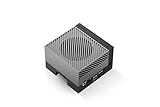
- The NVIDIA Jetson AGX Orin 64GB Developer Kit makes it easy to get started with Jetson Orin. Compact size, lots of connectors, and up to 275 TOPS of AI performance make this developer kit perfect for prototyping advanced AI-powered robots and other autonomous machines.
- The developer kit includes a Jetson AGX Orin 64GB module, and can emulate all the Jetson Orin modules. It supports multiple concurrent AI application pipelines with the NVIDIA Ampere GPU architecture, next-generation deep learning and vision accelerators, high-speed IO and fast memory bandwidth. Now you can develop solutions using your largest and most complex AI models to solve problems such as natural language understanding, 3D perception, and multi-sensor fusion.
- Jetson runs the NVIDIA AI software stack, and use-case specific application frameworks are available, including Isaac for robotics, DeepStream for vision AI, and Riva for conversational AI. You can save significant time with NVIDIA Omniverse Replicator for synthetic data generation (SDG), and by using NVIDIA TAO toolkit to fine-tune pretrained AI models from the NGC catalog.
- Jetson ecosystem partners offer additional AI and system software, developer tools, and custom software development. They can also help with cameras and other sensors, as well as carrier boards and design services for your product.
- With the computing capability of more than 8 Jetson AGX Xavier systems in a developer kit that integrates the latest NVIDIA GPU technology with the world’s most advanced deep learning software stack, you’ll have the flexibility to create tomorrow’s AI solution as well as today’s.
What published case results can—and cannot—tell you
AWS’s case study about Siemens Electronics Factory Erlangen reports an 80% reduction in time spent on model retraining, a 50% reduction in false-call rate, more than 90% cost savings compared with on-premises storage, and around 4% of PCB assembly errors prevented. The case page’s publication year was not stated in the retrieved result, and these figures belong to that vendor-reported case rather than a general benchmark.
Quick wins for a faster PC:
Fix the driver behind crashes, sound loss and screen glitchesFind Drivers →Repair Windows errors before they cause bigger problemsFix Now →In the same case, AWS attributes to process engineer and application owner Marvin Herchenbach a change from about 30 minutes of manual model configuration or retraining to roughly five minutes up to deployment. This is a reported workflow comparison for that factory; it does not predict the time or outcome another business will achieve.
Is a development kit useful for an edge AI pilot?
A development kit can help a team learn, prototype, and test an edge workload, but it is not automatically suitable for deployment in a production environment. NVIDIA describes the Jetson Orin Nano Super Developer Kit as a development platform; its guide reports up to 67 INT8 TOPS, memory bandwidth up to 102 GB/s, and configurable 7–25 W power with its latest software update. Specifications can change with software and product revisions. NVIDIA’s documentation distinguishes developer kits from production modules, so verify the intended production hardware and operating requirements separately.
Use a kit only if it helps answer a defined pilot question, such as whether a model can meet the task’s response-time and accuracy criteria on representative hardware. Its published specifications alone do not establish that it meets a particular business deployment requirement.
Make the edge decision measurable
Keep the decision-sensitive step local when response time, resilience, or reduced data movement justifies the additional device and fleet operations. Keep training, aggregation, and less time-sensitive analysis central when shared scale is more useful. In either case, judge the design by the operational baseline, the quality of decisions it enables, and the full lifecycle work required to keep it reliable.
Quick Recap
Product prices and availability are accurate as of the date/time indicated and are subject to change. Any price and availability information displayed on Amazon at the time of purchase will apply.

