
iTechGuides is reader-supported. When you buy through links on our site, we may earn an affiliate commission. As an Amazon Associate I earn from qualifying purchases. Learn more
To reduce the privacy and security risks of a voice assistant, use its physical microphone mute when you want it off, check how it stores and deletes recordings, restrict linked accounts and purchases, and secure the network it uses. Voice systems differ: many listen locally for a wake word, then record a triggered interaction and send it to a provider’s servers. A listening indicator or mute control can help you understand and control that process, but neither is a substitute for checking the device’s settings and data practices.
What a voice assistant hears—and when it sends audio
A voice assistant needs to detect a wake-word pattern before it can respond. That detection may happen on the device. A device can mishear a similar sound and activate; after activation, it may record an interaction and send it to the manufacturer’s servers. The Federal Trade Commission (FTC) describes this general pattern, but the details depend on the product, its settings, and the service connected to it.
This distinction matters: local wake-word detection is not the same as continuously uploading every sound in a room. Nor does the presence of on-device processing prove that all speech or related data stays local. Check the specific device’s current documentation and privacy settings rather than assuming all assistants work alike.
Free tools Windows power users keep installed
One-click scans. No signup required.
Use the mute control for conversations you do not want captured
Look for a physical microphone switch or button and an indicator that shows when the assistant is listening. Use the mute control when sensitive conversations are nearby or when you do not need voice control. A physical control offers a direct way to restrict microphone access; the indicator helps you notice activation. Check the product documentation to understand what its indicator means and whether muting disables the microphones you intend to disable.
#1 Best Overall

- MEET ECHO SPOT - A sleek smart alarm clock with Alexa and big vibrant sound. Ready to help you wake up, wind down, and so much more.
- CUSTOMIZABLE SMART CLOCK - See time, weather, and song titles at a glance, control smart home devices, and more. Personalize your display with your favorite clock face and fun colors.
- BIG VIBRANT SOUND - Enjoy rich sound with clear vocals and deep bass. Just ask Alexa to play music, podcasts, and audiobooks. See song titles and touch to control your music.
- EASE INTO THE DAY - Set up an Alexa routine that gently wakes you with music and gradual light. Glance at the time, check reminders, or ask Alexa for weather updates.
- KEEP YOUR HOME COMFORTABLE - Control compatible smart home devices. Just ask Alexa to turn on lights or touch the screen to dim. Create routines that use motion detection to turn down the thermostat as you head out or open the blinds when you walk into a room.
Who may access recordings, and how long are they kept?
Audio, transcripts, and information derived from voice interactions can be stored or used in different ways. The FTC advises users to review whether recordings are retained, how long they remain available, whether automatic deletion is offered, whether people may review them, and whether settings allow that review to be disabled. Read the provider’s current privacy policy and settings; do not infer retention or review practices from the device’s wake-word behavior.
In a June 2023 article, the FTC discussed complaints concerning Amazon’s retention and deletion practices, including allegations of permanent retention, deficient deletion, and employee access concerns. Those are claims and agency discussion concerning that provider, not evidence that every voice-assistant provider follows the same practices.
Rank #2
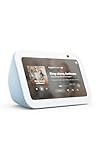
- Alexa can show you more - Echo Show 5 includes a 5.5” display so you can see news and weather at a glance, make video calls, view compatible cameras, stream music and shows, and more.
- Small size, bigger sound – Stream your favorite music, shows, podcasts, and more from providers like Amazon Music, Spotify, and Prime Video—now with deeper bass and clearer vocals. Includes a 5.5" display so you can view shows, song titles, and more at a glance.
- Keep your home comfortable – Control compatible smart devices like lights and thermostats, even while you're away.
- See more with the built-in camera – Check in on your family, pets, and more using the built-in camera. Drop in on your home when you're out or view the front door from your Echo Show 5 with compatible video doorbells.
- See your photos on display – When not in use, set the background to a rotating slideshow of your favorite photos. Invite family and friends to share photos to your Echo Show. Prime members also get unlimited cloud photo storage.
Review the controls that affect stored data
- Check whether audio recordings and transcripts are stored, and what retention period applies.
- Look for a control to delete recordings and, where offered, enable automatic deletion.
- Check whether human review or use of recordings to improve services is described, and whether you can opt out.
- Review linked services and account history as well as the device’s microphone settings; stored data may be managed in a provider account rather than on the speaker itself.
Why voice data deserves careful protection
Voice recordings can contain sensitive conversations and information about the people speaking. The FTC’s 2023 explanation identifies voice recordings as biometric data and says the sensitivity of biometric information can create risks of bias, discrimination, and harmful use. Whether a particular recording legally qualifies as biometric data depends on the context and applicable law; the label should not be treated as universal across jurisdictions or uses.
Windows Errors? Fix Them Before They Spread
Repair common Windows errors and clear accumulated junk for a smoother, more stable PC - no reinstall needed.Free scan · no reinstallCrashes, No Sound, or Screen Glitches?
Random freezes, missing sound and display glitches usually trace back to one bad driver. Find and replace yours safely.Free scan · under a minuteVoice-derived identifiers and profiles can also create privacy concerns even when the original audio is not retained. Ask what data is collected, what is inferred from it, and how long each kind of information is kept.
Rank #3

- Powered by a 47% faster processor, the next-gen dual-tweeter acoustic architecture produces detailed stereo separation while a 25% larger midwoofer deepens the bass.¹
- Place this speaker anywhere and everywhere you want to listen. The compact design fits beautifully on your bookshelf, kitchen counter, desk, or nightstand.
- Stream from all your favorite services over WiFi. Pair a Bluetooth device with the press of a button. Connect a turntable or other audio source using an auxiliary cable and the Sonos Line-In Adapter.²
- Go from unboxing to unbelievable sound in just a few minutes. Simply plug in the power cable, connect your phone or tablet to WiFi, and open the Sonos app.
- With a tap in the Sonos app, Trueplay tuning technology analyzes the unique acoustics of your space and optimizes the speaker’s EQ. So all your content sounds just the way it should.
How to reduce account and household risks
Voice assistants may be linked to email, calendars, contacts, shopping, and other accounts or devices. Each connection can give voice commands access to information or actions that matter. Shared speakers also raise questions about household members and guests using the device.
- Remove integrations you do not need, especially those that expose sensitive information or permit consequential actions.
- Use a PIN or passcode for purchases and other account actions when the service offers one.
- Use guest or household settings when they provide meaningful restrictions for people who share the device.
- Protect the provider account with a long, unique password and multifactor authentication when available. The FTC consumer guidance recommends a password of at least 15 characters; that is the FTC’s advice, not a universal technical standard.
How to secure the network and connected devices
A voice assistant is one device on a home network that may also carry phones, computers, cameras, and other connected equipment. The FTC recommends securing the router. Keep the router and connected devices’ software and settings current, and use the router’s available security controls. The appropriate steps vary by router, so consult its documentation rather than relying on a feature name or model assumption.
Rank #4

- Your favorite music and content – Play music, audiobooks, and podcasts from Amazon Music, Apple Music, Spotify and others or via Bluetooth throughout your home.
- Alexa is happy to help – Ask Alexa for weather updates and to set hands-free timers, get answers to your questions and even hear jokes. Need a few extra minutes in the morning? Just tap your Echo Dot to snooze your alarm.
- Keep your home comfortable – Control compatible smart home devices with your voice and routines triggered by built-in motion or indoor temperature sensors. Create routines to automatically turn on lights when you walk into a room, or start a fan if the inside temperature goes above your comfort zone.
- Do more with device pairing – Fill your home with music using compatible Echo devices in different rooms, or create a home theatre system with Fire TV.
- Say goodbye to drop-offs and buffering - With eero Built-in, Echo Dot doubles as a mesh wifi extender, adding up to 1,000 sq. ft. of wifi coverage to your existing eero network.
Local processing can reduce the amount of data sent elsewhere and may reduce response time, but it is not a complete privacy guarantee. The European Data Protection Board’s technical training on virtual voice assistants notes that other operations may still send data to external services, and that locally stored information or usage profiles may be accessed or misused. Treat local processing as one design characteristic to assess, not proof that a device is private or secure.
What changes when voice AI is used for health care?
In a home-health setup, a voice assistant may sit between a patient and a provider while sharing a home network with personally owned devices. That creates consequences beyond an unwanted recording: a compromised device or poorly isolated network could become a path to sensitive systems. NIST’s Cybersecurity White Paper 34, published December 17, 2025, addresses hospital-at-home systems connected with smart-home technology and uses voice assistants as a representative IoT device.
Best Value

- Your favorite music and content – Play music, audiobooks, and podcasts from Amazon Music, Apple Music, Spotify and others or via Bluetooth throughout your home.
- Alexa is happy to help – Ask Alexa for weather updates and to set hands-free timers, get answers to your questions and even hear jokes. Need a few extra minutes in the morning? Just tap your Echo Dot to snooze your alarm.
- Keep your home comfortable – Control compatible smart home devices with your voice and routines triggered by built-in motion or indoor temperature sensors. Create routines to automatically turn on lights when you walk into a room, or start a fan if the inside temperature goes above your comfort zone.
- Do more with device pairing – Fill your home with music using compatible Echo devices in different rooms, or create a home theatre system with Fire TV.
- Say goodbye to drop-offs and buffering - With eero Built-in, Echo Dot doubles as a mesh wifi extender, adding up to 1,000 sq. ft. of wifi coverage to your existing eero network.
NIST describes possible threats including unauthorized access, interception or manipulation of data, data exfiltration, denial of service, disruption of commands, and altered commands. Its mitigations include access control, authentication, encryption, continuous monitoring, data security, governance, and network segmentation. In particular, health-care equipment and data should be isolated from other personally owned devices in the patient’s home where the deployment allows it.
Controls for organizations and care providers
- Define which users and devices are authorized to access the voice service and downstream health systems.
- Require appropriate authentication and access controls; do not assume that physical access to a speaker is sufficient authorization.
- Protect communications with encryption and monitor systems for suspicious activity or service disruption.
- Segment health-care systems and data from personal IoT devices on the home network.
- Set governance rules for data collection, retention, deletion, incident response, and responsibility across the provider, platform, and integrator.
NIST’s recommendations are cybersecurity guidance for the described health-care setting, not a complete statement of legal obligations. Applicable requirements depend on jurisdiction, the data involved, the parties’ roles, and how the system is used.
How to evaluate a voice AI setup
Whether you are choosing a consumer assistant or reviewing an organizational deployment, assess the same practical dimensions instead of assuming that one feature settles the question:
- Processing location: Find out which parts of wake-word detection and speech processing happen on the device and which use remote services.
- Data and retention: Identify whether audio, transcripts, or derived data are kept, for how long, and how deletion works.
- Human review and secondary use: Check whether recordings may be reviewed by people or used to improve services, and whether meaningful controls are available.
- User controls: Verify the behavior of the mute control and listening indicator, and locate recording deletion and account settings.
- Authentication and authorization: Check how household members, guests, staff, and connected services are permitted to access information or issue commands.
- Network protections: Assess encryption, monitoring, and—where sensitive systems are involved—network segmentation.
- Responsibility: Determine which organization operates the assistant, platform, integration, and any sensitive downstream system, and who handles data requests or incidents.
The EDPB’s final Guidelines 02/2021 on virtual voice assistants, dated July 7, 2021, address data-protection principles, legal basis, technology, and privacy by design and default. They are EU regulator guidance, not a complete legal answer for every location. For a specific deployment, consult the relevant regulator guidance and qualified legal advice for the applicable jurisdiction and roles.
Quick Recap
Product prices and availability are accurate as of the date/time indicated and are subject to change. Any price and availability information displayed on Amazon at the time of purchase will apply.

