
PC Slower Than It Used to Be?
A free scan shows the junk files, broken settings and background clutter dragging Windows down - then fixes them in one click.Free scan · Windows 10 & 11Crashes, No Sound, or Screen Glitches?
Random freezes, missing sound and display glitches usually trace back to one bad driver. Find and replace yours safely.Free scan · under a minuteiTechGuides is reader-supported. When you buy through links on our site, we may earn an affiliate commission. As an Amazon Associate I earn from qualifying purchases. Learn more
A photograph can show a historic building and still miss what makes the place matter. To tell its story, learn what happened there, show the site in its setting, and photograph the features that connect to that history. Then caption what you captured using verified information—without disturbing the place or treating an image as proof of an event.
Before you visit, learn what makes the site significant
Start with the site’s official page and any interpretation provided by its managing organization. Look for what happened there, who used it, and which visible features relate to those stories. The National Park Service encourages visitors to ask why people were at an archaeological place and what they did there; a visitor center is a good place to bring questions. NPS guidance on visiting archaeological places and its interpretation policy connect what visitors can see with the meanings attached to it.
Before packing a shot list, check current rules for photography, interior access, tripods, closed areas, and commercial activity. Requirements vary by site and authority. For example, the NPS National Register and National Historic Landmarks program has a 2024 photograph policy for nomination submissions; that formal process is different from taking visitor photos.
Recommended Free Tools
How do I photograph historic sites? Build a sequence that explains the place
Use a sequence as a practical guide, not a required shot list. NPS documentation standards treat photographs as part of a larger record, alongside written history and description, and call for images that illustrate a property’s significance. Those are standards for formal documentation—not minimum requirements for a travel album. The same principle is useful to visitors: make each image contribute something different to the story.
#1 Best Overall

- 4K DIGITAL CAMERA WITH AUTOFOCUS: The newest 4K digital camera for photography captures videos in 4K resolution and snaps ultra HD 48MP images. With Autofocus and 16X digital zoom, every detail is crisp, clear, and vibrant even captured from a distance.
- 180° FLIP SCREEN AND PORTABLE: Our 4k camera for photography offers a 3.0-inch IPS 180° flip screen, ideal for selfie enthusiasts and vlogging creation. Designed for travel and everyday use, this compact travel camera for pictures is built to last. Its small size and durable construction make it a reliable companion for capturing memories on the go.
- MULTIFUNCTIONAL PHOTOGRAPHY CAMERA: The 4K digital video camera features a date stamp, exposure compensation (-3.0 to +3.0), video pause and playback, time-lapse, slow-motion, giving your videos a creative edge. Additional features like a fill light, Anti-shake, 3 continuous shooting, smile & face detection, beauty face, self-timer, and various filters encourage you to stretch your creative boundaries.
- WEBCAM AND EASY TRANSFER: This 4K vlogging camera for YouTube doubles as a webcam, perfect for live streaming, video chats, and vlogging. You can connect the photo camera to your computer via an USB cable for easy file download, sharing your experiences with friends instantly. With 2 spare rechareable batteries, never worry about power shortage.
- A PERFECT GIFT WITH A HASSLE-FREE WARRANTY: User-friendly and versatile, this portable digital camera for teens is an ideal gift for beginners, amateurs, teens, and seniors, fulfilling daily shooting needs easily. Enjoy our worry-free 18-month replacement and refund warranty. Our prompt customer support team is ready to assist you in under 12 hours!
- Establish the setting. Make a wide view that shows where the site sits in the landscape or surrounding area. Include neighboring structures, paths, or terrain only if they are actually visible and relevant.
- Show the overall form. Photograph the building, ruin, or site as a whole so viewers can understand its shape and scale.
- Show a significant feature or relationship. Frame a feature you have learned about, or show how spaces connect. A doorway, wall, or room is more informative when its relationship to the rest of the site is clear.
- Capture a supporting detail. Photograph a material, mark, or feature that supports a researched point. The image shows what is visible; a reliable caption supplies historical interpretation.
- Include the present where it matters. If current use or the visitor experience is part of the story, show it without intruding on people or implying that present-day conditions are unchanged from the past.
As you work, ask what each frame contributes: context, overall form, a detail, or visible evidence of use. A close-up can be striking, but without a frame that locates it, viewers may not know where it belongs. Conversely, a wide view may establish location while leaving the significant feature too small to see.
How can I tell the story of a place through photos?
Think of the photographs and captions as a pair. A picture can show a doorway, worn surface, or arrangement of rooms; it cannot by itself establish who made or used it, when an event occurred, or what a feature meant. Verify those claims with the site’s interpretation or another reliable source, and keep observation separate from interpretation.
Rank #2

- 16MP Sensor: Captures detailed photos with a CMOS sensor for everyday shooting
- Optical Zoom: 5x optical zoom with a 28mm wide angle lens for flexible framing indoors or outdoors
- Full HD Video: Records 1080p video for travel clips, family moments, or simple vlogging
- Memory Support: Works with Class 10 SD, SDHC, or SDXC cards up to 512GB
- Rechargeable Battery: Included LB-012 lithium-ion battery charges in the camera over USB with the supplied adapter in about 2 hours; charge it for at least 4 hours before first use to maximize battery life
For a useful comparison, assess each image by what it communicates, what it leaves uncertain, and how it was made:
- Story function: Does it establish context, show overall form, reveal a detail, or document visible use?
- Spatial relationship: Does it isolate an object, or show how it relates to the larger place?
- Interpretive confidence: What can viewers see directly, and what depends on a verified caption?
- Impact: Was the position safe, permitted, and considerate of the site and other visitors?
These are practical questions for choosing and sequencing visitor photographs, not a published rating system. Formal HABS/HAER/HALS records have more specific requirements: the NPS describes them as combinations of photographs, drawings, and written data intended to document a property’s historical, architectural, technological, or cultural significance. Its standards address clear depictions, significant areas, perspective correction, and full captions in that formal context. You do not need archival equipment to make a meaningful visitor series.
Rank #3
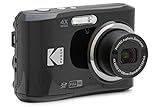
- 16MP Sensor: Captures detailed photos with a CMOS sensor for everyday shooting
- Optical Zoom: 4x optical zoom with a 27mm wide angle lens for flexible framing indoors or outdoors
- Full HD Video: Records 1080p video for travel clips, family moments, or simple vlogging
- Memory Support: Works with Class 10 SD, SDHC, or SDXC cards up to 512GB
- LCD Screen and Battery: 2.7in LCD screen with 2 AA alkaline batteries for convenient on-the-go use
What should I photograph at a historic site?
Photograph what helps explain the place: its setting, its overall form, a feature connected to its history, and details that support a verified point. Notice how the site relates to its surroundings, but describe only relationships you can actually see. Avoid turning an uncertain interpretation into a claim simply because a photograph seems to suggest it.
For perspective, the NPS HABS/HAER/HALS Photography Guidelines, updated in June 2015, describe large-format black-and-white film and in-field perspective correction as standards for that formal program. The guidelines also say that records on over 40,000 historic sites were maintained in a Library of Congress special collection; that is the figure given in the 2015 guideline, not a current count. These archival details provide context for formal documentation, not a checklist or equipment recommendation for visitors. NPS HABS/HAER/HALS Photography Guidelines
Rank #4
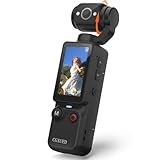
- 【Mini Camcorder, Pocket Size Design】: Measuring only 5.35 × 1.56 inches, this handheld video camera easily fits in your pocket or bag. Designed for travel, daily recording, and spontaneous moments, it delivers a simple way to capture life anywhere.
- 【One-Button Recording, Ready Out of the Box】: Start recording instantly with no app download, no QR code, and no complicated setup. Includes a 32GB memory card, making this mini video camera perfect for beginners, travelers, and everyday creators.
- 【7-Hour Long Battery Life】: Built-in 2000mAh rechargeable battery supports up to 7 hours of continuous recording. Ideal as a travel camcorder, handheld video camera, outdoor recorder, or long-form vlogging camera without frequent charging.
- 【180° Rotating Lens for Vlog & Self Recording】: 180° Rotating Lens for POV & Self-Recording((manual rotation required),Capture POV shots, selfies, and hands-free style videos with the flexible rotating lens. A compact alternative to bulky cameras for content creators, travelers, and anyone who enjoys simple everyday recording.
- 【Designed for Everyday Moments】:While it is not designed to deliver DSLR-level image quality, its charm lies in capturing effortless and fun moments.This compact camera is made for simple and fun everyday recording, travel memories, and creative moments. For users looking for an easy-to-carry camera rather than bulky professional equipment. CGXUED products include an 18-month warranty and lifetime technical support. Have any questions? Just contact customer service!
Use camera technique to make the story easier to read
Keep framing clear enough that viewers can tell what matters in the image. When photographing a building, include enough surrounding structure to make a feature’s location understandable; when photographing a detail, consider whether another image is needed to show where it sits.
Quick wins for a faster PC:
Fix the driver behind crashes, sound loss and screen glitchesFind Drivers →Repair Windows errors before they cause bigger problemsFix Now →Scan for outdated or missing drivers - takes under a minuteDriver Scan →Shutter speed is especially useful when movement is part of the scene. A faster shutter speed makes moving subjects crisper; a slower one lets movement blur. A tripod can help prevent camera shake at low shutter speeds, if the site allows one. For instance, Grand Canyon National Park’s photography guidance recommends a tripod for low shutter speeds and tells visitors to stop walking before taking a photograph and remain at least six feet from the rim edge. That distance is specific to the Grand Canyon’s rim guidance, not a universal rule for historic or archaeological sites. Follow the hazards and instructions at the place you are visiting.
Best Value

- 【4K UHD 56MP Autofocus Digital Cameras】Tired of blurry smartphone photos or missing important moments? This 4K digital camera records in 4K at 30FPS and captures sharp 56MP photos with natural detail. The fast autofocus keeps subjects crisp—just half-press the shutter to lock focus for effortless, stunning shots. Whether documenting daily moments or travel scenes, this beginner-friendly camera for photography offers excellent image quality and easy operation, ideal for beginners and content creators
- 【180° Flip Screen Selfie Camera with 16X Zoom】Struggling to frame selfies or capture distant scenery clearly? This point and shoot digital camera features a 180° flip screen for effortless selfie framing and smooth vlog recording. The powerful 16X digital zoom brings distant scenery, wildlife, and travel details closer with impressive clarity. With the built-in fill light, you can capture brighter, sharper photos even in low-light or indoor environments, making this small camera perfect for everyday recording and creative shooting
- 【360° Dial for Quick Creative Modes】Frustrated by complicated camara settings and confusing menus? This 4K photo and vlogging camera features a smooth 360° rotating mode dial for quick mode switching. Easily switch between Photo, Video, Self Timer, Motion Detection, Slow Motion, Smile Capture, and Continuous Shooting with ease. Access settings quickly whenever you need to adjust your shooting preferences. Ideal for beginners and teen creators, this intuitive layout keeps every function within reach so you can stay focused on creating
- 【USB Transfer & Webcam Vlogging Function】Need an easy way to create content or improve video call quality? This upgraded 4K digital camera supports fast USB data transfer, making it easy to move videos and photos directly to your computer for editing or sharing. It also functions as a high-quality webcam—simply connect via USB and switch to PC Webcam mode to enjoy clearer video for live streaming, online meetings, or real-time vlogging. The included USB cable supports both charging and file transfer for added convenience
- 【Perfect Gift for Any Occasion with 3 Years of Product Support】Looking for a meaningful gift that’s both fun and practical? Easy to use and designed to inspire creativity, this 4K travel camera makes a wonderful gift for family, friends, teens, students, or anyone excited to start creating. It’s ideal for birthdays, back-to-school celebrations, holidays, anniversaries, Thanksgiving, and Christmas, offering a thoughtful and memorable experience. To make every purchase worry-free, this camera comes with 3 years of product support and responsive customer assistance whenever needed
How do I take respectful photos at sacred or archaeological sites?
Follow posted instructions and the guidance of the site or community. Do not touch, move, remove, or reposition artifacts, rocks, plants, or other remains to improve a composition. The NPS specifically warns visitors against disturbing archaeological features, including pictographs and petroglyphs; even touching them can cause harm. Some culturally important places may restrict photography or may not welcome it, so ask when guidance is unclear.
The NPS puts the principle plainly: “Act respectfully to places that are sacred or culturally important. Think about how you’d like someone else to act around your ancestors.” Stay in permitted areas, avoid blocking other visitors, and ask the site manager about rules for interiors, tripods, or commercial photography rather than assuming permission.
After the visit, caption what you know
Write captions while details are fresh. Include the site or location, date, viewpoint or feature, and the source behind any historical interpretation. Separate what the image visibly shows from what a source says it means. If the meaning or identification is uncertain, say so rather than making the photograph carry a claim the evidence does not support.
What’s actually slowing this PC down?
Pick the symptom - the matching free tool is one click away.
Quick Recap
Product prices and availability are accurate as of the date/time indicated and are subject to change. Any price and availability information displayed on Amazon at the time of purchase will apply.

