
PC Slower Than It Used to Be?
A free scan shows the junk files, broken settings and background clutter dragging Windows down - then fixes them in one click.Free scan · Windows 10 & 11Crashes, No Sound, or Screen Glitches?
Random freezes, missing sound and display glitches usually trace back to one bad driver. Find and replace yours safely.Free scan · under a minuteiTechGuides is reader-supported. When you buy through links on our site, we may earn an affiliate commission. As an Amazon Associate I earn from qualifying purchases. Learn more
You can pay for an Indian VPS with Google Pay UPI when the provider offers UPI at checkout: choose a plan, select UPI or Google Pay, approve the payment in your app or scan the displayed QR, then return to the provider and confirm the order is active. SeekaHost India and VCCLHosting explicitly advertise both UPI and Google Pay; availability can still vary by checkout session, so verify the options and final amount before paying.
Pay for an Indian VPS using Google Pay UPI
- Choose the VPS plan and inspect its terms. Confirm the server location, billing period, operating system, bandwidth or traffic policy, renewal amount, taxes, and cancellation or refund terms. Check that the provider permits your intended streaming or relay workload.
- Proceed to the provider’s checkout. SeekaHost India and VCCLHosting explicitly list UPI and Google Pay among accepted payment methods. CloudPe and Inservers list UPI, but the reviewed material does not establish the same explicit Google Pay claim for them. These are provider statements, not confirmation that every checkout will show every method.
- Select UPI or Google Pay if it is offered. Follow the payment prompt to approve the transaction in Google Pay or scan the UPI QR shown by the provider. Do not share your UPI PIN with the provider or anyone claiming to provide support.
- Return to the provider and confirm the order. Wait for a paid or active status and save the confirmation and invoice. If your account is debited but the order remains unpaid, contact the provider through its official support channel with the transaction reference. Do not submit another payment until the first transaction’s status is resolved.
- Test the VPS before depending on it. Configure your encoder and test privately or with an unlisted YouTube stream. YouTube recommends testing and monitoring stream health before relying on a live setup.
The provider pages establish that these businesses advertise UPI or Google Pay; they do not establish a universal checkout flow, transaction-processing time, or refund outcome. Check the selected provider’s current checkout and terms rather than assuming a payment method or policy applies to every order.



Do you need a VPS to stream on YouTube?
No. YouTube’s setup uses an encoder that sends a feed to the Live Control Room’s stream URL using the stream key; its instructions do not require a VPS. A VPS is an optional remote machine for an unattended relay or server-side encoding workflow. It does not supply a camera, video source, or correctly configured encoder.
YouTube recommends RTMPS where supported and says to treat the stream key like a password. Keep it private and reset it if it is compromised. YouTube’s official setup and encoder guidance is available in YouTube Help: Choose live encoder settings, bitrates, and resolutions.
#1 Best Overall
Set encoder and network requirements before choosing a VPS
YouTube’s recommended 1080p H.264 settings
| Output | Recommended H.264 bitrate |
|---|---|
| 1080p at 30 fps | 5–14 Mbps |
| 1080p at 60 fps | 6–17 Mbps |
YouTube’s current encoder guidance, accessed in 2026, recommends constant bitrate encoding and a two-second keyframe interval, not exceeding four seconds. It supports up to 60 fps in the described encoder settings and recommends RTMPS as the secure version of RTMP. These are YouTube’s recommendations, not a guarantee that any particular VPS route or provider will deliver a stable stream.
Relay-only VPS or video encoding?
In a relay-only setup, the VPS receives an already encoded stream and forwards it; stable network connectivity and sufficient traffic allowance are central. If the VPS must encode or transcode video in real time, CPU capacity matters more, and GPU support may matter for some encoder workflows. Do not treat a vendor’s recommended plan as independent proof of performance.
Check sustained upload capacity and traffic rules
An advertised 1 Gbps port does not guarantee sustained throughput to YouTube. Actual delivery can depend on network contention, routing, provider policies, traffic caps, and the encoder’s bitrate. YouTube recommends allowing bandwidth headroom beyond the total stream bitrate and checking outbound bandwidth. Treat “unmetered” as a provider claim to verify in its service terms.
Compare payment and VPS terms before ordering
- Payment method: Confirm UPI or Google Pay appears in the live checkout, whether payment is in INR, and whether taxes or payment fees are added.
- Total cost: Check the amount due now, renewal price, billing commitment, and refund terms. A headline price may be promotional or exclude tax.
- Location and route: Confirm where the VPS is physically hosted and test whether its route to YouTube is stable from that location.
- Network terms: Find out whether traffic is capped, metered, or described as unmetered, and what the acceptable-use terms say. Look for sustained upload capacity rather than relying on port speed alone.
- Workload fit: Decide whether the machine only relays an encoded feed or needs to encode/transcode. Compare vCPU, RAM, and any required hardware acceleration accordingly.
- Administration and support: Check operating-system options, root or administrator access, setup requirements, support availability, and the recovery process if a stream drops.
Examples of providers advertising relevant payment options
Inservers markets a streaming VPS plan at ₹880 per month with 2 vCores, 4 GB RAM, 40 GB NVMe storage, and a 1 Gbps uplink, and says it accepts UPI. It also states that its minimum plan is sufficient for a single 1080p60 relay without transcoding. These specifications and suitability claims are Inservers’ own statements, not independent benchmark results; verify current price and terms directly.
Rank #3
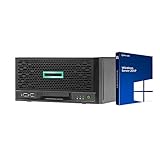
- HP MicroServer Gen10 Plus Tower Server for Business with Microsoft Windows Server 2019 OS!
- Intel Xeon E-2224 Quad-Core 3.4GHz 8MB CPU, Up To 4.6GHz Turbo
- 32GB (2 x 16GB) DDR4 PC4-21300 2666MHz Unbuffered Memory
- 16TB (4 x 4TB) 7.2K 6Gb/s SATA 3.5" HDDs in RAID
- Hard drives and memory upgrades included separately NOT installed, installation required.
SeekaHost India advertises INR payment by UPI and Google Pay, while VCCLHosting says it accepts UPI and Google Pay. CloudPe lists UPI and shows a starting plan price. These examples demonstrate provider-advertised payment methods; they do not establish that a particular plan is the best fit. Compare the current checkout, traffic terms, and renewal details before selecting a service.
Independent reader supportYour contribution helps us test, update, and keep practical guides available for everyone.Or let it run in the cloud
If your goal is to keep uploaded videos running as a 24/7 YouTube live stream, a VPS is not the only option. With StreamNeo, upload a recording or build a playlist, add your YouTube stream key once, and go live. StreamNeo loops the uploaded video from the cloud, so nothing has to stay powered on at home. Every slot streams the file as uploaded, up to 4K 60fps, at one flat price per slot; it automatically recovers if YouTube drops the stream. The first day is free with no card. Monthly pricing is $9.99 per month. Start your free day with StreamNeo.
Quick Recap
Best Value
Rank #4
Product prices and availability are accurate as of the date/time indicated and are subject to change. Any price and availability information displayed on Amazon at the time of purchase will apply.
The Tool Desk
Outbyte Driver Updater FREEScan for outdated or missing drivers - takes under a minuteDriver Scan →Outbyte PC Repair FREEClear out junk files and repair common Windows errorsFree Scan →
