
Free tools Windows power users keep installed
One-click scans. No signup required.
iTechGuides is reader-supported. When you buy through links on our site, we may earn an affiliate commission. As an Amazon Associate I earn from qualifying purchases. Learn more
First identify which connection failed. FFmpeg’s HTTP reconnect options can retry an HTTP input, but they do not reconnect an RTMP output to YouTube. For a temporary failure while sending to YouTube, FFmpeg documents an output-side recovery pattern using its FIFO pseudo-muxer. It can attempt recovery, but it does not guarantee uninterrupted playback or that every packet will be preserved; test your exact FFmpeg build and YouTube workflow before relying on it.
Identify whether the input or YouTube output failed
Look at the FFmpeg log and determine which side reports the error. If FFmpeg cannot read an HTTP source, the failure is on the input side. If it reports an error writing to the RTMP destination, the failure is on the output side. The fixes are different: HTTP protocol reconnect flags apply to HTTP connections, while FIFO muxer recovery is the documented approach for temporary output failures.
| Failure | Relevant mechanism | What it does not do |
|---|---|---|
| HTTP input disconnects | HTTP protocol options such as reconnect, reconnect_at_eof and reconnect_streamed, with retry delay and limit controls as needed. |
These options do not make an RTMP output to YouTube reconnect. |
| RTMP output to YouTube temporarily fails | FFmpeg’s FIFO pseudo-muxer with attempt_recovery and recovery_wait_time. |
It does not guarantee every packet is preserved or that YouTube will continue the same live event after any outage. |
FFmpeg’s protocol documentation says of reconnect_at_eof: “If set then eof is treated like an error and causes reconnection, this is useful for live / endless streams.” That describes an HTTP protocol option, not a general RTMP output retry switch. See the FFmpeg protocol documentation.
The Tool Desk
Outbyte PC Repair FREEClear out junk files and repair common Windows errorsFree Scan →Outbyte Driver Updater FREEScan for outdated or missing drivers - takes under a minuteDriver Scan →Recover a temporary RTMP output failure with FIFO
For output-side recovery, FFmpeg’s FIFO pseudo-muxer documentation gives an example that enables recovery and waits one second between attempts. Adapt its structure to your source and YouTube ingest details:
#1 Best Overall

- Includes Raspberry Pi 4 4GB Model B with 1.5GHz 64-bit quad-core CPU (4GB RAM)
- Includes Pre-Loaded 32GB EVO+ Micro SD Card (Class 10), USB MicroSD Card Reader
- CanaKit Premium High-Gloss Raspberry Pi 4 Case with Integrated Fan Mount, CanaKit Low Noise Bearing System Fan
- CanaKit 3.5A USB-C Raspberry Pi 4 Power Supply (US Plug) with Noise Filter, Set of Heat Sinks, Display Cable - 6 foot (Supports up to 4K60p)
- CanaKit USB-C PiSwitch (On/Off Power Switch for Raspberry Pi 4)
ffmpeg -re -i INPUT -c:v libx264 -c:a aac -f fifo -fifo_format flv
  -drop_pkts_on_overflow 1 -attempt_recovery 1 -recovery_wait_time 1
-map 0:v -map 0:a "rtmp://YOUTUBE_INGEST_URL/YOUR_STREAM_KEY"- Replace the placeholders. Set
INPUTto your actual media source. Replace the destination with the current RTMP server URL and stream key from YouTube Live Control Room. Keep the stream key private. - Check your local build. Run
ffmpeg -h muxer=fifoand confirm that the installed build exposes the FIFO muxer and the options used above. If it does not, use a build that supports them before testing the command. - Review the media mapping and encoding. The example maps the first input’s video and audio and encodes H.264 video and AAC audio. Adapt codec and mapping choices to your source and workflow rather than assuming this exact command fits every input.
- Understand overflow behavior. The example sets
-drop_pkts_on_overflow 1. FIFO buffering and recovery timing can affect what reaches YouTube; do not assume all packets from an outage will be retained. - Test before a real event. Run a private or otherwise safe test stream, cause a short network interruption, and observe FFmpeg’s logs and YouTube Live Control Room. Note whether the same event continues or you need to start another one.
This is FFmpeg’s documented example pattern, not a command tested for every input, FFmpeg version or YouTube session. The documentation does not establish a universal outage duration after which recovery will fail.
Retry an HTTP input instead
If the error is that FFmpeg lost an HTTP input, use the HTTP protocol’s reconnect options on that input. Options include reconnect, reconnect_at_eof and reconnect_streamed, plus controls for retry delay and limits. Their exact behavior and availability depend on the installed FFmpeg version; consult its protocol help and the FFmpeg protocol documentation.
Rank #2
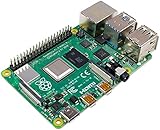
- Broadcom BCM2711, quad-core Cortex-A72 (ARM v8) 64-bit SoC @ 1. 5GHz
- 2. 4 GHz and 5. 0 GHz IEEE 802. 11b/g/n/ac wireless LAN, Bluetooth 5. 0, BLE
- 2 × USB 3. 0 ports, 2 x USB 2. 0 Ports
- 2 × micro HDMI ports supproting up to 4Kp60 video resolution
- Micro SD card slot for loading operating system and data storage
These flags address the HTTP read connection only. They do not repair a failed RTMP write to YouTube. Also check whether the upstream HTTP source is available again and can resume; FFmpeg cannot reconnect to a source that remains offline.
Verify YouTube’s ingest URL and stream key
In the encoder setup, YouTube instructs creators to enter the Live server URL and stream key. Returning users may be able to load previously saved settings. Use the current values shown in YouTube’s encoder setup instructions. If YouTube reports that the key is invalid, its stream troubleshooting guidance says to get a new key in Live Control Room and update the encoder.
Rank #3
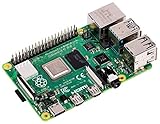
- Broadcom BCM2711, Quad core Cortex-A72 (ARM v8) 64-bit SoC @ 1.5GHz
- 1GB, 2GB, 4GB or 8GB LPDDR4-3200 SDRAM (depending on model)
- 2.4 GHz and 5.0 GHz IEEE 802.11ac wireless, Bluetooth 5.0, BLE Gigabit Ethernet
- 2 USB 3.0 ports; 2 USB 2.0 ports.
- Raspberry Pi standard 40 pin GPIO header (fully backwards compatible with previous boards)
Check upload capacity and stream health
Recovery settings do not compensate for a connection that cannot sustain the chosen stream. YouTube recommends choosing quality that is reliable for your available internet connection, testing upload bitrate, and testing audio and motion representative of the planned stream. During the broadcast, monitor stream health and messages in Live Control Room. These checks can reveal or reduce configuration and connection problems; they do not guarantee that every outage will resume the same YouTube session. See YouTube’s live encoder settings and stream health guidance.
Troubleshoot when the stream does not resume
- FFmpeg reports an HTTP read error: Apply HTTP reconnect behavior to the input, and verify that the source itself is reachable again. Do not expect those input flags to reconnect the YouTube output.
- FFmpeg reports an RTMP write error: Check the output URL and key, then use the FIFO recovery pattern if your build supports it. Review the logs to see whether recovery attempts occur.
- YouTube says the stream key is invalid: Obtain a replacement in Live Control Room and update the encoder configuration.
- The stream remains unhealthy or drops again: Check upload capacity and test with representative audio, motion and quality settings. Monitor YouTube’s stream health messages.
- The encoder reconnects but the live event does not continue: Test the full workflow in advance and record whether the same event resumes or a new event must be started. The available official guidance does not establish one outcome for every outage duration or session.
Or let it run in the cloud
If your goal is a YouTube channel that keeps playing uploaded videos around the clock, StreamNeo is a cloud alternative to keeping FFmpeg and a home internet connection running. Upload a recording or build a playlist, add your YouTube stream key once, and go live. Nothing has to stay powered on at home; each slot streams your upload as made, up to 4K 60fps, at one flat price per slot. StreamNeo automatically attempts recovery if YouTube drops the stream. The first day is free with no card. Monthly pricing is $9.99 per month. Learn more at StreamNeo, or start your free day.
Quick Recap
Best Value

- Includes Raspberry Pi 4 4GB Model B with 1.5GHz 64-bit quad-core CPU (4GB RAM)
- CanaKit 3.5A USB-C Power Supply with Noise Filter (UL Listed) specially designed for the Raspberry Pi 4 (5-foot cable)
- CanaKit USB-C PiSwitch (On/Off Power Switch)
- Set of 3 Aluminum Heat Sinks for the Raspberry Pi 4
Rank #4

- Vilros Complete Starter Kit for Pi 4 Includes Raspberry Pi 4 Model B Board and all the accessories you need to get started.
- 9-PART KIT WILL HAVE YOU READY TO GET UP AND RUNNING: Kit Includes 1. Raspberry Pi 4 Model B Board 2. Case With Easy to connect Built-in fan 3. 64GB Micro SD card Preloaded with RP OS 4. Vilros Pi 4 Compatible Power Supply with Inline on/off switch (power supply color may vary white/black) 5. Micro HDMI to Standard HDMI cable (5ft) 6. Micro SD to USB adapter to reflash card if desired 7. Neoprene Storage Bag to store all parts when not in use 8. Set of 4 Heatsinks 9. Vilros QuickStart Guide instruction booklet for Pi 4
- PASSIVE & ACTIVE COOLING: The included case is well-vented and the kit also includes a set of heatsinks with thermal stickers for easy application and a pre-installed fan to keep the board cool in any use.
- CONVENIENT ACCESSORIES: The power supply features an inline on/off switch neoprene bag that holds and protects all the parts when not in use and the QuickStart guide is updated and written for Raspberry Pi 4.
- IMPORTANT: Kit does NOT include Keyboard, Mouse or Monitor
Product prices and availability are accurate as of the date/time indicated and are subject to change. Any price and availability information displayed on Amazon at the time of purchase will apply.

