
Free tools Windows power users keep installed
One-click scans. No signup required.
iTechGuides is reader-supported. When you buy through links on our site, we may earn an affiliate commission. As an Amazon Associate I earn from qualifying purchases. Learn more
To keep a trade-show booth demo available after the exhibition, send a prepared video to a YouTube Live stream through an encoder or service that explicitly supports looping or scheduled prerecorded playback. Create the stream in YouTube Live Control Room, connect the encoder with the stream URL and key, test the complete setup, and monitor it while it runs. YouTube supports encoder-based livestreams, but its general guidance does not prescribe one universal way to repeat a video—confirm the feature in the specific encoder you choose.
Choose how the demo will repeat
The key choice is not simply software versus hardware: it is whether the option can reliably play your file repeatedly or on a schedule, and whether it can remain online for the run you need. YouTube describes both software and dedicated hardware encoders. A computer-based encoder is a practical route when you can leave a suitable computer and operator available; dedicated hardware or a cloud service may better suit unattended or extended operation. YouTube recommends professional-grade hardware for higher-production-value events, but says expensive equipment is not required.
| Route | Repeated or scheduled playback | What must remain available | Consider it when |
|---|---|---|---|
| Computer software | Depends on the encoder. Confirm that its current version can loop or schedule a prerecorded file; do not assume every encoder can. | The computer, encoder, network connection, and any required operator. | You can supervise the setup and want a flexible software workflow. |
| Dedicated hardware | Depends on the device and any add-on functionality. YouTube documents AJA HELO Plus with optional PlayToStream for scheduling prerecorded media. | The encoder, media storage or network location, and internet connection. | You need a physical encoder and a documented prerecorded scheduling route without a computer. |
| Cloud service | Depends on the service and plan; verify looping, scheduling, run duration, and recovery behavior before relying on it. | The service account, uploaded media, and a working connection from the service to YouTube. | You prefer not to keep an encoder computer running at the venue or office. |
YouTube lists cloud services including Upstream, described as a browser-based 24/7 cloud live video streaming studio, and Gyre, described as a cloud-based service for 24/7 streaming of prerecorded videos on YouTube. Those descriptions do not establish current pricing, plan terms, or detailed playback behavior. Compare the actual service terms and test the particular loop or schedule feature before choosing one.
Quick wins for a faster PC:
Clear out junk files and repair common Windows errorsFree Scan →Scan for outdated or missing drivers - takes under a minuteDriver Scan →Repair Windows errors before they cause bigger problemsFix Now →A hardware example: AJA HELO Plus
YouTube describes AJA HELO Plus as a standalone H.264 encoder that can stream to YouTube Live and record to SD cards, USB storage, or network locations. Its optional PlayToStream functionality is described as enabling prerecorded media to be scheduled and streamed to YouTube Live without a computer. Confirm current device, feature, and media compatibility details with the manufacturer before buying or building a workflow around it.
#1 Best Overall
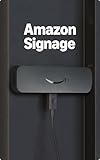
- Professional digital signage: The Amazon Signage Stick auto-launches your CMS in kiosk mode for seamless, unattended operation.
- Easy setup: Setup one or multiple Signage Sticks with the free Amazon Signage app. No tech skills needed.
- Works with over 80+ content management systems (CMS subscription may be required).
- Secure by design: Secure boot and encrypted storage keep your signage protected and running smoothly.
- Manage on the go: Create profiles, organize by location, and monitor real-time right from your phone.
Prepare the video and confirm online rights
Use an edited demo file that makes sense to someone who may join at any point in the loop. Put the product name and essential context early, keep key information on screen long enough to read, and make the transition between the end and beginning tolerable if the encoder repeats the file. Check the exported file in full, including its sound, before uploading or loading it into the encoder.
Confirm that your business has the rights needed for the video and audio in both the livestream and any recording you intend to keep or publish. Exhibition playback permission does not by itself establish permission for an online livestream or archive. YouTube’s livestream terms make the content provider responsible for obtaining necessary rights, including music licensing rights: YouTube livestream terms.
Rank #2

- Optimized for Digital Signage: Suitable for digital signage use, fully supports all OptiSigns features and apps available on your subscription plan
- Easy Setup and Remote Management: Pre-installed OptiSigns Player allows you to manage your screen from anywhere using OptiSigns portal or OptiSigns Admin app
- Extensive Integration Options: 160+ apps help you quickly and easily put useful content on the screens
- Simplified Content Creation: 5000+ ready to use templates and easy to use designer help you design your digital signs in minutes
- Compact and Powerful Hardware: Easy install with no mounting brackets and screws required, features Amlogic 4 Core CPU, 2G DDR4 RAM, 16 GB eMMC, 4K HDR support, and AV1 decoding
YouTube scans live streams for third-party content. If it detects such material, it may replace the stream with a placeholder and warn the provider; if the material remains, the stream can be interrupted or terminated. Even licensed third-party content can cause an interruption if the rights owner has not allowlisted the channel through Content ID. Check with the relevant rights holder and arrange any required allowlisting before going live: YouTube Help: Copyright issues with live streams.
Set up YouTube Live and connect the encoder
- Check channel eligibility. YouTube says livestreaming requires a verified channel without livestreaming restrictions in the prior 90 days. Enable livestreaming and allow for any required activation time before the planned broadcast. See YouTube Help: Get started with live streaming.
- Create or schedule the broadcast. In YouTube Studio, open Create > Go live to reach Live Control Room, then create or schedule the stream. Set the title, description, visibility, and audience options to suit the demo. Select private or unlisted for a test; choose the intended public access setting for the actual post-exhibition broadcast.
- Get the stream URL and key. In Live Control Room, use the stream settings to obtain the YouTube stream URL and stream key. YouTube’s encoder setup uses these to connect the encoder to the live broadcast. Treat the key like a password: anyone who obtains it may be able to send a feed to your stream. Do not post it in public materials, and reset it if exposed. See YouTube Help: Set up your encoder for live streaming.
- Configure the encoder. Paste the stream URL and key into the corresponding encoder fields. Select your prepared demo file and explicitly enable its loop or schedule feature if the encoder provides one. Check whether playback repeats immediately, waits for a scheduled start, or stops at a configured end time. The exact controls differ by encoder; verify them in its current documentation.
- Review stream behavior options. Decide whether to enable DVR, auto-start, auto-stop, scheduling, and archiving based on how viewers will watch and how long the broadcast should run. Confirm the selected encoder’s behavior rather than assuming these settings work the same across products.
Test the feed, bandwidth, and viewer experience
Reliability depends on the upload path as well as the encoder. YouTube recommends leaving 20% upload-bandwidth headroom. In other words, do not plan to consume all of the available upload capacity with the live video; other devices and network activity can reduce what is actually available. Check the connection at the location and under the conditions expected during the broadcast, not only on a quiet office network. See YouTube Help: Troubleshoot your live stream.
Rank #3

- MAKE YOUR TV SMARTER - Enhance any TV with the ability to play videos, music, and photo slideshows from a USB drive or MicroSD Card! It’s so simple and intuitive - anyone can use it. The Micca 4K is amazingly compact and affordable, get one for each TV in the house!
- PLAYS 4K ULTRA-HD VIDEOS - Works with TVs old and new! Smoothly plays videos up to 4096x2304@30fps over UHD 4K/60Hz HDMI output. Sharp and clear video and audio in pure digital format, compatible with 4K and 1080p TVs, projectors, and monitor displays. Composite AV output for use with analog TVs or for sending sound to a stereo system.
- DUAL USB AND MICRO SD READER - Play media files from USB flash drives and USB hard drives up to 8TB, or microSD cards up to 1TB. Supports FAT/FAT32, exFAT and NTFS file systems. Compatible with wireless air mouse remotes for non-line-of-sight control so that the player can be hidden away!
- SIMPLE DIGITAL SIGNAGE - Automatic video playback with endless repeat and looping, and the ability to resume from the last stopping point. Configurable 90/180/270 degree video output rotation. Great for digital signage applications such as restaurant menu boards, lobby welcome videos, art and museum installations.
- MEDIA FORMAT SUPPORT - Videos: MKV, MP4/M4V, AVI, MOV, MPG, VOB, M2TS, TS files encoded with H.265/HEVC, H.264/AVC, MPEG1/2/4, VC1, up to 4096x2304, 30fps, 200mbps. Subtitles: SRT, PGS, IDX+SUB. Music: MP3, WAV, FLAC. Photos: JPG, GIF, BMP, PNG
- Follow YouTube’s timing guidance: prepare the encoder setup at least two hours ahead, then start the encoder at least 15 minutes before the event or planned viewing window so you can check the incoming feed. See YouTube Help: Set up encoders for a livestream.
- Run a private or unlisted test with the same file, encoder settings, network, and intended loop behavior. Watch long enough to confirm that playback repeats or starts on schedule as expected.
- Check the Live Control Room preview for picture, sound, and status before making the stream available to viewers.
- Open the watch page on a phone and another device. Confirm the intended audience can access it and that the title, description, and visibility are correct.
- Monitor the broadcast while it runs. Look and listen for freezes, silence, unexpected transitions, encoder errors, or a YouTube warning. A successful initial preview does not prove an unattended stream will remain healthy.
Make the post-exhibition watch page useful
Decide whether you want a persistent watch page, a scheduled event viewers can anticipate, or a short live window followed by an archive. Set visibility and timing accordingly, and test the actual audience-access path. If the demo is intended for prospects who were not at the exhibition, include enough context in the stream title and description for them to identify the product and understand what they are watching. Avoid including confidential booth conversations, personal information, or material that was cleared only for the exhibition floor.
Agree internally on who will check the stream and what they should do if playback or the YouTube connection fails. An unattended encoder is not the same as a monitored broadcast; identify how the responsible person can see the Live Control Room status and restart or replace the feed if required.
Rank #4

- MAKE YOUR TV SMARTER - Enhance any TV with the ability to play videos, music, and photo slideshows from a USB drive or MicroSD Card! It’s so simple and intuitive - anyone can use it. The Micca G3 is amazingly compact and affordable, get one for each TV in the house!
- PLAYS 2K QUAD-HD VIDEOS - Works with TVs old and new! Smoothly plays videos up to 2560x1440@60fps, upscaled to UHD 4K/60Hz HDMI output. Sharp and clear video and audio in pure digital format, compatible with 4K and 1080p TVs, projectors, and monitor displays. Composite AV output for use with analog TVs or for sending sound to a stereo system.
- DUAL USB AND MICRO SD READER - Play media files from USB flash drives and USB hard drives up to 8TB, or microSD cards up to 1TB. Supports FAT/FAT32, exFAT and NTFS file systems. Compatible with wireless air mouse remotes for non-line-of-sight control so that the player can be hidden away!
- SIMPLE DIGITAL SIGNAGE - Automatic video playback with endless repeat and looping, and the ability to resume from the last stopping point. Configurable 90/180/270 degree video output rotation. Great for digital signage applications such as restaurant menu boards, lobby welcome videos, art and museum installations.
- MEDIA FORMAT SUPPORT - Videos: MKV, MP4/M4V, AVI, MOV, MPG, VOB, M2TS, TS files encoded with H.265/HEVC, H.264/AVC, MPEG1/2/4, VC1, up to 2560x1440, 60fps, 100mbps. Subtitles: SRT, PGS, IDX+SUB. Music: MP3, WAV, FLAC. Photos: JPG, GIF, BMP, PNG
Troubleshoot common failures
| Symptom | Likely cause | What to check or do |
|---|---|---|
| The encoder connects, but the demo does not repeat. | The encoder may not support file looping, or looping may not be enabled for the selected source. | Check the encoder’s current playback controls and documentation, then run a test long enough to reach the end of the file. Use a route that explicitly supports looping or scheduled prerecorded playback. |
| Live Control Room shows no incoming picture or audio. | The stream URL or key may be wrong, the encoder may not be sending, or the stream may not be configured as expected. | Check the encoder’s connection status and the URL/key fields in Live Control Room. If the key may have been exposed, reset it and update the encoder. |
| The stream stutters, drops frames, or disconnects. | Available upload bandwidth may be insufficient or variable, or other network use may be competing with the encoder. | Measure upload capacity during representative network use, preserve YouTube’s recommended 20% headroom, and reduce competing traffic. Test from the actual connection planned for the run. |
| YouTube interrupts the broadcast or shows a copyright warning. | Third-party audio or video may have been detected; a license may not cover online streaming, or a rights owner may not have allowlisted the channel in Content ID. | Review the material and the applicable online rights, contact the rights holder where needed, and arrange allowlisting if required. Do not assume a venue or exhibition license covers the stream. |
| Viewers cannot open the watch page. | The stream may be private, scheduled for a different time, or otherwise not configured for the intended audience. | Check visibility, event timing, and the watch-page link in a signed-out or otherwise representative viewer session, including on mobile. |
Or let it run in the cloud
If you would rather not keep an encoder computer running after the exhibition, StreamNeo is a YouTube-only cloud service for keeping a channel live from uploaded videos. Upload the prepared demo, add your YouTube stream key once, and go live; StreamNeo loops it from the cloud, so nothing has to stay on at home or at the booth. It supports uploaded video as made, up to 4K 60fps, at one price per slot, with automatic recovery if YouTube drops the stream. The first day is free with no card.
Each slot includes one always-on stream, 10 GB storage per slot pooled across active slots, 24/7 looping and playlists, automatic recovery, and StreamNeo team support. You can choose short or long billing periods and cancel any time. Monthly pricing: $9.99 per month. See StreamNeo for details, then start the free first day.
Quick Recap
Best Value

- Built for Digital Signage (24/7 Playback); Designed for continuous operation with auto-play, auto-loop and resume functions — ideal for restaurants, retail stores, exhibitions and business displays.
- True Plug & Play — No WiFi, No App: Simply insert a USB drive or MicroSD card and power on. Content plays automatically without internet, software or subscriptions.
- Massive Storage Support for Large Content Libraries: Supports USB storage devices up to 8TB and MicroSD cards up to 1TB, perfect for long videos and multiple playlists.
- Smooth 4K UHD Video Performance: Plays 4K video up to 4096×2304 with efficient H.265/HEVC decoding for stable, low-heat playback.
- Works with Modern & Legacy Displays: HDMI and AV output allow connection to TVs, monitors, projectors and older.
Product prices and availability are accurate as of the date/time indicated and are subject to change. Any price and availability information displayed on Amazon at the time of purchase will apply.

