
Free tools Windows power users keep installed
One-click scans. No signup required.
iTechGuides is reader-supported. When you buy through links on our site, we may earn an affiliate commission. As an Amazon Associate I earn from qualifying purchases. Learn more
To live stream a nature camera on YouTube, first secure permission and plan a wildlife-safe, maintainable camera site with dependable power and upload capacity. Then send the camera feed through a compatible encoder or streaming application to YouTube Live, check the preview in Live Control Room, and assign someone to monitor the feed. The camera is only one link in the chain: at a remote site, power, connectivity, weather, and maintenance can be harder to solve than YouTube setup.
How do I live stream a wildlife camera to YouTube?
Plan the project as a system: site and permissions, camera and mount, power, network, encoder, YouTube ingest, monitoring, and the public watch page. YouTube’s encoder workflow is straightforward once your channel is eligible and the camera feed can reach the internet, but a stable wildlife stream depends on all of those links working together.
- Define the feed and the operating plan. Decide what viewers should see, whether you need audio or remote camera movement, how continuously the feed must run, who will check it, and how equipment can be serviced.
- Get permission and assess wildlife risk. Obtain landowner consent and check local wildlife permits and protected-site rules before installing equipment. Rules depend on the place and species. Keep maintenance access in the plan, and avoid revealing sensitive site details in the stream title, description, overlays, or public chat.
- Survey power and connectivity at the installation point. Assess the actual camera position—not just the nearest building—for power, mobile coverage, line of sight to a wireless link, and usable upload capacity. Estimate equipment loads and plan how to reach, reboot, and maintain them.
- Choose and mount a camera for the site. Match the field of view, low-light needs, weather exposure, audio, cable route, power draw, and service access to the scene. A network camera may feed an encoder or supported streaming software; exact compatibility depends on the camera and software.
- Configure YouTube and the encoder. Create or schedule an encoder stream in YouTube Studio, copy its server URL and stream key into the sending device or software, and keep the key private.
- Test before going public. Start the encoder, check the preview and stream health in Live Control Room, verify audio and picture, and confirm that viewers can open the watch page.
- Monitor the installation and stream. Assign a person to check image quality, camera alignment, power, audio, connection, and stream health, and decide how to handle outages or sensitive wildlife events.
What should I check before choosing a site?
Start with the animal and the people responsible for its habitat, not the ideal camera angle. Consider disturbance from installation and maintenance, camera or motor noise, illumination, weather exposure, and whether an unedited live view could expose nesting, predation, handling, or another sensitive event. Work with relevant wildlife experts on placement and on a response plan for events viewers may witness.
Permission and permitting are location-specific. Natural England’s guidance cited for this subject concerns broadband work in protected sites in England; it is not a worldwide wildlife-permitting guide. Consult the relevant land manager and local authorities for your site and species. Do not publish precise coordinates or identifying location details if that could put wildlife or landowners at risk.
#1 Best Overall

- 𝐍𝐎𝐓𝐄: 𝐢𝐭 𝐢𝐬 𝐍𝐎𝐓 𝐜𝐨𝐦𝐩𝐚𝐭𝐢𝐛𝐥𝐞 𝐰𝐢𝐭𝐡 𝐡𝐨𝐦𝐞 𝐖𝐢𝐅𝐢, 𝐝𝐨𝐞𝐬 𝐍𝐎𝐓 𝐬𝐮𝐩𝐩𝐨𝐫𝐭 𝐜𝐞𝐥𝐥𝐮𝐥𝐚𝐫/𝟒𝐆/𝟓𝐆 𝐧𝐞𝐭𝐰𝐨𝐫𝐤𝐬, and 𝐝𝐨𝐞𝐬 𝐍𝐎𝐓 capable of real-time motion alerts or push notifications. The camera creates its own short-range Wi-Fi hotspot (𝐍𝐨𝐧-𝐂𝐞𝐥𝐥𝐮𝐥𝐚𝐫) for setup, and downloading files only. Wi-Fi range is up to 33–50 ft in open areas. The camera records automatically even when your phone is not connected. No subscription or monthly fees
- Upgraded Split Solar Panel Design: This trail camera features a Allows flexible placement design. Its angle can be manually adjusted to efficiently face the sun, regardless of seasonal changes or terrain. This greatly improves charging efficiency and minimizes sunlight blockage, making it suitable for all kinds of outdoor environments (32GB SD card included (pre-installed). No extra charge)
- Non-Stop Solar Power: Equipped with a high-capacity 6000mAh rechargeable power, this trail camera supports three charging modes: solar charging, Type-C charging, and rechargeable power. It allows for long-term continuous use. No more wasting money or climbing. It is the truly energy saving, and long-lasting solution for 24/7 backyard, farm, and deep-woods surveillance
- Easy & Smart App Control : This wifi trail camera pairs instantly via WiFi + Bluetooth with the user friendly “TrailCamGO” app, with a maximum connection range of 55FT (recommended within 10FT). Photos and videos can be send directly to your phone without removing the SD card. (As the wireless trail camera creates its own hotspot to connect with the phone, it does not support home Wi-Fi networks.)
- 4K & 64MP Ultra-Clear Imaging: With a high-resolution sensor and excellent low-light performance, this solar trail camera minimizes image and video blur or noise, enabling quick wildlife recognition and capturing every detail clearly.Ideal for birdwatching, spotting wildlife, and keeping an eye on your garden/home
What camera do I need to livestream a bird nest?
There is no universally suitable camera. A fixed network camera can suit a stable, carefully framed view; a pan-tilt-zoom (PTZ) camera can allow remote reframing, but it adds moving parts and can make operational noise. Conserve Wildlife Foundation of New Jersey’s undated Live Wildlife Cam Guide describes an osprey installation using Axis PTZ network cameras, mounts, and a microphone. That is an operator example, not a controlled comparison or a recommendation for every nest.
| Approach | Potential fit | What to weigh |
|---|---|---|
| Fixed framing | A scene that can be positioned well during installation and rarely needs reframing | Field of view, changing light, access for adjustment, and whether the chosen framing remains useful across seasons |
| PTZ | A site where an operator needs to adjust the view remotely | Movement noise, animal proximity, power and connectivity, additional mechanisms, and the risk of disturbing wildlife |
For either approach, check low-light performance, outdoor suitability, audio needs, cable runs, remote adjustment, local recording options, power consumption, and maintenance access. The cited sources do not establish a specific current model, universal encoder compatibility, or a tested camera winner.
How do I plan power and connectivity at a remote site?
Where available, mains power and wired internet are described by the Live Wildlife Cam Guide as reliable and often more cost-effective than remote alternatives. Power over Ethernet (PoE) can carry power and data on one cable when the camera and network equipment both support it. At remote sites, documented projects have used solar-charged batteries with cellular broadband, or solar-recharged batteries with a wireless link to shore and fiber backhaul. Those examples demonstrate possible architectures, not guaranteed performance at another location.
What’s actually slowing this PC down?
Pick the symptom - the matching free tool is one click away.
Estimate the full system load
Include more than the camera: account for any heater, infrared illuminator, router, encoder, wireless bridge, and other network equipment. Consider seasonal sunlight and temperature, battery reserve, weather protection, and how the system will recover after an outage. A site-specific installer can help size equipment; the cited material does not establish a universal solar or battery specification.
Rank #2
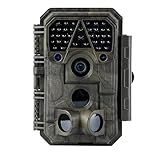
- Crystal-Clear 64MP Photos & 1296p HD Video – Stunning detail day or night, thanks to advanced image tech and a high-performance f/1.6 aperture lens.
- Lightning-Fast 0.1s Trigger Speed – Never miss a moment! Side sensors detect motion instantly, even for fast-moving wildlife, deer.
- Bright 100ft No-Glow Night Vision – Invisible 940nm LEDs and enhanced light capture deliver sharp nighttime footage without spooking animals.
- Smaller Files, Faster Playback – H.264 tech compresses videos (MP4/MOV) for quick downloads and seamless viewing on any device.
- 2.4" Color Display + User-Friendly Controls – Review footage on the spot with an intuitive menu and easy-access buttons.
Verify the uplink where the camera will sit
Ask a carrier to confirm coverage and data terms at the actual camera location, or test a proposed wired or wireless link on site. Download speed does not establish upload capacity. YouTube recommends allowing 20% headroom beyond the combined outgoing stream bitrate. If several feeds share a connection, include all of them in that total and test the actual outbound link under representative conditions.
Remote infrastructure can be expensive. Conserve Wildlife Foundation of New Jersey’s undated guide says solar-powered systems can easily exceed $10,000 and describes one partnered camera system that incurred approximately $2,000 in monthly 4G costs before it was taken offline. These are project-specific observations from one organization, not current market averages or a quote for another site.
How do I connect the camera feed to YouTube Live?
You need an eligible YouTube channel, a feed that an encoder can send, and the stream’s server URL and key. YouTube Help says the channel must be verified, have no live-streaming restrictions in the previous 90 days, and the streamer must be at least 16. Check the current channel requirements in YouTube Studio before planning a launch.
- Open YouTube Studio and create or schedule a live stream. Choose the encoder workflow. Set the intended privacy and audience options for the stream.
- Copy the ingest details into the encoder. In YouTube’s stream settings, copy the server URL and stream key into the camera’s supported streaming software or a separate encoder. Treat the key like a password: do not publish it, and reset it if it is exposed.
- Choose settings the entire system can sustain. Set resolution, frame rate, and bitrate according to the camera’s output, encoder capability, available upload capacity, and power budget. Follow YouTube’s current encoder-settings guidance for a compatible configuration; do not select a high-bitrate mode merely because the camera offers it.
- Prefer encrypted ingest where supported. YouTube recommends RTMPS, its encrypted extension to RTMP. Use it when the camera or encoder supports it.
- Start the encoder and inspect the preview. Wait for the feed to appear in Live Control Room, check the picture and sound, and only then make the stream public or start the scheduled event.
YouTube automatically transcodes incoming live streams into output formats for viewers on different devices and networks. That can make playback more accessible, but it does not guarantee that the source uplink is stable, that the stream will be discovered, or that every viewer will have uninterrupted access.
Rank #3

- 【Solar Powered Trail Camera – Set & Forget Power】Built-in rechargeable battery and solar panel keep this trail camera running nonstop in yards, farms, and around your home — no cables, no battery swaps, no maintenance worries.
- 【4K Wildlife Camera with 64MP Photos】Record breathtaking 4K ultra HD video and 64MP images with f/1.6 wide aperture lens, delivering sharp detail even in low light, dawn, dusk, and nighttime wildlife activity.
- 【0.1s Activation Speed – Never Miss the Action】Ultra-fast 0.1s rapid activation and a 5-frame sequence mode record fast-moving animals in perfect detail — ideal for deer, birds, raccoons, and foxes.
- 【On-Camera & App Playback – No SD Card Removal Needed】View photos and videos instantly on the built-in screen or via the "Trailcam Go" phone app within 30-50m in open areas — monitor wildlife without disturbing the environment.
- 【Secure Local Storage】Ready out of the box with an included 8GB card for up to 30 days of loop recording. Secure local storage means total privacy and no monthly fees. Expandable up to 128GB if you need more space (larger cards sold separately).
How should I test and monitor an always-on wildlife feed?
YouTube’s live-streaming tips recommend setting up an encoder at least two hours before a scheduled event and starting it 15 minutes ahead. For a camera project, test in advance with representative movement and audio, inspect the Live Control Room preview and stream-health indicators, and verify the watch page from a channel view and a mobile device. If you have a backup encoder or connection, test the failover rather than assuming it will work.
For continuous operation, give a named person responsibility for checks. A practical checklist includes:
- Confirming that the stream is online and the image is clear, correctly framed, and appropriate to show.
- Checking connection and stream health, plus audio if used.
- Reviewing camera, network, and power status where those readings are available.
- Checking local recording storage and file growth if the system records on site.
- Using a planned response for power or network outages, maintenance, and sensitive wildlife events.
YouTube says streams under 12 hours are automatically archived. Do not assume a 24/7 feed will be retained as one continuous archive: verify current YouTube behavior and separately plan any recording and retention the project needs.
How do I protect wildlife, copyright, and sensitive locations?
Use only video and sound that the channel has the right to stream. YouTube scans live content for third-party material. If it detects such content, it may replace the stream image, interrupt the stream, or terminate it if the material remains. YouTube also says licensed third-party content may require the channel to be allowlisted through Content ID. A nature setting does not make background music, a nearby broadcast, or other recorded material automatically safe to use.
Rank #4

- 【Ultra-clear Photos and Videos】36MP Still Images & 2.7K Videos. Thanks to premium optical lens and an advanced image sensor, and built-in 22Pcs 850nm low glow LEDs, this trail camera provides crystal clear images and amazing smooth 2.7K videos with sound in the daytime, low light or nighttime, combined with noise reduction speaker and 2.0” HD TFT Color Screen, which takes you into the world of wildlife.(This camera does not include an SD card.)
- 【Super Night Vision & Low Glow Infrared LEDs】The trail camera is equipped with powerful low glow infrared LEDs, features upgraded 850nm infrared technology, makes this game camera more stealth, which can show the night behavior of animals without disturbing them, encompasses adaptive illumination technology to avoid overexposure or over-dimmed, which can provide clear night images and videos in total darkness, delivers brilliant night vision up to 75ft.
- 【Fast 0.1s Trigger Time &130°Wide Angle】Once movements are detected, the lightning-fast trigger speed of less than 0.1s with 1 to 3 shots choice guarantees fast and accurate capture of each detected motion exposed to the field, never miss any animals that wander by this camera. 130° detection range to give you an expansive field view, indispensable for hunting, wildlife observation, farm monitoring, home backyard, plant growth observation, property security and surveillance.
- 【Easier Setup Than Ever】This hunting camera features a built-in 2.0-inch color screen and TV remote-style control buttons. No Wi-Fi or app is needed; the intuitive and easy-to-use interface allows for quick setup and instant playback, making it suitable for users of all ages. The included mounting strap and stand allow you to stabilize the camera in various scenes and at any angle. A comprehensive user guide helps you quickly get started using this hunting camera.
- 【IP66 Waterproof】KJK201 is designed to withstand extreme environments, thanks to the tightly integrated design of the camera body and high-quality rubber ring, ensuring that works normally from -22 °F to 158 °F, excellent quality can be used in deserts, rainforests, etc. The efficient PIR design works to reduce false triggers, boasting an impressive 17,000-image battery life! The smaller size makes them easier to conceal from theft/vandalism, and also much easier to carry out into the field.
Keep equipment and operators from disturbing animals, consider noise from camera movement and lighting, and avoid disclosing a sensitive location. The Loon Preservation Committee’s Loon Cam page says its exact location is not identified to protect the loons and landowners. Decide with wildlife experts how the project will respond if live footage shows an event that should not remain publicly visible.
Independent reader supportYour contribution helps us test, update, and keep practical guides available for everyone.How can a nature camera reach viewers around the world?
A public YouTube watch page can be shared with viewers regardless of where the camera is installed, and YouTube’s transcoding creates formats for varied devices and network conditions. Neither the platform nor the cited project examples establish a particular worldwide audience size or guarantee discovery. Give the stream a clear title and description, promote its watch page through the organization’s channels, and use captions or an explanatory overlay when they help viewers understand the scene. Keep sensitive location information out of the metadata.
If planning multiple concurrent feeds, confirm the channel’s current limit in YouTube Studio before committing to an installation. On March 24, 2026, Cornell Lab Bird Cams reported that YouTube was introducing a limit of 10 simultaneous live streams per channel and that Cornell moved some feeds to a second channel. Treat that as a dated operator report, not a substitute for checking current YouTube guidance.
Can StreamNeo run a live nature camera?
StreamNeo is for keeping uploaded videos live on YouTube; it does not take a live camera feed. That makes it unsuitable as the encoder for a camera whose current, real-time view matters. If the project instead wants to loop a rights-cleared recording—for example, a previously captured scene when no live feed is intended—StreamNeo can keep that uploaded video or playlist running from the cloud. It is the first option to consider for that prerecorded-video use case: it runs always-on from the cloud, supports any uploaded quality up to 4K 60fps at one flat price per slot, and offers a free first day.
Best Value
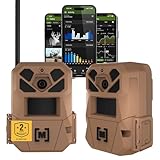
- HARVEST MORE BUCKS THIS SEASON - EDGE 3 delivers real-time deer activity, movement patterns, and location intelligence—so you know when and where mature bucks are moving instead of hunting on hope.
- AI BUCK DETECTION + INSTANT ALERTS - Moultrie AI identifies bucks and immediately delivers high-resolution photos or HD video—reducing false alerts and helping you act fast when it matters most.
- NATIONWIDE 4-CARRIER AUTO-CONNECT - Automatically connects to the strongest of four major U.S. networks. No SIM cards. No manual setup. Reliable photo and video delivery—even in remote hunting properties.
- 40MP PHOTOS + 1080p HD VIDEO - Capture crisp, detailed images and lifelike HD video. Low-glow infrared flash keeps nighttime shots clear without spooking deer.
- 0.5-SECOND TRIGGER + 100FT RANGE - Fast trigger speed and long detection range ensure moving deer are captured cleanly—no blur, no missed opportunities.
To use it for suitable prerecorded footage, upload the recording or build a playlist, add the YouTube stream key once, and go live. The computer can stay off, and StreamNeo automatically recovers if YouTube drops the stream. Each slot includes one always-on stream, 10 GB storage per slot pooled across active slots, looping and playlists, and StreamNeo team support; every plan has the same product, with the billing period changing. The first day is free with no card, and UPI is available in India. The monthly option is $9.99 per month. See StreamNeo or its plans for current details. Check copyright safety before looping any recording.
For recorded footage that fits the project, the cloud workflow is: upload the video or playlist, add the YouTube stream key, and go live. Nothing has to stay on at home; the upload streams as made up to 4K 60fps at one price per slot; and the service automatically recovers if YouTube drops the stream. The first day is free with no card. Monthly billing is $9.99 per month. This is not a substitute for live camera capture. Start the free day with StreamNeo.
What should the project plan include?
Before installation, confirm the permissions, wildlife safeguards, maintenance access, power and network plan, camera-to-encoder compatibility, YouTube eligibility, stream settings, monitoring responsibility, copyright clearance, and outage response. Recheck platform requirements and any channel stream limits in YouTube Studio when the project is ready to launch; they can change over time.
The Tool Desk
Outbyte PC Repair FREERepair Windows errors before they cause bigger problemsFix Now →Outbyte Driver Updater FREEFix the driver behind crashes, sound loss and screen glitchesFind Drivers →Quick Recap
Product prices and availability are accurate as of the date/time indicated and are subject to change. Any price and availability information displayed on Amazon at the time of purchase will apply.

