
iTechGuides is reader-supported. When you buy through links on our site, we may earn an affiliate commission. As an Amazon Associate I earn from qualifying purchases. Learn more
To get better output from a coding agent, shape the information and capabilities it can use throughout the task—not just the wording of its first prompt. Give it concise project guidance, clear tools, selective access to relevant code, a way to preserve progress, and tests or other evidence it can use to check its work.
What context engineering adds to prompt engineering
Prompt engineering focuses on writing and organizing the model’s instructions. Context engineering is broader: it curates and maintains the information available to the model while it works, including instructions, tool results, external data, and conversation history. Anthropic describes context engineering as “the set of strategies for curating and maintaining the optimal set of tokens” available to a model. Its article, published September 29, 2025, presents this as guidance from Anthropic’s engineering perspective, not a universally standardized taxonomy. Anthropic’s context-engineering guide
The distinction matters for coding agents because their context changes as they inspect files, run commands, and receive results. A useful initial prompt can still lead to poor work if the agent cannot find the right code, misunderstands a tool, loses an important decision, or never checks whether its changes work. Context engineering extends the prompt into a working environment that must be managed over multiple steps.
Should you give a coding agent the whole codebase?
Usually, do not load every file by default. More text is not automatically more useful: irrelevant material competes with the details the agent needs to notice. A better approach is to provide stable project conventions up front, then let the agent retrieve task-specific code as needed.
#1 Best Overall

- 𝗧𝗵𝗲 𝗨𝗹𝘁𝗶𝗺𝗮𝘁𝗲 𝗖𝗼𝘂𝗽𝗹𝗲𝘀 𝗖𝗮𝗿𝗱 𝗚𝗮𝗺𝗲 𝗳𝗼𝗿 𝗔𝗱𝘂𝗹𝘁𝘀: Look forward to your evenings with this bestselling intimacy card game – perfect for romantic couples looking to connect deeper with fun and meaningful questions. A must-have for those seeking the best card games to enjoy together and enhance their bond.
- 𝟭𝟳𝟬 𝗣𝘀𝘆𝗰𝗵𝗼𝗹𝗼𝗴𝘆-𝗕𝗮𝗰𝗸𝗲𝗱 𝗖𝗼𝗻𝘃𝗲𝗿𝘀𝗮𝘁𝗶𝗼𝗻 𝗖𝗮𝗿𝗱𝘀 𝗖𝗿𝗲𝗮𝘁𝗲𝗱 𝗯𝘆 𝗘𝘅𝗽𝗲𝗿𝘁𝘀: Explore love, life, dreams, and desires with couples conversation cards that spark laughter, honesty, and meaningful connection. Perfect for couples games seeking emotional growth through engaging dialogue.
- 𝗣𝗲𝗿𝗳𝗲𝗰𝘁 𝗳𝗼𝗿 𝗗𝗮𝘁𝗲 𝗡𝗶𝗴𝗵𝘁 𝗚𝗮𝗺e𝘀 𝗼𝗿 𝗚𝗮𝗺𝗲 𝗡𝗶𝗴𝗵𝘁 𝗙𝘂𝗻: Turn ordinary nights into unforgettable ones. This deck includes 7 curated topic categories to guide conversations across all aspects of your relationship. Whether it's a cozy two-player game or part of your board games for adults collection, this couples game is your go-to for deepening connections and sharing laughs.
- 𝗛𝗶𝗴𝗵𝗹𝘆 𝗥𝗮𝘁𝗲𝗱 𝗖𝗮𝗿𝗱 𝗚𝗮𝗺𝗲 𝗳𝗼𝗿 𝗖𝗼𝘂𝗽𝗹𝗲𝘀 𝗼𝗻 𝗔𝗺𝗮𝘇𝗼𝗻 – 𝗟𝗼𝘃𝗲𝗱 𝗯𝘆 𝗢𝘃𝗲𝗿 𝟮𝟬𝟬𝗞 𝗖𝗼𝘂𝗽𝗹𝗲𝘀: Join over 200,000 couples who choose our relationship-building couple card game over typical adult games for game night. A top-rated addition to your collection of relationship-building activities, this intimacy game is perfect for those looking to spark deeper conversations and emotional connection.
- 𝗔 𝗧𝗼𝗽-𝗥𝗮𝘁𝗲𝗱 𝗚𝗶𝗳𝘁 𝗳𝗼𝗿 𝗕𝗼𝘆𝗳𝗿𝗶𝗲𝗻𝗱, 𝗚𝗶𝗿𝗹𝗳𝗿𝗶𝗲𝗻𝗱, 𝗼𝗿 𝗦𝗽𝗼𝘂𝘀𝗲: Searching for couple gifts, relationship card games, or romantic gifts for him or her? This deck is a thoughtful choice for anniversary gifts, birthdays, or holidays. An excellent option for long distance relationship gifts as well!
- Include stable, broadly applicable guidance such as how to run tests, naming conventions, or architectural constraints.
- Give the agent ways to locate and inspect task-specific files, such as search, repository browsing, or targeted file-reading tools.
- Point it toward likely entry points when you know them, but allow it to verify dependencies and call sites rather than assuming a single file is sufficient.
- Use search boundaries or other retrieval heuristics to keep exploration relevant; on-demand discovery can save context but may take longer and can become aimless without useful tools.
This hybrid approach balances a consistent project baseline with access to the details that vary from task to task. Anthropic recommends just-in-time retrieval in which an agent holds references—such as file paths or stored queries—and uses tools to fetch information when needed. Anthropic’s context-engineering guide
Write project instructions that prevent predictable mistakes
Project guidance should clarify the task’s goal, constraints, expected output, and relevant conventions. Keep it high-signal and organize longer instructions under named sections so an agent can locate the relevant rule. Concision is useful, but omitting a necessary constraint merely to make instructions shorter is not.
Start with a baseline rather than trying to anticipate every possible failure. If the agent repeatedly misses a convention or skips a required check, add a concise instruction or a canonical example that addresses that failure. Revisit the guidance as the project changes; outdated instructions can be as misleading as missing ones.
What’s actually slowing this PC down?
Pick the symptom - the matching free tool is one click away.
Rank #2

- Comprehensive Coverage: Dive deep into Python with thorough explanations of key topics and practical, real-world examples that make complex concepts easy to grasp. Our content is designed to provide you with a strong foundation and advanced skills, ensuring you are well-prepared for any Python-related challenge.
- Interactive Learning: Transform your learning experience with our interactive format. Practice and apply what you learn immediately with hands-on code snippets and exercises. This approach not only reinforces your understanding but also helps you develop practical coding skills that you can use in real projects.
- Portable Convenience: Take your learning journey anywhere with our highly portable resources. Whether you’re at home, on the commute, or traveling, you can study and code whenever it suits you. Our materials are accessible across devices, making it easy to fit learning into your busy schedule.
- Versatile Audience: Our content is tailored to meet the needs of a wide range of learners. Whether you’re a student looking to ace your exams, a professional aiming to advance your career, or a hobbyist passionate about coding, our resources are designed to help you achieve your goals.
- Skill Enhancement: Boost your confidence and retention with our regularly updated content. Stay ahead of the curve with the latest Python advancements and trends. Our continuously refreshed materials ensure that you are always learning the most current and relevant information, keeping your skills sharp and up-to-date.
For a specific coding task, make the request concrete: describe the behavior to change, the behavior that must remain intact, any files or interfaces that must not be altered, and how success should be verified. Separate requirements from suggestions so the agent can distinguish what is mandatory.
Design tools as part of the agent’s interface
An agent can only use its environment through the tools it is given. Tool names, descriptions, parameters, output formats, and error handling all affect whether it can inspect or modify the right things. Prefer tools with clear purposes and limited overlap, and return results in formats that help the agent decide what to do next.
Anthropic says that while building its SWE-bench agent, “we actually spent more time optimizing our tools than the overall prompt.” This is the company’s account of its own engineering work, not a controlled comparison proving that tool changes always matter more than prompts. It does illustrate why tool design belongs in the same conversation as instruction quality. Anthropic’s guide to building effective agents
Rank #3
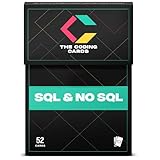
- Comprehensive Coverage: SQL Flashcards and NoSQL Flashcards designed for beginners and interview prep, covering core database concepts, queries, indexing, normalization, and real-world use cases. From relational structures, JOINs, and indexing to NoSQL document models, key-value stores, and distributed systems, these flashcards give you a solid foundation and advanced knowledge to handle any database challenge confidently.
- Interactive Learning: Enhance your understanding with an interactive, hands-on approach. Each card includes practical query examples, schema illustrations, and exercises that let you immediately apply what you learn. This active learning style helps you strengthen your querying skills and build intuition for solving real data problems. Beginner-friendly explanations that help you learn SQL and NoSQL faster without overwhelming theory or dense textbooks
- Portable Convenience: Study databases anytime, anywhere. Whether you’re at home, commuting, or taking a break, these portable flashcards make it easy to learn on the go. Perfect for busy students, developers, or professionals fitting learning into a tight schedule.
- Versatile Audience: Designed for all learners from students preparing for exams to data analysts, backend engineers, and tech enthusiasts. Whether you're building your first query or optimizing production databases, these flashcards guide you at every stage of your learning journey. Perfect for SQL interview preparation for software engineers, data analysts, backend developers, and computer science students
- Skill Enhancement: Boost your confidence and stay current with evolving database technologies. Ideal for self-study, bootcamps, university courses, and last-minute interview revision with concise, memorable flashcard format
- Use descriptions that state what a tool does, what inputs it expects, and what its output means.
- Make errors informative enough to support recovery instead of leaving the agent with an unexplained failure.
- Test the agent’s actual tool use. If it repeatedly chooses the wrong action or misreads output, improve the interface or examples.
- Limit unnecessary overlap among tools so the agent has a clearer choice of action.
Keep long coding tasks from losing their place
Long tasks accumulate tool output, decisions, and unresolved questions. A compact progress note or task list can preserve what matters: decisions already made, files or behaviors investigated, open problems, and the next concrete steps. The note should help the agent resume work, not duplicate the entire conversation.
When a system compacts a long interaction, redundant tool results may be less important than a subtle constraint or an unresolved failure. Summarizing too aggressively risks losing details that matter later, so keep durable decisions and evidence that affect the next step. Anthropic describes an architecture in which a specialized subagent returns a condensed summary of 1,000–2,000 tokens. That is an illustrative practice described by Anthropic, not a universal ideal length for every project or task. Anthropic’s context-engineering guide
Focused subagents can investigate a bounded question and return condensed findings when that is worth the coordination overhead. They are not automatically beneficial: for a small change, delegating work may add more context and handoffs than it saves.
Rank #4

- Comprehensive Coverage: Dive deep into JavaScript with thorough explanations of key topics and practical, real-world examples that make complex concepts easy to grasp. Our content is designed to provide you with a strong foundation and advanced skills, ensuring you are well-prepared for any JavaScript-related challenge.
- Interactive Learning: Transform your learning experience with our interactive format. Practice and apply what you learn immediately with hands-on code snippets and exercises. This approach not only reinforces your understanding but also helps you develop practical coding skills that you can use in real projects.
- Portable Convenience: Take your learning journey anywhere with our highly portable resources. Whether you’re at home, on the commute, or traveling, you can study whenever it suits you, making it easy to fit learning into your busy schedule.
- Versatile Audience: Our content is tailored to meet the needs of a wide range of learners. Whether you’re a student looking to ace your exams, a professional aiming to advance your career, or a hobbyist passionate about coding, our resources are designed to help you achieve your goals.
- QR Code Embedded: A QR code is embedded on each card at the top. At any point, if you need further clarification on a topic, simply scan the QR code with your smartphone. The QR code will take you to a YouTube video or an article that provides a detailed explanation of the topic.
Make verification part of the work, not an afterthought
A coding agent needs feedback from the environment to correct its work. Ask it to run the relevant tests or checks, inspect their results, and address failures rather than merely report that code has changed. Choose checks that match the task: a focused test may be quicker, while broader tests can reveal effects elsewhere in the project.
Passing tests are evidence about the behaviors those tests cover; they do not establish that the change meets every product or system requirement. Human review remains important for requirements that are difficult to encode, unintended side effects, and whether the implementation is appropriate. Anthropic’s agent-building guidance recommends environmental feedback, sandboxing, and human review as engineering practices; it does not prove that a particular configuration improves every codebase. Anthropic’s guide to building effective agents
Increase autonomy in stages. First evaluate whether the agent can complete a bounded task with clear tools and checks. Add longer unattended sequences only when evaluation shows they are useful; each additional step creates more opportunity for errors to compound before a person sees them.
Best Value

- 200 CONVERSATION STARTER CARDS FOR COUPLES - Each card was written and reviewed by relationship and communication experts to help you and your partner talk about the things that matter. From lighthearted 'getting to know you' questions to deeper prompts about goals and values, there is something for every mood and every stage of your relationship.
- MAKE DATE NIGHT MORE FUN - Pick a card, read the question, and take turns answering. That is it. No complicated rules, no board, no timer. Play at home on the couch, on a long drive, at a restaurant, or over FaceTime. The portable box fits in a purse or travel bag so you can bring it anywhere your relationship goes.
- THE PERFECT COUPLES GIFT - Whether you need a wedding anniversary gift, engagement gift for couples, birthday present for your boyfriend or girlfriend, or a thoughtful newlywed gift, the COUPLES Pack is a meaningful way to say 'I want to know you better.' Great for Valentine's Day, bridal showers, and holidays too. Works for new relationships and 30-year marriages alike.
- 4 COLOR-CODED CATEGORIES - Questions are sorted into 4 categories by depth, from casual icebreakers to deeper prompts about intimacy and your future together. Start with the easy ones and work your way up, or shuffle the whole deck and see where the conversation takes you. 200 cards means months of fresh questions.
- EXPERT-WRITTEN FOR REAL RESULTS - Every prompt was developed by a team of relationship and communication experts. Couples tell us these cards helped them have their longest conversation in years, learn things they never thought to ask, and feel closer after just one sitting. Recommended by therapists and marriage counselors as a communication tool.
Choose a runtime by control, state, and execution
Product labels are less useful than understanding who operates the agent loop, where state lives, how tools run, and what approval or review controls are available. OpenAI’s documentation distinguishes three integration approaches:
| Approach | Who manages the loop | State and execution |
|---|---|---|
| Agents API | Managed runtime | Runtime and state handling are managed by the service; check current documentation for the specific execution and state behavior available. |
| Agents SDK | Your application controls the agent loop | Your application manages the loop and its integration with tools and state. |
| Responses API | Your application integrates directly with the model | Direct model integration gives the application control over how it handles tools and state. |
This is a high-level distinction, not a complete feature or deployment comparison. OpenAI’s product documentation can change, so confirm current interfaces and availability before building around a specific capability. OpenAI’s Agents guide
For a coding workflow, compare the options against practical questions: Who approves actions? Does the application or service save and compact state? Where does code execute? Which tools are built in, custom functions, or external integrations? How much repository context is loaded initially versus retrieved later? What test feedback, tracing, and human review can you use?
The Tool Desk
Outbyte Driver Updater FREEScan for outdated or missing drivers - takes under a minuteDriver Scan →Outbyte PC Repair FREEClear out junk files and repair common Windows errorsFree Scan →Add integrations deliberately and protect credentials
Function calling, MCP, Skills, shell access, file search, and tool search are different ways to add actions or information; they are not interchangeable labels for the same capability. Choose integrations based on what the task needs, then verify what they can access and where they run.
MCP connections may run from a service or from the agent’s environment, depending on the configuration. Check credentials, reachability, and the tools allowed through the connection. Keep secrets out of reusable agent definitions and logs, and grant only the access the workflow needs. OpenAI’s documentation describes product-specific tool and MCP details, which may change. OpenAI’s tools guide OpenAI’s remote MCP guide
Quick Recap
A practical workflow for better coding-agent output
- Define the change. State the desired behavior, relevant constraints, and what must not change.
- Provide project guidance. Include applicable conventions and the commands or checks used to verify work.
- Enable targeted discovery. Give the agent tools to find and inspect relevant code rather than loading the entire repository without a reason.
- Keep a useful record. For work that spans many steps, preserve decisions, unresolved questions, and the next action in a compact progress note.
- Observe and verify. Have the agent use tool results and test outcomes to revise its work, then review the change against requirements the tests cannot judge.
- Improve the weak link. If output fails, determine whether the cause was missing guidance, poor retrieval, confusing tools, lost state, or inadequate verification—and adjust that part of the setup.
Product prices and availability are accurate as of the date/time indicated and are subject to change. Any price and availability information displayed on Amazon at the time of purchase will apply.

