
What’s actually slowing this PC down?
Pick the symptom - the matching free tool is one click away.
If images are missing in Microsoft Edge, first check whether the problem affects one website or every website. Reload the page, open the same URL in another browser, then follow the least disruptive fixes: clear Edge’s cached images, test extensions, check tracking prevention and site permissions, and only then update, repair, or reset Edge. If images fail in other browsers or on another network too, the cause may be the website or network rather than Edge.
First find out whether Edge, the website, or the network is responsible
A blank image box can have several causes: a stale cached file, an extension blocking a request, a privacy setting that changes how a site works, a network problem, or a site-side failure. Start with tests that do not change settings or remove data.
- Reload the affected page. If only one image or one page is affected, try opening the image or page again later.
- Copy the page URL into another browser on the same device. If images load there, focus on Edge settings, extensions, or cached data. If they fail there too, Edge is less likely to be the cause.
- If possible, try the same page on another network. A failure that follows one network can point to a router or network issue; a failure limited to one website may need to be reported to that site’s owner.
Microsoft’s general troubleshooting guidance recommends checking whether a page opens in another browser and, when a site or network appears responsible, restarting the modem or router or contacting the website owner. These checks are diagnostic, not proof: sites can behave differently between browsers, and a temporary outage can affect only some page elements.
Clear Edge’s cached images and files
Edge stores temporary website files, including cached images. If a cached copy is stale or damaged, clearing it can make the browser request the image again. This removes cached files, not your saved passwords or bookmarks. Avoid clearing cookies unless you have a reason to do so: cookies can keep you signed in or preserve site preferences.
The Tool Desk
Outbyte Driver Updater FREEScan for outdated or missing drivers - takes under a minuteDriver Scan →Outbyte PC Repair FREEClear out junk files and repair common Windows errorsFree Scan →#1 Best Overall

- USB-C 2-in-1 storage OTG: The Lexar JumpDrive Dual Drive D40E features USB Type-A and Type-C connectors in a slim, portable form factor for easy device compatibility
- Transfer speeds up to 100MB/s: Based on internal testing, performance may vary depending upon the host device, interface, and usage conditions. 1MB=1,000,000 bytes
- Plug and Play: Widely compatible with USB Type-C smartphones, tablets, laptops, Macs, and traditional Type-A devices, no software installation required. The 360° swivel design allows for easy switching between connectors without the hassle of losing a cap
- Durable & Compact: The Lexar D40E USB memory stick features a metal enclosure, withstands temperatures from 0° to 50° C (32°F to 122°F), and is lightweight at 26g with dimensions of 70.4 x 16.9 x 11.7mm
- Security & Warranty: Securely protects files using an advanced security software solution with 256-bit AES encryption. Backed by a Lexar 3-year limited warranty
Use the History page
- In Edge, open Settings and more (the three-dot menu).
- Select History, then Open history page.
- Select Delete browsing data.
- Set the time range to All time.
- Select Cached images and files. You may also select Browsing history if you want to remove it, but it is not required just to clear the image cache.
- Select Clear now, then reload the affected page.
The equivalent control is available under Settings and more > Settings > Privacy, search, and services > Clear browsing data. Labels can vary slightly across Edge versions. If a site still shows blank images after clearing the cache, continue to the extension and privacy checks rather than repeatedly clearing the same data.
Check whether an extension is blocking image requests
Ad blockers, privacy extensions, and other add-ons can block page resources. Temporarily disabling extensions is a useful isolation test: if images return, re-enable extensions one at a time and reload the page after each change to identify the one involved.
Rank #2

- 2 in 1: USB C + USB 3.0, 32GB usb c flash drive has dual ports, usb 3.0 port is applied to all devices which have usb 3.0 interface and usb c port is widely used in all Android smartphones with OTG function
- High Speed USB 3.0: Read speed up to 90 MB/s, Write speed up to 30 MB/s, the speed of USB 3.0 interface is faster than USB 2.0, save time to wait, increases work productivity. Note: Speed will be limited if you use the USB key in the USB 2.0 interface
- Large Compatibility: The USB 3.0 Connector is compatible with USB 3.0 & USB 2.0 backward USB 1.1 devices, such as Laptop, Desktop, Car Audio, Tablet, TV, Speakers, Projector. USB-C port is compatible with all Android Smartphones
- Expand Storage: Good performance in storing, transferring and sharing digital data with families, friends, colleagues, customers. It can expand the capacity of smartphone, you can watch movies or share pictures when you go on vacation with your family
- Note: Make sure your smartphone is equipped with OTG function and need to open OTG function in Settings when you plug memory stick, then you can transfer easily data bewteen different devices
- Open Settings and more > Extensions > Manage extensions.
- Turn off the extensions, then reload the page with missing images.
- If images return, turn extensions back on one at a time. Reload after each one.
- When the problem returns, review that extension’s settings or site access. You can leave it disabled for the affected site or adjust its rules if the extension provides that control.
If turning extensions off changes nothing, turn them back on and move to the next check. The test is reversible and does not require removing extensions or resetting Edge.
Review tracking prevention, cookies, and site permissions
Edge’s tracking prevention has Basic, Balanced, and Strict levels. Microsoft cautions that Strict blocks the most trackers but can cause some websites not to behave as expected. If the affected site relies on content or data from another domain, privacy controls may affect how some of its resources load.
Rank #3

- USB-C 2-in-1 storage OTG: The Lexar JumpDrive Dual Drive D40E features USB Type-A and Type-C connectors in a slim, portable form factor for easy device compatibility
- Transfer speeds up to 100MB/s: Based on internal testing, performance may vary depending upon the host device, interface, and usage conditions. 1MB=1,000,000 bytes
- Plug and Play: Widely compatible with USB Type-C smartphones, tablets, laptops, Macs, and traditional Type-A devices, no software installation required. The 360° swivel design allows for easy switching between connectors without the hassle of losing a cap
- Durable & Compact: The Lexar D40E USB memory stick features a metal enclosure, withstands temperatures from 0° to 50° C (32°F to 122°F), and is lightweight at 26g with dimensions of 70.4 x 16.9 x 11.7mm
- Security & Warranty: Securely protects files using an advanced security software solution with 256-bit AES encryption. Backed by a Lexar 3-year limited warranty
- Open Settings and more > Settings > Privacy, search, and services.
- Find Tracking prevention and note the current level.
- If it is set to Strict, test Balanced and reload the affected site. Change the setting back if it makes no difference.
- If the problem is limited to a trusted website, use the site exception control available from Tracking prevention rather than broadly weakening protection for every site.
- If the site needs cross-site data, check its cookie and site-data permissions. Temporarily allow cookies and site data for that site, reload, and restore the previous setting if the test does not help.
Make one change at a time. That keeps the test informative and makes it easier to restore the previous behavior. Only make an exception for a site you trust; allowing cross-site data can change what information that site and related services can use.
Try another network if the browser checks did not help
If the same page fails in more than one browser, try another available network before changing more Edge settings. For example, compare the connection you normally use with another network you are permitted to use. If the page works on the alternate connection, restart the modem or router and try again. If images remain unavailable across browsers and networks, report the page and affected image URLs to the website owner.
Rank #4

- 2-in-1 Dual Design: Features both USB-C and USB-A connectors, making it compatible with phones, tablets, MacBooks, PCs, and laptops-no adapter needed
- Wide Compatibility: Works seamlessly with USB A and USB C devices, ensuring reliable file transfers across smartphones, computers, and more
- Ample Storage Options: Available in 16GB/32GB/64GB/128GB providing plenty of space for photos, videos, music, and documents
- Portable & Lightweight: Compact and durable design for travel, school, or daily use-take your files anywhere
- Plug-and-Play Convenience: No software or drivers required; simply insert into USB-C or USB-A ports and start transferring files instantly
Do not assume every network-related image failure is caused by your router. The website may be having a problem, and a single failed image can also be a site-side issue even when the rest of the page loads.
Check whether a work or school administrator blocks images
Managed Edge installations can receive policies that allow or block images for specified URLs. The relevant Microsoft Edge policy names are ImagesAllowedForUrls and ImagesBlockedForUrls. If the problem occurs on a work or school device, a policy may be controlling the behavior even when the browser’s ordinary settings appear correct.
Best Value
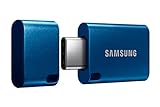
- USB-C STORAGE ON THE GO: This sleek drive is supported by Samsung NAND flash and is incredibly compact to fit in the palm of your hand; Count on reliable performance and fast transfer speeds while staying compact
- PERFORMANCE WITH SPEED: No need to choose between performance and reliability; Experience a fast, powerful flash drive that transfers 4GB files in just 11 seconds with up to 400MB/s USB 3.2 Gen 1 read speeds and is backward compatible with USB 3.0/2.0
- MODERN MEETS ICONIC: The ultra-sleek USB-C drive looks as good as it performs; Featuring a reversible plug, the Type-C inserts into your devices seamlessly every time; Transfer large files with style and ease
- ALWAYS CONNECTED: USB-C is compatible across devices, including laptops, tablets, phones and cameras, with enough space for 63,730 photos or maximum 12 hours of 4K video; With up to 256GB of storage space, this pocket-sized thumb drive comes in handy wherever you go
- TOUGH & TRUSTED: Files stay secure, no matter the terrain; Samsung's flash memory technology makes the Type-C a trustworthy drive to store your valuable data; It's waterproof, shock-proof, magnet-proof, temperature-proof, and X-ray-proof body, plus it's backed by a 5-year limited warranty
Ask your organization’s IT administrator to check the policy for the affected site. A user may not be able to override an administrator-enforced restriction locally. Avoid trying to bypass a managed policy; provide the administrator with the affected URL, whether all images or only some images fail, and the results of your cross-browser test.
Independent reader supportYour contribution helps us test, update, and keep practical guides available for everyone.Update, repair, or reset Edge only after simpler checks
Update Edge
Open Settings and more > Help and feedback > About Microsoft Edge, or navigate to edge://settings/help. Edge checks for updates on that page. Follow any prompt to install an available update and restart the browser, then test the page again.
Repair Edge on Windows
If images continue to fail across sites in Edge, Windows offers a repair option. Open Settings > Apps > Installed apps > Microsoft Edge > Modify > Repair. Follow the Windows prompts. The repair option is for Windows; it may not appear on other operating systems or on devices managed by an organization.
Reset Edge settings
Reset is a broader step, so use it after the reversible tests above. Open edge://settings/reset, choose Restore settings to their default values, and confirm the reset. Microsoft’s reset guidance says bookmarks, history, and saved passwords are preserved; pinned tabs, the startup page, search engine, and extensions are reset. Review the settings and extensions you rely on afterward.
Do these 3 things before closing this tab:
1Clear out junk files and repair common Windows errors2Scan for outdated or missing drivers - takes under a minute3Repair Windows errors before they cause bigger problemsTroubleshooting by symptom
| What you observe | What to test next | What the result suggests |
|---|---|---|
| Images fail on one site, but other sites work | Open that URL in another browser; test Edge extensions and a site-specific tracking or cookie exception. | If another browser works, investigate Edge settings or extensions. If not, the site or its interaction with the network may be responsible. |
| Images fail on many sites in Edge | Clear cached images, disable extensions as a test, then update Edge. | A browser-level cache, extension, or setting becomes more plausible than a problem limited to one site. |
| Images fail in multiple browsers on the same connection | Try another network; restart the modem or router if appropriate. | The issue may involve the network or the website. If it persists across networks, contact the site owner. |
| Only a work or school device is affected | Ask the administrator to check image URL policies. | An organization policy such as ImagesBlockedForUrls may be in effect. |
| The issue began after changing a privacy setting | Restore the previous setting or test Balanced tracking prevention and a narrow site exception. | If the images return, the setting affected that site’s behavior; keep the narrowest change that solves the problem. |
Or skip the browser setup
If you need a screenshot of a page for a workflow rather than a fix to your Edge display, ScreenshotNeo offers a website screenshot API and MCP server. A single GET request can return an image or PDF. For this example, save a WebP screenshot of the affected page by replacing the sample URL with the page you need. Create an API key first, and see the ScreenshotNeo API documentation for request options.
Quick Recap
curl -G "https://api.screenshotneo.com/v1/shot" -d access_key=YOUR_API_KEY --data-urlencode url=https://stripe.com -o shot.webpScreenshotNeo accepts cookie or consent banners before capture and removes more than 60 known consent platforms, newsletter popups, and chat widgets; each of those steps can be turned off. Bot checks and CAPTCHAs, blank pages, timeouts, failed loads, and cache hits are not billed, and the response identifies the page verdict and billing status in headers. Its MCP server provides take_screenshot, get_page_info, and capture_pdf for AI agents and other MCP clients. The Free plan includes 1,000 screenshots per month with no card; paid plans start at $5 for 3,000 screenshots. Sign up free for 1,000 screenshots a month, with no card required.
When to escalate
- Contact the website owner if the page fails in other browsers or remains broken across networks.
- Contact your organization’s administrator if a work or school policy appears to block images.
- If the issue is limited to Edge after the cache, extension, privacy, update, repair, and reset checks, provide Microsoft Support with the Edge version, operating system, affected page, and the steps you already tried.
Product prices and availability are accurate as of the date/time indicated and are subject to change. Any price and availability information displayed on Amazon at the time of purchase will apply.

